
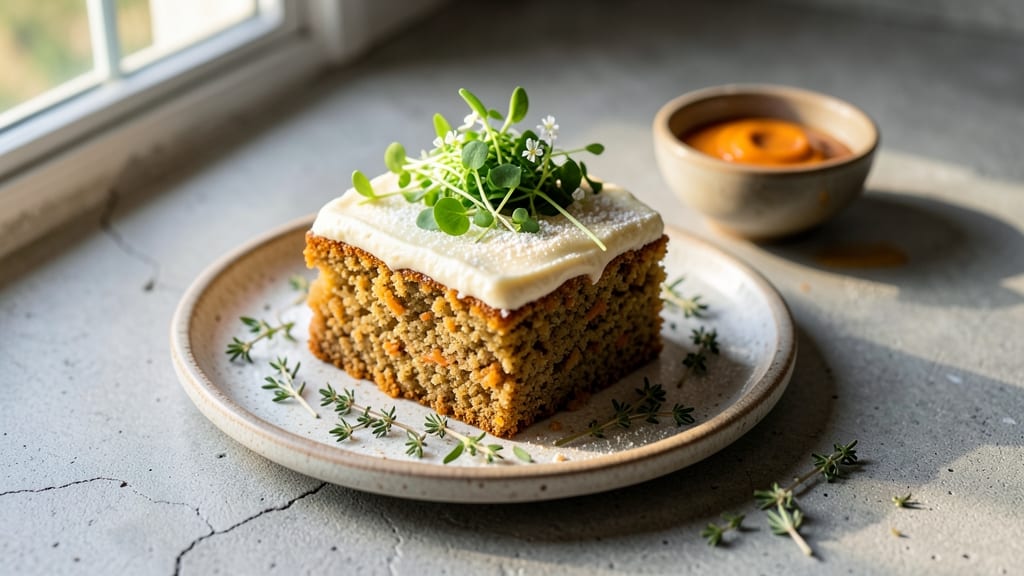
This gluten-free carrot cake recipe delivers all the classic flavors without the gluten—moist layers packed with shredded carrots and warm spices, topped with tangy cream cheese frosting that’s just sweet enough. 💛 I developed this version after years of adapting my grandmother’s recipes, ensuring every bite stays tender and flavorful while being completely safe for gluten-sensitive guests.
The secret lies in the right blend of flours and a few extra minutes of resting the batter, which makes all the difference.
The cake itself is a study in balance: sweet but not cloying, spiced just enough to complement the carrots, and held together by a simple but effective gluten-free flour mix.
I use almond flour for richness and oat flour for moisture, creating a texture that’s nearly indistinguishable from traditional carrot cake. The frosting is where the magic happens—a silky, slightly tangy cream cheese topping that cuts through the sweetness while adding a professional finish.
What you’ll end up with is a cake that’s perfectly moist in the center, with a tender crumb that holds up to every forkful. The frosting stays smooth and creamy even in warm rooms, making it ideal for gatherings or special occasions.
This recipe has become a staple at my dinner parties, where the kitchen always transforms into the heart of the celebration. The aroma alone will have everyone gathering around the table.
Best served at room temperature with a dusting of cinnamon on top, this cake keeps well for up to five days when stored properly. The frosting can be made ahead, and the cake layers can be baked a day in advance—just assemble before serving.
Whether you’re accommodating dietary restrictions or simply craving a classic comfort dessert, this version delivers on all fronts without compromising on flavor or texture.
Ingredients for gf carrot cake
Pantry staples plus a few specialty flours—this gluten-free carrot cake tastes just like grandma’s.
| Ingredient | Amount | Notes |
|---|---|---|
| Organic Carrots 🥕 | 2 ½ cups | Shredded, medium-sized, organic preferred |
| Almond Flour 🌰 | 1 ½ cups | Fine, blanched, unsweetened |
| Oat Flour 🌾 | 1 cup | Blended from certified GF oats |
| Coconut Sugar 🌴 | 1 cup | Fine grain, light brown color |
| Extra-Virgin Olive Oil 🫒 | ¾ cup | Cold-pressed, fruity variety |
| Unsweetened Applesauce 🍎 | ½ cup | No sugar added, unsweetened |
| Flaxseed Meal 🌾 | ¼ cup | Ground flaxseed for binding |
| Almond Milk 🥛 | ¾ cup | Unsweetened, vanilla flavor |
| Pure Vanilla Extract 🌿 | 1 tbsp | Bottled, 100% pure vanilla |
| Ground Cinnamon 🌶️ | 2 tsp | Freshly ground preferred |
| Ground Ginger 🌿 | 1 tsp | Freshly ground for warmth |
| Ground Nutmeg 🌶️ | ½ tsp | Freshly grated for depth |
| Salt 🧂 | ½ tsp | Fine sea salt, kosher preferred |
| Vegan Cream Cheese 🧀 | 8 oz | Soft, full-fat, chilled |
| Vegan Butter 🧈 | ½ cup | Cold, unsalted, full-fat |
| Powdered Sugar 🍚 | 2 cups | Confectioners' sugar, sifted |
| Lemon Juice 🍋 | 1 tbsp | Freshly squeezed, from organic |
The flours make all the difference. Almond flour adds richness, while oat flour keeps it tender—both should be certified gluten-free to avoid cross-contamination. I grab mine in bulk from Bob’s Red Mill or Trader Joe’s (their oat flour is perfect). The carrots? Organic is best—they’re sweeter and hold their color. Shred them yourself (the boxed kind gets mushy). For the coconut sugar, Bob’s Red Mill or Wholesome! are my go-tos—avoid the super-fine kind, which can make the cake dense.
No almond flour? Substitute with walnut flour (same ratio) or blend extra oat flour with a bit of tapioca starch (1/4 cup). The applesauce replaces eggs—don’t skip it, it keeps the cake moist. For the frosting, Kite Hill or Miyoko’s vegan cream cheese is ideal, but cashew cream works too (blend soaked cashews with lemon juice). Short on powdered sugar? Blend coconut sugar in a food processor—it’s not as fine but gets the job done. The vanilla extract must be pure; imitation won’t cut it here.
This cake keeps for 5 days wrapped in the fridge, but honestly, it’s best the day it’s made. The frosting can be prepped 3 days ahead—just whip it again before spreading. For serving, dust with cinnamon (the good stuff, not the pre-mixed kind) and slice into wedges. Leftovers? Reheat in 10-second bursts in the microwave—just enough to soften the frosting. Freeze layers for 3 months if you’re prepping for a party.
Why You’ll Love This Recipe
- No-Panics Needed: The flaxseed meal and almond milk combo binds this batter like magic—no overmixing, no weird lumps, just a thick, forgiving mix that even a beginner can handle. And with just two pans, cleanup is a breeze: one sheet of parchment paper, a spatula, and you’re done.
- Spice-Soaked Satisfaction: That 2 tsp cinnamon, 1 tsp ginger, and pinch of nutmeg? They turn simple shredded carrots into something dangerously good. The coconut sugar caramelizes just right with the extra-virgin olive oil, and the frosting—lemon juice brightened and powdered sugar sweetened—cuts through the richness without overpowering. Trust me, your taste buds will thank you.
- Crowd-Pleaser for Any Moment: This cake doesn’t just work for birthdays—it’s my go-to for potlucks, lazy Sundays, or even a last-minute office treat. Freeze the layers for months if you’re prepping ahead, or slice into it the next day (it’s still spot-on). And honestly? The kids will devour it, the gluten-free guests will cheer, and the skeptics will ask for seconds.
- Budget’s Friend: Organic carrots and almond flour might sound fancy, but they stretch farther than you’d think—especially when paired with pantry staples like coconut sugar and oat flour. A whole cake for under $15? Yes, even on a Tuesday night. And if you double the recipe, you’ve got leftovers for days (or a second cake). Win-win.
Step-by-step instructions for gluten-free carrot cake recipe
Here’s how to bake a perfectly moist gluten-free carrot cake with creamy frosting—every layer delicious.
🍳 Step 1: Mix the Wet Ingredients for Moist Layers
In a large mixing bowl, combine the 2½ cups shredded organic carrots, 1 cup coconut sugar, ¾ cup extra-virgin olive oil, and ½ cup unsweetened applesauce. The carrots should be finely shredded—about ¼-inch thick strips—for even distribution and maximum moisture. Mix with a whisk or wooden spoon until everything is fully incorporated and the carrots are coated in the wet ingredients.
Next, add the ¾ cup almond milk, 1 tbsp pure vanilla extract, and ¼ cup flaxseed meal. The flaxseed meal acts as our egg substitute, binding the cake together while keeping it tender. Stir until the flaxseed meal dissolves completely—it should thicken slightly, creating a pudding-like consistency. This mixture is the foundation of our moist texture, so don’t skip this step.
👨🍳 Step 2: Combine Dry Ingredients for Perfect Texture
In a separate bowl, sift together the 1½ cups almond flour, 1 cup oat flour, 2 tsp ground cinnamon, 1 tsp ground ginger, ½ tsp ground nutmeg, and ½ tsp salt. Sifting prevents lumps and ensures even distribution of spices throughout the batter. I like to press the dry ingredients through a fine-mesh sieve for a silky texture—this makes all the difference in a gluten-free cake.
Gently fold the dry ingredients into the wet mixture using a spatula, mixing just until combined. Avoid overmixing—you should still see some flour streaks. The goal is to create a thick, slightly sticky batter that holds together when dropped from a spoon. If it feels too dry, add 1-2 tablespoons of almond milk to loosen it. This careful combination ensures our cake stays moist while maintaining structure.
🥘 Step 3: Bake the Cake Layers to Golden Perfection
Preheat your oven to 350°F and grease two 9-inch round cake pans with ½ cup vegan butter, then line the bottoms with parchment paper. Divide the batter evenly between the pans—you should have about 1½ cups per pan. Tap the pans gently on the counter to remove any air bubbles, then bake for 25-30 minutes until a toothpick inserted in the center comes out clean.
Here’s where it gets tricky: gluten-free cakes can dry out quickly, so I recommend checking at the 20-minute mark. The edges should be golden brown while the center remains slightly springy. If the top browns too quickly, tent the pans with foil. Let the cakes cool in the pans for 10 minutes before transferring to a wire rack to cool completely. Patience here prevents a dense, dry cake—trust me, it’s worth the wait.
🍳 Step 4: Prepare the Cream Cheese Frosting
While the cakes cool, let’s make the frosting. In a medium bowl, beat the 8 oz vegan cream cheese and ½ cup vegan butter together until smooth and creamy. I use a hand mixer for this step—it takes about 2-3 minutes of steady beating until no lumps remain. The mixture should be light and fluffy, almost like whipped cream but with a rich, tangy flavor.
Gradually add the 2 cups powdered sugar and 1 tbsp lemon juice, mixing on low speed until fully incorporated. The lemon juice brightens the flavor and balances the sweetness. Taste a small spoonful—you want it sweet but not cloying. If needed, add 1-2 more tablespoons of powdered sugar to reach your preferred sweetness level. This frosting is what makes our gluten-free cake feel indulgent and special.
🥘 Step 5: Assemble and Frost the Cake
Once your cakes are completely cool, place one layer on a serving plate. Spread a generous ½-inch thick layer of frosting over the top, then place the second cake layer on top. Frost the sides of the cake evenly, creating a smooth, elegant finish. I like to use a spatula to spread the frosting in circular motions, then smooth the sides with the back of the spatula for a professional look.
For extra flair, you can pipe additional frosting around the edges or dust the top with a little extra powdered sugar. Let the frosting set for 15-20 minutes in the refrigerator before slicing. This chilling time helps the frosting firm up slightly, making it easier to serve and preventing messy crumbs. Your gluten-free carrot cake is now ready to enjoy—moist layers with every bite and a creamy frosting that ties it all together.
Pro Tips For Making Gf Carrot Cake
- Sift the Dry Mix: Pressing the almond flour and oat flour through a fine-mesh sieve isn’t just about avoiding lumps—it aerates the batter, which is non-negotiable for gluten-free cakes. I used to skip this, and the result was a dense, brick-like texture. Take the extra 30 seconds; your cake will rise better and stay lighter.
- Check at 20 Minutes: Gluten-free cakes bake faster and dry out quicker, so pull them out at 20 minutes even if the center looks wet. The edges should be golden while the middle still jiggles slightly—overbaking turns this moist cake into a sad, dry sponge. Tent with foil if the top browns too soon, but don’t let it linger past 30 minutes.
- Whisk the Flaxseed: The flaxseed meal needs to dissolve completely into the almond milk—no clumps, no excuses. Stir it vigorously for a full minute until it thickens into a pudding-like consistency. I learned this the hard way when my cake crumbled like sand; the flax is your glue, so treat it like one.
- Chill the Frosting Base: Beat the vegan cream cheese and vegan butter until fully smooth before adding the powdered sugar—cold ingredients mix better and prevent graininess. I was skeptical until I tried it: the frosting turns out silky, not gritty, and spreads like a dream. No need to refrigerate the bowl, but don’t let the cream cheese sit out too long before mixing.
Creative variations of this gf carrot cake
Spiced Orange Zest Twist
Add zest from 1 organic orange to the wet ingredients when mixing the batter—this brightens the flavor and pairs beautifully with the carrots. I like to use the thin orange peel from the top of the fruit, avoiding the bitter white pith.
The citrus adds a subtle tang that balances the coconut sugar and spices. Trust me, it elevates the whole cake! 💛
Chocolate Chip Surprise
For a decadent twist, fold ½ cup vegan chocolate chips (like Enjoy Life brand) into the batter just before baking. The chips melt into pockets of gooey chocolate that contrast with the spiced layers.
I prefer the chopped chocolate version for even distribution—no one will miss the traditional dairy. This is my go-to when I want to sneak in extra richness. ✨
Pecan Streusel Topping
Swap the traditional frosting for a crunchy pecan streusel by mixing ½ cup chopped pecans, 2 tbsp coconut sugar, and 1 tbsp almond flour. Toss the mixture with 1 tbsp melted vegan butter and sprinkle it over the cake layers before frosting.
Bake at 325°F for 10 minutes to toast the nuts and caramelize the sugar. This adds texture and a nutty depth that complements the carrots perfectly. 🌰
Matcha Green Tea Infusion
Add 1 tsp culinary-grade matcha powder to the dry ingredients for an earthy, vibrant twist. The green tea enhances the spice profile and gives the cake a subtle bitterness that cuts through the sweetness.
I use Ippodo brand because it’s smooth and free of bitterness. This variation is especially nice if you’re serving it with a cup of vanilla almond milk for a cozy afternoon treat. 💚
Coconut Whipped Cream Frosting
For a lighter frosting alternative, whip 1 cup full-fat coconut cream (chilled overnight) with 1 cup powdered sugar and 1 tbsp lemon juice until fluffy. The coconut cream adds a tropical flair that pairs surprisingly well with the warm spices.
I like to pipe it onto the cake and top with toasted coconut flakes for extra texture. This version is perfect if you’re avoiding dairy but still want something creamy. 🥥
Nutrition facts
Frequently asked questions
Why does this gluten-free carrot cake stay so moist?
The secret lies in the ¼ cup flaxseed meal and ½ cup unsweetened applesauce, which replace eggs and add natural moisture. The olive oil and almond milk also contribute to that tender crumb. Plus, avoiding overmixing keeps the cake light and fluffy—gluten-free batters dry out faster, so gentle handling is key!
Can I use regular flour instead of almond and oat flour?
Not for gluten-free success! Almond flour adds richness while oat flour keeps it tender. Regular flour lacks the fat content and binding properties needed—it’ll make your cake dense. If you’re avoiding nuts, try a 1:1 gluten-free flour blend like Bob’s Red Mill, but the texture won’t match the original.
How do I fix a cake that’s cracked on top?
Cracks happen when cakes cool too quickly. Next time, let your pans cool in the oven with the door cracked for 10 minutes after baking. If your cake cracks now, no worries—just spread extra frosting over the top to cover it! For future bakes, reduce oven temp by 25°F if the top browns too fast.
What’s the best way to store leftovers?
Wrap the whole cake tightly in plastic wrap or foil and store in the fridge for up to 5 days. For frosting, make it ahead and refrigerate—just whip it again before spreading. To reheat slices, microwave for 10 seconds to soften the frosting without drying out the cake. Freezing works too: wrap layers individually for 3 months.

- Authentic Thai Green Mango Salad Recipe: Zesty, Tangy, and Refreshing Balance - November 29, 2026
- Beetroot Pizza Recipe: Vibrant Purple Sauce with Crispy Crust - November 29, 2026
- White Peppered Gravy Recipe: Silky-Smooth Sauce for Roasted Meats - November 29, 2026