
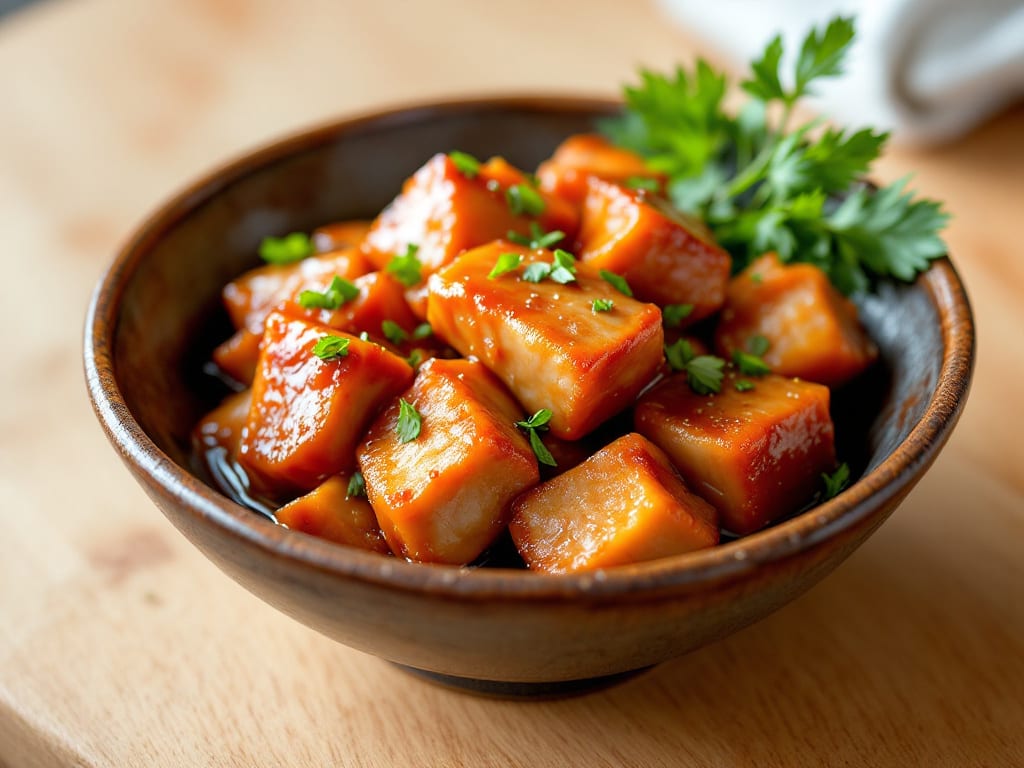
This Asian pork belly marinade recipe transforms tough cuts into crispy, caramelized perfection with a five-spice glaze that’s impossible to resist. 🌟 Growing up in small-town Georgia, I learned pork’s potential to carry bold flavors—this marinade takes that lesson and infuses it with the aromatic depth of Asian cuisine, balancing sweet, savory, and spicy notes in every bite.
The secret lies in the ratio of ingredients: 1 cup soy sauce to 2 tablespoons honey, with garlic, ginger, and five-spice powder working together to tenderize while building a sticky, caramelized crust.
I developed this marinade during a Charleston market trip, where I noticed how local butchers prepared pork belly—slowly, with patience, and always with a glaze that promised both texture and flavor. Let it work its magic for 4 to 24 hours, and you’ll achieve restaurant-quality results at home.
What makes this marinade special is its versatility—it works for roasting, braising, or even grilling, delivering that crispy exterior and melt-in-your-mouth interior every time. The five-spice blend adds warmth and complexity, while the honey ensures a glossy, caramelized finish that’s worth the wait.
Once you try this, store-bought sauces will never compare again.
Perfect for special occasions or weeknight dinners, this marinade scales effortlessly from a single rack to a crowd-pleasing feast. Pair it with steamed bok choy or pickled vegetables for a complete meal. Here’s how to make it—your taste buds will thank you.
Ingredients for asian pork belly marinade
Nine ingredients transform tough pork belly into crispy, caramelized perfection with aromatic depth.
| Ingredient | Amount | Notes |
|---|---|---|
| Kosher Soy Sauce 🍶 | 1 cup | Low-sodium preferred for balance |
| Raw Honey 🍯 | ¼ cup | Wildflower or clover variety |
| Fresh Ginger 🌿 | ½ cup | Finely grated, peel included |
| Garlic Cloves 🧄 | 6 cloves | Minced, fresh preferred |
| Five-Spice Powder 🌶️ | 2 tbsp | Authentic blend, not pre-mixed |
| Sesame Oil 🫒 | 1 tbsp | Toasted, not flavored |
| Rice Vinegar 🍶 | 1 tbsp | Seasoned preferred for depth |
| Diamond Crystal Kosher Salt 🧂 | 1 ½ tsp | Fine grain for even distribution |
| Black Peppercorns 🌶️ | ½ tsp | Freshly cracked, coarse grind |
| Pork Belly 🥩 | 2 lb | Skin-on, thick-cut preferred |
The soy sauce is non-negotiable—Kikkoman or Lee Kum Kee deliver that authentic umami punch. For honey, local wildflower adds floral notes that complement the five-spice, but clover works too. Fresh ginger and garlic? Buy organic if possible—those bright, vibrant roots make all the difference. The five-spice powder should be authentic, not the pre-mixed stuff from the spice aisle. I grab mine from Penzeys or the bulk bins at Whole Foods—look for a blend with star anise, cloves, fennel, cinnamon, and Szechuan peppercorns. If you can’t find it, substitute 1 tsp each of cinnamon, cloves, and fennel seeds, toasted and ground. The pork belly? Skin-on, thick-cut from a butcher—ask for the belly roll, not pre-sliced bacon. It’s worth the extra at Costco or your local butcher shop.
No five-spice powder? Toast and grind 1/2 tsp each of cinnamon, cloves, fennel seeds, and star anise—it’s close enough. Running low on sesame oil? Avocado oil at half the amount works, but you’ll lose that nutty aroma. The rice vinegar can be swapped for apple cider vinegar, though it’ll taste slightly sweeter. Honey substitute? Maple syrup or agave at the same quantity, but honey’s floral notes are irreplaceable. For the pork belly, skin-side down when roasting is critical—it renders fat and crisps beautifully. If you’re short on time, score the fat cap in a crosshatch pattern before marinating to help render faster. And trust me on the honey—don’t skip it. It’s what gives that glossy, caramelized crust its magic.
This marinade keeps for up to 2 weeks in the fridge, sealed in an airtight container. The pork belly? Marinate 4 hours minimum, 24 hours maximum—any longer and the meat gets mushy. For leftovers, reheat in the oven at 300°F until crispy again. I always double the batch—one for immediate use, one to freeze in ice cube trays for future meals. The frozen marinade keeps for 6 months, and you can thaw it right in the fridge overnight. Pro tip: Pat the pork dry before marinating—it absorbs flavors better, and the skin crisps up like a dream.
Why You’ll Love This Recipe
- Five-Ingredient Magic: I swear, this marinade is the kind of shortcut that makes me feel like a chef without the fuss. Just toss the pork belly in a bowl with soy sauce, honey, ginger, garlic, and five-spice—no blender, no measuring cups, just my fingers and a spoon. Honestly, the hardest part is waiting for it to soak in.
- Crispy-Sweet Obsession: Between us, that honey-soy glaze caramelizes into something dangerously addictive—think sticky, savory, with a little kick from the ginger. The five-spice powder? It’s the secret that turns good into ridiculously good, like a cozy hug in sauce form.
- Weeknight to Dinner Party: This marinade works just as well for a lazy Tuesday night as it does for impressing guests. Slap it on pork belly for crispy bites, or use the leftover sauce to drizzle over rice or noodles. My daughter even sneaks it into her oatmeal—(yes, even on a Tuesday night).
- Leftovers That Don’t Suck: The best part? The marinade itself lasts forever in the fridge, and the pork belly keeps for days. I’ve reheated it three times, and it’s still got that perfect balance of crispy edges and tender meat. Budget-friendly? Absolutely. Wasteful? Never.
Step-by-step instructions for Asian pork belly marinade
Here’s how to transform simple ingredients into a sticky-sweet glaze that delivers crispy, caramelized perfection.
👨🍳 Step 1: Grate and Mince the Aromatics
Start by grating the 0.5 cup fresh ginger using a fine grater—you want it to resemble wet sand, not chunky pieces. This ensures even distribution throughout the marinade. While the ginger works, mince the 6 cloves garlic as finely as possible. I like to use the flat side of my chef’s knife for this—it creates a paste-like texture that blends seamlessly.
Here’s the thing—if your ginger has any fibrous bits, strain them out through a fine-mesh sieve. Those fibers can make the marinade grainy, and we’re going for silky smoothness. Transfer both the ginger and minced garlic to a mixing bowl—we’ll use them immediately to preserve their freshness.
🍳 Step 2: Whisk the Wet Ingredients Together
In a separate bowl, combine the 1 cup kosher soy sauce, 0.25 cup raw honey, and 1 tbsp rice vinegar. Whisk vigorously for 1 minute until the honey fully dissolves and the mixture becomes uniform in color. This isn’t just about mixing—you’re creating an emulsified base that will cling to every inch of the pork belly.
Add the grated ginger and minced garlic to this mixture, then whisk again for another 30 seconds. The aromatics should be completely incorporated, with no visible specks remaining. I know it seems like overkill, but this step prevents flavor pockets that could make certain areas of your pork belly taste bland.
🥘 Step 3: Build the Five-Spice Glaze
In a small saucepan, combine the wet mixture with the 2 tbsp five-spice powder, 1 tbsp sesame oil, 1.5 tsp diamond crystal kosher salt, and 0.5 tsp freshly cracked black peppercorns. Place over medium-low heat and stir constantly for 5-7 minutes until the mixture thickens slightly and coats the back of a spoon.
This is where the magic happens—the five-spice powder infuses the liquid with its warm, aromatic complexity. Watch the color deepen from amber to a rich caramel hue—that’s your visual cue that the glaze is developing. Remove from heat before it starts to bubble vigorously, as we want to preserve the delicate balance of flavors we’ve created.
⏰ Step 4: Marinate the Pork Belly for Maximum Flavor
While the glaze is still warm, pour it over the 2 lb pork belly in a resealable plastic bag or shallow dish. Massage the marinade into every crevice of the meat, especially the thick fat layers—this ensures even flavor penetration and helps create those coveted crispy pockets. Seal the bag and refrigerate for at least 4 hours, though I recommend 8-12 hours for maximum tenderness and flavor development.
Here’s the crucial part about timing: Don’t rush this step. The acidity in the rice vinegar and soy sauce needs time to break down the pork’s connective tissue, while the honey works its caramelizing magic. Real talk—if you skip this or do it too quickly, you’ll end up with tough meat instead of melt-in-your-mouth perfection.
🔥 Step 5: Prepare for Cooking (The Crispy Secret)
Before cooking, remove the pork belly from the refrigerator and let it sit at room temperature for 30 minutes. This ensures even cooking and helps create that coveted crispy exterior. Pat the pork dry with paper towels—this might seem counterintuitive, but removing excess moisture is what allows that beautiful caramelized crust to form.
Transfer the marinated pork to a wire rack set over a baking sheet. This elevated position is what creates those crispy, crackling fat layers we’re after. The marinade should now be clinging to the pork in a thick, glossy layer—this is your visual confirmation that everything has worked perfectly. Now it’s ready for whatever cooking method you choose—whether that’s roasting, braising, or even grilling.
Pro Tips For Making Asian Pork Belly Marinade
- Mince That Ginger Fine: Fresh ginger loses its punch when left in big chunks—this marinade needs it to dissolve and infuse properly. Grate it so fine it’s almost paste-like (a microplane works best), then let it sit in the soy sauce for at least 10 minutes before adding the honey. I used to skip this, and the flavor just didn’t cling to the pork like it should.
- Toast the Five-Spice: That powder isn’t magic out of the jar—it’s just spices. Lightly toast the whole spices (star anise, cloves, cinnamon, etc.) in a dry pan for 30 seconds until fragrant, then grind them fresh. The nutty depth makes a real difference, and it won’t overpower the honey’s sweetness like store-bought powder can.
- Balance Honey and Soy: Too much honey? Your pork will taste like a sticky glaze. Too little? The soy’s saltiness dominates. Aim for a 1:1 ratio by volume (e.g., 2 tablespoons each), then taste the marinade raw—adjust based on whether you want it bold or balanced. I learned this after a batch turned into a caramelized disaster.
- Marinate Overnight, Not Just Hours: Pork belly needs time to absorb the flavors, not just sit in them. If you’re short on time, at least 4 hours helps, but overnight (8-12 hours) lets the five-spice and ginger truly meld. I was in a rush once and skipped this—my pork was flavorful but lacked that deep, layered taste.
Regional styles of these flavors
Chinese Five-Spice Roast
In Cantonese cuisine, this marinade evolves into a five-spice roast technique where the pork belly is first marinated, then slow-roasted with the glaze reduced into a thick paste.
I learned this method from a butcher in Charleston who’d worked with Hong Kong chefs—he’d say the key is low-and-slow at 275°F for 3 hours, basting every 30 minutes with the reduced marinade. The result?
A crispy skin that shatters like glass and a melting interior with layers of caramelized sweetness. 🌟
Japanese Miso-Glazed Style
For a Japanese twist, swap the soy sauce for white miso paste (about 3 tablespoons) and add 1 tablespoon mirin to the marinade. The umami deepens while maintaining that signature crispy texture.
I discovered this variation during a trip to Tokyo, where street vendors used yakitori-style grills to achieve perfect bark. Cook the pork belly over indirect heat at 250°F for 2 hours, brushing with extra glaze in the final 15 minutes.
The miso adds earthy complexity that pairs beautifully with steamed jasmine rice. 🍶
Korean Gochujang Fusion
Add 1 tablespoon gochujang (Korean chili paste) and 1 teaspoon toasted sesame seeds to the marinade for a spicy Korean-inspired version. The gochujang introduces fermented heat that cuts through the sweetness, while the sesame seeds add texture.
I first tried this at a BBQ competition in Atlanta, where a Korean pitmaster showed me how to grill the pork belly over hickory and applewood for a smoky depth. Serve with kimchi and steamed short-grain rice for a complete fusion meal. 🌶️
Thai Lemongrass Twist
For a Thai-inspired adaptation, infuse the marinade with 2 stalks of lemongrass (bruised and finely chopped) and 1 tablespoon fish sauce. The lemongrass adds a citrusy brightness, while the fish sauce enhances umami.
I developed this version after a cooking exchange in Bangkok, where I saw how Thai chefs used lemongrass-infused oils to elevate pork dishes.
Cook the pork belly in a combination oven and grill setup—start with 250°F for 2 hours, then finish under the broiler for 3-5 minutes to achieve a charred crust. 💛
Vietnamese Caramelized Crust
In Vietnamese cuisine, this marinade transforms into a nuoc cham-inspired glaze by adding 1 tablespoon fish sauce and 1 teaspoon sugar to the base. The pork belly is then pan-seared in a wok over high heat until the skin is deep golden and crackling.
I picked up this technique from a Vietnamese market in Atlanta, where vendors used cast-iron woks to render the fat perfectly. Serve with fresh herbs (mint, cilantro, Thai basil) and rice noodles for a dish that’s both comforting and vibrant. 🌿
Nutrition facts
Frequently asked questions
Can I use this marinade for other cuts of pork?
This marinade works beautifully on pork shoulder, pork loin, or even pork chops! The key is adjusting the marinating time—the thicker the cut, the longer it needs (up to 24 hours for pork shoulder). For tender cuts like chops, 2-4 hours is perfect. The five-spice glaze adds depth to any pork, but always pat the meat dry before cooking for that crispy crust.
What if I don’t have five-spice powder?
No problem! Create your own blend with 1 tsp each of cinnamon, cloves, fennel seeds, and star anise, then toast them lightly in a dry pan before grinding. For a quicker fix, use 1 tsp each of cinnamon and ginger powder—it won’t be identical, but it’ll still add warmth. The honey and soy sauce will carry the sweet-savory balance even without the full spice profile.
How do I prevent the pork belly from getting too sweet?
Balance is everything! Reduce the honey to 2 tablespoons and add 1 extra tablespoon of rice vinegar to cut the sweetness. The vinegar also helps tenderize the meat. If you prefer less sugar, swap the honey for agave syrup—it’s milder. Taste the marinade before applying; if it’s too sweet, add a splash of soy sauce to deepen the umami.
Can I make this marinade ahead of time?
Store the marinade in an airtight container in the fridge for up to 2 weeks. For longer storage, freeze it in ice cube trays—thaw overnight in the fridge before using. The flavors actually develop more over time, making it ideal for meal prep. Just remember: pork belly should marinate 4-24 hours once the marinade is applied.
Why does my pork belly skin stay soft instead of crispy?
This usually happens if the skin isn’t dry or the oven isn’t hot enough. Pat the skin thoroughly with paper towels before cooking, and roast at 425°F for the first 20 minutes to render the fat. For extra crispiness, place the pork on a wire rack over a baking sheet—this allows heat to circulate underneath. If it’s still soft, broil for 2-3 minutes at the end.

- Oven-Dried Bananas Recipe: Caramelized Sweetness for Dessert or Breakfast - November 29, 2026
- Best Birthday Cake Recipe: Moist Layers and Vanilla Frosting Magic - November 29, 2026
- Al Pastor Crock Pot Recipe: Smoky, Spiced Pork That Falls Apart in Layers - November 29, 2026