
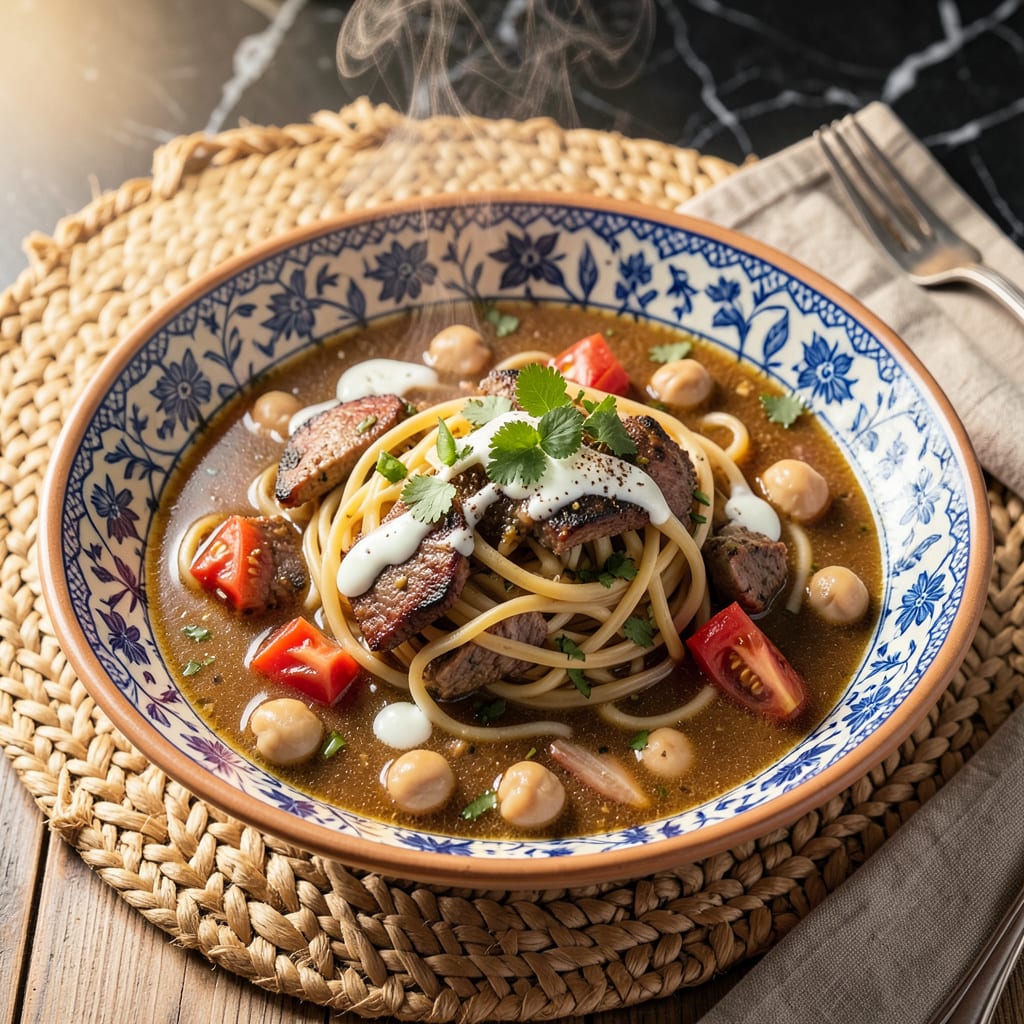
Aush is a hearty Afghan noodle soup featuring handmade dough strips, rich tomato-based broth, and a mix of vegetables, lentils, and aromatic spices like turmeric and coriander. It’s traditionally topped with yogurt, mint, and garlic for a creamy, tangy finish.
This beloved Afghan comfort food reflects centuries of culinary tradition, blending Persian influences with Central Asian flavors. 🔥 The noodles, often rolled paper-thin and cut into irregular shapes, absorb the deeply spiced broth while maintaining a satisfying chew. What sets aush apart is its layered complexity—earthy lentils provide body, while the yogurt topping adds a cooling contrast to the warm spices. I’ve found the dish varies by region, with some versions incorporating spinach or lamb for added richness.
💡 In This Article
- Key Ingredients That Define Authentic Afghan Aush
- Step-by-Step Techniques for Perfect Aush Noodles and Broth
Key Ingredients That Define Authentic Afghan Aush
The foundation of aush begins with its noodles—traditionally made from unbleached wheat flour and water, rolled paper-thin to about 1-2mm thickness before being cut into irregular strips. This handmade approach creates a rustic texture that absorbs broth while maintaining a satisfying bite.
The dough’s simplicity (just flour, water, and salt) allows the noodles to become flavor carriers rather than competing with the soup’s aromatic base.
What gives aush its signature body are the split peas and red lentils, which break down during simmering to create a velvety texture. Afghan cooks typically use a 1:1 ratio of split peas to lentils, simmered for 45-60 minutes until they form a thick, creamy base.
The lentils contribute earthy notes while the peas add subtle sweetness—this combination is what makes the broth so uniquely hearty compared to other noodle soups.
The spice profile is where aush gets its soul. Beyond the familiar turmeric and coriander, authentic versions often include asafetida (hing)—a pungent resin that mellows into a savory, onion-like depth when cooked.
In northern Afghanistan, cooks might add dried lime (limu amani) for tartness, while southern versions sometimes incorporate gur (dried yogurt) for a tangy complexity. These ingredients create a flavor layering that’s both comforting and intriguing.
Vegetables play a crucial supporting role, with carrots, potatoes, and leeks being staples. The carrots add natural sweetness that balances the spices, while potatoes help thicken the broth.
What’s fascinating is how the vegetables are added in stages—harder veggies like carrots go in first, while delicate greens (spinach or cilantro) are stirred in at the very end to preserve their color and freshness.
The crowning glory is the yogurt topping, traditionally made by thinning whole milk yogurt with water to a pourable consistency. This isn’t just for creaminess—it creates a temperature contrast when served hot. The yogurt is often infused with minced garlic and dried mint, adding a bright, cooling element that cuts through the rich broth.
Some families even stir in a pinch of salt and black pepper for extra dimension.
Regional variations show how adaptable this dish is. In Kabul, you might find versions with lamb meatballs, while Herat’s aush often includes fresh herbs like dill and parsley. The common thread is always the balance between the hearty noodles, the deeply flavored broth, and that essential yogurt topping that brings everything together. ✨
What’s remarkable is how these simple ingredients transform through careful layering. The noodles soak up the spiced broth, the lentils create body, and the yogurt adds that final bright note—each component plays a specific role in creating aush’s signature comfort-in-a-bowl experience.
The dish proves that complexity doesn’t require exotic ingredients, just thoughtful preparation and respect for tradition.

- BBQ Sausage Recipe Oven: Smoky Depth Without the Grill - September 28, 2026
- BBQ Chicken Bowl Recipe Rice: Smoky Sweetness Over Fluffy Grains - September 28, 2026
- Beef Cutlet Recipe Ideas: Crispy Breaded Patties With Bold Seasonings - September 28, 2026