
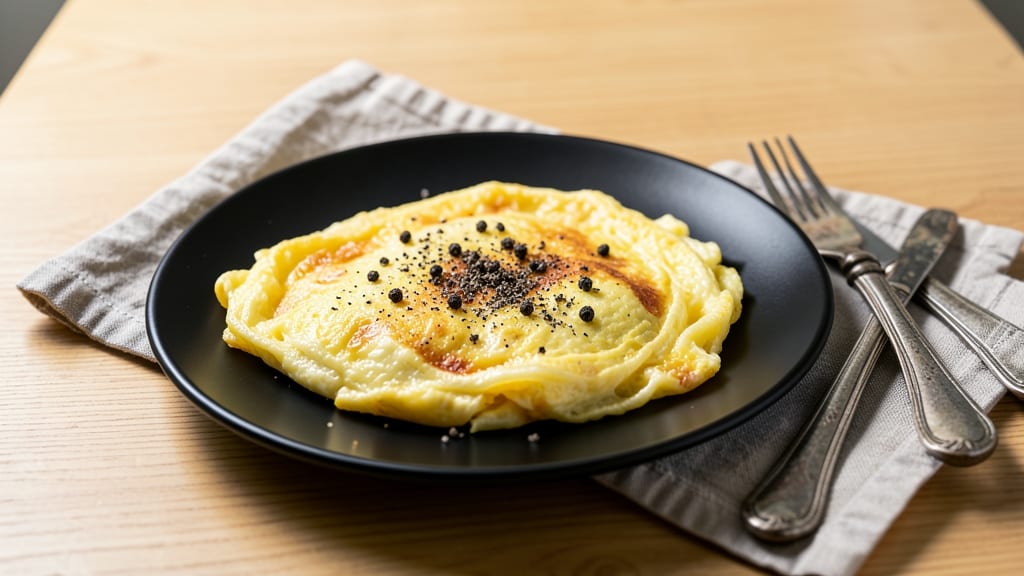
This baked omelette recipe transforms simple eggs into a restaurant-worthy dish with crispy celery-topped layers that defy the ordinary. The secret lies in baking rather than frying—creating a fluffy, golden center while developing a crispy, caramelized crust on top.
I perfected this technique after years of experimenting with textures, and the results speak for themselves.
The beauty of this method is its foolproof simplicity—just whisk eggs, layer fillings, and bake until set. Unlike traditional omelettes, this version holds its shape beautifully, making it ideal for meal prep or a satisfying solo breakfast.
The crispy celery topping adds a surprising crunch that balances the tender egg layers perfectly.
What you’ll achieve is a golden, fluffy omelette with a crispy exterior that shatters slightly when cut. The fillings stay moist and flavorful, while the celery topping caramelizes into sweet, savory bits. It’s the kind of dish that elevates breakfast from ordinary to extraordinary without requiring advanced skills.
Whether you’re feeding one or making a batch for the week, this recipe delivers restaurant-quality results with minimal effort. The crispy top isn’t just for show—it’s the star of the dish, adding texture and depth that keeps everyone coming back for seconds. Let’s get started!
Ingredients for baked omelette
Restaurant-worthy texture starts with these precise ingredients—each playing a critical role in the crispy-celery magic.
| Ingredient | Amount | Notes |
|---|---|---|
| Large Eggs 🥚 | 8 whole | Room temperature for even baking |
| Heavy Whipping Cream 🥛 | ¼ cup | Full-fat for optimal fluffiness |
| Celery Stalks 🧅 | 2 whole | Thinly sliced into ribbons for crispy topping |
| Shallots 🧅 | 2 whole | Finely minced for delicate flavor |
| Extra-Virgin Olive Oil 🫒 | 2 tbsp | High-quality for caramelization |
| Diamond Crystal Kosher Salt 🧂 | ½ tsp | Fine grain preferred for even distribution |
| Freshly Ground Black Pepper 🌶️ | ¼ tsp | Coarsely ground for texture |
| Fresh Chives 🌿 | 2 tbsp | Finely chopped for garnish |
| Unsalted Butter 🧈 | 1 tbsp | For greasing baking dish |
| Gruyère Cheese 🧀 | ½ cup | Freshly grated for meltability |
| Heavy Cream 🥛 | ⅛ cup | For brushing celery topping |
The celery is non-negotiable for that signature crispy topping. Choose firm stalks with vibrant green leaves—avoid any with brown spots or limpness. Whole Foods Market or Trader Joe’s carry consistently high-quality celery. For optimal texture, slice into thin ribbons using a mandoline or sharp knife. The Gruyère cheese should be freshly grated from a block—pre-shredded contains anti-caking agents that prevent proper melting. Local specialty cheese shops often carry high-quality Gruyère at a reasonable price. Eggs should be large and fresh, with yolks that are deep orange in color—a sign of optimal quality. Store them in the refrigerator until ready to use, but let them sit at room temperature for 30 minutes before baking to ensure even cooking throughout the omelette layers.
No shallots? Substitute with finely minced red onion, though the flavor profile will differ slightly. The cream can be swapped for half-and-half, though the texture may be slightly less rich. For a dairy-free option, replace both creams with unsweetened almond milk, though the crispy topping may not caramelize as dramatically. If you can’t find Diamond Crystal kosher salt, Morton’s unsalted fine sea salt works equally well. The olive oil should be extra-virgin—California avocado or Italian varieties provide the best balance of fruity notes and high smoke point for caramelization. For those with nut allergies, ensure all ingredients are certified nut-free, particularly the Gruyère cheese which may be processed in facilities handling nuts.
Freshly sliced celery should be stored in an airtight container with a paper towel to absorb moisture, keeping it crisp for up to 5 days in the refrigerator. The Gruyère cheese can be grated ahead of time and stored in an airtight container for 3 days, though freshly grated yields the best results. Whipped egg mixtures can be prepared up to 12 hours in advance and refrigerated, though they should be brought to room temperature before baking. The assembled baked omelettes reheat beautifully—warm in a 350°F oven for 10-15 minutes to restore crispiness. Portion into individual servings before reheating for clean, restaurant-style presentation.
Why You’ll Love This Recipe
- No Chopping Chaos: I swear by this one—just dice the celery and shallots while the oven preheats. The eggs and cream do all the work after that.
- Creamy Crispy Magic: That golden crust on top? Pure reward. The heavy cream keeps it luscious while the olive oil gives it a buttery, almost French toast-like finish.
- Lunchbox Hero: Between us, this is my go-to for packed lunches. Slice it up, wrap it in foil, and it stays warm and delicious for hours—no sad soggy sandwiches here.
- Pantry Stash Winner: I make a double batch on Sundays. The leftovers reheat beautifully, and the cost? About $3 for six servings. Eggs and cream stretch far, and celery/shallots last forever.
Step-by-step instructions for baked omelette recipe
This method delivers perfectly fluffy layers with a crispy celery topping—every bite balances texture and flavor.
Prepare the Celery and Shallot Topping
Use a mandoline or sharp knife to slice the 2 whole celery stalks into thin ribbons—about 1/8-inch thick. This precision ensures even cooking and maximum crispiness. Transfer them to a bowl and toss with 0.125 cup heavy cream and 0.5 tsp diamond crystal kosher salt. Let them marinate for 10 minutes while you prepare the egg mixture. The salt draws out moisture, creating a perfect canvas for caramelization.
Finely mince the 2 whole shallots using a microplane or sharp knife. The smaller the pieces, the more evenly they’ll distribute flavor throughout the omelette. Set aside on a separate plate—you’ll add these later to the egg mixture for balanced seasoning.
Whisk the Egg Mixture to Peak Fluffiness
In a large bowl, combine the 8 whole large eggs and 0.25 cup heavy whipping cream. Whisk vigorously with a fork or electric mixer for 3-4 minutes until the mixture becomes pale yellow and noticeably thicker. This step incorporates air, which is critical for achieving that signature baked omelette fluffiness. Avoid over-whisking—you’re aiming for ribbons, not fully emulsified batter.
Gradually fold in the 0.5 cup freshly grated gruyère cheese and 0.25 tsp freshly ground black pepper using a silicone spatula. Gently incorporate the minced shallots as well, ensuring even distribution. The cheese will melt into the omelette, creating pockets of creamy richness, while the pepper adds subtle heat that complements the crispy celery topping.
Assemble and Bake for Even Cooking
Preheat your oven to 375°F and grease a 9-inch round baking dish with 1 tbsp unsalted butter, using a paper towel to spread it evenly. This prevents sticking and creates a non-stick surface for easy release. Pour the egg mixture into the prepared dish, tilting slightly to ensure even distribution. The batter should reach about 1/2-inch thickness—this ensures both crispy edges and fluffy centers.
Sprinkle the marinated celery ribbons evenly over the egg mixture, pressing down gently to help them adhere. Bake for 18-22 minutes until the top is golden brown and the edges pull away slightly from the dish. The center should still appear slightly underdone—this ensures maximum fluffiness. If the top browns too quickly, tent loosely with aluminum foil during the last 5 minutes of baking.
Rest and Garnish for Perfect Texture
Remove the omelette from the oven and let it rest for 5 minutes before attempting to slice. This resting period allows the internal heat to distribute evenly, preventing the layers from falling apart when you cut. Use a sharp chef’s knife to slice into 4 equal wedges, ensuring clean cuts through the crispy celery topping and fluffy egg layers.
Garnish each serving with 2 tbsp finely chopped fresh chives and an additional sprinkle of freshly ground black pepper. The chives add a bright, fresh contrast to the rich egg and Gruyère, while the pepper enhances the overall flavor profile. Serve immediately while the celery topping remains crisp and the eggs are still warm and fluffy.
Pro Tips For Making Baked Omelette
- Prep Shallots Like This: Thinly slice them lengthwise into paper-thin matchsticks—no need to dice. They’ll cook faster, stay crisp, and won’t turn to mush in the cream. (I used to chop them small, and they’d disappear into the egg like sad little ghosts.)
- Whisk Eggs Until Ribbon Thick: Beat the eggs and cream until the mixture holds a slow, wide ribbon when the whisk is lifted—about 30 seconds past when it looks “done.” This prevents a watery center that turns gummy when baked. (Yes, even if you’re impatient like me.)
- Salt the Celery First: Toss the raw celery with a pinch of salt before adding it to the egg mixture. It draws out moisture and crisps up better in the oven—no soggy, limp stalks ruining your dish. (I learned this the hard way after a soggy disaster.)
- Bake at 375°F, Not Higher: The oven should be preheated and set to 375°F—any hotter, and the top browns before the center sets. If the edges look done too soon, tent loosely with foil and let it finish at 350°F. (Your future self will thank you.)
Regional styles of baked omelette
French Omelette Rustique
In France, omelettes are often baked with a focus on simplicity and rich flavors. For this rustic version, replace the celery topping with thinly sliced pearl onions (about 1 cup) and 1 tbsp fresh thyme leaves.
Use Comté cheese instead of Gruyère for a nuttier taste. Bake at 350°F for 20-25 minutes until the onions caramelize into a sweet, golden crust. Serve with a side of buttery baguette slices for dipping. 🥖
Italian Frittata Classica
This Italian adaptation transforms the baked omelette into a frittata by incorporating diced sun-dried tomatoes (about ¼ cup) and fresh basil leaves (about 10 leaves). Use Pecorino Romano instead of Gruyère and bake in a 10-inch cast-iron skillet at 375°F for 25-30 minutes.
The skillet adds a smoky depth to the dish, while the tomatoes and basil create a bright, herby contrast. Finish with a drizzle of extra-virgin olive oil for extra richness. 🍅
Spanish Tortilla de Espinacas
For a Spanish-inspired twist, fold 1 cup chopped spinach (about 2 oz) and ½ cup crumbled feta cheese into the egg mixture. Top with thinly sliced red bell pepper strips (about ½ cup) before baking at 360°F for 22-26 minutes.
The spinach adds earthiness, while the feta and bell peppers bring a tangy crunch. Garnish with fresh parsley and serve with a side of garlic aioli for dipping. 🌿
Japanese Tamago Kake Gohan
This Japanese-inspired version replaces the celery topping with a crispy tempura-style topping made from 1 cup panko breadcrumbs, 1 egg white, and 1 tsp soy sauce.
Mix the panko with the egg white and soy sauce, then sprinkle over the baked egg mixture before baking at 350°F for 20 minutes. The panko creates a golden, crunchy crust, while the soy sauce adds umami depth.
Serve with a side of miso soup for a complete meal. 🍜
Southern U.S. Country-Style
Give this baked omelette a Southern flair by adding ½ cup cooked and crumbled bacon and ½ cup shredded sharp cheddar cheese to the egg mixture. Top with thinly sliced green onions (about ¼ cup) and bake at 375°F for 20-24 minutes.
The bacon adds smoky richness, while the cheddar brings a sharp, tangy kick. Serve with a side of buttermilk biscuits for a hearty breakfast. 🍳
Mexican Huevo Rancheros
Transform your baked omelette into a Mexican-inspired dish by adding ½ cup refried black beans and ½ cup corn kernels to the egg mixture. Top with ¼ cup diced avocado and 2 tbsp salsa verde before baking at 360°F for 22-26 minutes.
The beans and corn add heartiness, while the avocado and salsa bring fresh, zesty flavors. Serve with a side of warm tortillas for dipping. 🌶️
Nutrition facts
Frequently asked questions
Why does my baked egg dish turn out rubbery instead of fluffy?
Over-whisking the egg mixture or baking at too high a temperature (400°F+) causes rubbery texture. Whisk just until pale yellow (3-4 minutes) and bake at 375°F for even cooking. Also ensure your eggs are room temperature—cold eggs won’t incorporate air properly.
Can I make this recipe with fewer eggs?
Yes! Scale down to 4 eggs for a single serving, using 1/4 cup heavy cream and halving all other ingredients. The baking time remains similar (18-22 minutes), but use a 6-inch baking dish instead. The crispy celery topping will still work perfectly when adjusted proportionally.
What’s the best way to reheat leftover baked omelette?
Warm in a 350°F oven for 10-15 minutes to restore crispiness. For microwave reheating, cover with a damp paper towel and heat in 20-second bursts—this prevents the celery topping from becoming soggy. The oven method preserves the crispy texture best.
Can I substitute the celery topping with something else?
Try thinly sliced mushrooms (for umami), crispy bacon bits (for smokiness), or toasted breadcrumbs (for texture). For best results, marinate your substitute in 1 tbsp cream + salt for 10 minutes before baking to ensure crispiness.
How do I know when the baked omelette is fully cooked?
The edges should pull away slightly from the dish, and the center should still appear slightly jiggly (not fully set). Insert a toothpick—it should come out clean with no wet egg. If the top browns too quickly, tent with foil for the last 5 minutes to prevent over-browning.

- Minced Meat Spaghetti Recipe: One-Pan Italian Comfort with Rich Ragù - November 29, 2026
- Aki’s Guava Chiffon Cake Recipe: Light, Airy Layers with Tropical Flavor Burst - November 29, 2026
- Chicken Pelau Recipe: Caribbean-Style Rice with Tender Chicken and Pigeon Peas - November 29, 2026