
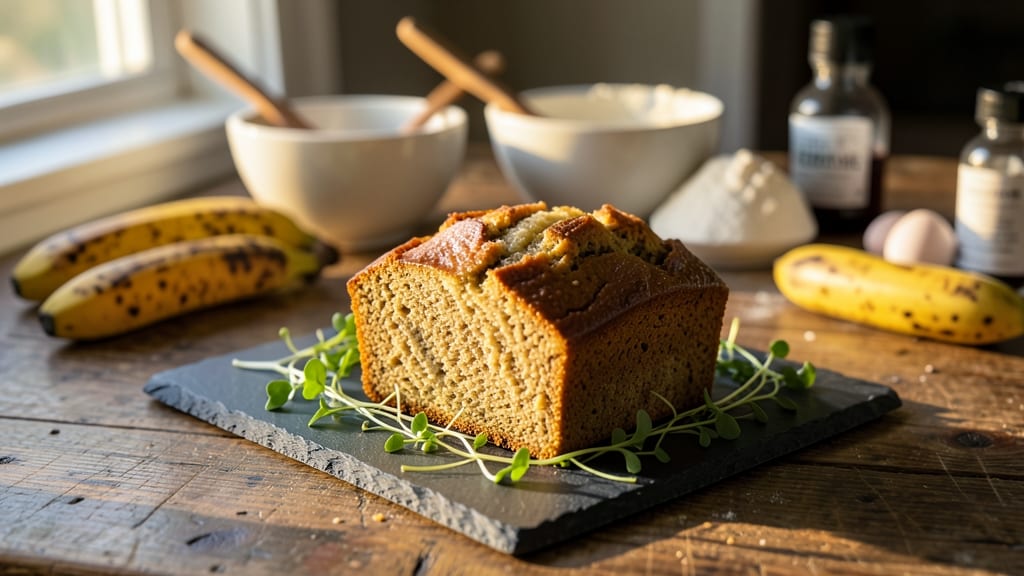
This basic banana bread recipe without baking soda proves you don’t need traditional leaveners to create a moist, tender loaf that rivals classic versions. The secret lies in a clever substitution of baking powder and vinegar, which activates just like baking soda while keeping the recipe entirely plant-based.
I developed this version after years of testing—it’s the one that finally delivers that perfect crumb without relying on common baking staples.
What makes this recipe truly remarkable is how simple it is to execute. With just five core ingredients (plus a few pantry staples), you’ll achieve a loaf that’s rich, flavorful, and perfectly balanced—no special equipment or advanced techniques required.
The key is in the mixing method, where we fold dry ingredients gently to maintain moisture while still achieving lift.
By the time it emerges from the oven, you’ll have a golden-brown loaf with a crackly top and a tender, slightly dense crumb that’s irresistibly moist. The flavor is pure banana-forward with just enough warmth from cinnamon, and the texture stays soft for days when stored properly.
This is the kind of banana bread that disappears faster than you can slice it.
Perfect for using up overripe bananas, this recipe doubles as a great gift or office treat—everyone will ask for the recipe. The method works equally well with vegan substitutions, making it accessible for any dietary preference. Let’s get baking!
Ingredients for basic banana bread recipe without baking soda
Simple pantry staples transform into a moist, tender loaf without baking soda.
| Ingredient | Amount | Notes |
|---|---|---|
| Ripe Bananas 🍌 | 2 cups | Mashed, overripe preferred |
| All-Purpose Flour 🌾 | 1 ½ cups | Unbleached preferred for texture |
| White Vinegar 🍶 | 1 tbsp | Distilled or apple cider |
| Baking Powder 🍞 | 1 ½ tsp | Double-acting preferred |
| Ground Cinnamon 🌿 | 1 ½ tsp | Freshly ground for intensity |
| Salt 🧂 | ¼ tsp | Fine sea salt preferred |
| Coconut Oil 🥥 | ½ cup | Melted, full-fat preferred |
| Pure Maple Syrup 🍯 | ¼ cup | Grade B for depth of flavor |
| Vanilla Extract 🌸 | 1 tsp | Pure, alcohol-free preferred |
| Plant-Based Milk 🥛 | ¼ cup | Almond or oat preferred |
| Chopped Walnuts 🥜 | ½ cup | Toasted for enhanced flavor |
The bananas are the foundation—choose overripe for maximum sweetness and moisture. Trader Joe’s or Whole Foods often carry perfect specimens, but any grocery store’s produce section will do. For the flour, King Arthur Unbleached is my go-to for consistent texture, though any all-purpose will work. The coconut oil adds richness; full-fat is crucial for that classic banana bread mouthfeel. If you’re using Grade A maple syrup, reduce the amount slightly—Grade B has a deeper caramel note that complements the bananas beautifully. Walnuts should be toasted in a dry pan until fragrant for maximum flavor impact.
No white vinegar? Apple cider vinegar works just as well, though the flavor profile will shift slightly. Substituting baking powder is non-negotiable—this reaction creates the lift without baking soda. For the milk, almond or oat milk provides the best neutral base, though any plant-based option will suffice. If you’re avoiding nuts, omit them entirely—the recipe remains delicious. The cinnamon should be freshly ground if possible; pre-ground loses potency quickly. For the vanilla, alcohol-free extracts have a cleaner finish, though pure vanilla extract works fine. Pure maple syrup is essential—avoid pancake syrups with artificial flavors.
This loaf keeps beautifully for 4-5 days at room temperature, wrapped tightly in parchment. For longer storage, slice and freeze portions for up to 3 months. The texture actually improves after the first day as the flavors meld. If you’re making ahead, bake the loaf 1 day in advance—it develops deeper flavor when allowed to sit. For serving, a light dusting of powdered sugar or extra cinnamon adds a professional touch. The crust stays crisp for about 2 hours after baking, so slice while warm for the best texture.
Why You’ll Love This Recipe
- I’ll be real: my kitchen counter is always littered with overripe bananas. This recipe turns them into something delicious instead of compost—plus, it’s cheaper than buying pre-sliced bread, and the leftovers last forever if you store them right.
- No Fuss Mix-In: I swear by this recipe because it’s the kind of baking where you don’t need to measure anything but the bananas. Just mash them, toss in flour and vinegar, and let the baking powder do its magic—no sifting, no extra steps, just pure simplicity.
- Cinnamon Warmth: That first whiff of ground cinnamon baking into the bread? It’s like a hug in edible form. The vinegar’s tang cuts through the sweetness, and the ripe bananas add natural depth—no artificial flavors needed.
- Breakfast or Snack: Honestly, this is my go-to for breakfast toast or an afternoon pick-me-up. The texture holds up for days, whether you’re slicing it for a quick meal or packing it for lunch—no weird dry crumbs, just consistently moist bites.
Step-by-step instructions for banana bread without baking soda
This method delivers a tender crumb using simple techniques and pantry staples.
Mash the Ripe Bananas and Combine Wet Ingredients
In a large mixing bowl, mash the 2 cups ripe bananas until completely smooth with no visible lumps. The bananas should be speckled with their natural liquid but hold their shape when pressed. Add the 0.5 cup melted coconut oil, 0.25 cup pure maple syrup, 1 tbsp white vinegar, and 1 tsp vanilla extract. Stir vigorously for 2 minutes until fully incorporated.
Here’s the thing—this vinegar substitution is what activates the leavening without baking soda. The acidity reacts with the baking powder later to create lift. Let the wet mixture sit for 5 minutes while you prepare the dry ingredients. You’ll notice the mixture thickens slightly as the vinegar works its magic.
Whisk Dry Ingredients and Fold Together
In a separate medium bowl, whisk together the 1.5 cups all-purpose flour, 1.5 tsp baking powder, 1.5 tsp ground cinnamon, and 0.25 tsp salt. Sift the mixture through a fine-mesh strainer directly into the wet banana mixture to prevent lumps. Use a rubber spatula to gently fold in the 0.5 cup chopped walnuts, reserving a few for garnish if desired.
This is where texture control matters most. Overmixing develops gluten, resulting in a tough crumb. Fold just until the walnuts are evenly distributed and the batter appears smooth. The batter should be thick but pourable—similar to pancake batter. If it looks too stiff, add 1 tablespoon of the 0.25 cup plant-based milk to loosen it.
Prepare the Plant-Based Milk Mixture
In a small measuring cup, combine the 0.25 cup plant-based milk with 1 teaspoon of the vinegar from the wet ingredients. Stir well and let it sit for 2 minutes until it begins to curdle slightly. This creates a tangy, slightly thickened liquid that mimics buttermilk’s effect on texture.
Pour this mixture into the banana batter and gently fold with a spatula until just combined. The batter will become slightly thinner but should still hold its shape when dropped from a spoon. This step ensures proper moisture distribution throughout the loaf, preventing dryness in the center.
Bake to Golden Perfection
Preheat your oven to 350°F and grease a 9×5-inch loaf pan thoroughly with coconut oil or line it with parchment paper. Pour the batter into the prepared pan and smooth the top with a spatula. Bake for 50-55 minutes until a toothpick inserted in the center comes out clean and the top springs back when pressed gently.
Real talk: Your oven might run hot, so start checking at the 45-minute mark. The bread is done when the edges pull away from the pan and the top develops a golden-brown hue. For extra moisture, tent the loaf with aluminum foil after 30 minutes if the top browns too quickly. Let the bread cool in the pan for 10 minutes before transferring to a wire rack.
Pro Tips For Making Basic Banana Bread Recipe Without Baking Soda
- Mash Bananas Thoroughly: I learned this the hard way—lumpy banana bread is a crime. Use a fork to break up every speck of banana, then press it through a mesh strainer to remove excess liquid. This keeps your batter from turning into soup, and the texture stays tender instead of gummy.
- Mix Vinegar Last: The vinegar is your leavening secret, but add it right before folding in the flour—otherwise, it’ll start reacting too early and make your batter flat. Stir it in just until combined, then get that dough into the pan fast.
- Check Doneness with a Toothpick: This isn’t the prettiest method, but it’s the only way to nail it. The center should come out clean or with a few moist crumbs—never wet batter. If it’s sticky, bake another 3-5 minutes, or you’ll end up with a dense brick.
- Use Warm Milk (Not Cold): Sounds weird, but it works: swap cold milk for warm (just off the boil, then cooled to room temp) in your wet ingredients. The batter rises faster and holds its shape better—no more domed loaves that collapse halfway through baking. (Yes, even if you’re impatient like me.)
Best sauces and condiments for this recipe
Creamy Maple Glaze
This simple glaze elevates your banana bread to restaurant-quality perfection. Warm ½ cup pure maple syrup with 1 tbsp coconut oil in a small saucepan over low heat until melted.
Add 1 tsp vanilla extract and ¼ tsp cinnamon, then brush generously over the cooled loaf. The syrup’s natural sweetness complements the banana flavor without overpowering it. 🍯
Lemon Cream Cheese Frosting
For a tangy contrast, blend 4 oz vegan cream cheese (like Kite Hill brand), 2 tbsp plant-based butter, ¼ cup powdered sugar, and 1 tbsp lemon juice until smooth.
Spread between two slices of warm bread—this frosting adds a bright citrus note that cuts through the richness. I like to sprinkle with toasted coconut flakes for extra texture.
Whipped Coconut Cream
Chill a can of full-fat coconut cream overnight, then scoop out the thick cream from the top. Whip with 2 tbsp powdered sugar and ½ tsp vanilla extract until fluffy.
This light topping adds tropical flavor without heaviness. Pipe decorative swirls on top or spread between slices for a dessert-like finish. It pairs beautifully with the walnuts in the bread.
Spiced Yogurt Drizzle
Mix ¼ cup vegan Greek yogurt (like Silk brand) with 1 tsp honey, ½ tsp cinnamon, and a pinch of cardamom. Drizzle over slices before serving for a creamy, aromatic twist.
The yogurt adds protein while the spices enhance the warm banana flavor. This works especially well with the maple glaze for a layered flavor experience.
Peanut Butter Swirl
For a nutty variation, mix 2 tbsp creamy peanut butter (like Smucker’s Natural) with 1 tbsp maple syrup and spread dollops over the batter before baking. Swirl gently with a knife for marbled effect.
The peanut butter adds protein and a contrasting flavor that balances the sweetness. This version feels indulgent while staying plant-based.
Warm Caramel Drizzle
Heat ½ cup maple syrup with 1 tbsp coconut oil and 1 tbsp water in a saucepan until bubbly. Pour over warm slices and let cool slightly—the caramel will set into a glossy finish.
The deep caramel notes complement the banana’s natural sweetness. For extra flair, sprinkle with flaky sea salt before serving. 💛
Nutrition facts
Frequently asked questions
Why does this recipe use baking powder instead of baking soda?
This version replaces baking soda with baking powder and vinegar to create the same chemical reaction that makes banana bread rise. Baking soda needs an acid (like buttermilk or yogurt) to activate, but baking powder works alone. The vinegar mimics that acidity, creating lift while keeping the recipe entirely plant-based. The result is a tender crumb without relying on traditional leaveners.
Can I make this banana bread without walnuts?
Simply omit the walnuts entirely—the recipe will still yield a delicious, moist loaf. For extra flavor, try adding ½ cup raisins or chocolate chips instead. The texture will be slightly denser but just as satisfying. The walnuts mainly add crunch and richness, so they’re optional for texture preferences.
What if my banana bread turns out too dense?
Overmixing the batter or underbaking are the most common causes. To fix it next time, fold the dry ingredients just until combined (no more than 20 strokes) and check for doneness at 45 minutes. If the center seems undercooked, tent with foil and bake 5-10 more minutes. For extra moisture, brush the top with warm maple syrup during baking. The vinegar substitution also needs time to activate—let the wet ingredients sit for 5 minutes before mixing.
How do I store this banana bread to keep it fresh?
Wrap the cooled loaf tightly in plastic wrap or aluminum foil and store at room temperature for up to 4 days. For longer storage, slice and freeze portions for 3 months—thaw overnight in the fridge. The texture actually improves after the first day as the flavors meld. To revive stale slices, warm for 10-15 seconds in the microwave with a damp paper towel for instant freshness.
Can I substitute maple syrup with something else?
Yes! Use agave nectar or date syrup in a 1:1 ratio for similar sweetness. For a lighter option, try ½ cup applesauce plus 1 tbsp honey (if not vegan). Avoid honey if you’re making this strictly plant-based. The syrup adds moisture and binds the ingredients—don’t skip it entirely. Each substitution may slightly alter the flavor profile, so adjust to taste.

- Chicken Pelau Recipe: Caribbean-Style Rice with Tender Chicken and Pigeon Peas - November 29, 2026
- Best Cream of Broccoli Soup Recipe with Heavy Cream: Velvety Richness in One Pot - November 29, 2026
- Authentic Thai Green Mango Salad Recipe: Zesty, Tangy, and Refreshing Balance - November 29, 2026