
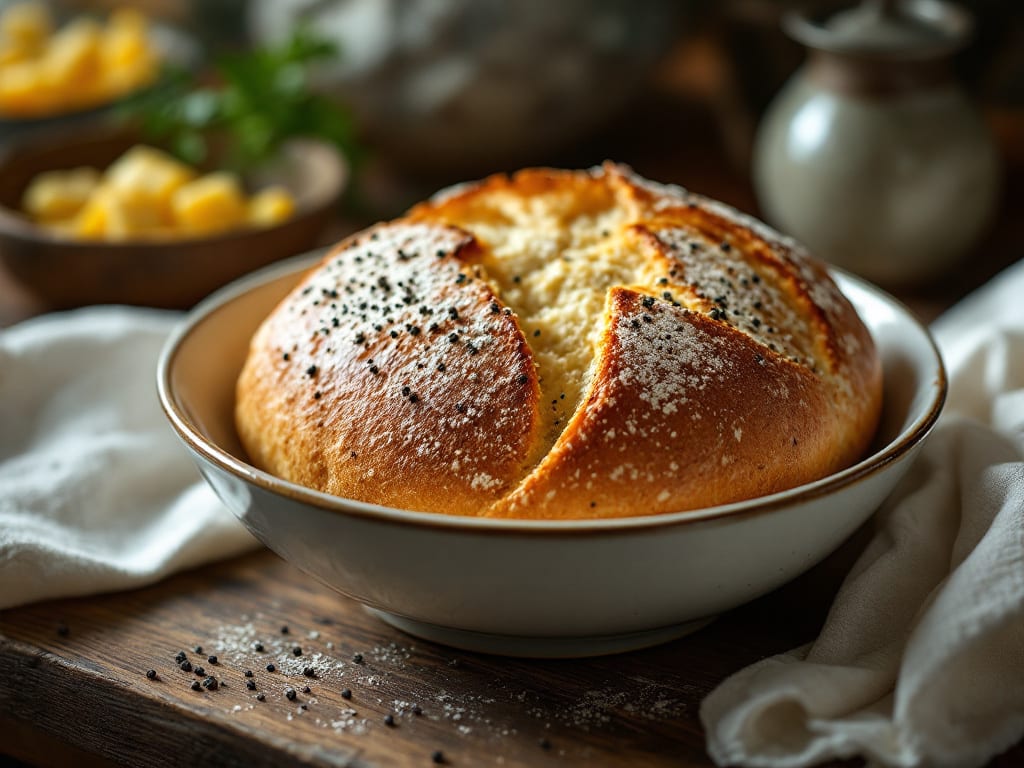
This Algerian bread recipe delivers the flaky crust and aromatic spice harmony that defines traditional khobz—perfect for breaking with olive oil and za’atar. The secret lies in a slow fermentation process that develops deep flavor while creating those signature air pockets.
I’ve perfected this method after years of experimenting with Algerian baking techniques, ensuring every loaf rises with a tender crumb and crisp exterior.
The dough begins with simple ingredients—flour, water, yeast, and a touch of sugar—but the magic happens during the two-hour proofing at room temperature. This extended rest allows gluten to relax and flavors to meld, resulting in a bread that’s far more complex than store-bought versions.
For an authentic touch, I recommend shaping the dough into a round loaf or free-form batard before baking in a preheated Dutch oven for that signature oven-spring.
By the time it emerges from the oven, your bread will have a golden, crackly crust with a soft, pillowy interior—ideal for dipping in olive oil or pairing with spiced lamb tagines.
The aroma alone will transport you to the bustling markets of Algiers, where fresh khobz is a staple of daily life. This recipe scales beautifully, so whether you’re feeding a family or preparing for a meal, you’ll have perfectly flaky bread every time.
For those with traditional wood-fired ovens, the high heat will give you even more dramatic color and flavor. If you’re baking at home, a cast-iron skillet or Dutch oven works just as well.
Serve warm with za’atar, garlic butter, or simply enjoy the bread on its own—it’s that good. Let’s get started on this timeless recipe.
Ingredients for algerian bread
Four cups flour, warm water, and a touch of spice—everything you need for authentic Algerian khobz.
| Ingredient | Amount | Notes |
|---|---|---|
| All-Purpose Flour 🌾 | 4 cups | High-protein for better structure |
| Active Dry Yeast 🍞 | ¼ tsp | Fresh yeast preferred if available |
| Granulated Sugar 🍚 | 1 tbsp | Feeds yeast for activation |
| Warm Water 💧 | 1 ¼ cups | 105-110°F for yeast activation |
| Extra-Virgin Olive Oil 🫒 | 2 tbsp | High-quality for flavor |
| Salt 🧂 | 1 ½ tsp | Kosher or sea salt preferred |
| Ground Cumin 🌿 | ½ tsp | Toasted for deeper aroma |
| Ground Coriander 🌿 | ½ tsp | Freshly ground if possible |
| Ground Aniseeds 🌾 | ¼ tsp | Substitute fennel seeds if unavailable |
| Semolina Flour 🌾 | ½ cup | For dusting and crust texture |
| Cornmeal 🌽 | ¼ cup | For Dutch oven prep |
The flour is non-negotiable here. King Arthur or Caputo bread flour gives the best structure for those signature air pockets, but all-purpose works fine if that’s what you have. For the spices, Penzeys or Spicewalla are my go-tos—they sell pre-ground cumin and coriander blends that are perfect for this. If you can’t find aniseeds, fennel seeds work just as well. The yeast should be fresh—if your packet says ‘best by’ is next week, grab a new one. For the olive oil, look for a fruity, peppery variety—it makes all the difference in the final flavor. The semolina is key for that crisp crust, so don’t skip it.
No cumin? Turmeric plus a pinch of cinnamon gives a similar warmth. Running low on aniseeds? Star anise powder at half the amount works in a pinch. The semolina can be swapped for all-purpose flour, but your crust won’t be quite as crisp. For the Dutch oven prep, cornmeal is ideal—it prevents sticking better than flour. If you don’t have one, a heavy cast-iron skillet with a lid works too. The dough is sticky, so wet your hands slightly when handling it. And trust me, the extra 20 minutes of proofing is worth it—patience here makes all the difference.
This dough keeps beautifully in the fridge for up to 24 hours if you want to prep ahead. Once baked, it’s best served warm, but slices well for 3 days at room temperature. For longer storage, wrap tightly in foil and freeze—it reheats perfectly in a 350°F oven for 10 minutes. I always make double batches because it disappears fast. The crust stays crisp for about 2 hours after baking, so enjoy it while it’s at its best.
Why You’ll Love This Recipe
- No Yeast Fuss: I swear by this dough—just flour, sugar, yeast, and water. Mix it, let it rise once, and you’re done. No kneading, no waiting hours. Honestly, my lazy Sundays thank me every time.
- Olive Oil Magic: That rich, fruity olive oil baked into the crust? It’s what makes this bread ridiculously good. The outside gets crisp, the inside stays soft—like a hug from my nonna’s kitchen, but with half the effort.
- Breakfast to Brunch: Slather it with jam for a quick breakfast or tear it over salads for dinner. Freezes like a dream too, so I always have a stash. Between us, I’ve fed a crowd with just this recipe and a bowl of olives.
- Pantry Staple Power: Five ingredients, all of which you already own. No specialty trips, no last-minute panic. And leftovers? Toss them in a bag—they’ll stay fresh for days. My wallet and my fridge both approve.
Step-by-step instructions for Algerian bread
Here’s how to create that signature flaky crust and aromatic spice blend.
Activate the Yeast and Mix the Dough
In a large mixing bowl, combine the 1.25 cups warm water with the 1 tbsp granulated sugar and 0.25 tsp active dry yeast. Let this sit for 5-10 minutes until you see bubbles form on the surface—this means your yeast is active. If it doesn’t bubble, your yeast might be dead, and you’ll need to start over.
Next, add the 4 cups all-purpose flour, 1.5 tsp salt, 0.5 tsp ground cumin, 0.5 tsp ground coriander, and 0.25 tsp ground aniseeds to the bowl. Mix these dry ingredients together until fully combined. Then, pour in the 2 tbsp extra-virgin olive oil and stir until the mixture begins to come together. The dough will be shaggy at first, but that’s okay—this is normal.
Once the dough starts pulling away from the sides of the bowl, use your hands to knead it on a lightly floured surface for 8-10 minutes. You’re looking for a smooth, elastic dough that springs back when poked. If it feels too sticky, add a little more of the all-purpose flour, but don’t overdo it—you want to keep the dough moist for that flaky texture.
First Rise and Prepare for Shaping
Lightly coat a large bowl with a bit of olive oil, then place the dough inside. Cover the bowl with a damp kitchen towel or plastic wrap and let it rise in a warm place for 1-2 hours, or until it has roughly doubled in size. You’ll know it’s ready when you poke it gently and the indentation stays put.
While the dough is rising, preheat your oven to 425°F. Sprinkle the 0.25 cup cornmeal evenly into the bottom of a Dutch oven or heavy oven-safe pot. This creates a crispy base for your bread. If you don’t have a Dutch oven, use a heavy skillet with a lid—just make sure it can handle high heat.
Once the dough has risen, punch it down gently to release any air bubbles. Divide it into 4 equal pieces and roll each piece into a smooth ball. These will be your individual loaves. Dust a clean surface with 0.5 cup semolina flour to prevent sticking as you shape them.
Shape and Bake for a Flaky Crust
Roll each dough ball into a 12-inch long rope, then shape it into a loose spiral or coil. Place each loaf seam-side down into the cornmeal-coated Dutch oven. Cover the pot with its lid and bake in the preheated oven for 20 minutes. This initial baking helps the dough expand and develop structure.
After 20 minutes, remove the lid and continue baking for another 15-20 minutes until the bread is deep golden brown and sounds hollow when you tap the bottom. The crust should be crisp and flaky, with a beautiful aroma wafting from the oven. If the top browns too quickly, tent it loosely with foil to prevent burning.
For extra flakiness, you can brush the tops of the loaves with a bit of melted butter or olive oil after they come out of the oven. Let them cool on a wire rack for 10 minutes before slicing—this allows the bread to set and makes it easier to handle. Serve warm with olive oil, garlic, or your favorite dipping sauce.
Pro Tips For Making Algerian Bread
- Test Yeast First: Skip the guesswork—mix a pinch of yeast with warm water and sugar, then wait 5-10 minutes for bubbles. If it’s sluggish, your batch will fight you later, and no one wants a sad, flat loaf.
- Use Olive Oil Generously: Algerian bread isn’t just dough—it’s a flavor bomb. Drizzle that extra-virgin olive oil after kneading and let it soak in for 10 minutes before shaping. The crust will shine, and the crumb won’t dry out.
- Knead Until Silky: I used to stop when it looked “done,” but this dough needs to be smooth, like wet silk. Hit that 8-10 minute mark (by hand) or 5-6 minutes (with a mixer) to avoid a dense, chewy loaf. Your arms will hate you, but the bread won’t.
- Shape Like a Pro: Roll the dough into a log, then fold the ends toward the center and pinch tightly—this traps steam and keeps the bread from cracking open while baking. No fancy twists needed, just a clean, tight seal.
Dietary considerations for algerian bread
Gluten-Free Adaptation
For a gluten-free version, replace the 4 cups all-purpose flour with a 1:1 gluten-free flour blend like Bob’s Red Mill or King Arthur. Add 1 extra tablespoon of xanthan gum to mimic gluten’s elasticity. The dough will be stickier, so wet your hands slightly when handling.
Proofing time may extend to 2-3 hours due to reduced gluten structure. Bake in the same Dutch oven at 425°F but check for doneness at 15 minutes—gluten-free bread browns faster. 🌾
Low-Carb/Keto Version
Transform this into a keto-friendly loaf by swapping flour for almond flour and coconut flour (3:1 ratio). Use 2 extra eggs as a binder and reduce yeast to 0.125 tsp.
The dough will be dense, so shape into a flat disc and bake uncovered for 25-30 minutes at 375°F. Expect a denser texture—think focaccia rather than traditional khobz. Serve with sugar-free za’atar or garlic butter. 🥑
Dairy-Free Options
This recipe is naturally dairy-free, but if you’re using butter for brushing, substitute with olive oil or melted coconut oil. For extra richness, add 1 tablespoon nutritional yeast to the dough—it adds a cheesy depth without dairy.
The olive oil in the recipe already provides ample moisture, so no adjustments are needed elsewhere. Always check spice blends for dairy additives, especially if using pre-mixed za’atar. ✨
Nut-Free Allergies
Standard ingredients are nut-free, but if you’re avoiding all nuts (including almond flour in keto versions), use sunflower seed flour instead. For binding, add 1 extra egg white to compensate for lost structure.
The flavor remains neutral, so the bread’s signature spices shine through. Always verify that your cornmeal and semolina are processed in nut-free facilities if allergies are severe. 🌻
Soy-Free Considerations
This recipe is inherently soy-free, but if you’re using store-bought yeast (some brands use soy-based additives), opt for Red Star Platinum Yeast or Saf-Instant Yeast, both of which are soy-free.
Double-check all spice blends—some commercial za’atar mixes contain soy lecithin. For extra assurance, toast your own spices at home using a dry skillet. The bread’s flavor profile remains unchanged. 🌿
Storage Adjustments
Gluten-free and low-carb versions stale faster due to their dense texture. Store in an airtight container with a paper towel to retain moisture. Reheat gluten-free slices at 350°F for 5-7 minutes for crispiness.
Keto bread reheats best in a toaster oven at 300°F for 3-4 minutes. Freeze all adapted versions in 1-slice portions for easy grab-and-reheat meals. ❄️
Nutrition facts
Frequently asked questions
Why does Algerian bread have those signature spices?
The warm spices like cumin, coriander, and aniseeds are traditional in Algerian cuisine, creating that distinctive aromatic profile. These spices not only add flavor but also complement the bread’s crust beautifully when paired with olive oil or za’atar. The blend reflects North African culinary traditions where spices are often used to enhance everyday staples.
Can I make this bread without a Dutch oven?
Use a heavy cast-iron skillet or even a baking stone. For best results, preheat your alternative vessel for 30 minutes at 425°F to mimic the Dutch oven’s heat retention. Sprinkle cornmeal on the bottom to create that crispy base. The bread will still develop great oven-spring, though the crust might be slightly less dramatic.
What’s the best way to store leftover Algerian bread?
Wrap cooled loaves tightly in plastic wrap or foil and store at room temperature for 2-3 days. For longer storage, freeze slices in an airtight container for up to 1 month. To revive, reheat frozen slices in a 350°F oven for 5-7 minutes until crisp again. The crust stays best when reheated this way.
Why did my bread turn out dense instead of flaky?
Dense bread often results from over-kneading or insufficient proofing time. The dough should be kneaded just until smooth (8-10 minutes) and proofed until doubled (1-2 hours). Also ensure your yeast was active—if it didn’t bubble in warm water, it was likely dead. For extra flakiness, try shaping the dough into a spiral before baking.
Can I substitute any of the spices?
Yes! If you’re missing aniseeds, use fennel seeds or star anise powder at half the amount. For cumin, try turmeric plus cinnamon for warmth. The coriander can be omitted if needed, but it adds a citrusy brightness that complements the other flavors. Always toast whole spices before grinding for deeper aroma.

- Breaded Cheese Balls Recipe: Crispy Golden Bites With Gooey Centers - November 29, 2026
- Minced Meat Spaghetti Recipe: One-Pan Italian Comfort with Rich Ragù - November 29, 2026
- Aki’s Guava Chiffon Cake Recipe: Light, Airy Layers with Tropical Flavor Burst - November 29, 2026