
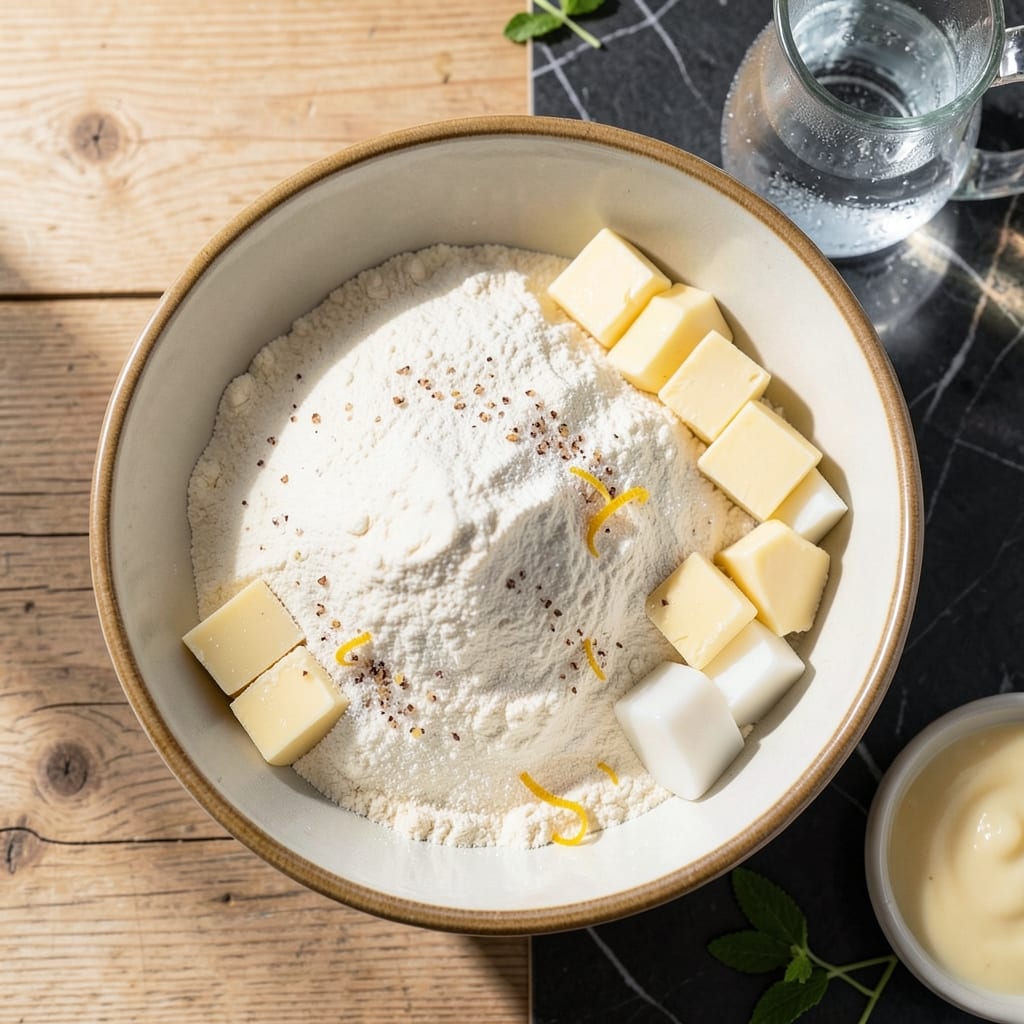
Nana Mae taught me that the perfect pie crust requires both butter for flavor and shortening for structure. This dual-fat approach creates flaky layers that shatter with each bite.
Combining these fats with ice water and minimal handling prevents gluten development, which keeps the crust tender. The result is a golden, flaky foundation that elevates any pie filling.
After years of testing, I’ve refined this method to ensure consistent results every time. Resting the dough for 30 minutes allows the fats to chill, making it easier to roll out without toughness.
This technique works for sweet and savory pies alike. The dual-fat magic delivers the texture every baker strives for.
Ingredients for Pie Crust Recipe Using Butter and Shortening
Butter and shortening team up for the flakiest crust you have ever baked.
| Ingredient | Amount | Notes |
|---|---|---|
| All-Purpose Flour 🌾 | 2 ½ cups | Spoon and level for accuracy |
| Unsalted Butter 🧈 | ½ cup | Chilled and cubed |
| Vegetable Shortening 🧈 | ½ cup | Chilled, such as Crisco |
| Fine Sea Salt 🧂 | 1 tsp | Dissolved in ice water |
| Ice Water 💧 | ½ cup | Plus more as needed |
| Granulated Sugar 🍚 | 1 tbsp | Optional for sweet crusts |
| White Vinegar 🍷 | 1 tbsp | For tenderness |
The fats are the foundation here. Use high-quality unsalted butter (I prefer Plugra or Kerrygold) for superior flavor. For shortening, Crisco is the standard—it has the right melting point for flakiness. Always chill both fats before use, and keep them cold throughout the process. The flour should be all-purpose; avoid bread flour as it develops too much gluten.
No shortening? Lard works as a substitute but isn’t vegetarian. For a butter-only crust, increase butter to 1 cup and accept slightly less flakiness. Vodka (1-2 tbsp) can replace some ice water for extra tenderness. The vinegar is optional but helps prevent toughness. The sugar is only needed for sweet pies like apple or cherry.
The dough keeps in the fridge for 2 days or freezes for 3 months. For best results, wrap tightly in plastic. Let chilled dough sit at room temperature for 10 minutes before rolling to prevent cracking. Always rest the dough for 30 minutes before using.
Why You’ll Love This Recipe
- No-Fuss Mixing: I just pulse the cold butter, shortening, and flour in my food processor—no overworking, no stress. Honestly, it comes together faster than my morning coffee.
- Buttery Layers: That combo of butter for flavor and shortening for flakiness? I’ll be real: it’s the reason my apple pie disappears first at potlucks.
- Freezer Friendly: I roll out extra dough, freeze it in discs, and boom—homemade pie crust on demand for last-minute desserts or savory tarts.
- Budget Stretch: All-purpose flour and a little shortening keep costs low, and one batch makes enough for a double-crust pie or two single crusts. Between us, it’s my secret to fancy desserts without the price tag.
Step-by-Step Instructions for Pie Crust Using Butter and Shortening
This method ensures a flaky, tender crust with the best of both fats for perfect texture.
Step 1: Combine Dry Ingredients and Chill Fats
In a large bowl, whisk together the 2.5 cups all-purpose flour, 1 tbsp granulated sugar, and 1 tsp fine sea salt until evenly distributed. This ensures the salt and sugar are well incorporated before the fats are added.
Place the 0.5 cup unsalted butter (chilled and cubed) and 0.5 cup vegetable shortening (chilled) in the freezer for 10 minutes while you prepare the rest. Keeping the fats ice-cold prevents them from melting prematurely, which is crucial for flakiness.
Step 2: Cut Fats into Flour Until Pea-Sized
Add the chilled unsalted butter and vegetable shortening to the flour mixture. Using a pastry cutter or your fingers, work the fats into the flour until the mixture resembles coarse crumbs with pea-sized pieces of fat visible.
This step is critical—you want visible pieces of fat remaining. These create the flaky layers in your crust as they melt during baking. Avoid overworking the mixture, as this can lead to a tough crust.
Step 3: Add Liquid Mixture Gradually
In a small bowl, combine the 0.5 cup ice water with the 1 tbsp white vinegar. The vinegar tenderizes the gluten, resulting in a more delicate crust. Stir in the fine sea salt until fully dissolved.
Add the liquid mixture to the flour-fat mixture 1 tablespoon at a time, gently tossing with a fork until the dough just begins to come together. You may not need all the liquid—stop as soon as the dough holds when pressed. This prevents overhydration, which can make the crust tough.
Step 4: Form and Chill the Dough
Turn the dough out onto a lightly floured surface and gently press it into a cohesive ball. Divide it into two equal portions and flatten each into a 1-inch thick disc. Wrap each disc tightly in plastic wrap.
Refrigerate the dough for at least 1 hour (or up to 2 days). Chilling relaxes the gluten and solidifies the fats, making the dough easier to roll out and ensuring a flaky texture. This step is non-negotiable for the best results.
Step 5: Roll and Fit the Crust
On a floured surface, roll one disc of dough to a 12-inch circle, about ⅛-inch thick. Work quickly to prevent the dough from warming up. If it starts to soften, return it to the refrigerator for 10 minutes before continuing.
Transfer the rolled dough to a pie dish, pressing it gently into the bottom and sides. Trim the edges, leaving a ½-inch overhang. Fold the overhang under and crimp as desired. Chill the fitted crust for 30 minutes before blind baking or filling to prevent shrinking.
Pro Tips For Making Pie Crust Recipe Using Butter And Shortening
- Chill the Dough: After mixing, let the dough rest in the fridge for at least 30 minutes—I learned this the hard way after my first few crusts shrunk in the pan.
- Use Ice-Cold Water: Measure your water, then add ice cubes to it and let it sit for 5 minutes before using. Sounds weird, but it keeps the butter and shortening from melting prematurely.
- Cut Fat Evenly: Aim for pea-sized crumbs when cutting the butter and shortening into the flour—any larger and you’ll get uneven layers, any smaller and the crust turns out tough.
- Skip the Overworking: Mix just until the dough comes together, even if it looks a little shaggy. I was skeptical until I tried it, but overworking makes the crust chewy instead of flaky.
Storing and Reheating This Recipe
Refrigerator Storage
After shaping, wrap your dough discs tightly in plastic wrap or place in airtight containers. This prevents the dough from drying out. Store in the fridge for up to 2 days. I always label mine with the date to keep track. ❄️
Freezer Storage
For longer storage, freeze wrapped dough discs for up to 3 months. Use freezer-safe bags or containers to prevent freezer burn. David swears by Central Market’s freezer bags for this. Thaw overnight in the fridge before using.
Room Temperature Rest
Let chilled dough sit at room temperature for 10 minutes before rolling. This makes it more pliable and prevents cracking. I learned this trick working in Asheville’s farm-to-table kitchens.
Baked Crust Storage
Store cooled, baked crusts in airtight containers at room temperature for up to 3 days. For longer storage, freeze for up to 1 month. Reheat in a 350°F oven for 5-10 minutes to restore crispness.
Pre-Baked Shells
If blind-baking, let the shell cool completely before storing. This prevents condensation from making the crust soggy. I always cool mine on a wire rack for even air circulation.
Nutrition Facts
Frequently Asked Questions
Why use both butter and shortening?
Butter adds rich flavor while shortening creates superior flakiness. Together, they balance taste and texture perfectly.
Can I substitute lard for shortening?
Yes, lard works well and may even boost flakiness. Use the same amount and ensure it’s well-chilled before mixing.
How do I prevent a tough crust?
Avoid overworking the dough. Use ice water, minimal handling, and chill thoroughly for a tender result.
What if my dough cracks while rolling?
Let it warm up for 10 minutes at room temperature. Press cracks together gently and continue rolling.

- Potato Candy Recipe 1933: Vintage Peanut Butter Roll Delight - October 30, 2026
- Potato Chip Cookie Recipe With Pecans: Buttery Crunch Meets Nutty Richness - October 30, 2026
- Potato Patty Recipe No Egg: Crispy Edges Without the Binder - October 30, 2026