
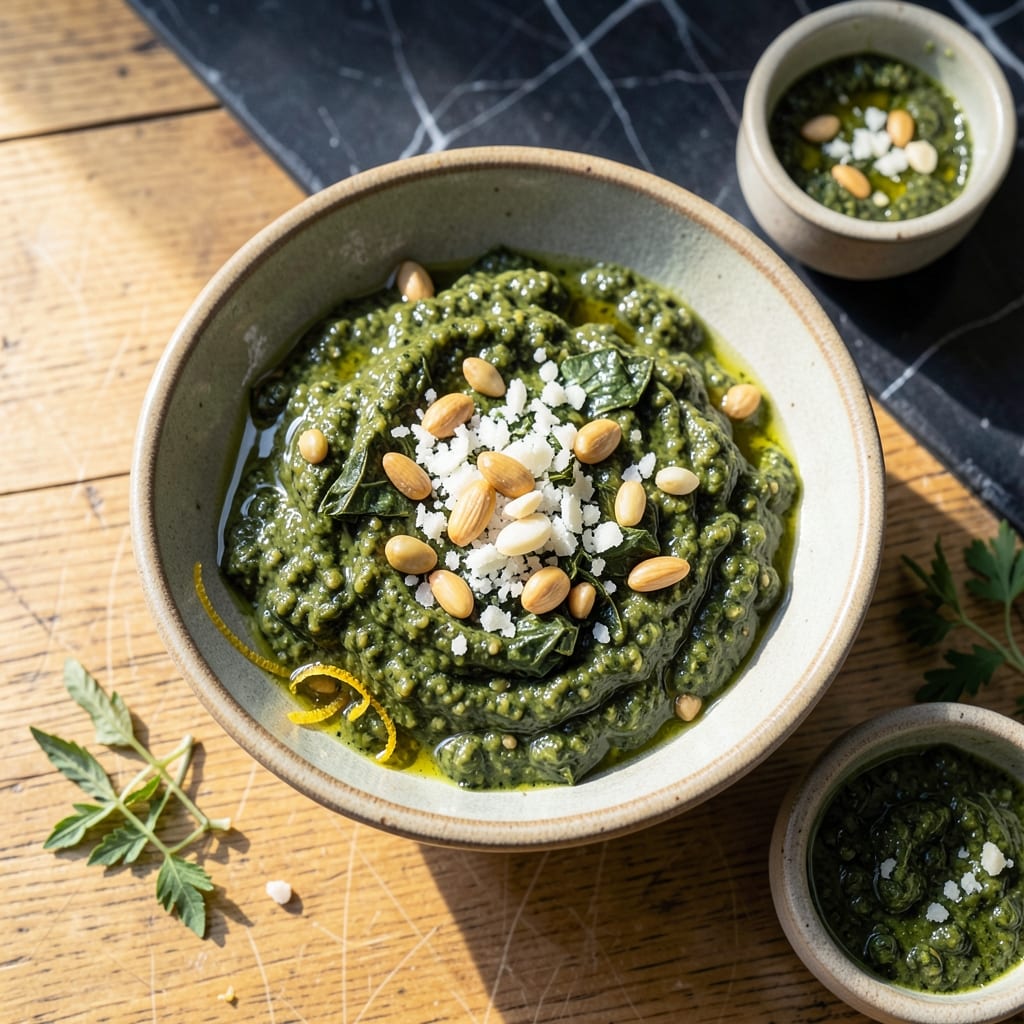
This pesto delivers the classic herb-infused creaminess you expect, using dried basil for convenience without sacrificing flavor depth. The key lies in rehydrating the dried leaves properly to restore their aromatic qualities.
Unlike fresh pesto versions, this recipe maintains its vibrant color and rich taste for days in the fridge. The dried basil absorbs the garlic, nuts, and cheese flavors beautifully during blending.
You’ll achieve a smooth, spreadable sauce perfect for pasta, sandwiches, or as a marinade. The texture holds up better than fresh pesto when heated.
Make a batch to keep on hand for quick meals. It stays fresh for up to a week when stored properly in an airtight container.
Ingredients for Pesto Sauce Recipe with Dried Basil
Nine ingredients transform dried basil into a vibrant, spreadable pesto with lasting freshness.
| Ingredient | Amount | Notes |
|---|---|---|
| Dried Basil Leaves 🌿 | ½ cup | Rehydrated in warm water |
| Pine Nuts 🥜 | ½ cup | Toasted for nutty depth |
| Parmesan Cheese 🧀 | ¾ cup | Freshly grated from wedge |
| Garlic Cloves 🧄 | 3 cloves | Peeled, roughly chopped |
| Extra-Virgin Olive Oil 🫒 | ¾ cup | High-quality, fruity finish |
| Lemon Juice 🍋 | 1 tbsp | Freshly squeezed for brightness |
| Sea Salt 🧂 | ½ tsp | Fine grain for even distribution |
| Black Pepper 🌶️ | ¼ tsp | Freshly ground for pungency |
| Pecorino Romano Cheese 🧀 | ¼ cup | Optional for sharper flavor |
The dried basil must be rehydrated properly—cover with warm water for 10 minutes, then drain and squeeze dry. Parmigiano-Reggiano is non-negotiable for authentic flavor; Whole Foods or Trader Joe’s carry quality wedges. Pine nuts from Costco offer the best value, but check the expiration date—old nuts turn rancid quickly. Toast them lightly to enhance their buttery richness before blending.
Out of pine nuts? Walnuts or raw cashews at one-to-one ratio work beautifully. No Parmesan? Pecorino Romano adds a sharper bite (use less salt if substituting). Short on lemon? A splash of white wine vinegar balances the richness. The olive oil should be extra-virgin—this isn’t the time for neutral oils. If your pesto seems thick, thin with a tablespoon of warm water (rehydration liquid works too).
Store in an airtight container with a thin olive oil layer on top to prevent browning. Keeps 1 week refrigerated or 3 months frozen in ice cube trays. The dried basil version actually holds up better than fresh when reheated—perfect for hot pasta or pizza.
Why You’ll Love This Recipe
- Pantry Hero: I can make this anytime since dried basil keeps forever in my cupboard.
- Rich and Nutty: The pine nuts and parmesan blend into this ridiculously good, creamy texture.
- Endless Uses: I toss it with pasta, spread it on sandwiches, and even mix it into scrambled eggs.
- Budget Stretch: A little goes a long way—this small batch flavors multiple meals for the week.
Step-by-Step Instructions for Pesto Sauce With Dried Basil
This method transforms dried basil into a vibrant, flavorful pesto that rivals fresh.
Step 1: Rehydrate the Dried Basil Leaves
Place the 0.5 cup dried basil leaves in a small bowl and cover with 1 cup of warm water. Let them soak for 10-15 minutes until the leaves are fully pliable and have regained their deep green color. This rehydration step is crucial—it restores the texture and aroma that dried herbs lack.
Drain the basil thoroughly in a fine-mesh sieve, pressing gently to remove all excess water. You want the leaves damp but not dripping, as excess moisture will dilute the pesto. Pat with a clean towel if needed to ensure they’re just slightly moist.
Step 2: Toast the Pine Nuts
In a dry skillet over medium-low heat, toast the 0.5 cup pine nuts for 3-5 minutes, stirring frequently. Watch for them to turn a light golden brown and release a nutty aroma. Pine nuts burn quickly, so stay attentive—once they start browning, they’re done.
Immediately transfer the pine nuts to a cool plate to stop the cooking process. Toasting deepens their flavor and adds a subtle crunch to the pesto, balancing the creaminess of the cheese. Let them cool completely before blending to prevent the oil from heating and altering the pesto’s texture.
Step 3: Blend the Base Ingredients
In a food processor, combine the rehydrated dried basil leaves, toasted pine nuts, 3 cloves garlic cloves, 0.75 cup Parmesan Cheese, and 0.25 cup Pecorino Romano Cheese. Pulse until the mixture resembles a coarse paste, about 20-30 seconds. Stop and scrape down the sides of the bowl as needed to ensure even blending.
The garlic should be finely minced, and the nuts and cheeses should be broken down into small, uniform pieces. Avoid over-processing at this stage—you want texture, not a smooth purée. The combination of Parmesan and Pecorino Romano adds depth, with the latter contributing a sharper, saltier note.
Step 4: Emulsify with Olive Oil and Finish
With the food processor running, slowly drizzle in the 0.75 cup extra-virgin olive oil through the feed tube. This gradual addition helps create a stable emulsion, giving the pesto a creamy, cohesive texture. Process for 30-45 seconds until the mixture is smooth but still has some visible flecks of basil and nuts.
Add the 1 tbsp lemon juice, 0.5 tsp sea salt, and 0.25 tsp black pepper, then pulse a few more times to incorporate. The lemon juice brightens the flavors and cuts through the richness of the cheese and oil, while the salt and pepper enhance the overall balance.
Step 5: Adjust and Rest Before Serving
Taste the pesto and adjust the seasoning if needed. If it’s too thick, thin it with a small amount of water or additional extra-virgin olive oil, 1 tablespoon at a time, until it reaches your desired consistency. For a sharper flavor, add a bit more Pecorino Romano Cheese.
Transfer the pesto to a clean jar or bowl and let it rest at room temperature for 10-15 minutes before serving. This allows the flavors to meld together fully. Store any leftovers in an airtight container in the refrigerator for up to 5 days, with a thin layer of olive oil on top to preserve freshness.
Pro Tips For Making Pesto Sauce Recipe With Dried Basil
- Rehydrate the Basil: Soak dried basil in warm water for 10 minutes before blending—I learned this the hard way after ending up with a grainy, bitter paste. Drain well and squeeze out excess water to avoid a watery pesto.
- Toast the Pine Nuts: Toss pine nuts in a dry pan over medium heat for 2-3 minutes until golden. Sounds weird, but it works: this brings out their natural oils and adds depth to the sauce.
- Grate Your Parmesan: Skip pre-shredded cheese and grate a fresh block of Parmesan yourself—it melts better and doesn’t have the anti-caking agents that make pesto clumpy.
- Pulse, Don’t Blend: Use short pulses in the food processor instead of continuous blending to keep some texture in your pesto. After burning out two motors, I finally figured out that over-processing turns it into a sad, oily paste.
Best Sauces and Condiments for These Flavors
Classic Pairings
This sauce transforms simple spaghetti or linguine into a restaurant-quality dish. Toss 1 lb cooked pasta with ½ cup pesto and a splash of pasta water for a creamy coating. I always reserve that starchy water—it’s the secret to perfect consistency. 💡
Sandwich Spread
A thin layer on ciabatta or focaccia elevates any sandwich. Pair with mozzarella, tomato, and prosciutto for a Caprese-style treat. The pesto’s oiliness prevents soggy bread, even when made ahead.
Dipping Sauces
Thin with 1-2 tbsp olive oil for a veggie dip or bread spread. It’s fantastic with crudités, garlic bread, or even grilled shrimp. I serve it alongside warm sourdough for effortless entertaining.
Protein Topper
Drizzle over grilled chicken, salmon, or steak for an herby finish. The acidity cuts through rich meats beautifully. For fish, I add lemon zest to brighten it further.
Soup Enhancer
Swirl 1 tbsp into minestrone or tomato soup for depth. It adds freshness to canned soups too—I stir it into lentil or white bean varieties for a quick upgrade.
Pizza Base
Replace tomato sauce with a thin pesto layer before adding toppings. It pairs especially well with goat cheese, roasted veggies, or sun-dried tomatoes. Bake at 425°F as usual. ✨
Nutrition Facts
Frequently Asked Questions
Can I use fresh basil instead?
Yes, but reduce the amount to 1 cup packed leaves and skip rehydration. Fresh basil has more moisture, so you may need less oil.
Why does my pesto turn brown?
Exposure to air oxidizes the basil. Always store with a thin olive oil layer on top in an airtight container. This blocks air contact.
Can I substitute another nut?
Walnuts or cashews work well at a 1:1 ratio. Toast them first for best flavor. Toasting enhances their natural oils.
How long does it last in the fridge?
Properly stored with oil on top, it stays fresh for 5-7 days. For longer storage, freeze in ice cube trays for 3 months.

- Potato Candy Recipe 1933: Vintage Peanut Butter Roll Delight - October 30, 2026
- Potato Chip Cookie Recipe With Pecans: Buttery Crunch Meets Nutty Richness - October 30, 2026
- Potato Patty Recipe No Egg: Crispy Edges Without the Binder - October 30, 2026