
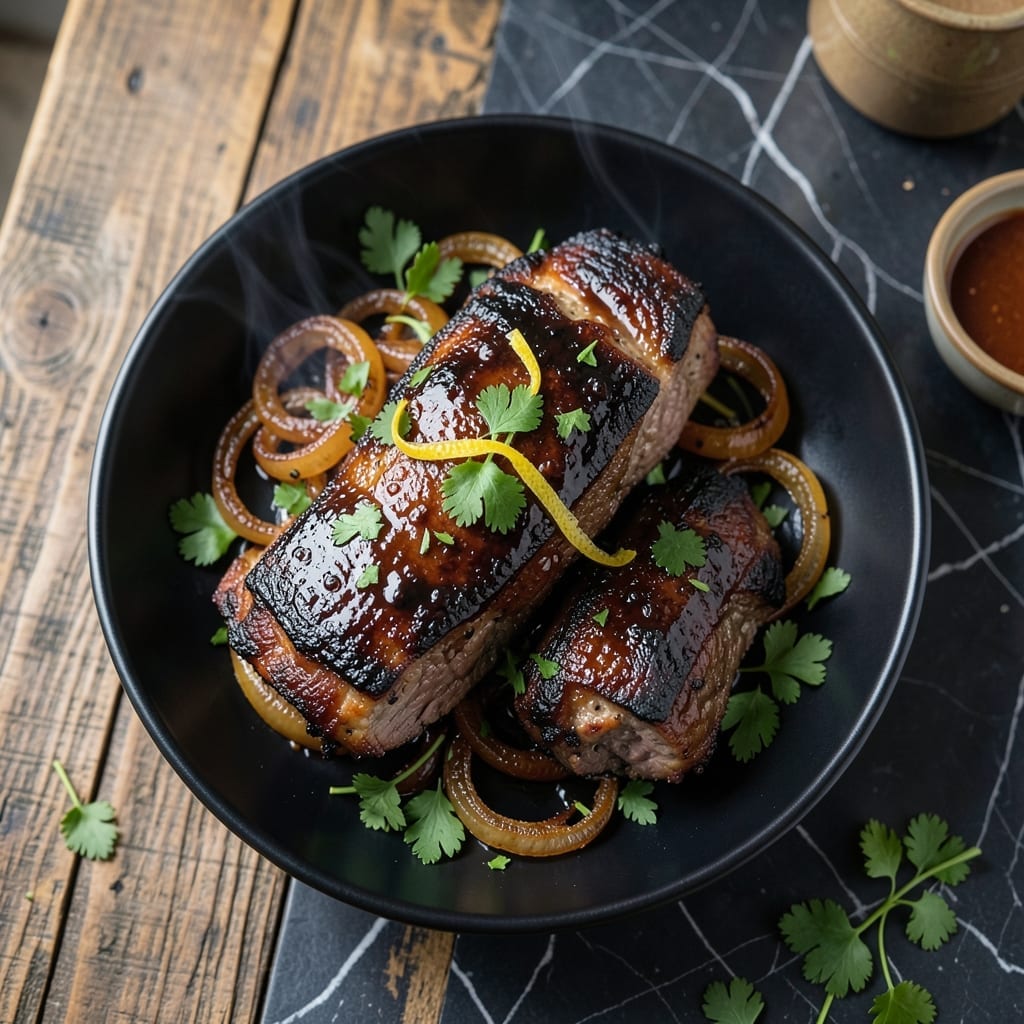
Low and slow smoking transforms beef cheeks into something magical. I learned this technique helping Nana Mae at her diner, where tough cuts became tender masterpieces.
This method coaxes the meat into melt-in-your-mouth perfection over hours of gentle smoking. The key is patience—letting the connective tissue break down while the smoky flavor penetrates deep.
You’ll end up with beef so tender it falls apart at the touch of a fork, with a rich, caramelized bark that locks in juices. David declared this his favorite after the first bite.
Serve these on soft buns with tangy BBQ sauce, or alongside classic sides. The wait is long, but the payoff is unforgettable.
Ingredients for Bbq Beef Cheeks Recipe Smoked
Pantry staples plus beef cheeks make this dish unforgettable. Simple but bold ingredients.
| Ingredient | Amount | Notes |
|---|---|---|
| Beef Cheeks 🥩 | 2 ½ lb | Trimmed of excess fat |
| Kosher Salt 🧂 | 2 tbsp | Diamond Crystal preferred |
| Black Pepper 🌶️ | 1 tbsp | Freshly cracked |
| Garlic Powder 🧄 | 1 tbsp | Not garlic salt |
| Onion Powder 🧅 | 1 tbsp | For depth of flavor |
| Smoked Paprika 🌶️ | 1 tbsp | Sweet or hot variety |
| Brown Sugar 🍚 | ½ cup | Light or dark |
| Apple Cider Vinegar 🍏 | ¼ cup | For tang and tenderness |
| Worcestershire Sauce 💧 | ¼ cup | Anchovy-free if preferred |
| Olive Oil 🫒 | 2 tbsp | For binding rub |
| Hickory Wood Chips 🪵 | 2 cups | Soaked in water 1 hour |
| BBQ Sauce 🍅 | 1 ½ cups | For serving and glazing |
| Beef Broth 🥣 | 1 cup | For spritzing during smoke |
The beef cheeks are the star here. Ask your butcher—they often have them tucked away. Look for even-sized pieces (about 4-6 oz each) without too much connective tissue. Costco sometimes carries them frozen, which works just as well. If you’re buying fresh, use within 2 days or freeze for up to 6 months. The fat cap can stay on—it renders down beautifully during the smoke.
No hickory chips? Pecan or apple wood give great flavor too. Swap brown sugar for maple syrup at half the amount if you want a deeper taste. Apple cider vinegar can be rice vinegar in a pinch, but the former’s fruitiness really complements the beef. If you’re avoiding anchovies, check your Worcestershire labels—Annie’s makes a great anchovy-free version.
The rub keeps in an airtight container for 1 month (trust me, you’ll want to make extra). Smoked beef cheeks freeze beautifully—wrap tightly and they’ll stay good for 3 months. Thaw overnight in the fridge before reheating gently with extra sauce.
Why You’ll Love This Recipe
- Set and Forget: I rub the cheeks with salt, pepper, and powders, then let the smoker do all the work for hours.
- Feeds the Gang: Honestly, I smoke a big batch and it stretches for tacos, sandwiches, or straight from the pan.
- Budget Win: Beef cheeks cost a fraction of brisket but give the same rich, satisfying bite.
Step-by-Step Instructions for BBQ Beef Cheeks Smoked
This method delivers fall-apart tender beef cheeks with smoky depth and a perfect bark.
Step 1: Season the Beef Cheeks Generously
Pat the 2.5 lb Beef Cheeks dry with paper towels to ensure the rub adheres properly. In a bowl, combine the 2 tbsp Kosher Salt, 1 tbsp Black Pepper, 1 tbsp Garlic Powder, 1 tbsp Onion Powder, 1 tbsp Smoked Paprika, and 0.5 cup Brown Sugar. Stir until evenly blended.
Rub the mixture all over the beef cheeks, pressing firmly so it sticks. The brown sugar will caramelize during smoking, creating a sweet, sticky bark. Drizzle the 2 tbsp Olive Oil over the seasoned beef and massage it in to help the rub bind.
Step 2: Smoke the Beef Cheeks Low and Slow
Preheat your smoker to 225°F using indirect heat. Add the 2 cups Hickory Wood Chips (soaked for 1 hour) to the fire for steady smoke. Place the beef cheeks directly on the grates, fat-side up, and smoke undisturbed for 3 hours.
After the first 3 hours, begin spritzing the beef cheeks every 45-60 minutes with the 1 cup Beef Broth. This keeps the surface moist and builds layers of flavor. You’ll notice the bark darkening as the smoke works its magic.
Step 3: Wrap and Continue Smoking
Once the beef cheeks reach an internal temperature of 165°F (about 4-5 hours in), wrap each piece tightly in butcher paper or foil. This step, called the Texas crutch, helps push through the stall while keeping the meat juicy.
Return the wrapped beef cheeks to the smoker and continue cooking until they reach 203-205°F internally, which usually takes another 2-3 hours. The beef should feel probe-tender, like butter, when tested with a meat thermometer.
Step 4: Rest and Serve with BBQ Sauce
Remove the beef cheeks from the smoker and let them rest wrapped in a cooler or warm oven for 1 hour. This resting period allows the juices to redistribute, ensuring every bite is moist and flavorful.
Unwrap the beef cheeks, shred or slice them, and toss with 1.5 cups BBQ Sauce for serving. Alternatively, serve the sauce on the side for dipping. The beef should be so tender it pulls apart effortlessly, with a rich, smoky flavor that’s perfectly balanced by the sweet and tangy sauce.
Pro Tips For Making Bbq Beef Cheeks Recipe Smoked
- Trim the Fat: I learned this the hard way—leave too much fat on beef cheeks and you’ll get a greasy, uneven smoke. Trim the excess, but keep a little marbling for flavor.
- Low and Slow: After burning a few batches, I finally figured out beef cheeks need 225°F-250°F for 6-8 hours to get tender without drying out.
- Season Overnight: Sounds weird, but it works: rub the cheeks with kosher salt, black pepper, garlic, and onion powder the night before so the flavors sink deep.
- Wrap at 165°F: My grandfather swore by this, and he was right: wrap the cheeks in foil when they hit 165°F internal to speed up the cook and lock in moisture.
Serving Suggestions for This Dish
Classic BBQ Presentation
Pile the shredded beef cheeks high on soft brioche buns from our Austin farmers market. The buttery texture holds up to the juices beautifully. I like to toast them lightly on the smoker for 2-3 minutes first for extra flavor. 💛
Southern-Style Plating
Serve on a wooden cutting board with pickled red onions and sliced jalapeños on the side. David always adds a sprinkle of chopped cilantro—his personal touch. The colors pop against the dark, smoky beef.
Family-Style Feast
For gatherings, present the beef cheeks in a cast iron skillet with tongs for self-serving. Keep warm BBQ sauce in a small slow cooker nearby. Emma and Jack love building their own sandwiches this way.
Restaurant-Worthy Garnish
A drizzle of reduced BBQ sauce on the plate with a dusting of smoked paprika elevates the presentation. Add a sprig of fresh rosemary for a touch of green. Simple but impressive.
Side Pairing
Classic cola slaw and smoked baked beans complete the meal. The tangy crunch cuts through the richness. I always make extra—the leftovers disappear fast at our house. 🔥
Nutrition Facts
Frequently Asked Questions
How long does it take to smoke beef cheeks?
Plan for 6-8 hours total at 225°F. The first 3-4 hours are unwrapped, then 2-3 hours wrapped until probe-tender.
Can I use a different wood for smoking?
Pecan or apple wood offer excellent flavor. Hickory provides a stronger smoke, while fruitwoods like cherry add a sweeter note.
Why wrap the beef cheeks during smoking?
Wrapping (the Texas crutch) helps push through the stall phase, speeds up cooking, and prevents the meat from drying out. It locks in moisture during the final stretch.
What if my beef cheeks aren’t tender after smoking?
If they’re not probe-tender at 203°F, keep smoking. Beef cheeks need time for collagen to break down. Never rush by increasing temperature.

- Bread Recipe For Bread Machine: Hands-Off Artisan Loaf With Perfect Rise - September 30, 2026
- BBQ Chicken Drumsticks Recipe Air Fryer: Smoky Char in Half the Time - September 30, 2026
- Korean BBQ Sauce Recipe Homemade: Sweet and Spicy Umami Glaze - September 30, 2026