
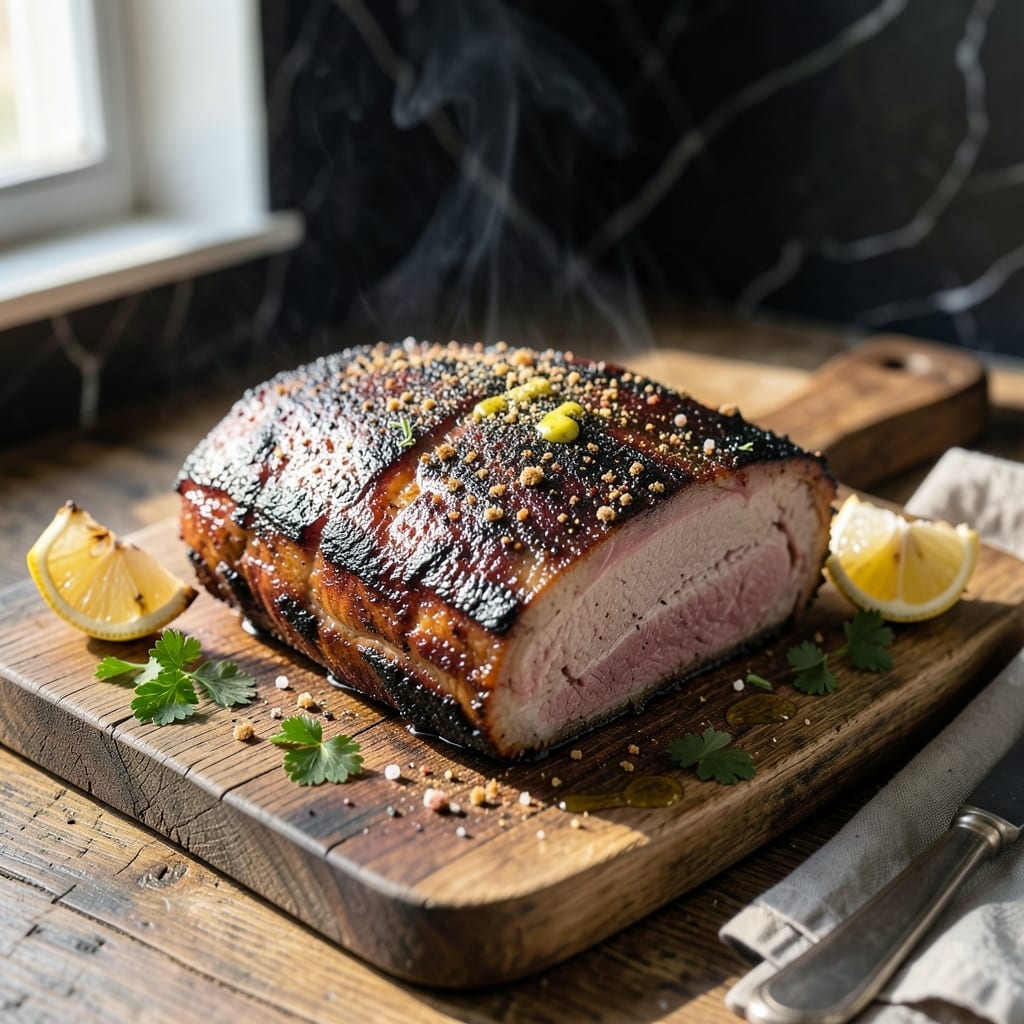
I’ve spent years chasing that perfect brisket moment—when the meat pulls apart with zero effort and the bark has just the right crunch. This method delivers that melt-in-your-mouth texture every time.
The secret is patience. A full packer brisket needs 12+ hours at 225°F on the smoker, with post oak or hickory wood for that classic BBQ flavor. Don’t rush it; the best things come to those who wait.
What you’re after is a deep mahogany bark outside and juicy, tender meat inside. Wrap it in butcher paper when it hits 165°F internal, then let it ride until it probes like butter at 203°F.
Rest it for at least an hour before slicing—this step is non-negotiable. Serve with pickles, white bread, and your favorite sauce.
Ingredients for Bbq Brisket Recipe Smoker
A full packer, bold rub, and wood smoke—this is brisket done right.
| Ingredient | Amount | Notes |
|---|---|---|
| Full Packer Brisket 🥩 | 12 lb | Untrimmed, with fat cap intact |
| Yellow Mustard 🟡 | ½ cup | Binder for rub to stick |
| Coarse Kosher Salt 🧂 | ½ cup | Diamond Crystal preferred for texture |
| Coarse Black Pepper 🌶️ | ½ cup | Freshly ground for best bark |
| Garlic Powder 🧄 | 2 tbsp | Not garlic salt substitution |
| Onion Powder 🧅 | 2 tbsp | Balances the rub blend |
| Paprika 🌶️ | 2 tbsp | Sweet or smoked variety |
| Brown Sugar 🫙 | ¼ cup | Light or dark works fine |
| Post Oak Wood Chunks 🪵 | 4 pieces | Or hickory for classic BBQ |
| Beef Broth 🥣 | 2 cups | For spritzing during cook |
| Apple Cider Vinegar 🍏 | ½ cup | Mixed with beef broth for spritz |
| Butter 🧈 | ½ cup | For wrapping phase if desired |
| Butcher Paper 📜 | 1 sheet | For wrapping at 165°F internal |
The brisket is the star here—USDA Prime or Choice grades are what you want. Costco or local butchers usually have the best selection (avoid pre-trimmed cuts, you need that fat cap). The full packer should weigh 12-14 lbs raw. For the wood, post oak is traditional in Texas, but hickory works great too. I grab mine from Academy Sports or order online if local options are limited.
No post oak? Hickory or pecan wood give great results too. Swap brown sugar for white if that’s what’s in the pantry. Out of beef broth? Water with extra salt works for spritzing. The mustard binder can be olive oil or mayo in a pinch. Some pitmasters add cayenne to the rub—I leave it out but add a dash to the spritz for a little heat.
Store the untrimmed brisket in the fridge for up to 3 days before cooking. The rub can be mixed ahead and kept in a jar for 6 months. Leftover brisket freezes beautifully for 3 months—slice before freezing for easy reheating. That bark stays crispy if you wrap it properly before storing.
Why You’ll Love This Recipe
- Set and Forget: The smoker does all the work—just season, smoke, and let that full packer brisket transform while you kick back.
- Smoky Perfection: That yellow mustard binder with coarse salt, pepper, and garlic powder creates a bark so flavorful it’ll have everyone asking for your secret.
- Crowd Pleaser: I’ve served this at summer cookouts and casual Sundays alike—always disappears, always gets compliments.
- Leftovers for Days: Honestly, it tastes even better the next day. Pile it on sandwiches, tacos, or just eat it straight from the fridge like I do.
Step-by-Step Instructions for BBQ Brisket Smoker
This method delivers tender, smoky perfection with a beautiful bark every time.
Step 1: Prep and Season the Brisket
Start by trimming the 12 lb Full Packer Brisket fat cap to about ¼ inch thickness, keeping it intact. I use a sharp knife for precision—this protects the meat while allowing smoke penetration. Pat it completely dry with paper towels; moisture prevents the rub from adhering.
Brush the entire surface with 0.5 cup Yellow Mustard—this acts as a binder. In a bowl, combine 0.5 cup Coarse Kosher Salt, 0.5 cup Coarse Black Pepper, 2 tbsp Garlic Powder, 2 tbsp Onion Powder, 2 tbsp Paprika, and 0.25 cup Brown Sugar. Apply this rub generously, pressing it into the meat. Let it sit at room temperature for 1 hour before smoking.
Step 2: Set Up the Smoker for Low and Slow
Preheat your smoker to 225-250°F using 4 pieces Post Oak Wood Chunks. I prefer post oak for its mild, balanced smoke flavor. Once the smoker reaches temperature and produces thin blue smoke (not thick white smoke), it’s ready for the brisket.
Place the brisket fat-side up on the grates. The fat will render down during cooking, basting the meat naturally. Position a water pan in the smoker to maintain moisture levels throughout the long cook. Close the lid and avoid opening it unnecessarily—this keeps the temperature steady.
Step 3: Smoke and Spritz to Build Bark
Smoke the brisket undisturbed for 6-8 hours until the internal temperature reaches 165-170°F. In a spray bottle, mix 2 cups Beef Broth and 0.5 cup Apple Cider Vinegar. Every 1-2 hours, spritz the brisket lightly to keep the surface moist and build a beautiful bark.
You’ll notice the color deepening to a rich mahogany—this is the bark forming. The spritz also helps regulate the surface temperature, preventing it from drying out. Keep an eye on your smoker’s temperature; fluctuations can extend the cook time significantly.
Step 4: Wrap and Finish the Cook
When the brisket hits 165-170°F internally, it’s time for “the stall.” Wrap the brisket tightly in 1 sheet Butcher Paper to power through this phase. This method, called the Texas crutch, helps maintain moisture and speeds up the cooking process.
Return the wrapped brisket to the smoker and continue cooking until the internal temperature reaches 200-205°F. At this point, probe the thickest part with a meat thermometer—it should slide in like butter. This usually takes another 4-6 hours, but trust the probe test over the clock.
Step 5: Rest and Slice for Maximum Tenderness
Remove the brisket from the smoker and let it rest, wrapped, for at least 1 hour (I prefer 2 hours in a cooler). This resting period allows the juices to redistribute, ensuring every slice is moist and flavorful. Unwrap and slice against the grain into ¼-inch thick pieces.
If desired, melt 0.5 cup Butter and brush it over the sliced brisket before serving. The meat should pull apart easily with a gentle tug, with a dark, crispy bark on the outside and a beautiful pink smoke ring just beneath the surface.
Pro Tips For Making Bbq Brisket Recipe Smoker
- Trim the Fat Cap: Leave about 1/4 inch of fat on the brisket—any thicker and it won’t render properly, any thinner and the meat dries out. I learned this the hard way after my first few came out greasy or tough.
- Mustard Slather First: Coat the brisket with yellow mustard before the rub—it helps the salt, pepper, and garlic powder stick better than oil or water ever did. Sounds weird, but it works.
- Low and Slow: Keep your smoker at 225°F and don’t rush it. After burning a brisket at 250°F, I finally figured out patience is the only way to get that perfect tender texture.
- Rest Overnight: Wrap the brisket in foil and let it rest in a cooler for at least 2 hours—4 is better. My grandmother swore by this, and she was right.
Essential Equipment for Perfect Results
Smoker Essentials
Invest in a quality smoker with precise temperature control—I use a Traeger Pro 780 for its consistent heat and set-it-and-forget-it convenience. A dual-probe thermometer like the ThermoWorks Smoke is non-negotiable for tracking both smoker and meat temps simultaneously. 🌡️
Fuel and Wood
For fuel, I prefer lump charcoal like Jealous Devil—it burns clean and hot. Post oak wood chunks deliver that authentic Texas flavor, but hickory works beautifully too. Soak your wood for 30 minutes before use if your smoker runs hot.
Tools for Success
A sharp 12-inch slicing knife (I love my Dexter-Russell) makes clean cuts through the bark. Don’t forget a good spray bottle for your beef broth spritz—look for one with an adjustable nozzle. A water pan in the smoker maintains humidity for ideal bark formation.
Butcher Paper
For wrapping, pink butcher paper is the gold standard—it breathes better than foil, preserving the bark’s texture. I buy 18-inch wide rolls from Amazon or BBQ supply stores. Tear off a 2-3 foot length to fully encase your brisket without leaks.
Protection Gear
Long sessions at the smoker require protection. I wear heat-resistant gloves (like Ovex brand) for handling hot grates and wood. Keep a fire extinguisher nearby—safety first when working with high heat and open flames. 🔥
Cleanup Kit
A sturdy grill brush and aluminum foil make post-cook cleanup a breeze. I also keep a shop vac handy for ash removal. Proper maintenance extends your smoker’s life and ensures consistent performance for your next cook.
Nutrition Facts
Frequently Asked Questions
What’s the ideal smoker temperature?
Maintain a steady 225-250°F throughout the cook. Temperature fluctuations can extend the process or dry out the meat.
When should I wrap the brisket?
Wrap in butcher paper when it hits 165-170°F internally to push through the stall. This keeps moisture in while letting the bark stay firm.
How long should I rest the brisket?
Rest for at least 1 hour, preferably 2 hours in a cooler. This lets juices redistribute for maximum tenderness.
Can I use foil instead of butcher paper?
Yes, but butcher paper is better—it breathes, preserving the bark. Foil softens the crust but speeds up the cook time slightly.

- Bluefin Tuna Recipe Ideas: Sushi-Grade Seared and Sesame-Crusted - September 28, 2026
- Blue Zone Recipe Ideas: Longevity-Boosting Meals for Vibrant Living - September 28, 2026
- Beefaroni Recipe With Tomato Soup: One-Pot Nostalgic Comfort - September 28, 2026