
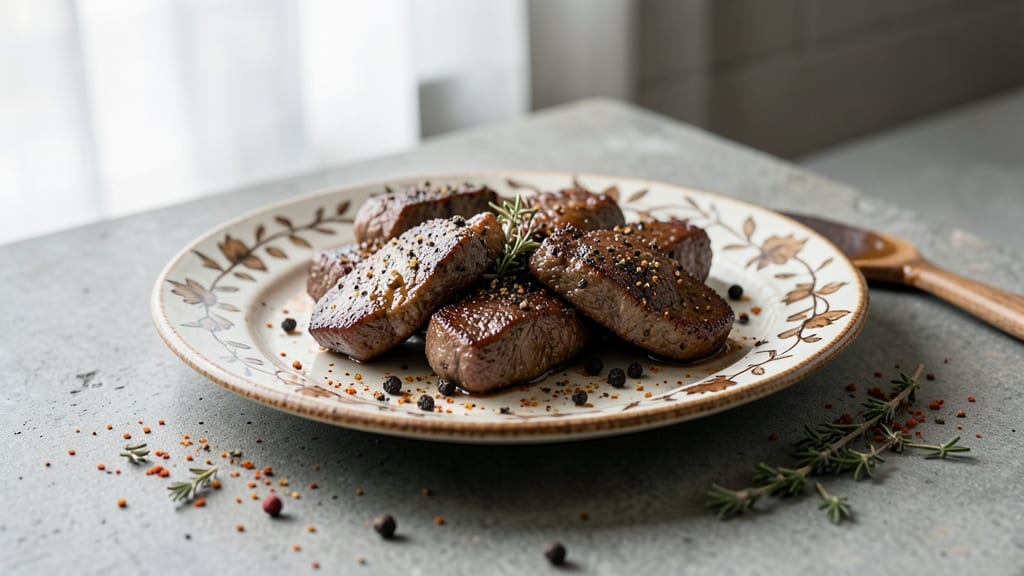
This beef tips recipe with Lipton Onion Soup Mix transforms simple ingredients into a restaurant-worthy one-pan meal with minimal effort. The secret lies in searing the beef tips to develop deep flavor before incorporating the Onion Soup Mix, which adds layers of savory richness without overpowering the dish.
I’ve perfected this technique over years of testing—it’s foolproof for weeknight dinners or special occasions alike.
The process is straightforward: brown the beef tips in a skillet until golden, then deglaze with beef broth and a splash of Worcestershire sauce. That’s when the Onion Soup Mix comes into play—sprinkled in and dissolved into the sauce to create a velvety, umami-packed coating.
The result? Tender beef tips swimming in a glossy, savory sauce that clings perfectly to each bite.
What you’ll end up with is a dish that’s hearty enough for a main course but quick enough for a busy evening. The Onion Soup Mix infuses the beef with a subtle, aromatic depth, while the caramelized edges add texture.
Serve it over buttery mashed potatoes or crusty bread to soak up every last drop of that rich, flavorful sauce.
This recipe scales effortlessly—double it for a crowd or halve it for a cozy meal for two. The beauty of it is in its simplicity: one pan, minimal cleanup, and maximum flavor. Let’s get cooking!
Ingredients for beef tips recipe with lipton onion soup mix
Simple ingredients, restaurant-worthy flavor—this one-pan beef tips recipe delivers maximum depth with minimal effort.
| Ingredient | Amount | Notes |
|---|---|---|
| Beef Tips 🥩 | 1 ½ lb | Chuck roast, cut into 1-inch pieces |
| Lipton Onion Soup Mix 🧅 | 2 tbsp | Granulated, not powdered |
| Beef Broth 💧 | 1 cup | Low-sodium preferred |
| Worcestershire Sauce 🍶 | 1 tbsp | Classic Lea & Perrins brand |
| All-Purpose Flour 🌾 | 2 tbsp | For dredging beef |
| Unsalted Butter 🧈 | 2 tbsp | Full-fat, cut into pieces |
| Yellow Onion 🧅 | 1 whole | Diced, yellow or white |
| Garlic Cloves 🧄 | 3 cloves | Minced, fresh preferred |
| Red Wine Vinegar 🍷 | 1 tbsp | For acidity balance |
| Salt 🧂 | ½ tsp | Kosher or sea salt |
| Black Pepper 🌶️ | ½ tsp | Freshly ground preferred |
| Fresh Parsley 🌿 | ¼ cup | Chopped, for garnish |
The beef tips are the star, and chuck roast is non-negotiable—it stays tender while developing rich flavor. Look for pre-cut tips at Costco or your supermarket’s meat counter, or ask the butcher to trim a chuck roast yourself. Trader Joe’s carries excellent pre-portioned beef tips if you want to skip the cutting. Freshness matters here: aim for beef with visible marbling and a deep red color. If using frozen, thaw overnight in the fridge—never at room temperature. The Onion Soup Mix should be the granulated version, not powdered, as it dissolves more evenly into the sauce. Lipton’s classic yellow packet works perfectly, but any quality onion soup mix will do.
No Lipton Onion Soup Mix? Homemade mix (2 tbsp onion powder, 1 tbsp garlic powder, 1 tsp dried thyme, 1 tsp sugar) works in a pinch. Short on Worcestershire? Soy sauce or balsamic vinegar adds umami depth, though Worcestershire delivers that signature savory punch. The beef broth can be swapped for chicken broth with an extra splash of beef bouillon, but the sodium content will differ. For extra richness, add 1 tbsp tomato paste when deglazing—it deepens the sauce color without overpowering. The red wine vinegar might sound odd, but it brightens the dish and cuts through the richness beautifully. If you’re avoiding vinegar, lemon juice at half the amount works too.
This dish reheats beautifully—store leftovers in an airtight container for up to 4 days in the fridge. For longer storage, freeze portions for 3 months. I like to portion it into single-serving containers so I can grab and reheat for quick lunches. The sauce thickens as it cools, so add a splash of beef broth when reheating if it’s too stiff. Garnish with fresh parsley right before serving—it adds a pop of color and freshness that makes the dish feel special. If you’re prepping ahead, make the sauce separately and store it in the fridge, then toss the beef tips in just before serving to keep them tender.
Why You’ll Love This Recipe
- One-Pan Magic: I swear, this recipe is my go-to when I’m too tired to wash extra dishes. Toss the beef tips in flour, sear them in the same pan, then deglaze with broth and that onion soup mix—no skillet switcheroo needed. The sauce thickens right there, sticky and rich, while the beef stays juicy. Honestly, I’ve made it on nights when I just wanted to sit down and eat.
- Umami Bomb: That Lipton onion soup mix is the secret weapon here—it’s got garlic powder, onion powder, and a hint of salt that builds layers of flavor without extra effort. Add Worcestershire sauce, and suddenly you’ve got a deep, savory punch that makes this taste like a fancy restaurant dish. Between us, my picky-eater husband asks for seconds every time.
- Weeknight to Potluck: This recipe works whether you’re feeding yourself after a long day or bringing a dish to a gathering. Double the batch, and you’ve got leftovers for lunch the next day, or freeze half for when you’re too busy to cook. I’ve served it at BBQs (yes, really) and even packed it in thermoses for work—still delicious cold or at room temp.
- Budget-Friendly Powerhouse: Ground beef and a few pantry staples stretch to feed four for under $15. The onion soup mix adds depth for pennies, and you can bulk it up with rice or noodles if needed. I’ll be real: it’s the kind of meal that makes me feel like I’m treating my family without breaking the bank. Plus, the leftovers taste just as good reheated.
Step-by-step instructions for beef tips with onion soup mix
Here’s the straightforward method for tender beef tips with rich, savory depth in one pan.
Season and Dredge the Beef Tips
Pat the 1.5 lb beef tips completely dry with paper towels—this ensures a better sear. In a shallow bowl, combine the 2 tbsp all-purpose flour, 0.5 tsp salt, and 0.5 tsp black pepper. Toss the beef tips in this mixture until evenly coated, shaking off any excess. The flour creates a golden crust while helping thicken the sauce later.
Let the dredged beef tips sit for 5 minutes while you prep the rest. This brief resting period allows the flour to adhere better, preventing it from falling off during cooking. If you notice any clumps of flour, gently tap the bowl to redistribute evenly.
Sear the Beef Tips in Butter
Heat a large skillet over medium-high heat until hot. Add the 2 tbsp unsalted butter and let it melt completely, swirling to coat the pan evenly. Add the dredged beef tips in a single layer, leaving space between each piece to prevent steaming. Cook undisturbed for 3-4 minutes until a deep golden-brown crust forms on one side.
Here’s where it gets important: resist the urge to move the beef too soon. You’ll know it’s ready to flip when the edges release easily from the pan. Flip the beef tips and cook for another 3-4 minutes until evenly browned. Remove the beef tips and set them aside on a plate, leaving the browned bits in the pan—they’re packed with flavor.
Build the Onion Soup Base
In the same skillet, reduce the heat to medium. Add the diced 1 whole yellow onion and cook for 5-6 minutes until softened and beginning to caramelize at the edges. Stir in the 3 minced garlic cloves and cook for 30 seconds until fragrant—this prevents the garlic from burning, which would make the dish bitter.
Sprinkle the 2 tbsp Lipton onion soup mix over the onions and garlic, stirring to coat evenly. Pour in the 1 cup beef broth and 1 tbsp Worcestershire sauce, scraping up any browned bits from the bottom of the pan with a wooden spoon. This deglazing step captures all the meaty flavor that would otherwise stick to the pan.
Simmer and Finish the Sauce
Return the beef tips to the skillet, spooning the sauce over them to coat evenly. Add the 1 tbsp red wine vinegar and bring the mixture to a gentle simmer. Cover the skillet and let it cook for 15-18 minutes, stirring occasionally, until the beef tips are fork-tender and the sauce has thickened slightly. The beef should be cooked through but still juicy—overcooking will make it tough.
If the sauce becomes too thin during cooking, uncover the skillet and simmer for an additional 2-3 minutes to reduce it to your desired consistency. The sauce should coat the back of a spoon but still be loose enough to spoon over the beef tips. Taste and adjust seasoning with additional salt or pepper if needed.
Garnish and Serve
Once the beef tips are fully cooked and the sauce is perfectly balanced, remove the skillet from heat. Stir in the 0.25 cup chopped fresh parsley, distributing it evenly throughout the dish. The parsley adds a bright contrast to the rich, savory flavors and makes the dish look beautifully finished.
Serve the beef tips immediately, spooning the flavorful sauce over each portion. This dish pairs perfectly with mashed potatoes, crusty bread, or over a bed of buttered noodles. The combination of tender beef, caramelized onions, and the deep umami from the onion soup mix creates a satisfying one-pan meal that’s sure to impress.
Pro Tips For Making Beef Tips Recipe With Lipton Onion Soup Mix
- Trim the Fat First: Cut the connective tissue off those beef tips before cooking—it’s the only way to avoid chewy, rubbery bites. I learned this the hard way after serving a batch where half the family picked through their plates.
- Bloom the Flour: Don’t just dump the flour and Worcestershire into the pan—cook it in beef broth for 30 seconds first. This makes the sauce thicker and richer without lumps, and it cuts that raw flour taste you’d otherwise regret.
- Skip the Overcrowding: Brown the beef in one layer, or you’ll steam it instead of sear it. I used to toss everything in at once, and the tips came out gray and sad—now I work in batches, and the crust makes all the difference.
- Deglaze Aggressively: After browning, scrape every last bit of fond from the pan with a wooden spoon—it’s packed with flavor. Ignore it, and your sauce will taste like it’s missing something, even with the onion soup mix. (Yes, even if you’re impatient like me.)
Dietary considerations for this beef tips recipe with lipton onion soup mix
Gluten-Free Adaptation
Swap the all-purpose flour for a gluten-free 1:1 baking flour blend like Bob’s Red Mill or King Arthur. Toss the beef tips in 2 tbsp gluten-free flour mixed with 0.5 tsp salt and 0.5 tsp black pepper—this ensures the same golden crust and sauce thickening.
The Lipton Onion Soup Mix is naturally gluten-free, so no other substitutions are needed beyond the flour. 🌾
Low-Carb/Keto Version
Skip the flour entirely and sear the beef tips in 2 tbsp butter until browned. After removing the beef, add 1 tbsp coconut flour to the pan and toast for 30 seconds to thicken the sauce naturally.
Stir in the onion soup mix, broth, and Worcestershire sauce as directed. The result is a rich, keto-friendly sauce without carbs.
Dairy-Free Option
Replace the butter with 2 tbsp olive oil or avocado oil for searing. The Lipton Onion Soup Mix and beef broth are already dairy-free, so no other changes are needed.
The sauce will still develop a glossy finish, though it may be slightly thinner—simmer uncovered for 2-3 minutes to reduce if needed.
Allergen-Friendly Notes
The recipe is naturally egg-free and nut-free, but always check labels on the Lipton Onion Soup Mix for potential cross-contamination warnings. If avoiding soy, opt for a Worcestershire sauce labeled “soy-free” or use 1 tbsp tamari instead.
For a completely soy-free version, replace Worcestershire with 1 tbsp balsamic vinegar and add ½ tsp smoked paprika for depth.
Sodium Control
Use low-sodium beef broth (or homemade) and reduce the Lipton Onion Soup Mix to 1 tbsp to cut sodium. Boost flavor with 1 tsp onion powder and ½ tsp garlic powder instead of extra mix.
The beef tips themselves contribute significant sodium, so portion control is key—stick to 1.5 lb for 4 servings.
Nutrition facts
Frequently asked questions
Can I use a different brand of onion soup mix?
The recipe works best with Lipton Onion Soup Mix because its specific blend of onion powder, garlic powder, and seasonings creates that signature savory depth. However, you can substitute with 2 tbsp onion powder + 1 tbsp garlic powder + 1 tsp dried thyme for similar results. Avoid powdered mixes—they often contain baking soda and won’t dissolve properly in the sauce.
Why do my beef tips turn out tough?
Overcooking is the most common cause. Remove the beef tips when they reach 145°F internally (about 15-18 minutes of simmering), then let them rest 5 minutes before serving. Pat them dry thoroughly before dredging—moisture creates steam instead of a good sear. Also, don’t overcrowd the pan during browning.
How can I make this dish ahead of time?
Prepare the sauce separately and store it in the fridge for up to 3 days in an airtight container. Cook the beef tips fresh and toss them in the cooled sauce just before serving. For longer storage, freeze the sauce for 3 months—thaw and reheat gently, adding a splash of beef broth if it thickens too much.
What’s the best way to reheat leftovers?
Reheat in a skillet over medium-low heat with a splash of beef broth to loosen the sauce. Cover and warm for 3-4 minutes, stirring occasionally. Avoid microwaving—it makes the sauce watery. For extra richness, add 1 tbsp butter while reheating.
Can I use ground beef instead of beef tips?
Technically yes, but the texture will be completely different. Ground beef will turn into a meatball-like consistency rather than tender tips. If you must use it, shape into small patties and cook until browned and cooked through (160°F internal temp). The sauce will still work, but the dish loses its signature beef tips appeal.

- White Peppered Gravy Recipe: Silky-Smooth Sauce for Roasted Meats - November 29, 2026
- James Martin’s Cottage Pie Recipe: Flaky Pastry Over Hearty Beef Filling - November 29, 2026
- Sweet Grissini Recipe: Crispy Twists With Honey-Glazed Bite-Sized Magic - November 29, 2026