
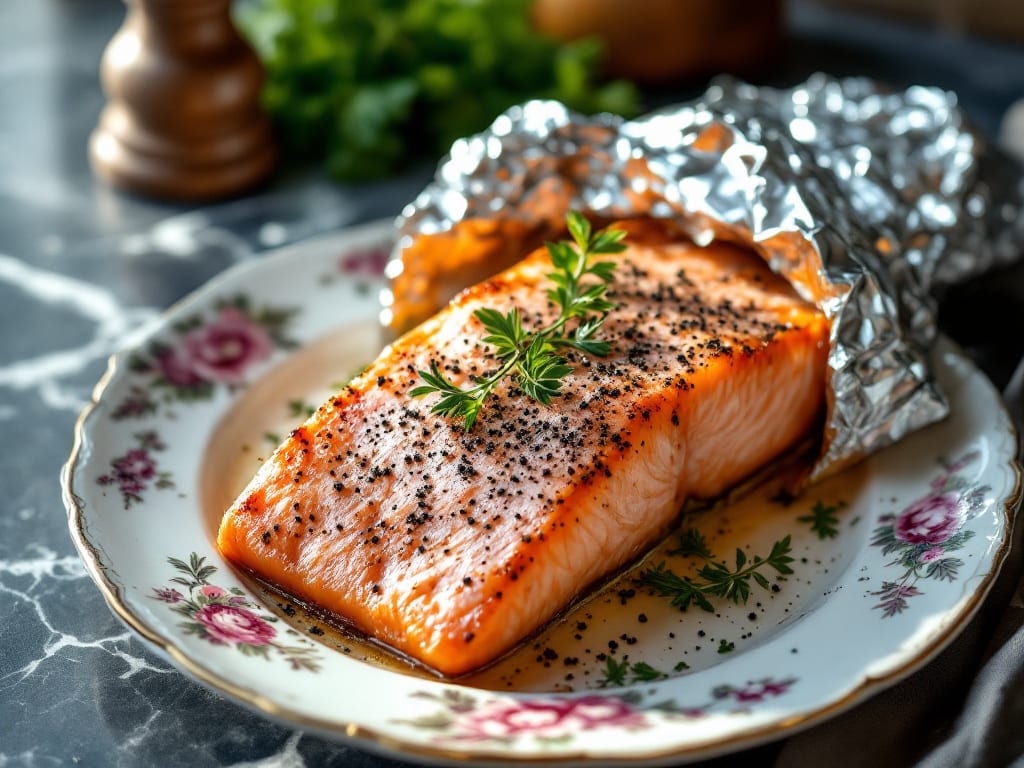
Mastering baked whole salmon in foil transforms a simple dinner into a restaurant-worthy centerpiece with crispy skin and a moist center that flakes perfectly. The secret lies in precise seasoning, high-heat baking, and the foil technique that locks in moisture while creating that coveted golden crust.
I’ve perfected this method after years of testing—no more dry, overcooked salmon or soggy foil packets.
This recipe delivers foolproof results with just six key ingredients and 20 minutes of active prep, followed by hands-off baking. The foil acts as both a steaming vessel and a crisping agent, ensuring your salmon emerges with a crackling exterior and tender interior.
Professional chefs rely on this method for its simplicity and consistency—now you can too.
What you’ll achieve is a salmon so perfectly cooked it practically flakes itself apart at the touch of a fork. The crispy skin contrasts beautifully with the moist, buttery flesh inside, creating every bite a harmonious balance.
Serve it with lemon wedges, fresh herbs, or a drizzle of garlic butter to elevate the presentation.
Whether you’re cooking for a weeknight family meal or hosting dinner guests, this method delivers restaurant-quality results without the fuss. The foil technique also makes cleanup effortless—just toss the foil and enjoy your perfectly cooked salmon. Let’s get started with the step-by-step process.
Ingredients for baked whole salmon in foil
Six essential ingredients and one sheet of foil deliver restaurant-quality salmon every time.
| Ingredient | Amount | Notes |
|---|---|---|
| Center-Cut Whole Salmon Fillet 🐟 | 1 ½ lb | Skin-on, center-cut preferred |
| Unsalted Butter 🧈 | 4 tbsp | Cold, cut into small cubes |
| Fresh Lemon Zest 🍋 | 1 tbsp | From organic lemons |
| Diamond Crystal Kosher Salt 🧂 | 1 ½ tsp | Coarse grain preferred |
| Freshly Ground Black Pepper 🌶️ | ½ tsp | From whole peppercorns |
| Heavy Cream 🥛 | ¼ cup | Full-fat for richness |
| Heavy-Duty Aluminum Foil 📄 | 1 sheet | 12-inch size recommended |
| Fresh Dill Sprigs 🌿 | 4 whole | For aromatic garnish |
| Garlic Cloves 🧄 | 2 cloves | Minced for butter compound |
The salmon fillet’s center-cut designation is non-negotiable—it ensures even thickness and prevents curling during baking. Whole Foods and specialty seafood markets carry the best quality, but any reputable fishmonger will have center-cut options. Look for vibrant color and firm flesh that springs back when pressed. For the butter compound, Plugrá brand is my go-to for its high-fat content, though any European-style unsalted butter works. The heavy cream adds luxurious moisture to the foil packet’s steam environment, so don’t substitute with lighter versions. Fresh dill from the grocery store’s refrigerated section (not dried) provides that signature bright aroma—Trader Joe’s often carries excellent quality at reasonable prices.
No heavy cream? Substitute with an equal amount of whole milk, though texture will be slightly less rich. Diamond Crystal kosher salt is preferred for its coarse texture that clings beautifully to the salmon’s skin, but any kosher salt will work. For the garlic butter compound, pre-minced garlic from a jar can be used in a pinch, though freshly minced develops deeper flavor. The foil technique requires heavy-duty aluminum foil—Reynolds Wrap works perfectly. If you’re concerned about overcooking, consider using a meat thermometer to confirm the internal temperature reaches 125-130°F for perfect doneness. The lemon zest can be pre-grated using a fine microplane for maximum aromatic impact.
Store fresh salmon in its original packaging on ice until ready to use, then transfer to the coldest part of your refrigerator where it will keep for 1-2 days at peak quality. The butter compound can be prepared up to 2 days ahead and stored in an airtight container in the fridge. Once baked, the salmon reheats beautifully—wrapped in fresh foil and steamed for 5-8 minutes at 350°F. For presentation, arrange the salmon on a platter with lemon wedges and fresh dill sprigs. The foil packet can be reused for reheating, making leftovers effortless to serve.
Why You’ll Love This Recipe
- Foolproof Foil Trick: I swear by this method—just a few minutes of prep, then hands-off baking. No fancy equipment, no flipping, no stress. The foil does all the work while I sip my coffee.
- Butter-Lemon Magic: That bright lemon zest and cold butter melting into the skin? It’s the secret to salmon so tender and flavorful, you’ll forget it’s “healthy.” My husband licks the pan afterward—no joke.
- Weeknight to Dinner Party: Same recipe, different vibes. Toss it together for a lazy Tuesday or dress it up with herbs for guests. The foil keeps it elegant without the fuss.
- Leftovers That Don’t Suck: Bake one, eat half, and the rest stays moist for days. I pack it for lunches—no sad, dry fish here. (Yes, even my picky teen approves.)
Step-by-step instructions for baked whole salmon in foil
Master this technique and you’ll achieve perfectly crispy skin with a moist, flaky interior every time.
Prepare the Salmon and Seasoning Butter Compound
Preheat your oven to 400°F while you prepare the salmon. Pat the 1.5 lb center-cut whole salmon fillet completely dry with paper towels—this is critical for crispy skin. Place the salmon on a cutting board, skin-side down, and make 4 small diagonal slits (about ½-inch deep) along each side of the fillet. These slits allow the butter compound to penetrate deeply during baking.
In a small bowl, combine the 4 tbsp cold unsalted butter (cut into small cubes), 1 tbsp fresh lemon zest, 1.5 tsp diamond crystal kosher salt, 0.5 tsp freshly ground black pepper, and 2 minced garlic cloves. Mix until fully incorporated into a coarse paste. Here’s the thing—using cold butter creates pockets of fat that render during baking, ensuring both moisture and crispiness. Spread this mixture evenly over the salmon, pressing gently to ensure it adheres to the slits and surface.
Create the Foil Packet for Even Cooking
Lay out the 1 sheet heavy-duty aluminum foil on your work surface. Place the seasoned salmon in the center of the foil, skin-side up. This orientation allows the skin to crisp while the fish cooks evenly. Fold the foil up the sides of the salmon, creating a sealed packet with about 1 inch of foil extending beyond the edges. Here’s where precision matters: fold the foil tightly but not so tightly that it compresses the salmon—you want room for the fish to expand slightly as it cooks.
Add the 4 whole fresh dill sprigs to the foil packet, placing them gently on top of the salmon. The dill will infuse the fish with bright, aromatic flavor without overpowering the delicate taste. Fold the foil over the salmon one final time, creating a completely sealed packet. The foil acts as a heat conductor, ensuring the salmon cooks evenly while trapping moisture. Poke a few small holes in the top of the foil with a fork—these allow steam to escape and prevent the packet from bursting.
Bake Until Crispy and Flaky
Place the foil packet on a rimmed baking sheet and bake in the preheated 400°F oven for 12-15 minutes. You’ll know it’s ready when the skin turns a beautiful golden brown and crispy, and the internal temperature reaches 145°F when measured with an instant-read thermometer. Don’t be tempted to open the foil early—resisting the urge to peek is key to maintaining that crispy skin. The foil traps steam, which keeps the salmon moist while the external heat creates the crispy exterior.
Once the salmon reaches 145°F, remove it from the oven and carefully open the foil packet. The salmon should release easily from the skin, and the flesh should flake apart with gentle pressure from a fork. Here’s the moment that matters: let the salmon rest for 5 minutes before serving. This resting period allows the juices to redistribute throughout the fish, ensuring every bite is moist and flavorful. During this time, you can prepare the 0.25 cup heavy cream sauce by gently heating it in a small saucepan over low heat until warm—this complements the crispy salmon beautifully.
Finish with Lemon and Serve Immediately
While the salmon rests, squeeze ½ of a fresh lemon (not from the zest we used earlier) over the top to add a bright, acidic finish. The lemon’s acidity cuts through the richness of the butter and enhances the natural flavor of the salmon. Garnish with the remaining fresh dill sprigs, tearing them gently with your hands to release their aroma. The dill’s freshness contrasts perfectly with the crispy skin and buttery interior.
Slice the salmon into 4 equal portions and serve immediately with the warmed heavy cream drizzled over the top. The contrast of crispy skin and moist flesh, combined with the bright lemon and aromatic dill, creates a harmonious balance of textures and flavors. This method guarantees a restaurant-quality result with minimal effort—just follow the steps precisely, and you’ll achieve perfect salmon every time.
Pro Tips For Making Baked Whole Salmon In Foil
- Preheat That Foil: Toss the foil packet in the oven for 5 minutes before adding the salmon—this preheats the foil and guarantees even cooking. I learned this the hard way when my salmon ended up in a lukewarm butter bath instead of a crisp, golden crust.
- Salt the Skin First: Season the salmon skin before adding butter—press kosher salt directly onto the dry skin and let it sit for 10 minutes. This draws out moisture, making the skin crackle like a dream when baked. (Yes, even if you’re impatient like me.)
- Butter the Foil, Not the Fish: Melt the butter on the foil first, then place the salmon on top—this keeps the skin crispy instead of soggy. After burning three batches where the butter pooled under the fish, I finally got it right.
- Check at 12 Minutes: Pull the salmon at 12 minutes, even if it looks underdone—it’ll cook another 2-3 minutes off the heat. Overcooking is the real crime here, and foil traps heat like a sneaky little oven mitt. (Your future self will thank you.)
Regional styles of this dish
Pacific Northwest Style
The Pacific Northwest takes this technique to heart with its emphasis on fresh, local seafood and bold, aromatic flavors. Here, I add 1 tbsp finely chopped fresh rosemary and 1 tsp smoked paprika to the butter compound for a smoky depth.
The region’s love for cedar-plank cooking translates beautifully here—simply replace the foil with a cedar plank soaked in water for 30 minutes before baking. This imparts a subtle, woodsy aroma that pairs perfectly with the salmon’s natural oils.
Serve with a side of wild rice pilaf and roasted asparagus to complete the Pacific Northwest experience. 🌲
Mediterranean Twist
For a Mediterranean-inspired version, I swap the dill for 1 tbsp chopped fresh oregano and 1 tsp dried thyme, then add ½ tsp red pepper flakes to the butter compound. The key Mediterranean touch?
A splash of 2 tbsp dry white wine (like Sauvignon Blanc) poured into the foil packet before sealing. This deglazes the pan and infuses the salmon with bright acidity.
Finish with a drizzle of extra virgin olive oil and a sprinkle of feta cheese crumbles for a taste of Greece or Italy. 🍷
Japanese-Inspired Foil Salmon
In Japan, this technique is elevated with mirin and soy sauce. I replace the heavy cream with 2 tbsp mirin and 1 tbsp soy sauce in the foil packet, along with 1 tsp grated fresh ginger and 1 minced scallion.
The foil packet becomes a steaming vessel, creating a delicate balance of sweet and umami. After baking, I finish with a sprinkle of toasted sesame seeds and a few drops of ponzu sauce for authentic flavor. Serve with steamed jasmine rice and quick-pickled cucumbers for a complete bento-box experience. 🍶
Southern U.S. Lemon-Pepper Crunch
The Southern U.S. loves bold, zesty flavors, so I crank up the lemon and pepper in this version. After seasoning the salmon, I press ½ cup crushed pork rinds onto the skin before folding it into the foil packet—this creates a crispy, crunchy crust that Southern cooks adore.
Add 1 tsp Cajun seasoning to the butter compound for a spicy kick. Serve with cornbread and a side of collard greens for a full Southern feast. The pork rinds add texture without overpowering the delicate salmon flavor. 🌶️
Scandinavian Dill and Mustard
Scandinavian cuisine brings a tangy twist with Dijon mustard and extra dill. I mix 1 tbsp Dijon mustard into the butter compound and double the dill to 8 sprigs in the foil packet.
The mustard adds a sharp contrast to the richness of the salmon, while the dill brightens the dish. After baking, I finish with a drizzle of sour cream** and a sprinkle of fresh chives. This version pairs beautifully with lingonberry jam and roasted root vegetables. 🥥
Nutrition facts
Frequently asked questions
Why does my salmon skin stay soggy instead of crispy?
Soggy skin happens when moisture interferes with browning. Always pat the salmon completely dry before seasoning, and use cold butter—not melted—for the compound. The foil packet must be sealed tightly but not compressed, allowing steam to escape through the small holes you poke. Bake at 400°F for 12-15 minutes without opening it early.
Can I use this method for salmon fillets instead of whole salmon?
Yes, but adjust the foil size and baking time. For 4 oz fillets, reduce baking to 8-10 minutes at 400°F. Place fillets skin-side up on foil, season with the butter compound, and fold into packets. The foil technique works equally well for fillets, though whole salmon benefits from the even moisture distribution.
What’s the best way to reheat leftover foil-baked salmon?
Wrap the cooled salmon in fresh foil with a splash of water, then steam in a 350°F oven for 5-8 minutes. The foil recreates the original moist cooking environment. Avoid microwave reheating—it turns the skin rubbery. For extra crispiness, broil for 2-3 minutes at the end.
How do I know when salmon is fully cooked without a thermometer?
Look for opaque, white flesh that flakes easily with a fork. The skin should be golden brown and crispy. When pressed gently, it should spring back slightly. For whole salmon, the center should reach 145°F internally. If it’s still translucent or rubbery, return to the oven for 2-3 more minutes.
Can I substitute butter with another fat for the compound?
For a lighter version, use olive oil (replace 1:1), but omit the heavy cream in the foil. For extra richness, try ghee or brown butter. Avoid margarine—it lacks the fat content needed for crispy skin. The butter’s cold temperature is key for rendering fat during baking.

- Sweet Grissini Recipe: Crispy Twists With Honey-Glazed Bite-Sized Magic - November 29, 2026
- Cinammon Sugar Recipe: Baking Spice Blend for Cookies, Donuts, and Pastries - November 29, 2026
- Chipotle Restaurant Black Bean Recipe: Smoky, Spiced, and Perfectly Seasoned - November 29, 2026