
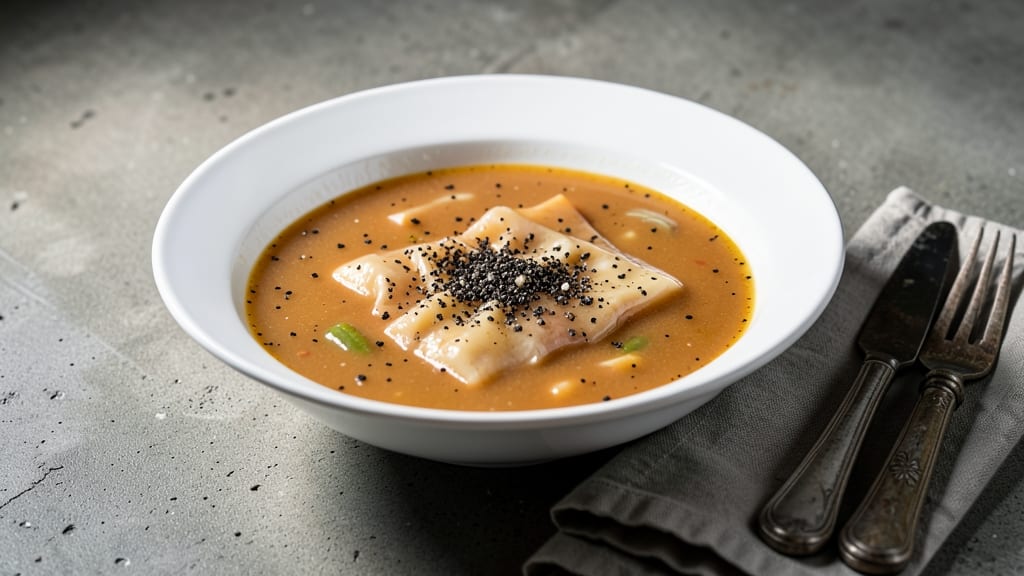
This bihon soup recipe brings the heart of Filipino home cooking to your kitchen, where fragrant rice and tender pork create a comforting embrace in every spoonful. The secret lies in slow-simmered broth that transforms simple ingredients into a dish rich with tradition and warmth.
I developed this version after years of perfecting the balance between tender pork, fluffy rice, and seasonal vegetables—each element working together to deliver that unmistakable Filipino soul.
The beauty of bihon soup is its versatility—whether you use pork, chicken, or shrimp, the foundation remains the same: aromatic broth, perfectly cooked rice, and vegetables that stay tender without losing their natural sweetness.
The dish starts with a flavorful base of pork bones and vegetables, simmered until the broth develops deep, savory notes that define Filipino comfort food. This isn’t just a soup; it’s a reminder of home, served with a side of crispy garlic fried rice for the full experience.
What makes this recipe special is the harmony of textures and flavors—soft rice grains, tender pork slices, and crisp vegetables all coming together in a single bowl. The broth reduces just enough to coat each ingredient, creating a dish that’s both nourishing and deeply satisfying.
By the time you finish, you’ll understand why this soup is a staple in Filipino households, offering warmth and comfort in every bite.
Serve this bihon soup as a main dish for family gatherings or a cozy weeknight meal—it’s equally at home at either table. The leftovers reheat beautifully, making it perfect for meal prep. Here’s how to bring this Filipino classic to life in your own kitchen.
Ingredients for bihon soup
Simple ingredients that transform into the soul of Filipino home cooking.
| Ingredient | Amount | Notes |
|---|---|---|
| Pork Bones 🍖 | 2 lb | With meat attached for flavor |
| Pork Shoulder 🥩 | 1 ½ lb | Cut into 1-inch slices |
| Bihon Rice 🍚 | 1 cup | Uncooked, short-grain rice |
| Carrots 🥕 | 4 whole | Medium size, peeled and sliced |
| Potatoes 🥔 | 2 medium | Russet, peeled and cubed |
| Onion 🧅 | 1 whole | Yellow, quartered |
| Garlic Cloves 🧄 | 6 cloves | Minced for aroma |
| Bay Leaves 🌿 | 2 whole | Dried, for depth |
| Salt 🧂 | 2 tsp | Kosher or sea salt |
| Black Peppercorns 🌶️ | 1 tsp | Crushed for heat |
| Fish Sauce 🐟 | 1 tbsp | For umami depth |
| Vegetable Oil 🫒 | ¼ cup | For initial cooking |
| Green Onions 🧅 | 3 whole | Chopped, for garnish |
| Fresh Parsley 🌿 | ¼ cup | Chopped, for garnish |
The pork bones are the flavor foundation—look for marbled cuts at your local butcher or Asian market. Costco often has them pre-packaged, but if you’re buying a whole shoulder, ask for it to be cut into 1-inch slices. The bihon rice should be short-grain—Filipino markets carry it, or check the international aisle at Walmart. Carrots and potatoes need to be firm, not waxy—organic or conventional works, but avoid bruised ones. For the fish sauce, Red Boat is my go-to, but any good brand will do.
No pork bones? Pork shoulder alone works, but the broth will be less rich. Swap the fish sauce for soy sauce (1 tbsp) + a pinch of sugar if needed. Potatoes can be Yukon Golds for creamier texture. The bay leaves are non-negotiable—they add that deep, earthy note. If you can’t find bihon rice, jasmine rice is the next best thing, but expect slightly different texture. For extra umami, add 1 tbsp oyster sauce with the fish sauce.
The broth keeps for 3 days in the fridge—freeze extras for up to 3 months. Cook the rice separately and add it to the broth at the end to keep it fluffy. Garnish with green onions and parsley right before serving. This soup tastes even better the next day as flavors meld together—perfect for meal prep. Store leftovers in airtight containers with a splash of water to prevent drying.
Why You’ll Love This Recipe
- No-Chop Needed: The pork shoulder and bones do all the work—just toss in chunks, no fancy slicing. I swear, the rice and veggies soften perfectly without me even trying.
- Rich Without Effort: That slow-simmered broth from pork bones? Chef’s kiss. It’s got this deep, savory punch that turns basic carrots and potatoes into something you’ll lick the bowl for.
- Weeknight to Party: Same pot, different vibes—serve it steaming for a lazy Sunday or ladle it into bowls for guests. The bihon rice keeps it hearty enough to feed a crowd without stress.
- Budget Magic: Pork bones and shoulder stretch this into three meals for the price of one. Honestly, my wallet thanks me every time I make it—plus, leftovers taste even better the next day.
Step-by-step instructions for bihon soup recipe
Here’s how to create this hearty Filipino comfort dish with rich pork flavors and tender vegetables.
Prepare the Pork for Deep Flavor
In a large pot, combine the 2 lb pork bones and 1.5 lb pork shoulder slices. Add the 0.25 cup vegetable oil and place over medium-high heat. Let the pork brown for 8-10 minutes, stirring occasionally, until the meat releases from the bones and develops a rich golden color.
This initial browning creates the foundation of your soup’s flavor. You’ll know it’s ready when the pork pieces are deeply colored and the oil begins to shimmer around the edges. Remove the pork from the pot and set aside temporarily.
In the same pot, add the quartered onion and sliced carrots. Cook for 5 minutes until the onion becomes translucent and the carrots begin to soften slightly. This step builds the aromatic base that will infuse your entire soup.
Build the Rich Broth
Return the pork to the pot and add 8 cups of water (enough to cover all ingredients by about 2 inches). Bring to a rolling boil, then reduce heat to medium-low. Add the 2 whole bay leaves, 2 tsp salt, and 1 tsp crushed black peppercorns.
Simmer uncovered for 1 hour, skimming off any foam that rises to the surface. This skimming removes impurities and ensures a crystal-clear broth. After the hour, add the peeled and cubed potatoes and the 6 cloves minced garlic. Continue simmering for another 30 minutes until the potatoes are tender when pierced with a fork.
Here’s where the magic happens: the pork shoulder will begin to break down into tender, flavorful shreds. If the broth isn’t covering all ingredients, add a little hot water to maintain the proper level.
Finish with Umami Depth
Stir in the 1 tbsp fish sauce and taste the broth. You want a balance of savory and slightly salty – this is where the fish sauce works its magic to enhance all the natural flavors. The soup should now have a rich, aromatic quality that fills your kitchen.
Add the 1 cup uncooked bihon rice and simmer for 15-20 minutes until the rice is tender and has absorbed most of the liquid. The rice should be plump but still have a slight bite to it – this indicates perfect cooking.
Real talk: don’t stir the rice constantly. Occasional gentle stirring prevents the rice from sticking to the bottom while allowing it to cook evenly. The rice should float just below the surface of the broth.
Prepare the Garnishes
While the soup finishes cooking, chop the 3 whole green onions and 0.25 cup fresh parsley. These will add freshness and visual appeal to your finished dish. The green onions should be cut into ½-inch pieces while the parsley should be finely chopped.
Ladle the hot soup into serving bowls, making sure each portion contains some pork, vegetables, and rice. The broth should be rich and flavorful, with the pork pieces falling apart easily. This is the moment that matters: serving the soup immediately while it’s hot ensures the best texture and flavor experience.
Top each serving generously with the chopped green onions and parsley. The contrast of fresh herbs against the rich pork broth creates a perfect balance of flavors that makes this soup truly comforting.
Pro Tips For Making Bihon Soup
- CRACK THE BONES FIRST: Don’t just toss whole pork bones into the pot—they’ll never release enough flavor. Smash them with a meat mallet or heavy pan before simmering. I learned this the hard way when my first batch tasted bland; cracked bones render fat and marrow faster, turning your broth into liquid gold.
- SIMMER LOW AND LONG: Skim the scum off within the first 30 minutes, then drop the heat to a bare simmer. Too much boiling wastes flavor, and you’ll end up with cloudy broth. My grandmother swore by this—”patience is the broth’s best friend”—and she was right. Aim for at least 2 hours for pork bones, 1.5 for shoulder.
- PEEL POTATOES LAST: Add carrots and potatoes after the pork shoulder is nearly tender. If you throw them in too early, they’ll turn to mush while the meat still needs time. I used to rush this, and the soup always felt uneven—crispy pork with sad, mealy potatoes. Wait until the meat pulls apart easily before adding them.
- UPGRADE WITH BAY LEAF: Tuck a single bay leaf into the broth early—it’s the easiest way to deepen flavor without extra effort. Sounds weird, but it works: the aroma infuses the broth while staying undetectable in the final dish. Skip the fancy herbs; this one trick makes the whole thing taste more complex.
Flavor customization for bihon soup
Spicy Kick
Add 1 tbsp sliced siling labuyo (Filipino chili) when browning the pork for a fiery twist. For milder heat, reduce to ½ tsp chili flakes or 1 tsp gochugaru (Korean chili flakes). I love adding 1 tsp calamansi juice (Filipino lime) at the end to brighten the heat. 🌶️
Creamy Texture
Stir in ½ cup coconut milk after the rice is cooked for a velvety finish. For extra richness, blend ½ cup cooked potatoes with the broth before adding the rice. This creates a naturally thickened, comforting version perfect for chilly days.
Seafood Fusion
Swap pork for 1 lb shrimp (peeled and deveined) or 1 lb white fish fillets like cod. Add the seafood in the last 5 minutes of cooking to prevent overcooking. Garnish with lemon wedges and extra fish sauce for a coastal-inspired take. 🦐
Vegetable Boost
Add 1 cup corn kernels (fresh or frozen) and 1 cup bok choy in the last 10 minutes of cooking. For a tropical touch, stir in ½ cup diced mango after serving—its sweetness balances the savory broth beautifully.
Herb Infusions
Tie ¼ cup fresh cilantro and ¼ cup fresh mint in cheesecloth and simmer with the broth for 20 minutes. Remove before serving for an aromatic, refreshing twist. Alternatively, add 1 tsp ground lemongrass with the garlic for a citrusy depth.
Protein Swaps
For chicken lovers, use 1.5 lb chicken thighs instead of pork. Braise them with the broth for 30 minutes before adding rice. For a vegetarian version, replace meat with 1 cup mushrooms and 1 cup tofu, simmering them until tender. 🍄
Nutrition facts
Frequently asked questions
What’s the secret to keeping bihon rice fluffy in the soup?
Never stir the rice constantly while cooking—just give it a gentle stir every 5 minutes to prevent sticking. Add the rice when the broth is already simmering (not boiling) and cook it uncovered. The rice should float just below the surface when done, with a slight bite remaining.
Can I make this soup without pork bones?
Yes! Use 1.5 lb pork shoulder alone for a slightly less rich broth, or swap for chicken thighs or shrimp. For extra depth, add 1 tbsp soy sauce + 1 tsp sugar to mimic the umami from pork bones. The flavor will still be delicious but more delicate.
How do I store and reheat leftovers?
Store in airtight containers with a splash of water to prevent drying. Reheat gently on the stove with 1-2 tbsp water until hot. Microwave reheating works too—cover with a damp paper towel for 1-2 minutes. The soup tastes even better the next day as flavors meld!
What if my broth isn’t flavorful enough?
Boost the flavor by adding 1 extra bay leaf or 1 tsp fish sauce. Simmer uncovered longer (up to 90 minutes) to deepen the pork’s richness. For instant depth, stir in 1 tbsp oyster sauce***. The key is patience—let the broth reduce naturally for maximum taste!
Is bihon soup gluten-free?
Yes, this recipe is naturally gluten-free! Just ensure your fish sauce is certified gluten-free (some brands contain wheat). The pork, rice, and vegetables are all gluten-free ingredients. Always double-check labels for any hidden additives.

- Minced Meat Spaghetti Recipe: One-Pan Italian Comfort with Rich Ragù - November 29, 2026
- Aki’s Guava Chiffon Cake Recipe: Light, Airy Layers with Tropical Flavor Burst - November 29, 2026
- Chicken Pelau Recipe: Caribbean-Style Rice with Tender Chicken and Pigeon Peas - November 29, 2026