
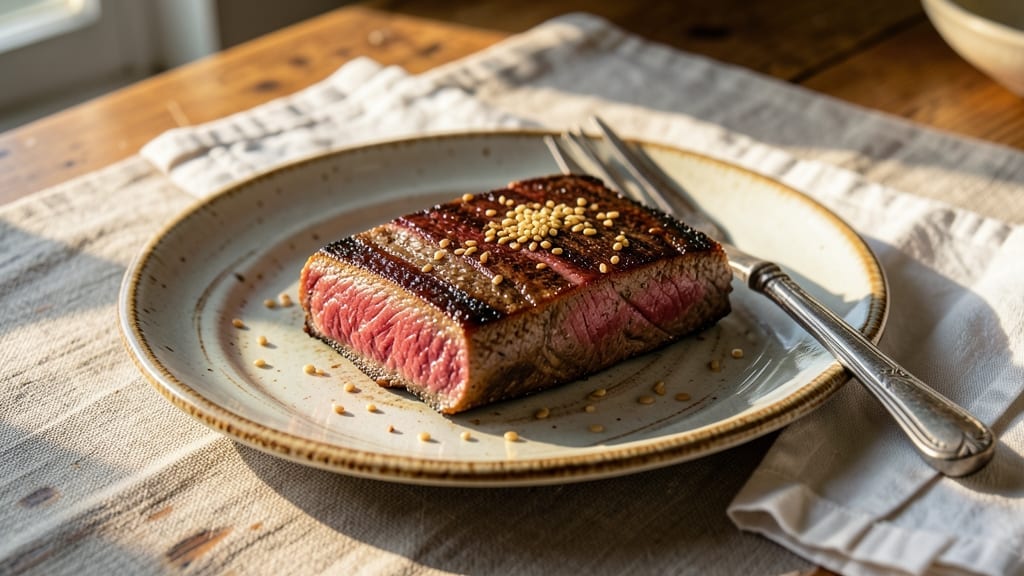
Bobby Flay’s tuna steak recipe delivers restaurant-quality results with a perfect seared crust and buttery center—the kind of dish that elevates weeknight dinners to fine dining. After years of perfecting his technique, Flay’s method ensures tender, juicy tuna every time, thanks to precise timing and high-heat searing.
The key lies in using sushi-grade tuna and mastering the butter-basting method, which adds richness without overcooking the delicate fish.
This recipe isn’t just about the tuna—it’s about the technique. Flay’s approach includes a quick sear in a screaming-hot pan, followed by basting with cold butter to lock in moisture and create that signature buttery finish.
The result? A crispy exterior that gives way to a tender, melt-in-your-mouth interior, all in just 3-4 minutes per side. No overcooking, no guessing—just foolproof execution that even home cooks can master.
Pair your tuna steak with a bright citrus sauce or a simple miso glaze to complement the rich flavors, and serve alongside steamed jasmine rice or a crisp sesame salad for a well-rounded meal.
The secret to success? Precision and patience—let the pan heat up fully before adding the tuna, and don’t rush the basting. This is the kind of dish that makes you feel like a pro, no matter your skill level.
Once you try Flay’s method, you’ll never go back to store-bought tuna steaks again. The crispy crust and buttery center are worth every minute of prep, and the results will impress even the most discerning diners. Ready to transform your kitchen into a seafood haven? Let’s get started.
Ingredients for bobby flay tuna steak
Precision-cut tuna, cold butter, and high-heat technique—this is Flay’s signature approach to perfect tuna steaks.
| Ingredient | Amount | Notes |
|---|---|---|
| Sushi-Grade Tuna Steaks 🐟 | 1 ½ lb | Evenly cut 1-inch thick slices |
| Unsalted Butter 🧈 | ½ cup | Cold, cut into 8 pieces |
| Extra-Virgin Olive Oil 🫒 | 2 tbsp | High smoke point preferred |
| Kosher Salt 🧂 | 1 ½ tsp | Diamond Crystal preferred |
| Freshly Ground Black Pepper 🌶️ | 1 tsp | Coarse grind for texture |
| Lemon Wedges 🍋 | 4 whole | For serving, Meyer preferred |
| Jasmine Rice 🍚 | 1 cup | Uncooked, long-grain |
| Sesame Seeds 🌰 | 1 tbsp | Toasted for garnish |
| Fresh Cilantro 🌿 | ¼ cup | Chopped, for garnish |
| Soy Sauce 🍶 | 2 tbsp | For optional glaze |
| Sesame Oil 🫒 | 1 tsp | For finishing drizzle |
The sushi-grade tuna is non-negotiable here—ask your fishmonger for toro or akami cuts, as they deliver the ideal balance of fat and tenderness. Whole Foods or high-end seafood markets like Sushi Market carry the best quality, but don’t overlook your local fish counter if they specialize in sashimi-grade cuts. Look for bright red color and firm texture—anything dull or mushy should be avoided. The steaks should be evenly cut at 1-inch thickness for consistent cooking; if your butcher doesn’t slice them this way, grab a sharp knife and do it yourself. For those short on time, Trader Joe’s often stocks pre-sliced sushi-grade tuna, though you’ll pay a premium. The butter must be completely cold when basting—take it straight from the fridge and cut into small cubes for even melting.
No extra-virgin olive oil? Avocado oil works equally well for its high smoke point, though it lacks the fruity depth. Running out of kosher salt? Maldon flaky salt can substitute at the same measurement, but it won’t dissolve as cleanly. The soy sauce and sesame oil are optional but recommended for the miso glaze variation—use Japanese tamari instead of regular soy sauce for a gluten-free twist. For the rice, jasmine or basmati are ideal, but any long-grain white rice will suffice. If you’re feeling adventurous, swap the sesame seeds for toasted black sesame seeds for a nutty contrast. The cilantro is purely decorative, so skip it if you’re not a fan—just ensure the tuna rests 5 minutes post-cooking before serving to let the juices redistribute.
Store the raw tuna steaks on ice or in the coldest part of your fridge until ready to cook—use within 24 hours for peak freshness. The unsalted butter can be prepped ahead and stored in an airtight container for up to 2 weeks in the fridge. Once cooked, the tuna steaks are best served immediately, but they’ll hold for 1 hour at room temperature if covered loosely with foil. For the rice, cook a full batch—it reheats beautifully and pairs perfectly with leftovers. The sesame oil and soy sauce should be kept in the pantry, but once opened, the sesame oil will last 6 months in a cool, dark place. Freeze any unused tuna in an airtight bag for up to 3 months, though it’s best enjoyed fresh.
Why You’ll Love This Recipe
- Two-Ingredient Magic: I swear by this trick—just butter and olive oil seared into that tuna, and suddenly you’ve got restaurant-level flavor without the fuss. No chopping, no marinating, just heat and patience.
- Butter-Pepper Bliss: That crispy crust from the butter and pepper? It’s the kind of bite that makes you close your eyes. The tuna stays tender inside while the edges get that golden, addictive crunch.
- Date Night Ready: Honestly, this takes less time than ordering takeout but feels way more impressive. Serve it with a simple salad or crusty bread, and you’ve got a dinner that’ll have your guests asking for the recipe.
- Leftovers That Don’t Suck: Unlike so many proteins, tuna reheats beautifully—just a quick sear in the pan, and it’s like eating it fresh. I keep the leftovers in the fridge for quick lunches or late-night cravings.
Step-by-step instructions for Bobby Flay’s tuna steak preparation
Master this technique to achieve Bobby Flay’s signature balance of seared crust and buttery interior.
Prepare the Tuna Steaks and Cook the Jasmine Rice
Begin by patting the 1.5 lb sushi-grade tuna steaks completely dry with paper towels. This step is crucial—any moisture will prevent proper searing. Arrange the steaks on a plate and season both sides generously with 1.5 tsp kosher salt and 1 tsp freshly ground black pepper. Let them sit at room temperature for 15-20 minutes while you prepare the rice.
Rinse the 1 cup jasmine rice under cold water until the water runs clear, then combine with 2 cups water in a pot. Bring to a boil, then reduce heat to low, cover, and simmer for 15 minutes. Remove from heat and let it steam, covered, for another 10 minutes. Fluff with a fork before serving—perfectly cooked rice forms the ideal bed for your tuna.
Create the Butter Bath for Perfect Cooking
In a small saucepan, melt the 0.5 cup unsalted butter over low heat until fully liquid but not browned. Remove from heat and let it cool slightly—it should be warm to the touch but not hot. This butter bath will cook the tuna gently from the inside while the searing creates that coveted crust.
Line a baking sheet with aluminum foil and place a wire rack on top. This elevated setup ensures the tuna doesn’t sit in its own juices, which would steam rather than sear. Keep the butter warm in a heatproof bowl while you prepare the searing station.
Sear the Tuna to Crisp Perfection
Heat a heavy skillet over high heat until it’s screaming hot—you should see a shimmer of steam when you splash in a drop of water. Add 2 tbsp extra-virgin olive oil and swirl to coat the pan evenly. Working quickly, add the tuna steaks and sear for 1 minute per side for 1-inch thick slices. Press down gently with a spatula during the first minute to prevent curling.
After searing, immediately transfer the tuna to the prepared wire rack. Pour the warm butter over each steak, coating them completely. Let them rest for 2 minutes—this allows the butter to penetrate while maintaining the seared exterior. The internal temperature should reach 125°F when checked with an instant-read thermometer.
Assemble and Garnish the Final Dish
Divide the cooked jasmine rice among four plates, creating a base for each serving. Place a seared tuna steak on top of each rice portion. Drizzle with 1 tsp sesame oil and sprinkle with 1 tbsp toasted sesame seeds and 0.25 cup chopped fresh cilantro. For an optional glaze, brush each steak with 2 tbsp soy sauce before serving.
Garnish with the 4 whole lemon wedges, cutting each wedge in half lengthwise for easy access. The acidity cuts through the richness of the butter and enhances the natural flavors of the tuna. Serve immediately while the sear is still crisp and the butter remains fluid.
Pro Tips For Making Bobby Flay Tuna Steak
- Preheat Pan Like It’s Your Job: Bobby Flay’s method relies on a screaming-hot cast-iron or stainless steel pan—no half-measures. Get it smoking over high heat for 3-4 minutes before adding oil, or your tuna will steam instead of sear. I learned this the hard way when my first attempt turned out gray and sad.
- Pat Dry, Then Salt Again: Tuna steaks release water like nobody’s business, and moisture is the enemy of a good crust. After patting them dry with paper towels, hit them with a generous pinch of kosher salt right before they hit the pan. The salt draws out any lingering moisture while adding flavor—don’t skip this second seasoning.
- Butter at the End Only: Adding butter too early will make your pan lose heat faster and dilute the sear. Instead, let the tuna develop its crust in olive oil first, then toss in the butter in the last 15 seconds of cooking. It’ll foam up beautifully and coat the steak with that rich, golden finish—like a little insurance policy against dryness.
- Rest Under Foil, Not Plate: Bobby Flay swears by resting the tuna on a plate, but I’ve found wrapping it loosely in foil for 2-3 minutes locks in juices and keeps it warm longer. The foil traps steam without steaming the tuna itself—just poke a tiny hole if you’re paranoid about sogginess. (Yes, even if you’re impatient like me.)
Best sauces and condiments for bobby flay tuna steak
Citrus Butter Sauce
Bobby Flay’s go-to sauce for tuna steak is a bright citrus butter sauce that balances the richness of the seared crust.
Melt ¼ cup unsalted butter in a small saucepan, then whisk in 2 tbsp fresh lemon juice, 1 tbsp Meyer lemon zest, 1 tsp honey, and a pinch of flaky sea salt.
Simmer for 1 minute until slightly thickened, then drizzle over the tuna just before serving. The acidity cuts through the butter beautifully, while the honey adds a touch of sweetness. 🍋
Miso-Glaze Finish
For an umami-packed alternative, create a miso glaze that pairs perfectly with the tuna’s natural flavors. Mix 2 tbsp white miso paste, 1 tbsp soy sauce, 1 tsp mirin, and ½ tsp grated ginger in a small bowl.
Brush this glaze over the tuna steaks during the last 30 seconds of searing or drizzle it on top after basting with butter. The miso adds depth without overpowering the delicate fish. 🌶️
Spicy Sriracha Aioli
If you love heat, a spicy sriracha aioli elevates the dish to new heights. Blend ¼ cup mayonnaise, 1 tbsp sriracha, 1 tsp lime juice, and ½ tsp garlic powder until smooth.
Spread a thin layer on the rice before adding the tuna, or serve it on the side for dipping. The creamy texture contrasts the crispy crust, while the sriracha adds a kick that complements the buttery interior. 🔥
Yuzu Kosho Butter
For a Japanese-inspired twist, infuse the butter with yuzu kosho—a citrusy, spicy paste that’s a staple in Japanese cuisine. Melt ¼ cup unsalted butter and stir in 1 tsp yuzu kosho paste (available at specialty stores or online).
Drizzle this over the tuna after basting for a bright, spicy-sweet finish. If yuzu kosho isn’t available, substitute with a mix of ½ tsp grated yuzu zest and ¼ tsp red pepper flakes. ✨
Sesame-Ginger Drizzle
A sesame-ginger drizzle adds a nutty, aromatic touch that enhances the tuna’s natural flavors. Whisk together 2 tbsp toasted sesame oil, 1 tbsp soy sauce, 1 tsp grated fresh ginger, and ½ tsp honey.
Drizzle this over the tuna and rice just before serving. The ginger brightens the dish, while the sesame oil adds a toasty note that ties everything together. 🌰
Quick Ponzu Sauce
For a refreshing, tangy option, whip up a quick ponzu sauce using 3 tbsp ponzu sauce (found in the Asian aisle), 1 tbsp rice vinegar, and ½ tsp grated daikon radish.
Thin with a splash of water if needed, then drizzle over the tuna. The citrusy, slightly sweet ponzu cleanses the palate and balances the richness of the butter. 🍶
Nutrition facts
Frequently asked questions
What’s the best cut of tuna for Bobby Flay’s recipe?
Use sushi-grade tuna—specifically toro (fatty tuna) or akami (lean tuna) for the perfect texture. Toro delivers a richer, buttery flavor, while akami stays firmer when seared. Always ask your fishmonger for 1-inch thick slices for even cooking.
How do I know when the tuna is perfectly cooked?
The ideal internal temperature is 125°F—use an instant-read thermometer to check. Visually, the crust should be deep brown and crispy, while the center remains bright red and slightly translucent. Overcooking turns it gray and dry, so time it precisely: 1 minute per side for 1-inch steaks.
Can I substitute regular tuna for sushi-grade?
Never use pre-cooked canned tuna—it’s too dry and lacks the delicate texture. For a budget-friendly alternative, ask your fishmonger for sashimi-grade (same as sushi-grade) or ahi tuna, which is a step up from grocery-store options. If you can’t find it, try yellowfin, but cook it 30 seconds less per side.
Why does my tuna turn gray after cooking?
Gray tuna means it’s overcooked—tuna’s natural color fades when exposed to high heat for too long. Keep your pan at high heat and sear for exactly 1 minute per side. Also, avoid flipping too soon; press down gently with a spatula to prevent curling, which traps steam and steams instead of searing.
What sides pair best with this dish?
Bobby Flay’s recipe shines with jasmine rice or sushi rice as the base. For freshness, add a cucumber salad with sesame dressing or a quick-pickled veggie mix (carrots, daikon, rice vinegar). A miso soup or steamed bok choy adds umami depth without overpowering the tuna.

- Mary Berry’s Boiled Fruit Cake Recipe: Moist Center and Spiced Crust Magic - November 5, 2026
- Atlantic Salmon Recipe: Honey-Dill Pan-Seared With Crispy Skin - November 5, 2026
- Blaze Pizza Copycat Dough Recipe: Chewy, Airy Crust That Mimics the Original - November 5, 2026