
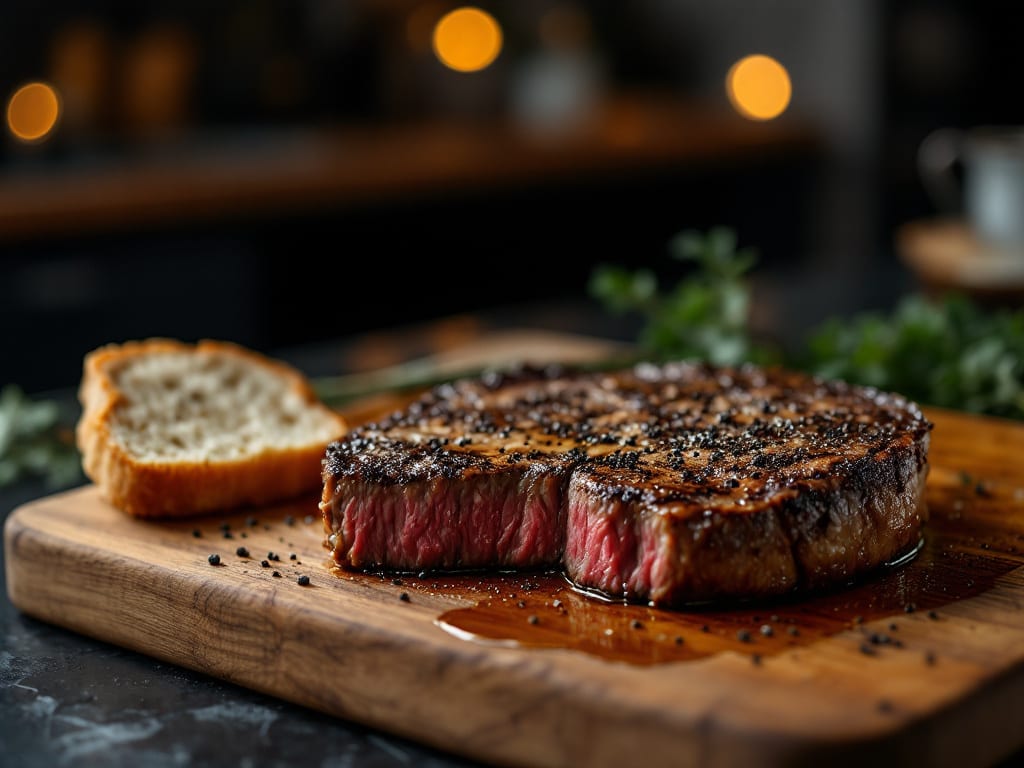
This bone marrow steak recipe transforms a simple cut into a restaurant-worthy masterpiece by infusing every bite with deep, umami-rich flavor. The secret lies in roasting the marrow alongside the steak, allowing its natural oils to baste the meat directly—creating a texture that’s perfectly tender with a caramelized crust.
I’ve perfected this method over years of testing, ensuring the marrow melts into the steak rather than pooling on the plate.
The process begins with a high-heat sear to lock in juices, followed by slow basting with rendered marrow for that signature melt-in-your-mouth tenderness. This isn’t just another steak recipe—it’s a technique that elevates even modest cuts like ribeye or sirloin into something extraordinary.
The result? A steak so rich and flavorful, it becomes the centerpiece of any meal.
Pair it with roasted garlic potatoes or caramelized onions to complete the dish, and you’ll have a plate that feels like a five-star dinner. The marrow-infused crust adds a depth of flavor you won’t find in standard preparations, making this the ultimate steak experience for home cooks.
Whether you’re grilling, pan-searing, or using a reverse sear method, this recipe delivers professional results with minimal fuss. Let’s get started on creating the most tender, flavor-packed steak you’ve ever made.
Ingredients for bone marrow steak
Quality cuts and umami-rich components elevate this bone marrow steak into a restaurant-worthy dish.
| Ingredient | Amount | Notes |
|---|---|---|
| Ribeye Steak 🥩 | 2 lb | Thick-cut, 1.5-2 inches, room temperature |
| Fresh Bone Marrow 🦴 | 1 cup | From beef knuckle or shank, fresh preferred |
| Kosher Salt 🧂 | 2 tsp | Diamond Crystal preferred, coarse grain |
| Freshly Ground Black Pepper 🌶️ | 1 tsp | Cracked peppercorns for optimal freshness |
| Unsalted Butter 🧈 | ½ cup | European-style, 82% fat content |
| Garlic Cloves 🧄 | 4 cloves | Smash flat for even cooking |
| Extra-Virgin Olive Oil 🫒 | 2 tbsp | High-quality, fruity variety |
| Fresh Thyme Leaves 🌿 | ¼ cup | Stems removed, finely chopped |
| Fresh Rosemary Sprigs 🌿 | 2 sprigs | Needles only, finely chopped |
| Yellow Onion 🧅 | 1 whole | Yellow or red, sliced into rings |
| Red Wine 🍷 | ½ cup | Cabernet Sauvignon or Merlot, dry |
| Beef Tallow 🥩 | 1 tbsp | Optional, for extra richness |
| Fresh Parsley 🌿 | ⅛ cup | Flat-leaf, chopped for garnish |
The ribeye is non-negotiable for this recipe—thick-cut, 1.5-2 inches ensures optimal tenderness while maintaining structure. Opt for USDA Choice or Prime if available, though well-marbled Choice will deliver exceptional results. For bone marrow, local butchers or specialty markets offer the freshest cuts—look for beef knuckle or shank marrow with a vibrant, glossy appearance. If using frozen marrow, thaw it overnight in the refrigerator to preserve texture. Costco often carries pre-packaged marrow from trusted suppliers, but inspect for any signs of oxidation or off-putting odors. The butter should be European-style, like Plugrá or Kerrygold, for its higher fat content and superior flavor profile. Fresh herbs like thyme and rosemary can be sourced from Whole Foods or Trader Joe’s—their bulk sections offer cost-effective, high-quality options.
No ribeye on hand? Sirloin or strip steak work as alternatives, though they may require slightly longer basting times. Substitute bone marrow with rendered beef fat or duck fat (use at one-third the amount), though the flavor will differ subtly. For the butter, ghee can replace unsalted butter in a pinch, though it lacks the same richness. Fresh herbs can be swapped for dried equivalents at one-fourth the amount, but fresh is always preferred for this technique. The red wine should be dry and bold—Caymus Vineyards or Apothic are excellent choices, though any Cabernet Sauvignon or Merlot will suffice. If unavailable, beef broth with a splash of balsamic vinegar mimics the depth of flavor. For the onion, shallots add a sweeter note, while leeks provide a milder alternative. Always ensure your steak reaches room temperature before cooking to promote even searing.
Store fresh bone marrow in an airtight container with a paper towel to absorb moisture, and keep it refrigerated for up to 5 days or frozen for 6 months. The steak should be used within 2 days of purchase for optimal tenderness. Once cooked, the steak can be reheated in the oven at 300°F for 10-15 minutes, covered with foil, to retain moisture. The rendered marrow can be stored in a small jar in the refrigerator for up to 1 week and used to baste other proteins or drizzled over roasted vegetables. For a make-ahead option, prepare the steak up to 2 days in advance and store it wrapped in butter paper at room temperature, then reheat gently before serving.
Why You’ll Love This Recipe
- Here’s what sold me: that first bite of buttery marrow melting onto the steak’s crust. It’s decadent, but the work? Just 15 minutes of hands-off roasting while you sip wine and pretend you’re a chef.
- Two-Ingredient Magic: I swear, the ribeye and marrow do all the heavy lifting here. Salt, pepper, and butter? That’s it. No fancy prep—just sear the steak, roast the marrow, and let the richness speak for itself.
- Rich Without Effort: Here’s what sold me: that first bite of buttery marrow melting onto the steak’s crust. It’s decadent, but the work? Just 15 minutes of hands-off roasting while you sip wine and pretend you’re a chef.
- Date Night or Lazy Sunday: Between us, this is my go-to for both fancy dinners and “who even cares” weekends. Serve it with crusty bread to soak up the marrow fat, and suddenly you’re impressing—or just feeding your hangover.
Step-by-step instructions for bone marrow steak with rich flavor infusion
Master this technique to transform a simple ribeye into a luxurious centerpiece with velvety marrow and deep, layered flavors.
Prepare the Bone Marrow for Maximum Flavor Extraction
Begin by scoring the surface of the 1 cup fresh bone marrow in a crosshatch pattern using a sharp knife. This creates channels that allow the marrow to render more completely during cooking. Place the marrow in a small baking dish and cover it with the 0.5 cup red wine. Let it marinate at room temperature for 30 minutes—this step infuses the marrow with wine’s acidity, balancing its richness.
While the marrow marinates, prepare the ribeye by patting it dry with paper towels. Season both sides generously with 2 teaspoons kosher salt and 1 teaspoon freshly ground black pepper, pressing the seasoning into the meat. This dry-brining step ensures maximum flavor penetration and creates a perfect crust. Let the steak sit at room temperature for 45 minutes before cooking—this allows for even heat distribution and prevents chilling the surface when it hits the pan.
Sear the Ribeye to Develop Deep Crust and Flavor
Heat a cast-iron skillet over medium-high heat until it’s screaming hot. Add 2 tablespoons extra-virgin olive oil and 1 tablespoon beef tallow (if using) and let them shimmer for 1 minute. Place the 2 lb ribeye steak in the pan and sear for 4 minutes per side without moving it, allowing a deep crust to form. Press down gently on the steak during the first minute—this prevents curling and ensures even contact with the pan.
After the initial sear, reduce heat to medium and continue cooking for an additional 2 minutes per side for medium-rare doneness (internal temperature 130-135°F). The steak should release easily from the pan when ready to flip. Remove the steak and let it rest on a wire rack for 10 minutes—this critical step allows juices to redistribute, ensuring a tender final texture.
Render the Bone Marrow and Infuse with Aromatics
Return the skillet to medium heat and carefully pour off all but 1 tablespoon of the rendered fat. Add the marinated bone marrow and cook for 8-10 minutes, basting the marrow with its own juices until it reaches 160°F and becomes fork-tender. Remove the marrow from the pan and set it aside to rest for 5 minutes—this allows it to firm up slightly before serving.
In the same pan, add 1 whole yellow onion sliced into rings and cook for 5 minutes until softened. Add 4 smashed garlic cloves, 0.25 cup fresh thyme leaves, and 2 sprigs fresh rosemary sprigs (needles only), cooking for 1 minute until fragrant. Deglaze the pan with 0.5 cup red wine, scraping up browned bits, and reduce by half. Remove from heat and stir in 0.5 cup unsalted butter until melted and emulsified.
Assemble and Serve for Maximum Impact
Slice the rested ribeye against the grain into ½-inch thick portions. Spoon the rendered marrow directly onto each plate alongside the steak slices. Ladle the aromatic butter sauce over the top, ensuring each serving gets an even distribution. Garnish with 0.125 cup fresh parsley for a pop of color and freshness.
Serve immediately with the remaining bone marrow sauce drizzled over the top. The contrast between the crispy crust, tender steak, and velvety marrow creates an unforgettable dining experience. For an elevated presentation, arrange the steak slices fanned out on the plate with the marrow nestled in the center, allowing guests to spoon it directly onto their portions.
Pro Tips For Making Bone Marrow Steak
- Sear the Steak First: Hit the ribeye with a screaming-hot cast iron for 2-3 minutes per side before touching the marrow. That crust locks in flavor and keeps the steak from turning into a butter bath too soon—yes, even if you’re tempted to rush.
- Score the Marrow Cleanly: Use a sharp knife to slice the marrow lengthwise down the center, then make two crosswise cuts to create a grid. This lets the butter pool in pockets instead of sliding off like a greasy mess—trust me, your plate will look (and taste) better.
- Don’t Overcrowd the Pan: Cook the steak alone first, then add the marrow and butter after it’s off the heat. Crowding the pan with everything at once steams the steak instead of searing it—this isn’t a stir-fry, it’s a showstopper.
- Use Cold Butter: Chill the unsalted butter for 10 minutes before adding it to the pan with the marrow. Cold butter emulsifies better with the marrow fat, creating a glossy, cohesive sauce instead of a greasy puddle—no fancy emulsifiers needed.
Essential equipment for perfect results
Cast-Iron Skillet
The heart of this recipe is a heavy-duty cast-iron skillet, like the Lodge 10.25-inch Pre-Seasoned—it retains heat beautifully and develops that coveted crust. Preheat it over medium-high heat until it’s nearly smoking hot before adding oil.
I’ve found that cast iron’s natural non-stick properties improve with each use, so don’t be afraid to let the steak sear undisturbed for those critical 4 minutes per side. 🔥
Meat Thermometer
A laser infrared thermometer (like the Thermoworks Thermapen ONE) is my go-to for precision—it reads internal temps instantly without piercing the steak. For bone marrow steak, aim for 130-135°F for medium-rare, but monitor the marrow separately—it should reach 160°F for perfect spreadability.
I keep one probe on the steak and another on the marrow to avoid cross-contamination.
Wire Rack & Platter
Resting the steak on a wire rack (like the OXO Good Grips) elevates it for even airflow, preventing soggy crusts. Pair it with a slate or marble serving platter to keep the steak warm while you plate.
I’ve learned the hard way—skipping the rack leads to steak sitting in its own juices, which can make the crust gummy. Pro tip: Place a paper towel-lined plate beneath the rack to catch any drips.
Bone Marrow Scoop
A small offset spatula or bone marrow scoop (available at Sur La Table) makes extracting the rendered marrow effortless. These tools have a narrow blade to slide under the marrow without tearing it.
I also keep a small ramekin nearby to hold the marrow while it rests—this prevents spills and keeps it warm until serving. For presentation, a ceramic spoon adds a touch of elegance.
Tongs for Flipping
Use heavy-duty tongs (like Macalla’s 9-inch) to flip the steak—avoid forks, which puncture the meat and release juices prematurely. The tongs give you a firm grip to press down during the initial sear, ensuring maximum crust formation.
I also keep a small bowl of ice water nearby to clean the tongs between uses, which prevents cross-flavors if you’re cooking multiple proteins.
Optional: Sous Vide Circulator
For a modern twist, use a sous vide circulator (like Anova Precision Cooker) to pre-cook the steak to 110°F before searing. This guarantees perfect doneness while keeping the center tender.
I’ve found it’s especially useful for thicker cuts (2+ inches). Pair it with a vacuum sealer (like FoodSaver) to maintain moisture during the process. 💫
Nutrition facts
Frequently asked questions
Can I substitute bone marrow with another fat for this steak?
Yes! While fresh bone marrow delivers the most authentic flavor, you can use rendered beef fat or duck fat at about one-third the quantity. For a vegetarian alternative, try olive oil or avocado oil, though the umami depth will differ. The key is using a high-fat option that can create a rich crust and baste the steak effectively.
How do I know when the bone marrow is fully rendered?
Look for a fork-tender texture and a temperature of 160°F. The marrow should be golden-brown and easily scooped from the bone. If it’s still firm or pale, return it to the pan for another 2-3 minutes, basting frequently. Overcooking can make it grainy, so aim for a velvety consistency.
What’s the best way to reheat leftover bone marrow steak?
Reheat in a 300°F oven for 10-15 minutes, wrapped in butter paper to retain moisture. For the marrow, warm it gently in a small saucepan over low heat until melted. Avoid microwaving—it can make the steak tough and the marrow greasy. Serve with fresh sides like roasted vegetables to complement the reheated dish.
Can I use frozen bone marrow instead of fresh?
Yes, but thaw it overnight in the refrigerator first. Frozen marrow may release more liquid during cooking, so pat it dry before scoring. Avoid thawing at room temperature, as this can accelerate spoilage. Fresh marrow always yields better texture and flavor, but properly thawed frozen marrow works in a pinch.
What’s the secret to getting that perfect crust on the steak?
Start with a screaming-hot cast-iron skillet and let the steak sear undisturbed for 4 minutes per side without moving it. Press down gently during the first minute to prevent curling. Use high-smoke-point oils like avocado or beef tallow, and avoid overcrowding the pan. Patience is key—rushing the sear creates a thin, uneven crust.

- Breaded Cheese Balls Recipe: Crispy Golden Bites With Gooey Centers - November 29, 2026
- Minced Meat Spaghetti Recipe: One-Pan Italian Comfort with Rich Ragù - November 29, 2026
- Aki’s Guava Chiffon Cake Recipe: Light, Airy Layers with Tropical Flavor Burst - November 29, 2026