
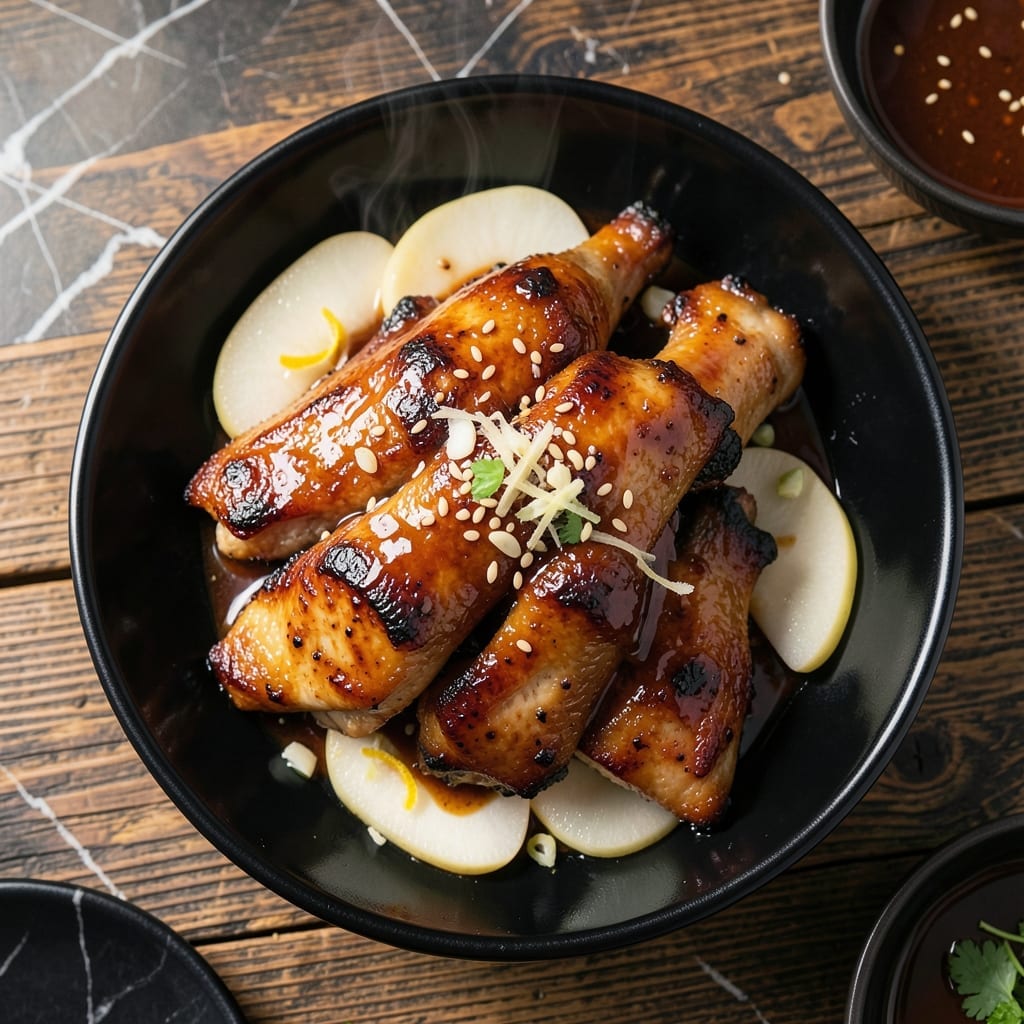
This recipe brings authentic Korean flavors to your grill with a sweet-savory marinade that transforms chicken into tender, caramelized perfection.
Traditional bulgogi techniques ensure each bite delivers maximum flavor, with a balance of soy, garlic, and pear that makes this dish unforgettable.
Ingredients for Bulgogi Chicken Recipe Korean
Authentic Korean flavors start with this carefully curated ingredient list for tender, caramelized perfection.
| Ingredient | Amount | Notes |
|---|---|---|
| Boneless, Skinless Chicken Thighs 🍗 | 1 ½ lb | Cut into thin strips |
| Soy Sauce 🫒 | ½ cup | Low-sodium preferred for balance |
| Brown Sugar 🍚 | ¼ cup | Packed, for caramelization |
| Asian Pear 🍐 | ½ whole | Peeled, grated for tenderness |
| Garlic Cloves 🧄 | 6 cloves | Minced finely for even flavor |
| Fresh Ginger 🌿 | 1 tbsp | Grated, no fibers |
| Sesame Oil 🫒 | 2 tbsp | Toasted for depth |
| Rice Wine 🍶 | ¼ cup | Mirin or sake acceptable |
| Green Onions 🧅 | 4 whole | Thinly sliced for garnish |
| Sesame Seeds 🌾 | 2 tbsp | Toasted for garnish |
| Black Pepper 🌶️ | ½ tsp | Freshly ground for best flavor |
| Vegetable Oil 🫒 | 1 tbsp | For cooking chicken |
| Red Pepper Flakes 🔥 | ½ tsp | Korean gochugaru if available |
The chicken thighs are non-negotiable—boneless, skinless for maximum marinade absorption and tenderness. Asian markets will have the best selection of pears (Bosc works in a pinch), while Korean soy sauce like Sempio or Jin adds authentic depth. Look for toasted sesame oil from brands like Kadoya—untested varieties can taste bitter. Fresh ginger and garlic should be firm, with no soft spots or sprouting.
No Asian pear? Substitute grated apple or kiwi—both contain enzymes that tenderize the meat. Out of rice wine? Dry sherry at half the amount works, or skip entirely and add a teaspoon of sugar to balance. For gluten-free, use tamari instead of soy sauce. The gochugaru (Korean chili flakes) adds subtle heat; omit if sensitive to spice or use paprika for color only.
Marinate the chicken for 4-12 hours for optimal flavor penetration. Store fresh ginger and garlic in the freezer—they grate beautifully straight from frozen. Leftovers keep 3-4 days in the fridge or freeze for up to 3 months (thaw before reheating to preserve texture).
Why You’ll Love This Recipe
- One Pot Wonder: I toss everything in a bowl, let it marinate, and cook in one pan—minimal cleanup, maximum flavor.
- Sweet-Savory Magic: The brown sugar and Asian pear caramelize into this sticky, finger-licking glaze that clings to every bite.
- Meal Prep Champion: I make a double batch on Sunday and it reheats beautifully for lunches all week. (Yes, even on a Tuesday night)
- Budget-Friendly Feast: Chicken thighs stay juicy and cheap, so I can feed my whole family without breaking the bank.
Step-by-Step Instructions for Bulgogi Chicken
Master the technique for tender, caramelized chicken with authentic Korean flavors.
Step 1: Prepare the Marinade Base
In a large bowl, whisk together the 0.5 cup soy sauce, 0.25 cup brown sugar, grated 0.5 whole Asian pear, minced 6 cloves garlic cloves, and grated 1 tbsp fresh ginger until the sugar dissolves. The pear adds natural enzymes that tenderize the meat while balancing the saltiness.
Next, whisk in the 2 tbsp sesame oil and 0.25 cup rice wine. This creates the foundation of your marinade. The sesame oil adds depth, while the rice wine contributes subtle sweetness. Stir in the 0.5 tsp black pepper and 0.5 tsp red pepper flakes for a gentle heat that builds complexity.
Step 2: Marinate the Chicken for Maximum Flavor
Add the 1.5 lb boneless, skinless chicken thighs, cut into thin strips, to the marinade. Ensure each piece is fully coated by massaging the mixture into the meat. I use my hands for this—it ensures every strip gets evenly covered.
Cover the bowl and refrigerate for at least 4 hours, or preferably overnight. The longer marination time allows the flavors to penetrate deeply and the sugar to begin caramelizing on the surface. This step is non-negotiable for achieving that signature sweet-savory bulgogi taste.
Step 3: Cook the Chicken to Caramelized Perfection
Heat 1 tbsp vegetable oil in a large skillet or wok over medium-high heat. Remove the chicken from the marinade (reserve the marinade) and add it to the hot pan in a single layer. Cook undisturbed for 4-5 minutes until the edges turn deep golden brown and slightly charred.
Flip the chicken and cook for another 3-4 minutes until cooked through and the marinade has reduced to a glossy glaze. If the pan gets too dry, add a splash of water to deglaze. The chicken should have a beautiful caramelized crust with juicy interiors.
Step 4: Finish and Garnish for Service
Transfer the chicken to a serving platter. Drizzle any remaining cooked marinade from the pan over the top for extra flavor. Immediately sprinkle with the thinly sliced 4 whole green onions and toasted 2 tbsp sesame seeds.
The green onions add freshness that cuts through the richness, while the toasted sesame seeds provide a nutty crunch. Serve while hot, with steamed rice to soak up the incredible sauce. The dish should have a balance of sweet, salty, and umami flavors in every bite.
Pro Tips For Making Bulgogi Chicken Recipe Korean
- Thin the Chicken: Slice the thighs into 1/4-inch pieces—any thicker and the marinade won’t penetrate, and you’ll end up with chewy bits. I learned this the hard way after too many dry, unevenly cooked batches.
- Grate the Pear: Sounds weird, but it works: finely grate the Asian pear into the marinade instead of blending. The texture helps the sugar and soy cling to the chicken better than juice alone.
- Skip the Overcrowding: Cook the chicken in batches if needed—dumping it all in at once steams it instead of searing. After burning three batches, I finally figured out that patience here means actual flavor.
- Rest Before Serving: Give the cooked chicken 5 minutes off the heat before serving. The juices redistribute, and that bulgogi stays tender instead of leaking all over the plate.
Common Mistakes When Making Perfect Results
Over-Marinating Mistake
While marinating is crucial, leaving chicken in the acidic mixture for over 24 hours can turn the texture mushy. The enzymes in the pear break down proteins, and too much time turns your strips to mush. I learned this the hard way with a batch that fell apart on the grill. 💡
Skipping the Thin Slice
Cutting chicken into thick pieces prevents proper flavor absorption and caramelization. Aim for ¼-inch thick strips—this ensures even cooking and maximum surface area for that delicious char. A sharp knife makes this easier and safer.
High Heat Errors
Cooking over too-high heat burns the sugar in the marinade before the chicken cooks through. Use medium-high heat and resist the urge to stir constantly. Let those edges crisp up for 4-5 minutes before flipping.
Wasting the Marinade
Never reuse raw marinade as a sauce—it contains raw chicken juices. Instead, boil reserved marinade for 3-5 minutes to kill bacteria before using it as a finishing glaze. This adds extra flavor without the risk.
Crowding the Pan
Overloading your skillet steams the chicken instead of searing it. Cook in batches if needed, giving each strip 1 inch of space. This prevents soggy results and ensures that perfect caramelized crust we all love.
Skipping the Rest
Let cooked chicken rest for 5 minutes before serving. This allows juices to redistribute, keeping every bite moist and flavorful. I always tent mine with foil to keep it warm while finishing other dishes.
Frequently Asked Questions
Can I use chicken breast instead of thighs?
You can, but thighs stay juicier due to higher fat content. If using breast, slice thinly and reduce cooking time to 3-4 minutes per side to prevent dryness. The marinade helps, but thighs are ideal for this dish.
How long can I store leftover bulgogi chicken?
Leftover chicken keeps well in an airtight container in the fridge for 3-4 days. For longer storage, freeze for up to 3 months. Reheat gently in a pan to maintain texture.
What can I serve with this dish?
Steamed white rice is traditional, but cauliflower rice works for low-carb. Add kimchi or quick-pickled cucumbers for contrast. The sweet-savory sauce pairs well with many sides.
Why does the recipe call for Asian pear?
The pear contains enzymes that tenderize the meat naturally. It also adds subtle sweetness that balances the soy sauce. If unavailable, substitute grated apple or kiwi.
Nutrition Facts

- BBQ Chicken Bowl Recipe Rice: Smoky Sweetness Over Fluffy Grains - September 28, 2026
- Beef Cutlet Recipe Ideas: Crispy Breaded Patties With Bold Seasonings - September 28, 2026
- Bluefin Tuna Recipe Ideas: Sushi-Grade Seared and Sesame-Crusted - September 28, 2026