
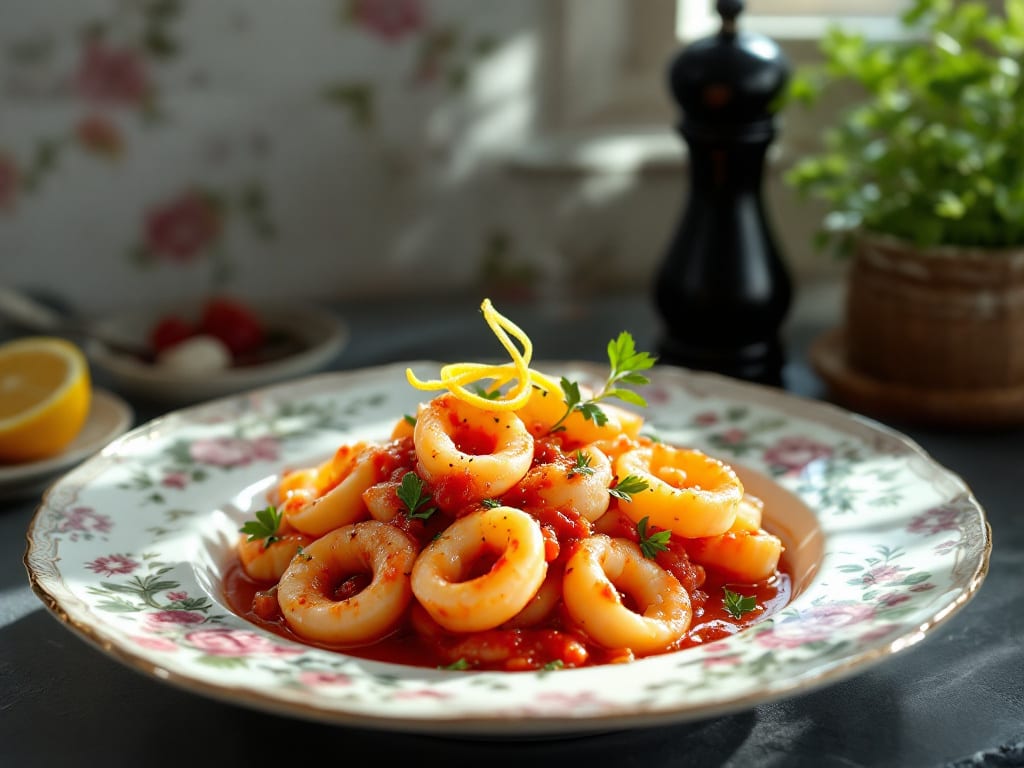
Mastering crispy calamari in rich red sauce transforms simple seafood into an unforgettable restaurant-quality dish. The secret lies in double-frying the squid for that signature crunch while balancing a velvety tomato sauce that’s neither too thin nor overly thick.
After years of perfecting this technique, I’ve developed a method that delivers crispy edges and tender centers every time.
This recipe begins with properly cleaning and cutting fresh calamari into rings and tubes—critical steps that ensure even cooking and maximum crispiness.
The red sauce builds on classic Italian foundations but adds depth with a touch of chili and white wine reduction, creating a complex flavor profile that complements the seafood perfectly. What makes this dish truly special is how the sauce clings to each crispy piece without overwhelming its delicate texture.
By the time you plate this dish, you’ll have golden-brown calamari with a satisfying crunch that gives way to tender flesh, all bathed in a glossy red sauce that’s rich yet balanced.
The contrast between the crispy exterior and velvety sauce creates a bite that’s both satisfying and elegant—ideal for impressing guests or elevating a weeknight dinner. The technique is straightforward once you understand the key steps, and the results speak for themselves.
Serve immediately with lemon wedges and crusty bread to soak up every last drop of that flavorful sauce. This dish pairs beautifully with a crisp white wine or a light salad to balance its richness. Let’s get started on creating your perfect calamari in red sauce.
Ingredients for calamari in red sauce
Fresh calamari and simple pantry staples create restaurant-quality seafood with velvety red sauce.
| Ingredient | Amount | Notes |
|---|---|---|
| Fresh Calamari 🦑 | 1 ½ lb | Cleaned, patted dry |
| All-Purpose Flour 🌾 | 1 cup | For dredging squid |
| Extra-Virgin Olive Oil 🫒 | 2 cups | For frying, high smoke point |
| Garlic Cloves 🧄 | 4 cloves | Minced, fresh preferred |
| Canned San Marzano Tomatoes 🍅 | 1 can | 28 oz, crushed by hand |
| Dry Red Wine 🍷 | ½ cup | Bold variety like Cabernet |
| Chili Flakes 🌶️ | 1 tsp | Adjust for heat preference |
| Dried Oregano 🍃 | 1 tsp | Italian variety preferred |
| Ground Black Pepper 🌶️ | ½ tsp | Freshly cracked |
| Sea Salt 🧂 | 1 ½ tsp | Kosher or fine grain |
| Lemon Wedges 🍋 | 2 whole | For serving, fresh squeezed |
| Fresh Basil Leaves 🌿 | ¼ cup | Chopped, for garnish |
| Crusty Bread 🍞 | 8 slices | For serving, unsalted |
The calamari is everything here. Freshness is non-negotiable—look for squid with a bright, glossy appearance and a clean ocean scent. Whole Foods or high-end seafood markets carry the best, but most grocery stores stock frozen calamari that works in a pinch. If using frozen, thaw completely in cold water before cleaning. The key to perfect rings and tubes is cutting through the body just behind the head—this ensures even cooking and maximum crispiness. Trader Joe’s often has pre-cleaned calamari if you want to skip this step entirely.
No red wine? Substitute with chicken or vegetable broth and a splash of balsamic vinegar for depth. Fresh garlic is ideal, but garlic powder at half the amount works if you’re short on time. For the tomatoes, San Marzano is the gold standard, but any high-quality canned tomatoes will do. The chili flakes can be omitted if you prefer a milder sauce, but I recommend keeping them—they add that subtle heat that balances the richness. If you’re using pre-minced garlic, toast it briefly in olive oil to deepen the flavor before adding to the sauce.
Freshly fried calamari should be served immediately—it loses crispiness fast. Store any leftover sauce in an airtight container in the fridge for up to 5 days, though it’s best used within 2 days for optimal flavor. The bread will keep at room temperature for 3 days if wrapped in a paper towel, but it’s best enjoyed fresh. For extra crispiness, reheat the calamari in a 400°F oven for 3-5 minutes before serving, but know it won’t match the first fry.
Why You’ll Love This Recipe
- Five-Ingredient Magic: I swear, this is the kind of dish where you stare at your pantry and think, “I’ve got this.” Fresh calamari gets a quick flour dip—no fancy batter here—and lands in sizzling olive oil while the garlic and tomatoes simmer into something rich and sweet. The San Marzano tomatoes make all the difference; their natural depth turns a simple sauce into something restaurant-worthy.
- Crispy-Creamy Bite: That first crunch when you break into the calamari? Chef’s kiss. The flour coating gives way to tender, juicy rings, and the red sauce clings like a hug—bright from garlic, mellow from slow-simmered tomatoes. It’s the kind of contrast that makes you reach for seconds without thinking.
- Weeknight to Dinner Party: Between us, this is my go-to when I’m feeding a crowd but don’t want to slave over it. Double the batch, serve it with crusty bread or over pasta, and suddenly you’ve got a dish that feels special—no stress. My daughter even asks for it at birthday parties, and she’s not a seafood fan.
- Leftovers That Don’t Suck: Honestly, I make this on Sundays just so I have something reliable for lunches. The sauce thickens beautifully the next day, and the calamari stays tender if you reheat it gently. Plus, it’s weirdly budget-friendly—San Marzano tomatoes last forever, and calamari freezes like a dream if you’re not using it all at once.
Step-by-step instructions for calamari in red sauce
Here’s the method to achieve perfectly crispy calamari with a rich, velvety tomato sauce.
Prepare the Calamari for Frying
Pat the 1.5 lb fresh calamari completely dry with paper towels—this is crucial for achieving that crispy exterior. Remove the small tentacles from the body and cut the larger tentacles into ½-inch rings. Cut the body into 1-inch rings as well, making sure to keep the pieces uniform in size for even cooking.
Place the 1 cup all-purpose flour in a large, shallow bowl. Season it with 1.5 tsp sea salt, 1 tsp dried oregano, and ½ tsp ground black pepper. Gently toss the calamari pieces in the flour mixture, shaking off any excess. This light coating will create a golden crust when fried. Work in batches if needed, but don’t overcrowd the bowl—this makes dredging difficult.
Fry the Calamari Until Golden
Heat 1 cup of the extra-virgin olive oil in a large skillet over medium-high heat until it reaches 350°F. You’ll know it’s ready when a small piece of calamari sizzles vigorously upon contact. Fry the calamari in batches for 1-2 minutes per side until it turns a deep golden brown. The pieces should float to the surface and crisp up quickly—don’t walk away during this step.
Transfer the fried calamari to a paper towel-lined plate to drain excess oil. Keep the fried calamari warm while you prepare the sauce. If the oil starts to smoke excessively, reduce the heat slightly to maintain a steady 350°F temperature. Overcrowding the pan will lower the oil temperature, resulting in greasy rather than crispy calamari.
Build the Tomato-Wine Sauce
In the same skillet (no need to clean it—the browned bits add flavor), reduce the heat to medium and add the remaining 1 cup extra-virgin olive oil. Once the oil is shimmering, add the 4 minced garlic cloves and sauté for 30 seconds until fragrant. Be careful not to let the garlic burn—it should turn golden without darkening.
Pour in the ½ cup dry red wine and scrape up any browned bits from the bottom of the pan. Let the wine simmer for 3-4 minutes until it reduces by half. Add the 1 can crushed San Marzano tomatoes, 1 tsp chili flakes, and bring the mixture to a gentle simmer. Let it cook uncovered for 10-12 minutes, stirring occasionally, until the sauce thickens slightly and the flavors meld together.
Finish the Sauce and Combine
Once the sauce has thickened, stir in the ¼ cup chopped fresh basil leaves and season with an additional ½ tsp sea salt if needed. Taste and adjust the seasoning—you want a balance of acidity, spice, and richness. The sauce should coat the back of a spoon but still be fluid enough to cling to the calamari.
Return the fried calamari to the skillet and gently toss to coat evenly in the sauce. Let it simmer together for 2-3 minutes so the calamari absorbs the flavors without becoming soggy. The calamari should remain crispy while the sauce clings to it like a velvety blanket.
Serve with Crusty Bread
Transfer the calamari and sauce to a warm serving platter. Garnish with the remaining 2 lemon wedges and a sprinkle of fresh basil leaves for a pop of color and brightness. Serve immediately with the 8 slices crusty bread on the side for dipping or scooping up the delicious sauce.
Each bite should deliver a perfect contrast: crispy, golden calamari with a rich, slightly spicy tomato sauce that clings to every piece. The bread soaks up any remaining sauce, making this a satisfying, shareable dish that’s perfect for any occasion.
Pro Tips For Making Calamari In Red Sauce
- Cut Calamari Lengthwise: Split the squid bodies open like a book—this keeps the meat tender and lets the sauce penetrate every fold. I used to leave them whole, and they’d stay chewy no matter how long I cooked them.
- Toast the Flour First: Bloom the flour in olive oil for 30 seconds before adding liquid—it deepens the flavor and prevents a raw taste. Skip this, and your sauce will taste like flour soup.
- Simmer Tomatoes Low: Reduce the San Marzano tomatoes on medium-low for at least 15 minutes before adding garlic. Rushing this step means a watery sauce that won’t cling to the calamari.
- Fry in Batches: Crowd the pan, and the oil temperature drops—soggy, greasy calamari is the result. Work in 2-3 batches max, and keep the oil hotter than you think.
Storing and reheating your calamari in red sauce
Refrigerator Storage
Store any leftover sauce in an airtight container (I prefer glass Pyrex) and refrigerate for up to 5 days, though the flavor peaks within 2 days.
The sauce thickens slightly when chilled—simply reheat it gently on the stovetop with a splash of water or red wine to restore its velvety texture. Keep the fried calamari separate in the fridge, but know it loses crispiness after 24 hours—best enjoyed fresh. 🌡️
Freezer-Friendly Sauce
For long-term storage, freeze the sauce in silicone ice cube trays (perfect for portion control) or quart-sized freezer bags. Leave ½-inch headspace to prevent expansion cracks. Thaw overnight in the fridge, then reheat on low heat—never microwave, as it can make the sauce grainy.
The sauce retains its depth but may lose some brightness over 3 months of freezing. ❄️
Reviving Crispiness
If you must reheat the calamari, place it on a baking sheet and crisp in a 400°F oven for 3-5 minutes—this restores some crunch without turning it rubbery.
For a quick fix, fry again in ¼ inch of fresh olive oil over high heat for 30 seconds per side. Just remember: nothing beats freshly fried calamari for that perfect texture. 🔥
Bread Storage Tips
Keep crusty bread in a paper towel-lined bag at room temperature for up to 3 days to maintain crispness. For longer storage, freeze slices individually between parchment paper—toast directly from frozen for 2-3 minutes in a 375°F oven.
The bread soaks up sauce beautifully when fresh, but even reheated, it works well for dipping. 🍞
Sauce Thickening Fix
If your refrigerated sauce seems too thin after reheating, mix 1 tsp cornstarch with 1 tbsp cold water, stir into the sauce, and simmer for 2 minutes until thickened.
For extra richness, add 1 tsp butter or a splash of red wine while reheating. The goal is a sauce that clings to the calamari without overwhelming it. ✨
Lemon & Herb Refresh
Brighten reheated sauce with a squeeze of fresh lemon juice and a sprinkle of chopped basil—this cuts through any richness and revives the flavors. Garnish with extra chili flakes if you want to restore some heat.
Serve with warm crusty bread to soak up the sauce and complete the experience. 🍋
Nutrition facts
Frequently asked questions about calamari in red sauce
Can I use frozen calamari instead of fresh?
Thaw frozen calamari completely in cold water before patting it completely dry. The texture will be slightly less tender than fresh, but it still delivers that satisfying crispy exterior when fried properly. Just be sure to drain it well before dredging in flour—any moisture will prevent proper browning.
How do I prevent the calamari from getting soggy in the sauce?
Fry the calamari to a deep golden brown first, then immediately transfer it to a warm plate lined with paper towels. When adding it back to the sauce, cook for just 2-3 minutes—this lets the flavors meld without steaming the squid. Keep the sauce at a gentle simmer, not a boil, to maintain crispiness.
What’s the best wine substitute for the red sauce?
If you don’t have red wine, use ½ cup chicken or vegetable broth plus 1 tablespoon balsamic vinegar for depth. For a non-alcoholic version, try ½ cup cranberry juice reduced by half—it adds natural acidity and sweetness that mimics wine’s complexity. The sauce will still develop rich flavors without the alcohol.
Can I make this recipe ahead of time?
Prepare the sauce up to 1 day ahead and store it in an airtight container in the fridge. Reheat gently on the stovetop with a splash of water or wine to restore its velvety texture. However, fry the calamari fresh before serving—it loses crispiness after 24 hours. For a complete make-ahead meal, cook the calamari, let it cool, and refrigerate separately.
How do I adjust the spice level in the sauce?
Start with the 1 teaspoon chili flakes called for, then adjust to taste. For milder heat, reduce to ½ teaspoon or omit entirely. If you love spice, add ¼ teaspoon red pepper flakes or a pinch of cayenne. Remember, the sauce will mellow slightly after sitting, so start with your preferred heat level.

- Yoder Prime Rib Roast Recipe: Smoked Low and Slow to Fall-Apart Tender - November 29, 2026
- Breaded Cheese Balls Recipe: Crispy Golden Bites With Gooey Centers - November 29, 2026
- Minced Meat Spaghetti Recipe: One-Pan Italian Comfort with Rich Ragù - November 29, 2026