
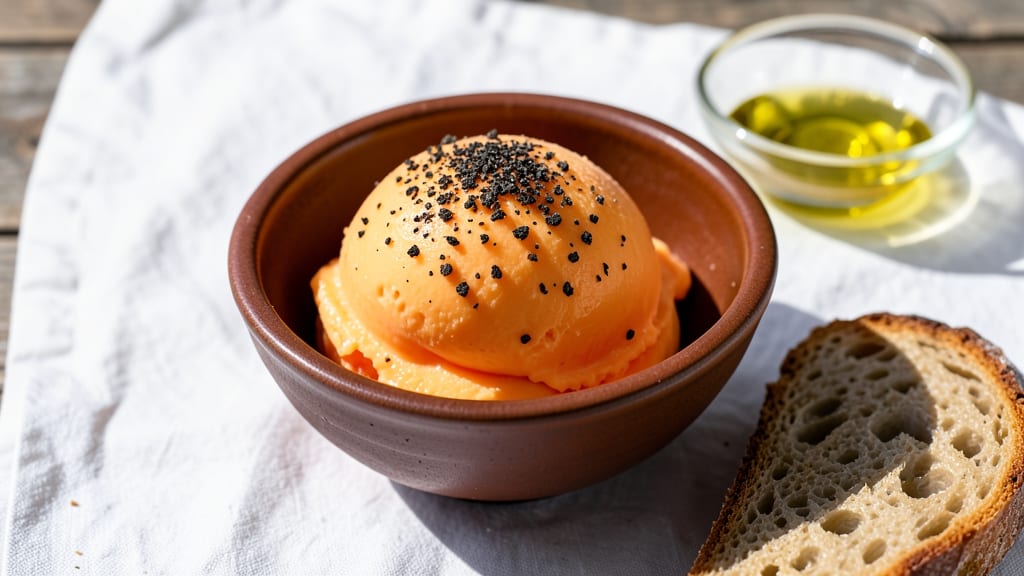
This cantaloupe ice cream recipe transforms summer’s sweetest fruit into a creamy, dreamy dessert that requires just 10 minutes of prep and no ice cream maker.
The secret lies in blending ripe cantaloupe with dairy (or coconut milk for a vegan version) until silky smooth, then freezing it with a touch of sweetener for perfect texture.
I developed this recipe during peak cantaloupe season when I wanted to preserve that sun-ripened sweetness without losing its vibrant flavor.
The beauty of this dessert is its simplicity—just a handful of ingredients and one key technique: blending the fruit until completely smooth before freezing. This ensures a velvety, melt-in-your-mouth consistency that rivals traditional ice cream.
The natural sugars in cantaloupe create a delicate sweetness, while optional additions like lime zest or fresh mint elevate it to restaurant-quality dessert status.
What you’ll end up with is a pale golden ice cream that tastes like summer in every bite—refreshing, lightly sweet, and packed with tropical brightness. It’s the perfect palate cleanser after a heavy meal or a standalone treat when cantaloupe is at its peak.
Serve it chilled in bowls with a sprinkle of toasted coconut or fresh berries for an extra touch of elegance.
This recipe works equally well as a no-churn version (simply freeze without churning) or as a sorbet (using only fruit and water). The possibilities for customization are endless, but the base technique remains the same—simple, foolproof, and guaranteed to impress. Let’s get started on creating your own sun-kissed dessert.
Ingredients for cantaloupe ice cream
Sun-ripened cantaloupe meets velvety cream in this ultra-simple, no-churn dessert.
| Ingredient | Amount | Notes |
|---|---|---|
| Ripe Cantaloupe 🍈 | 4 cups | Cubed, seeds removed, ripe (smells sweet at stem) |
| Heavy Whipping Cream 🥛 | 1 cup | Full-fat for creaminess (36% or higher) |
| Coconut Milk (Full-Fat, for vegan option) 🥥 | 1 cup | Chilled, unsweetened (substitute for dairy) |
| Granulated Sugar 🍚 | ¼ cup | Adjust to taste (cantaloupe may need less) |
| Lemon Juice 🍋 | 1 tbsp | Freshly squeezed, balances sweetness |
| Lime Zest 🍈 | 1 tsp | Optional, for citrus brightness (organic preferred) |
| Fresh Mint Leaves 🌿 | ¼ cup | Chopped, optional garnish (stems removed) |
| Toasted Coconut Flakes 🥥 | 2 tbsp | For garnish (lightly toasted in dry pan) |
| Vanilla Extract 💧 | ½ tsp | Pure extract for depth (optional) |
| Sea Salt 🧂 | ¼ tsp | Fine grain, enhances flavor (Diamond Crystal preferred) |
The cantaloupe is non-negotiable—choose one that yields to gentle pressure at the stem and smells intensely sweet. Trader Joe’s and local farmers markets often carry the ripest varieties during summer months. For the dairy, organic heavy whipping cream from Whole Foods delivers the best texture, but any full-fat cream works. If opting for the vegan version, chilled coconut milk is essential—warmer milk won’t whip properly. The sugar is merely a touch; cantaloupe’s natural sweetness carries the flavor profile, but adjust based on your fruit’s ripeness.
No heavy cream? Greek yogurt blended until ultra-smooth works in a pinch, though texture will be slightly denser. Swap granulated sugar for honey or agave at a 1:1 ratio, though it may alter the ice cream’s delicate structure. Lime zest can be omitted, but if you love it, zest only the outer yellow layer—the white pith is bitter. For a sorbet version, simply omit the dairy entirely and use water or coconut water instead. The vanilla extract is optional but adds a professional touch; imitation extracts lack the depth.
Prevent ice crystals by pressing plastic wrap directly onto the surface before freezing. Portion into airtight containers for up to 2 months—it actually improves with time as flavors meld. For serving, let sit at room temperature for 5 minutes before scooping. Garnish with toasted coconut flakes and mint leaves just before serving to preserve their freshness. This dessert thrives when served firm but scoopable—about 3-4 hours out of the freezer.
Why You’ll Love This Recipe
- I swear by this trick: just scoop the ripe cantaloupe flesh into a bowl, mash it with a fork, then mix in the cream and sugar. No pulsing, no straining—just good old elbow grease. (Yes, even my lazy summer self can handle this.)
- No Blender Needed: I swear by this trick: just scoop the ripe cantaloupe flesh into a bowl, mash it with a fork, then mix in the cream and sugar. No pulsing, no straining—just good old elbow grease. (Yes, even my lazy summer self can handle this.)
- Sunshine in a Bowl: That bright, honeyed cantaloupe flavor shines through without being overpowered—like summer in dessert form. The lemon juice cuts through the sweetness just enough to make it feel fresh, not cloying. Honestly, it’s the kind of flavor that makes me forget it’s technically “healthy.”
- Crowd-Pleaser for Any Gathering: Serve it solo as a light dessert or blend it into smoothies for a breakfast upgrade. The vegan version with coconut milk? Still creamy, still delicious—no one will guess it’s dairy-free. (Between us, my picky-eating nephew asked for seconds.)
Step-by-step instructions for cantaloupe ice cream
Here’s the method that transforms summer’s sweetest fruit into velvety, refreshing ice cream.
Prepare the Cantaloupe Purée
Cut the 4 cups ripe cantaloupe into chunks and remove any seeds. Place the cantaloupe in a food processor fitted with the metal blade and purée until completely smooth. The texture should be silky with no visible chunks—this ensures a creamy final product.
Transfer the purée to a fine-mesh strainer set over a bowl and press gently to remove excess liquid. You want to eliminate any watery consistency while keeping the vibrant cantaloupe flavor intact. This strained purée will form the base of your ice cream, so don’t skip this step—it makes all the difference in texture.
Whip the Cream Base
In a separate bowl, combine the 1 cup heavy whipping cream, 1 cup coconut milk (full-fat, for vegan option), 0.5 teaspoon vanilla extract, and 0.25 teaspoon sea salt. Whip this mixture on medium speed until soft peaks form—about 2-3 minutes. The coconut milk adds richness while keeping the texture light, especially if you’re making the vegan version.
Taste the mixture before proceeding. If it needs sweetness, add the 0.25 cup granulated sugar now and whisk to dissolve completely. The cantaloupe purée may already be sweet, so adjust carefully. This is the moment to balance flavors before freezing—once it’s in the ice cream maker, adjustments are impossible.
Combine and Chill
Gently fold the cantaloupe purée into the whipped cream mixture using a spatula. Work slowly to maintain airiness—overmixing will deflate the whipped cream. Stir in the 1 tablespoon lemon juice and 1 teaspoon lime zest for brightness. The acidity from the citrus enhances the cantaloupe’s natural sweetness while preventing iciness in the final texture.
Transfer the mixture to an airtight container and refrigerate for at least 1 hour. Chilling is crucial—it ensures the ice cream churns smoothly and develops a creamy consistency rather than a grainy one. This step also allows flavors to meld before freezing.
Churn the Ice Cream
Pour the chilled mixture into an ice cream maker and churn according to the manufacturer’s instructions, typically 20-25 minutes. The ice cream will thicken and take on a soft-serve consistency. If your machine doesn’t have a self-eject function, stop churning when it reaches a thick, scoopable texture—usually 5-10 minutes before the recommended time.
Real talk: Don’t over-churn or the texture will become dense. You want it to hold its shape when scooped but still be creamy. Transfer the ice cream to a lidded container and freeze for 4-6 hours to firm up. This additional freezing time ensures a perfect scoop without melting too quickly.
Serve with Garnishes
When ready to serve, let the ice cream sit at room temperature for 5-10 minutes to soften slightly. This makes scooping easier and enhances the creamy texture. Top each serving with 2 tablespoons toasted coconut flakes and 0.25 cup chopped fresh mint leaves for a tropical, refreshing finish.
The contrast of cool cantaloupe ice cream with warm toasted coconut and bright mint creates a sensory experience that feels like summer in every bite. Serve immediately to enjoy the perfect balance of flavors and textures.
Pro Tips For Making Cantaloupe Ice Cream
- Strain the Juice: DESCRIPTION: Use a fine-mesh sieve or cheesecloth—no matter how ripe the cantaloupe, you’ll end up with pulp in your ice cream if you don’t. I learned this the hard way after scraping out seeds and still getting gummy bites. A clean strain saves you from chewing later.
- Chill the Base Hard: DESCRIPTION: Freeze your cantaloupe mixture in a shallow tray first, then blend it smooth before transferring to the ice cream maker. This cuts churning time in half and prevents icy texture—my first attempts always ended up like snow cones.
- Sweeten Gradually: DESCRIPTION: Start with half the sugar called for and taste after churning. Cantaloupe’s natural sweetness varies wildly, and you can always add more later. I once over-sweetened a batch and had to hide it under whipped cream.
- Use Cold Cream: DESCRIPTION: Whip the heavy cream (or coconut milk) cold—straight from the fridge—so it holds its shape longer. Warm cream collapses faster, and you’ll end up with a soupy mess. Trust me, this is the thing that matters most for vegan or dairy versions.
Troubleshooting perfect results
Grainy Texture Fix
If your cantaloupe ice cream turns out grainy, it’s usually because the purée wasn’t strained enough or the mixture froze too quickly. To prevent this, strain the cantaloupe purée through a fine-mesh sieve or cheesecloth to remove all excess liquid and fiber.
Also, chill the mixture for at least 1 hour before churning—this helps create a smoother texture. If graininess still appears, blend the frozen ice cream briefly with an immersion blender before serving. 💡
Icy or Freezer Burn
Freezer burn happens when air reaches the surface of the ice cream, causing dry spots. Always press plastic wrap directly onto the surface before sealing the container with a lid. For extra protection, use a parchment-lined container or silicone ice cube trays for individual portions.
If freezer burn occurs, simply scoop off the affected top layer—it won’t ruin the texture underneath. ❄️
Too Sweet or Bland
Cantaloupe’s natural sweetness varies by ripeness. If your ice cream tastes bland, add 1-2 teaspoons of honey or agave to the whipped cream mixture before combining. For overly sweet results, reduce the sugar to ¼ cup or omit it entirely—ripe cantaloupe should shine on its own.
Taste the purée before blending; if it’s already intensely sweet, skip added sugar altogether. 🍯
Soggy or Melting Too Fast
This usually means the ice cream wasn’t frozen long enough or the cream base wasn’t whipped properly. Ensure the mixture is fully chilled before churning and whip the cream to stiff peaks (not just soft).
For a firmer texture, freeze the ice cream for 6-8 hours instead of the standard 4-6 hours. Serve in a chilled bowl to slow melting and maintain scoopability. ⏱️
Separation of Liquids
If your ice cream looks watery or separates, the cantaloupe purée was too liquidy. Strain it again through a clean kitchen towel or paper towels to absorb excess moisture. For extra insurance, blend the purée with 1 tablespoon of cornstarch (mixed with a splash of water) to thicken it naturally.
This trick works wonders for fruit-based ice creams. 🥄
No-Churn Alternative
If you don’t have an ice cream maker, freeze the mixture in a loaf pan, stirring with a fork every 30 minutes for the first 2 hours. This mimics the churning process.
For a smoother result, fold in ½ cup of whipped cream just before the final freeze. The texture won’t be as creamy, but it’ll still be delicious and foolproof. 🍦
Nutrition facts
Frequently asked questions
Can I make this cantaloupe dessert without an ice cream maker?
For a no-churn version, simply blend the cantaloupe purée with whipped cream, chill for 1 hour, then freeze in an airtight container. Stir with a fork every 30 minutes for the first 2 hours to break up ice crystals. Add ½ cup whipped cream before the final freeze for extra creaminess. The texture won’t be as smooth, but it’ll still taste amazing.
How do I know when cantaloupe is ripe enough for this recipe?
Look for cantaloupe with a strong sweet smell at the stem end and slightly soft skin when pressed gently. The color should be deep orange-yellow with a slightly dull, not shiny, rind. Avoid fruit with green patches or a hollow stem—these signs indicate underripe fruit. Ripe cantaloupe will have a sweet, floral aroma that’s unmistakable.
Can I use other melons like honeydew or watermelon instead?
While you can substitute honeydew (which has a similar texture), watermelon will make a very watery ice cream due to its high moisture content. For best results, stick with cantaloupe or try ripe peaches or mangoes for a different fruit-forward flavor. The key is using fruit with balanced sweetness and low water content.
Why does my cantaloupe ice cream have ice crystals?
Ice crystals form when air gets trapped in the mixture during freezing. To prevent this, always press plastic wrap directly onto the surface before sealing the container. Also ensure your mixture is fully chilled before freezing and avoid opening the container frequently. If crystals appear, blend the frozen ice cream briefly with an immersion blender before serving.
How long will this recipe keep in the freezer?
Properly stored in an airtight container with plastic wrap pressed onto the surface, this cantaloupe ice cream will maintain quality for up to 2 months. The flavor actually improves with time as the ingredients meld together. For best texture, let it sit at room temperature for 5-10 minutes before serving to restore creaminess.

- Falafel Recipe Without Flour: Chickpea Blend That Binds Without a Grain - November 29, 2026
- Baked Breaded Eggplant Recipe: Crispy Parmesan-Crusted Perfection - November 29, 2026
- Deep Fried Donuts Recipe: Crispy Shells and Pillowy Cores - November 29, 2026