
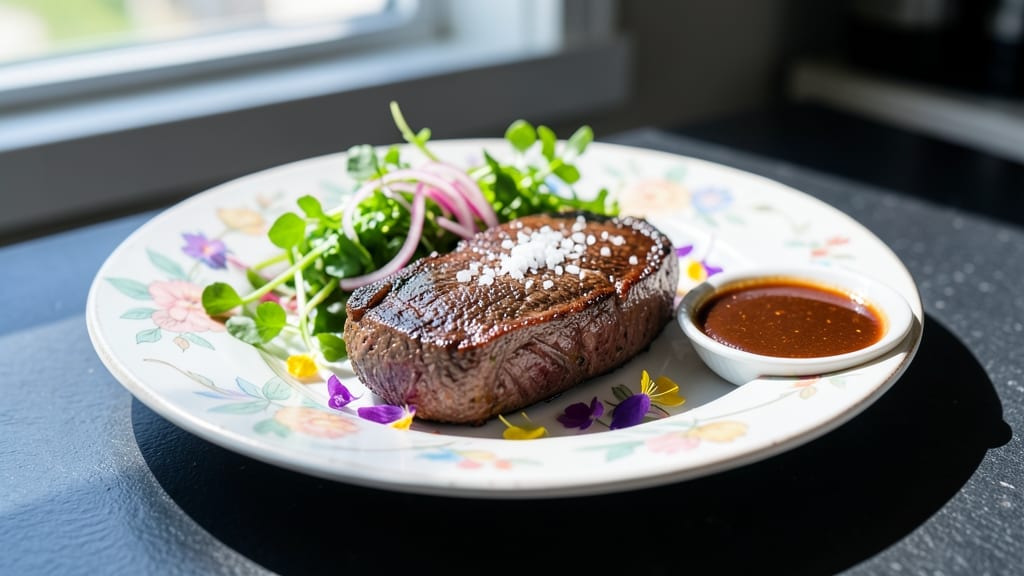
This carpetbag steak recipe delivers a Southern brunch classic where perfectly seared steak meets a runny yolk—juicy, smoky, and impossible to resist. The secret lies in high-heat searing for that crispy crust while keeping the inside tender, then crowning it with a sunny-side-up egg that ties everything together.
I’ve perfected this technique over years of weekend breakfasts, and it’s become a staple for lazy Sundays or special occasions.
The beauty of this dish is its simplicity: a thick-cut steak (ribeye or sirloin works best) gets seasoned with a smoky blend of spices, then cooked to your preferred doneness before sliding under a fried egg.
The egg’s richness cuts through the steak’s richness, creating a perfect balance. Serve it with crispy hash browns or fluffy biscuits for a meal that feels both hearty and effortless.
What makes this recipe stand out is the textural contrast—crispy steak edges, tender meat, and a perfectly runny yolk that pools over the top. The smoky spices add depth without overpowering, while the egg’s creaminess brings everything together.
It’s the kind of dish that transforms a simple breakfast into a memorable experience, and it comes together in under 30 minutes.
Whether you’re feeding a crowd or treating yourself to a weekend indulgence, this carpetbag steak delivers restaurant-quality results at home. The sides are flexible—try it with a crisp salad for a lighter option or keep it classic with buttery biscuits. Here’s how to make it perfectly every time.
Ingredients for carpetbag steak
Thick-cut steak, smoky spices, and runny yolks—this Southern brunch classic delivers restaurant-quality texture in every bite.
| Ingredient | Amount | Notes |
|---|---|---|
| Thick-Cut Ribeye Steak 🥩 | 1 ½ lb | 1.5-inch thick, bone-in preferred |
| Large Eggs 🥚 | 4 whole | Fresh, room temperature |
| Unsalted Butter 🧈 | ½ cup | Cold, cut into 1-inch cubes |
| Smoked Paprika 🌶️ | 1 tbsp | High-quality, vibrant color |
| Ground Black Pepper 🌶️ | 1 ½ tsp | Freshly cracked, coarse grind |
| Diamond Crystal Kosher Salt 🧂 | 1 ½ tsp | Fine grain, not iodized |
| Garlic Cloves 🧄 | 4 cloves | Fresh, peeled, minced |
| Extra-Virgin Olive Oil 🫒 | 2 tbsp | High smoke point, fruity |
| Fresh Thyme Leaves 🌿 | ½ tsp | Finely chopped, stems removed |
| Yellow Onion 🧅 | 1 whole | Yellow or red, thinly sliced |
| Heavy Whipping Cream 🥛 | ¼ cup | Full-fat, chilled |
| Cayenne Pepper 🔥 | ¼ tsp | Adjust for heat preference |
The steak selection is non-negotiable for this dish. Ribeye delivers the perfect marbling for juiciness, while sirloin offers leaner flavor. Opt for 1.5-inch thick cuts from a quality butcher—Whole Foods or D’Artagnan carry excellent options. Bone-in steaks develop better crust, but boneless works if you prefer convenience. Look for vibrant red color and visible fat marbling; these indicators ensure optimal tenderness. For the spices, Penzeys Spices offers superior quality, but any high-grade smoked paprika will suffice—just ensure it’s fresh with no bitter aftertaste. The butter should be European-style if available, as it has higher fat content for superior searing.
Substitutions should preserve the dish’s core characteristics. If ribeye isn’t available, New York strip steak works well but may require slightly longer cooking. For the eggs, duck eggs add richness but aren’t necessary. The heavy cream can be replaced with half-and-half, though texture will differ slightly. When mincing garlic, roast it first for 10 minutes at 400°F to mellow its sharpness—this professional technique enhances the overall flavor profile. The onions can be swapped for shallots, but yellow onions provide the necessary sweetness to balance the smoky spices. For those avoiding dairy, olive oil can replace the butter in the crust, though texture will be less crisp.
Proper storage ensures peak performance. Steaks should be kept in the coldest part of the refrigerator, wrapped in parchment paper, and used within 3-4 days for optimal tenderness. Eggs maintain freshness for up to 3 weeks when stored point-side down in the fridge. The spice blend can be pre-mixed and stored in an airtight container for up to 6 months, though fresh spices always yield superior results. For meal prep, cook the steaks ahead and reheat in a 400°F oven for 5-7 minutes to maintain texture. The eggs should always be fried fresh to ensure perfect runniness, but you can pre-chop onions and garlic to save time during cooking.
Why You’ll Love This Recipe
- Two-Handed Cooking: I swear by this recipe when I’m tired—just sear the ribeye in butter, crack eggs on top, and let the smoked paprika do its magic. No flipping, no fuss, just hands-off perfection while you sip your coffee.
- Butter-Basted Magic: That ribeye basted in butter with a sprinkle of smoked paprika? It’s the kind of rich, smoky flavor that makes you close your eyes and sigh. The eggs soak up the goodness like a dream, turning into a creamy, peppery finish.
- Weeknight to Dinner Party: Honestly, this works for both. Toss together a quick salad or crusty bread, and it’s my go-to for lazy nights. But serve it on a slate board with a drizzle of extra butter, and suddenly it’s fancy enough for guests—no one will guess how little effort it took.
- Leftovers? More Like Leftovers: I make this for Sunday dinner and eat it all week. The steak stays tender, the eggs reheat like a dream, and the smoky paprika flavor only gets deeper over time. It’s my secret weapon for cutting grocery costs without sacrificing taste.
Step-by-step instructions for smoky-spiced crust with juicy fillets
Master this technique and you’ll achieve a perfectly balanced crust with tender, flavorful meat inside.
Prepare the Steak and Seasoning Mixture
Begin by patting the 1.5 lb thick-cut ribeye steak completely dry with paper towels. This step is crucial for developing that signature crispy crust. Place the steak on a cutting board and make a deep pocket in the center by slicing horizontally about halfway through, being careful not to cut all the way through. This creates space for the filling.
In a small bowl, combine the 1 tbsp smoked paprika, 1.5 tsp ground black pepper, 1.5 tsp diamond crystal kosher salt, 0.5 tsp fresh thyme leaves, and 0.25 tsp cayenne pepper. Mix thoroughly to create a well-balanced spice blend. This aromatic mixture will infuse both the crust and the filling with deep, smoky flavors.
Create the Crust and Fill the Steak
Generously coat the exterior of the steak with the spice mixture, pressing it firmly into the meat so it adheres completely. This ensures maximum flavor penetration and even browning. Next, finely dice the 1 whole yellow onion and 4 cloves garlic cloves (about 1 tablespoon total). In a small skillet, heat 1 tablespoon extra-virgin olive oil over medium heat and sauté the onion and garlic until softened and fragrant, about 3-4 minutes. Remove from heat and let cool slightly.
Spread the sautéed onion and garlic mixture evenly into the pocket you created in the steak. This filling will add moisture and depth of flavor while cooking. Secure the steak by tying it with kitchen twine at two-inch intervals, ensuring it holds its shape during cooking. This technique creates the signature “carpetbag” effect while keeping the filling contained.
Sear and Roast for Perfect Texture
Heat a cast-iron skillet over medium-high heat until very hot. Add the remaining 1 tablespoon extra-virgin olive oil and let it shimmer. Place the steak in the skillet, searing for 2-3 minutes per side until a deep golden-brown crust forms. The crust should be crisp enough to resist gentle pressure but not so dark that it burns.
Transfer the seared steak to a baking sheet and place it in a preheated 425°F oven. Roast for 12-15 minutes until the internal temperature reaches 130°F for medium-rare (use a meat thermometer for accuracy). The residual heat will continue cooking the steak as it rests, ensuring perfect doneness. Remove from the oven and let rest for 10 minutes before serving.
Prepare the Creamy Garlic Sauce
While the steak rests, melt the 0.5 cup unsalted butter in the same skillet over medium heat. Add the 4 whole large eggs and whisk constantly until they begin to thicken but aren’t fully scrambled, about 2-3 minutes. This creates a rich, velvety base for the sauce.
Reduce heat to low and stir in the 0.25 cup heavy whipping cream, allowing it to warm through. Season with an additional 0.5 tsp diamond crystal kosher salt and 0.25 tsp black pepper if needed. The sauce should be smooth and luxurious, ready to complement the steak’s smoky crust and tender interior.
Pro Tips For Making Carpetbag Steak
- CRANK THE HEAT FIRST: Start your ribeye in a screaming-hot cast-iron—no half-measures. I learned this after flipping lukewarm steaks that turned out greasy instead of crusty. Once you hear that sear, let it go 2 minutes per side before backing off to medium-high for the eggs.
- SALT THE STEAK BEFORE SEARING: Generously coat the ribeye with kosher salt at least 40 minutes early—this seasoning is the foundation. I used to salt after cooking, and the flavor never cut through the richness like it does when it’s absorbed deep.
- DON’T SKIP THE BUTTER BATH: After searing, add cold butter, smoked paprika, and cracked black pepper to the pan—let it foam and sizzle for 30 seconds. This isn’t just flavor; it’s the sauce. I once rushed this step and ended up with dry steak and sad eggs.
- REST THE STEAK UNDER FOIL: Give that thick ribeye a solid 5-10 minutes under foil while you fry the eggs—yes, even if you’re starving. I’ve cut into steaks too soon and watched juices pool out like a sad pool party. (Your future self will thank you.)
Common mistakes when making your carpetbag steak
Overcooking the Steak
One of the biggest mistakes is letting the steak overcook, especially when using a meat thermometer. I’ve seen many home cooks pull the steak out too early or leave it in too long, resulting in dry, tough meat.
For medium-rare, aim for an internal temperature of 130°F—any higher and you risk losing tenderness. The key is to remove the steak from the oven when it reaches 125-130°F and let it rest for 10 minutes—this carryover cooking ensures perfect doneness. 🌡️
Skipping the Resting Phase
Rushing to slice into the steak immediately after cooking is a common pitfall. The resting phase allows juices to redistribute throughout the meat, ensuring every bite is moist and flavorful. I’ve learned the hard way—skipping this step leads to dry edges and a less enjoyable texture.
Always let the steak rest for at least 10 minutes before slicing, even if it feels like an eternity. The wait is worth it for that juicy, tender result.
Uneven Seasoning Application
Another mistake is not coating the steak evenly with the spice mixture. If you focus only on the exterior without pressing the spices into the meat, you’ll miss out on deep, smoky flavor throughout. I recommend using your fingers to firmly press the spices into every crevice of the steak.
This ensures a well-seasoned crust and flavorful meat all the way through. Don’t be shy—get those spices in there! 🌶️
Using Thin-Cut Steaks
Thin-cut steaks simply won’t deliver the same satisfying texture and crust as their thicker counterparts. For a carpetbag steak, you need a 1.5-inch thick cut to create that perfect balance of crispy crust and tender interior.
If you’re working with thinner steaks, consider using a steak tenderizer or marinating for a longer time, but even then, the results won’t be as impressive. Thickness is non-negotiable for this dish.
Overfilling the Pocket
Stuffing the pocket with too much filling can cause the steak to burst open during cooking, ruining the presentation and flavor distribution. I’ve found that a 1-tablespoon mixture of sautéed onions and garlic is the ideal amount for a 1.5 lb steak.
This ensures the filling stays contained while adding moisture and flavor without overpowering the steak. Less is more—trust the process!
Ignoring the Skillet’s Heat
Using a skillet that isn’t hot enough when searing the steak leads to a pale, soggy crust instead of the crispy, golden-brown crust you’re after. I always heat my cast-iron skillet over medium-high heat until it’s smoking hot before adding the steak.
A quick test is to flick a drop of water onto the skillet—if it sizzles and evaporates instantly, it’s ready. This step is crucial for that perfect crust.
Nutrition facts
Frequently asked questions
What makes this dish different from regular steak and eggs?
The key difference is the steak’s preparation—it’s stuffed with sautéed onions and garlic, then wrapped in a smoky-spiced crust before cooking. The egg isn’t scrambled but served sunny-side-up on top, creating a rich contrast with the crispy steak. This Southern-style technique transforms a simple breakfast into a decadent brunch centerpiece.
Can I make this with thinner steaks?
Thinner cuts won’t develop the same satisfying crust or texture. For best results, use 1.5-inch thick steaks—ribeye or sirloin work perfectly. If you must use thinner steaks, consider butterflying them or using a steak tenderizer, but expect less dramatic results. The thickness is what creates that signature crispy exterior with tender interior.
How do I know when the steak is done?
Use a meat thermometer for accuracy: 130°F for medium-rare (recommended), 140°F for medium. Remove it from the oven when it reaches 125-130°F and let it rest for 10 minutes—this carryover cooking ensures perfect doneness without overcooking. Never rely on visual cues alone.
What are the best sides to serve with this?
Classic Southern sides work perfectly: crispy hash browns, buttery biscuits, or a fresh garden salad. For extra indulgence, try roasted potatoes or sautéed green beans. The key is balancing textures—something crispy or light complements the rich steak and egg. Hash browns are my personal favorite for soaking up the creamy sauce.
Can I prepare this ahead of time?
Cook the steak ahead and refrigerate it (covered) for up to 2 days, then reheat in a 400°F oven for 5-7 minutes to maintain texture. However, always fry the eggs fresh—they should be runny and sunny-side-up for the best experience. The steak’s flavor improves with resting, but the egg must be cooked to order.

- Chicken Pelau Recipe: Caribbean-Style Rice with Tender Chicken and Pigeon Peas - November 29, 2026
- Best Cream of Broccoli Soup Recipe with Heavy Cream: Velvety Richness in One Pot - November 29, 2026
- Authentic Thai Green Mango Salad Recipe: Zesty, Tangy, and Refreshing Balance - November 29, 2026