
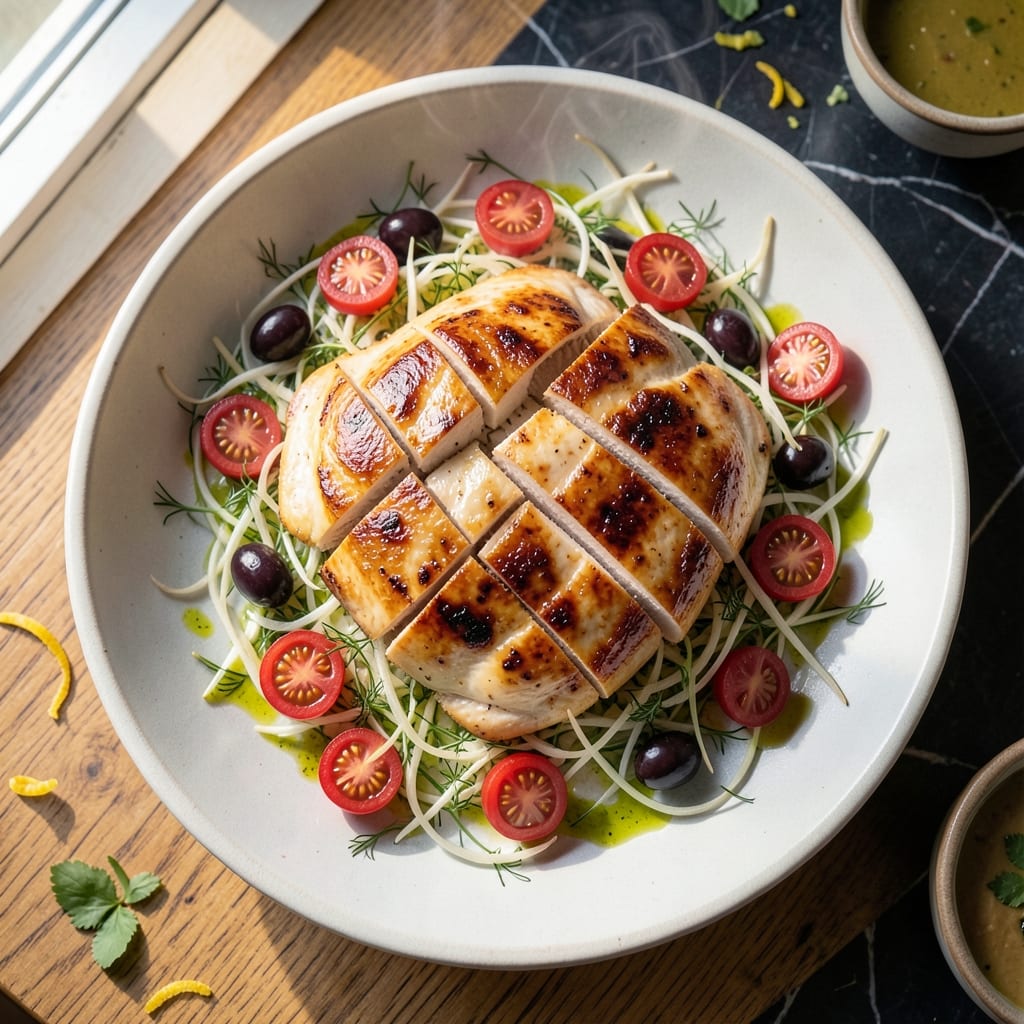
Dry, rubbery chicken breast is a problem of the past with this proven brining technique. I spent years perfecting this method to guarantee juicy, moist results every time, even for the leanest cuts.
The key is a simple saltwater brine that transforms the meat before cooking. This step plumps the muscle fibers, allowing them to retain natural juices during cooking. It’s a game-changer for home cooks.
After brining, a quick sear locks in moisture while creating a golden crust. The internal temperature reaches 165°F without drying out, ensuring tender, flavorful meat.
Resting the chicken before slicing allows the juices to redistribute. This small step makes all the difference in texture and flavor.
Ingredients for Chicken Breast Recipe Juicy
A short list of quality ingredients transforms lean chicken into juicy, restaurant-worthy results every time.
| Ingredient | Amount | Notes |
|---|---|---|
| Boneless Skinless Chicken Breasts 🍗 | 1 ½ lb | Uniform thickness for even cooking |
| Kosher Salt 🧂 | ¼ cup | Diamond Crystal preferred for brining |
| Granulated Sugar 🍚 | 2 tbsp | Balances salt in brine solution |
| Cold Water 💧 | 4 cups | For dissolving brine ingredients |
| Ice Cubes ❄️ | 2 cups | To chill brine quickly |
| Olive Oil 🫒 | 2 tbsp | High smoke point for searing |
| Unsalted Butter 🧈 | 2 tbsp | For basting during cooking |
| Garlic Cloves 🧄 | 3 cloves | Smashed for infused butter |
| Fresh Thyme Sprigs 🌿 | 4 sprigs | For aromatic basting |
| Fresh Rosemary Sprig 🌿 | 1 sprig | Optional for additional flavor |
| Black Pepper 🌶️ | 1 tsp | Freshly ground for seasoning |
| Lemon 🍋 | 1 whole | Zested and juiced for brightness |
The chicken quality is paramount. Opt for air-chilled, free-range breasts from Whole Foods or Costco—they retain moisture better than standard. Uniform thickness ensures even cooking, so pound thicker ends to about 3/4-inch. Diamond Crystal kosher salt is ideal for brining due to its coarse texture and clean flavor. The sugar isn’t just for sweetness; it helps the salt penetrate the meat more effectively.
No kosher salt? Table salt at half the amount works, but measure carefully—it’s much saltier by volume. Brown sugar can replace granulated, adding a subtle caramel note. If you’re out of fresh herbs, dried thyme and rosemary at one-third the amount will suffice. The butter can be swapped for ghee if you prefer a higher smoke point, though the flavor will be slightly different.
Brined chicken keeps in the fridge for 12-24 hours before cooking. Cooked chicken stays fresh for 3-4 days refrigerated or 3 months frozen. Always bring meat to room temperature before searing for the most even cooking and best crust development.
Why You’ll Love This Recipe
- Minimal Effort: I just mix salt, sugar, and cold water—no fancy skills needed.
- Locks In Flavor: The brine keeps the chicken so juicy it almost melts.
- Meal Prep Hero: I batch-cook these on Sunday and they last all week.
- Budget Friendly: One pound of chicken breasts makes four meals for under ten bucks.
Step-by-Step Instructions for Juicy Chicken Breast
This brining method guarantees tender, moist results with every cook.
Step 1: Create the Brine Solution
In a large bowl, combine the 0.25 cup Kosher Salt and 2 tbsp Granulated Sugar with the 4 cups Cold Water. Whisk vigorously until both are completely dissolved—this ensures even distribution throughout the brine.
Add the 2 cups Ice Cubes to chill the solution rapidly. The brine must be fully cooled before adding the chicken to prevent partial cooking and to maintain food safety. I verify the temperature with my fingers—it should feel cold to the touch.
Step 2: Brine the Chicken Breasts
Submerge the 1.5 lb Boneless Skinless Chicken Breasts completely in the brine. If they float, place a plate or weight on top to keep them under the liquid. Brine for 30 minutes to 1 hour—this is the sweet spot for maximum moisture retention without making the meat too salty.
The brine works by breaking down muscle proteins, allowing them to retain more moisture during cooking. I’ve found that brining for longer than recommended can actually start to alter the texture, making the chicken mushy rather than juicy.
Step 3: Prepare for Cooking
Remove the chicken from the brine and pat thoroughly dry with paper towels. Any residual moisture will prevent proper browning. Season both sides generously with the 1 tsp Black Pepper—this adds flavor and creates a beautiful crust.
Let the chicken rest at room temperature for 15 minutes while you prep the remaining ingredients. This takes the chill off so the meat cooks more evenly. I use this time to zest and juice the 1 whole Lemon and smash the 3 cloves Garlic Cloves for the basting butter.
Step 4: Sear and Baste the Chicken
Heat the 2 tbsp Olive Oil in a large skillet over medium-high heat until it shimmers. Add the chicken breasts and cook undisturbed for 5-6 minutes until the undersides develop a golden-brown crust.
Flip the chicken, then add the 2 tbsp Unsalted Butter, smashed garlic, 4 sprigs Fresh Thyme Sprigs, and 1 sprig Fresh Rosemary Sprig. Tilt the pan slightly and spoon the melted butter mixture over the chicken repeatedly for the remaining 5-6 minutes of cooking.
Use an instant-read thermometer to confirm the internal temperature reaches 165°F at the thickest part. The lemon zest can be sprinkled over the chicken during the last minute of cooking for a bright, aromatic finish.
Step 5: Rest and Serve
Transfer the chicken to a cutting board and tent loosely with foil. Let it rest for 10 minutes—this allows the juices to redistribute throughout the meat. Skipping this step will cause those precious juices to spill out when you slice, leaving the chicken dry.
Slice against the grain and serve immediately. The result should be incredibly moist, tender chicken with a flavorful crust. I like to drizzle any pan juices over the top for an extra boost of flavor and moisture.
Pro Tips For Making Chicken Breast Recipe Juicy
- Brine First Always: Mix 1/4 cup kosher salt and 1/4 cup sugar per quart of cold water, then soak the chicken for 30-60 minutes—I learned this the hard way after too many dry, stringy breasts.
- Ice Bath Stop: Plunge the cooked chicken into an ice bath for 5 minutes to halt cooking immediately; it keeps the juices locked in instead of leaking out on the cutting board.
- Skip the Boil: Resist the urge to boil the brine—just stir until the salt and sugar dissolve in cold water, or you’ll cook the chicken before it even hits the pan.
- Pat Dry Well: After brining, blot the chicken thoroughly with paper towels—sounds tedious, but it guarantees a good sear instead of steamed, soggy meat.
Regional Styles of chicken breast recipe juicy
Southern Buttermilk Style
Swap the water brine for a buttermilk marinade with 1 cup buttermilk, 1 tbsp salt, and 1 tsp black pepper. The acidity tenderizes while the fat adds richness. I learned this from my grandmother’s Sunday chicken—it’s a Southern staple that never fails. 💛
Asian Inspired Variation
Create an Asian brine with 4 cups water, ¼ cup soy sauce, 2 tbsp honey, and 1 tbsp grated ginger. Add 3 smashed garlic cloves and a star anise pod for depth. This works beautifully for stir-fries or rice bowls.
Mediterranean Herb Infusion
Enhance the basic brine with 4 smashed garlic cloves, 5 sprigs fresh thyme, and 1 lemon sliced thin. The citrus and herbs infuse the meat with bright, aromatic flavors. I love this for grilled chicken salads.
Spicy Cajun Twist
Add 2 tbsp Cajun seasoning to your brine, plus 1 tsp cayenne pepper for heat. After cooking, brush with melted unsalted butter and extra seasoning. This brings New Orleans flavor to your weeknight cooking. 🔥
Lemon Pepper Brine
Mix zest of 2 lemons and 1 tbsp cracked black peppercorns into the standard brine. The lemon brightens while the pepper adds a subtle kick. This simple variation elevates the chicken for sandwiches or pasta dishes.
Nutrition Facts
Frequently Asked Questions
Why does brining keep chicken moist?
The salt solution breaks down muscle proteins, allowing them to hold more liquid. This prevents the meat from drying out during cooking, even at high temperatures.
Can I brine for longer than an hour?
No, brining longer than 1 hour can make the texture mushy. The ideal window is 30 minutes to 1 hour for maximum moisture without over-softening.
What if I don’t have an instant-read thermometer?
Cut into the thickest part—if the juices run clear and there’s no pink, it’s done. However, an instant-read thermometer is the most reliable way to hit 165°F perfectly.
Is resting the chicken really necessary?
Yes! Resting for 10 minutes lets juices redistribute. Slicing too soon causes them to spill out, leaving the meat dry. Patience pays off with juicier results.

- Pav Bhaji Recipe Food Lab: Mumbai Street Food Magic at Home - October 6, 2026
- Peach Jelly Recipe Without Pectin: Naturally Set Sweet Spread - October 6, 2026
- Pasta Salad Recipe With Zesty Italian Dressing: Bright Herb-Kissed Medley for Picnics - October 6, 2026