
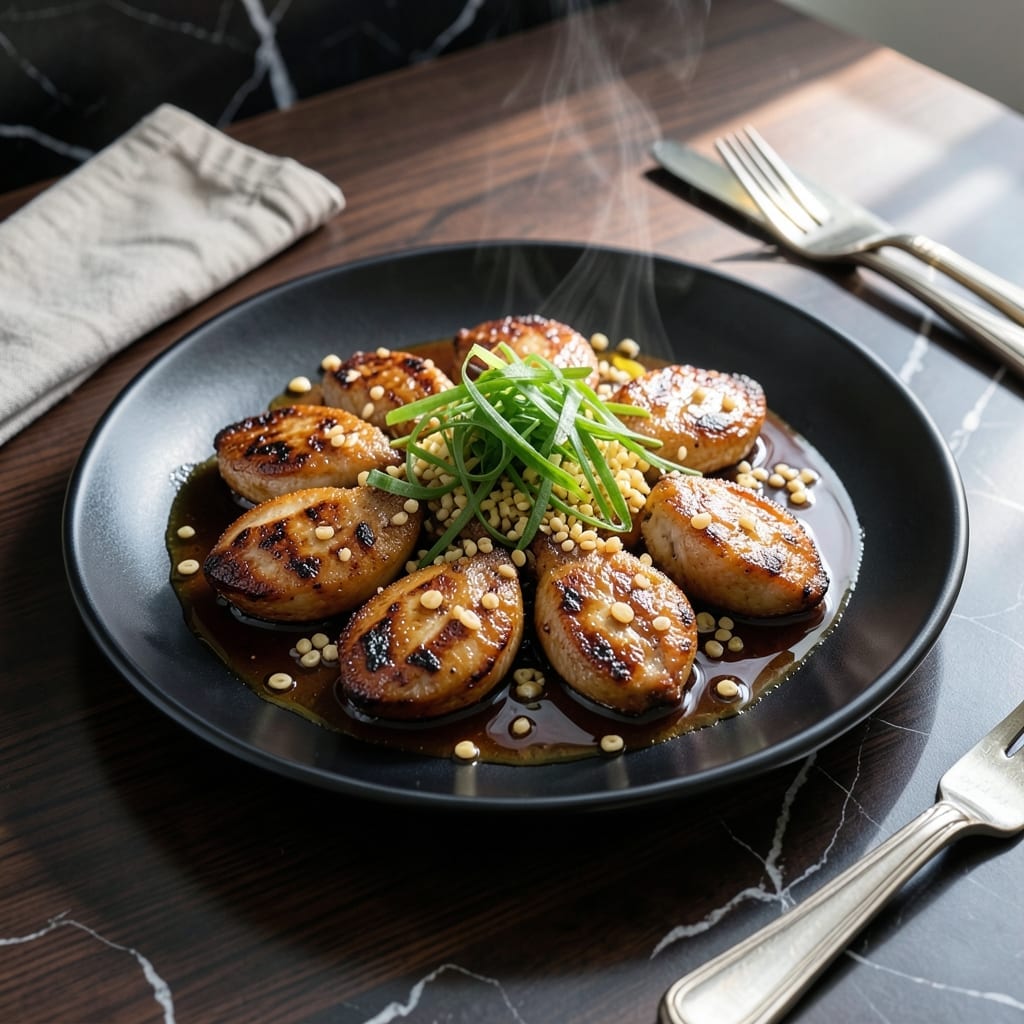
This dish transforms humble chicken hearts into a restaurant-quality Chinese delicacy with bold flavors. The key lies in proper preparation and high-heat wok cooking.
I developed this method after years of studying traditional Cantonese techniques. The hearts are marinated in a blend of soy sauce, Shaoxing wine, and cornstarch for tender results.
High heat searing creates a caramelized exterior while keeping the inside juicy. A finishing toss with garlic, ginger, and scallions adds aromatic depth.
Serve with steamed rice to soak up the savory sauce. This recipe stays true to its cultural roots while being accessible for home cooks.
Ingredients for Chicken Heart Recipe Chinese
Chicken hearts, soy sauces, and aromatics create bold Cantonese flavors at home.
| Ingredient | Amount | Notes |
|---|---|---|
| Chicken Hearts 🍗 | 1 ½ lb | Trimmed, cleaned thoroughly |
| Light Soy Sauce 🫒 | 3 tbsp | Low-sodium preferred |
| Dark Soy Sauce 🫒 | 1 tbsp | For color depth |
| Shaoxing Wine 🍷 | 2 tbsp | Chinese cooking wine |
| Cornstarch 🌾 | 2 tbsp | For marination and velveting |
| Garlic Cloves 🧄 | 6 cloves | Minced finely |
| Fresh Ginger 🌿 | 1 whole | Peeled, julienned |
| Scallions 🧅 | 4 whole | Cut into 2-inch pieces |
| Dried Red Chilies 🌶️ | 3 whole | Optional, for heat |
| Oyster Sauce 🫒 | 2 tbsp | Vegetarian oyster sauce if needed |
| Sesame Oil 🫒 | 1 tsp | Toasted, for finishing |
| Sugar 🧂 | 1 tsp | Balances savory flavors |
| White Pepper 🌶️ | ½ tsp | Ground, for authenticity |
| Neutral Oil 🫒 | 3 tbsp | High smoke point for searing |
The chicken hearts must be ultra-fresh—look for bright red color with no grayish tinge. Asian markets are ideal, but any reputable butcher can source them (call ahead). Shaoxing wine is non-negotiable for authentic flavor; Koon Chun is a reliable brand. For the soy sauces, Pearl River Bridge offers excellent quality for both light and dark varieties.
No Shaoxing wine? Dry sherry works in a pinch. Oyster sauce can be replaced with vegetarian oyster sauce or hoisin for similar depth. If you can’t find chicken hearts, substitute with chicken thighs (cut into bite-sized pieces) though texture will differ. The cornstarch can be swapped for potato starch at a 1:1 ratio.
Marinated hearts can sit in the fridge for up to 12 hours. Cooked dish keeps for 3 days refrigerated but is best fresh. Always store soy sauces in a cool, dark place—they’ll keep for 1 year unopened.
Why You’ll Love This Recipe
- 20-Minute Marvel: I can marinate the hearts in soy sauce and Shaoxing wine while the rice cooks, then sear them in minutes—dinner’s done before the kids set the table.
- Umami Bomb: The mix of light and dark soy gives that deep, sticky-sweet glaze that makes me lick the plate. Honestly, it’s the reason I keep making it.
- Party or Lunchbox: These little bites are just as good cold in a bento box as they are hot for a crowd. Between us, I always double the batch.
- Pocket-Friendly Protein: Chicken hearts cost pennies compared to steak, yet cornstarch turns them into tender, restaurant-worthy morsels. I’ll be real: my wallet thanks me.
Step-by-Step Instructions for Chicken Hearts Chinese
Master the wok-searing technique for tender, flavorful results with restaurant-quality depth.
Step 1: Clean and Velvet the Chicken Hearts
Begin by thoroughly cleaning the 1.5 lb Chicken Hearts, removing any connective tissue or fat. Trim them into uniform, bite-sized pieces to ensure even cooking. This preparation is crucial for texture and presentation.
In a bowl, combine the cleaned chicken hearts with 2 tbsp Cornstarch, 3 tbsp Light Soy Sauce, 1 tbsp Dark Soy Sauce, 2 tbsp Shaoxing Wine, 1 tsp Sugar, and 0.5 tsp White Pepper. Mix well and let marinate for 15 minutes. The cornstarch creates a velvety coating that locks in moisture during cooking.
Step 2: Prepare the Aromatics and Sauce
While the chicken hearts marinate, finely mince the 6 cloves Garlic Cloves, peel and julienne the 1 whole Fresh Ginger, and cut the 4 whole Scallions into 2-inch pieces. Keep these separate for layered flavor development.
In a small bowl, combine the 2 tbsp Oyster Sauce with 1 tsp Sesame Oil. This sauce will be added at the end to preserve its delicate aroma. The oyster sauce provides umami depth, while sesame oil adds a nutty finish that defines this dish.
Step 3: Wok-Sear the Chicken Hearts
Heat a wok or large skillet over high heat until smoking. Add 2 tbsp Neutral Oil and swirl to coat. Carefully add the marinated chicken hearts in a single layer, working in batches if necessary to avoid overcrowding. Let them sear undisturbed for 2-3 minutes until the edges develop a deep golden-brown crust.
Once the chicken hearts begin to release from the pan, stir-fry them vigorously for another 3-4 minutes until they’re cooked through but still slightly springy to the touch. Remove them from the wok and set aside. The high heat ensures a perfect sear while maintaining tenderness.
Step 4: Build Flavor with Aromatics
Return the wok to high heat and add the remaining 1 tbsp Neutral Oil. Add the 3 whole Dried Red Chilies and stir for 10 seconds until fragrant and just beginning to darken. Immediately add the minced garlic, julienned ginger, and scallion pieces. Stir-fry for 30-45 seconds until the aromatics are golden at the edges but not burned.
This step infuses the oil with complex flavors that will coat the chicken hearts. Be attentive—garlic and ginger burn quickly at high temperatures, which would introduce bitterness to the dish.
Step 5: Combine and Finish
Return the chicken hearts to the wok along with any accumulated juices. Pour the prepared oyster sauce mixture over the top and toss everything together for 1-2 minutes until the chicken hearts are evenly coated and glossy with sauce.
The sauce should cling to each piece, creating a lustrous sheen that signals perfect doneness. Remove from heat and serve immediately, garnished with additional scallion pieces if desired. The contrast of tender chicken hearts with the bold, aromatic sauce makes this dish irresistibly flavorful.
Pro Tips For Making Chicken Heart Recipe Chinese
- Parboil First: I learned this the hard way—simmer the hearts in water for 3-4 minutes before stir-frying to remove impurities and keep them tender. Skipping this leaves a gamey taste that no amount of soy sauce can fix.
- Velvet the Hearts: Toss the cleaned hearts with 1 teaspoon cornstarch and 1 tablespoon Shaoxing wine before cooking. This simple step keeps them juicy instead of rubbery, even if you overcook them slightly.
- High Heat Only: Crank the wok to smoking hot before adding the hearts, and don’t crowd the pan. After burning two batches, I finally figured out that medium heat just steams them into chewy disappointment.
- Double the Dark Soy: Sounds weird, but it works: use a 2:1 ratio of light to dark soy sauce for depth. My grandmother swore by this, and she was right—the color and flavor are richer without being overpowering.
Essential Equipment for This Recipe
Wok Selection
For authentic results, use a carbon steel wok—I recommend Made In or Joyce Chen brands. A 14-inch wok provides enough surface area for proper searing without overcrowding. The sloped sides make tossing ingredients effortless. 🔥
High Heat Source
This dish requires high heat to achieve the signature sear. A gas range with at least 15,000 BTU output works best. For electric stovetops, use a portable induction burner with a wok adapter for maximum heat transfer.
Essential Tools
A wok spatula (or chan da) is indispensable for stir-frying—its thin, curved edge slides under food easily. I also keep a long-handled tongs nearby for flipping larger pieces. These tools prevent burning your hands while maintaining control.
Oil Choices
Use neutral oil with a high smoke point like peanut, avocado, or vegetable oil. I prefer Kadoya sesame oil for finishing only—never for high-heat cooking. The oil must withstand 450°F+ temperatures without breaking down.
Prep Equipment
A sharp chef’s knife is crucial for trimming chicken hearts and slicing aromatics cleanly. I use a 8-inch Wüsthof. Also keep a cutting board with a groove to catch juices and a fine-mesh strainer for rinsing hearts.
Safety Gear
High-heat cooking requires protection. I wear heat-resistant gloves and use a splatter screen to contain oil. A well-ventilated kitchen or range hood is essential—this dish creates significant smoke at proper temperatures. 💡
Nutrition Facts
Frequently Asked Questions
How do I properly clean chicken hearts before cooking?
Rinse under cold water, then trim away any connective tissue or fat with a sharp knife. Soak in cold water for 10 minutes to remove blood. Pat dry thoroughly for best searing results.
Can I use a regular frying pan instead of a wok?
Yes, but a wok’s high, sloped sides make tossing easier. Use a heavy stainless steel or cast iron skillet for even heat. Avoid nonstick—it won’t get hot enough.
Why did my chicken hearts turn out tough?
Overcooking is the most common cause. Cook just until they’re no longer pink inside (5-6 minutes total). Marinating in cornstarch helps keep them tender.
What can I serve with this dish?
Steamed jasmine rice is perfect for soaking up the sauce. Pair with stir-fried greens like bok choy or gai lan for a balanced meal.

- BBQ Sausage Recipe Oven: Smoky Depth Without the Grill - September 28, 2026
- BBQ Chicken Bowl Recipe Rice: Smoky Sweetness Over Fluffy Grains - September 28, 2026
- Beef Cutlet Recipe Ideas: Crispy Breaded Patties With Bold Seasonings - September 28, 2026