
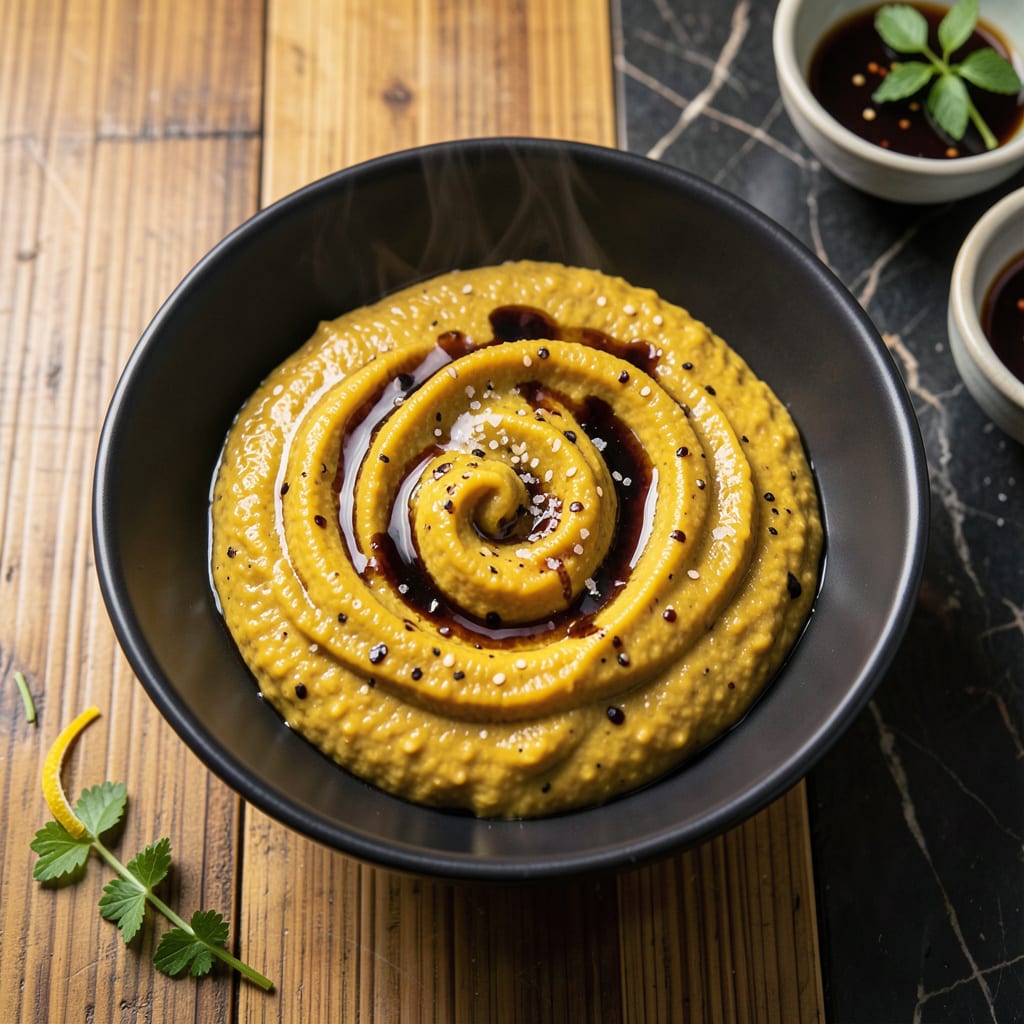
This traditional Chinese mustard delivers an authentic spicy kick that perfectly complements dumplings, egg rolls, and char siu. The paste achieves its signature heat through a precise blend of mustard powder and water.
Ready in 5 minutes, this condiment stores well in the fridge for weeks. Use it as a dipping sauce or mix with honey for a balanced sweet-spicy glaze.
Ingredients for Chinese Hot Mustard
Eight simple components create this fiery, umami-rich traditional condiment for dumplings and beyond.
| Ingredient | Amount | Notes |
|---|---|---|
| Mustard Powder 🌶️ | ½ cup | Dry, high-quality for best heat |
| Water 💧 | ½ cup | Room temperature preferred |
| Rice Vinegar 🍶 | 2 tbsp | Balances heat with acidity |
| Soy Sauce 🫒 | 1 tbsp | Low-sodium if available |
| Sesame Oil 🫒 | 1 tsp | Toasted for depth of flavor |
| Sugar 🍚 | 1 tsp | Optional, rounds out sharpness |
| Turmeric Powder 🟡 | ¼ tsp | Adds color, no flavor impact |
| Garlic Powder 🧄 | ¼ tsp | Enhances savory depth |
The mustard powder is non-negotiable—Colman’s is the gold standard for authentic heat (find it at Whole Foods or Asian markets). Turmeric adds that signature bright yellow color without altering flavor. Use room temperature water for even hydration. The soy sauce should be fresh and unopened for maximum impact, as older bottles lose their punch.
No rice vinegar? Apple cider vinegar works at a 1:1 ratio. Skip the soy sauce entirely if avoiding gluten, though the flavor profile will shift slightly. Sesame oil can be omitted for a purer mustard flavor, but it adds crucial depth. Sugar is optional—include it if you prefer a more balanced heat. Garlic powder can be replaced with fresh minced garlic at double the amount.
This keeps in an airtight container in the fridge for 4-6 weeks. The flavor intensifies over time, so let it rest 24 hours before first use. Stir well before each use as separation is natural.
Why You’ll Love This Recipe
- 5-Minute Mix: I stir mustard powder, water, and rice vinegar in a bowl and it’s done—no cooking, no fuss.
- Punchy Heat: That first sharp kick of mustard powder mellowed by soy and sesame oil is ridicuously good.
- Dip or Dress: I slather it on dumplings, whisk into salad dressings, or serve with roasted pork. Honestly, it works everywhere.
- Pantry Staples: All five ingredients live in my cupboard already, so it’s a zero-cost, last-minute save.
Step-by-Step Instructions for Chinese Hot Mustard
This method ensures a perfectly balanced, restaurant-quality condiment with consistent heat and depth of flavor.
Step 1: Hydrate the Mustard Powder
In a non-reactive bowl, combine the 0.5 cup Mustard Powder with the 0.5 cup Water. Use room temperature water as specified in the ingredients list—cold water can inhibit the mustard’s pungency development while hot water may activate it too quickly, creating an uneven heat profile.
Whisk vigorously until the mixture forms a smooth, lump-free paste. The consistency should resemble thick cream. I’ve found that high-quality dry mustard powder produces the most reliable heat, so don’t substitute with prepared mustard. Let this mixture sit undisturbed for 10-15 minutes to allow the mustard to fully hydrate and begin developing its characteristic sharpness.
Step 2: Incorporate the Acidic Components
After the mustard has hydrated, add the 2 tbsp Rice Vinegar and 1 tbsp Soy Sauce. The rice vinegar balances the heat with its mild acidity, while the soy sauce contributes umami depth that complements the mustard’s sharpness perfectly.
Stir thoroughly until the liquid components are fully integrated into the mustard base. The mixture should maintain its thick consistency but become slightly more fluid. At this stage, the aroma should be pungent with a slight tang from the vinegar—this indicates the flavors are beginning to meld properly.
Step 3: Add the Aromatic and Sweet Elements
Next, incorporate the 1 tsp Sesame Oil, 1 tsp Sugar, 0.25 tsp Turmeric Powder, and 0.25 tsp Garlic Powder. The sesame oil adds a nutty depth that enhances the overall complexity, while the sugar rounds out the sharpness without making it sweet.
The turmeric powder contributes a subtle golden color without affecting the flavor profile, as noted in the ingredients. Garlic powder reinforces the savory notes that make this condiment so versatile with dumplings and other dishes. Stir until all ingredients are completely combined and the color becomes uniformly golden.
Step 4: Rest and Develop Full Flavor
Cover the bowl with a clean kitchen towel or plastic wrap and let the mixture rest at room temperature for at least 2 hours. This resting period allows the flavors to fully develop and the heat to mellow slightly into a more balanced sharpness.
I’ve found that overnight resting in the refrigerator produces the most complex flavor profile, though the mustard is perfectly usable after the minimum rest time. The texture should remain thick but spoonable. Before using, give it a final stir to redistribute any separated liquids that may have settled during resting.
Pro Tips For Making Chinese Hot Mustard
- Mix with Cold Water: Always use ice-cold water to bloom the mustard powder—hot water kills the heat and leaves it bland. I learned this the hard way after making mild mustard three times in a row.
- Rest the Mixture: Let the mustard sit for at least 10 minutes after mixing—it thickens and develops that sharp kick. After burning my tongue testing it too soon, I now set a timer.
- Skip the Metal Bowl: Use glass or ceramic for mixing; metal can react with the vinegar and give a weird taste. Sounds weird, but it works.
- Add Oil Last: Stir in the sesame oil at the very end so its flavor stays bright and doesn’t cook off. My grandmother swore by this, and she was right.
Pro Cooking Tips for Perfect Results
Powder Quality Matters
Always use fresh, high-quality mustard powder like Colman’s for authentic heat. Stale powder loses potency—store yours in an airtight container away from light. I found mine at Whole Foods, but Asian markets often carry excellent options too.
Water Temperature Control
Use room temperature water for even hydration. Cold water slows pungency development, while hot water can create uneven heat pockets. The 10-15 minute rest after mixing lets the mustard fully bloom before adding other ingredients.
Flavor Layering
Add the rice vinegar and soy sauce after hydration to balance heat with acidity and umami. Stirring at this stage should release a pungent aroma with a slight tang—this signals proper flavor development.
Resting for Depth
Let the finished mustard rest at least 2 hours at room temperature. For best results, refrigerate overnight—the flavors meld and the heat becomes more complex. Always stir before using, as separation is natural. 🔥
Consistency Check
Your mustard should resemble thick cream. If it’s too thin, add 1 tsp more mustard powder. Too thick? Stir in 1 tsp water. The texture should be spoonable but not runny.
Storage Wisdom
This keeps in the fridge for 4-6 weeks. The flavor intensifies over time, so wait 24 hours before first use. Use a clean spoon each time to prevent contamination.
Nutrition Facts
Frequently Asked Questions
Why does my mustard taste bitter?
Over-hydration is the usual culprit. Stick to 1:1 powder-to-water ratio and use room temperature water. Bitter flavors develop when mustard sits too long after mixing—add vinegar within 15 minutes of hydrating.
Can I adjust the heat level?
For milder mustard, reduce powder by 1-2 tbsp. For extra heat, increase by the same amount. Balance with 1 tsp sugar to round out sharpness without losing authenticity.
What if I don’t have rice vinegar?
Apple cider vinegar works perfectly at a 1:1 ratio. Avoid white vinegar—it’s too harsh. The mild acidity of rice vinegar complements the mustard’s heat best.
How do I fix a too-thin consistency?
Add 1 tsp mustard powder at a time until thickened. Wait 5 minutes between additions. The perfect texture resembles thick cream and should coat the back of a spoon.

- BBQ Sausage Recipe Oven: Smoky Depth Without the Grill - September 28, 2026
- BBQ Chicken Bowl Recipe Rice: Smoky Sweetness Over Fluffy Grains - September 28, 2026
- Beef Cutlet Recipe Ideas: Crispy Breaded Patties With Bold Seasonings - September 28, 2026