
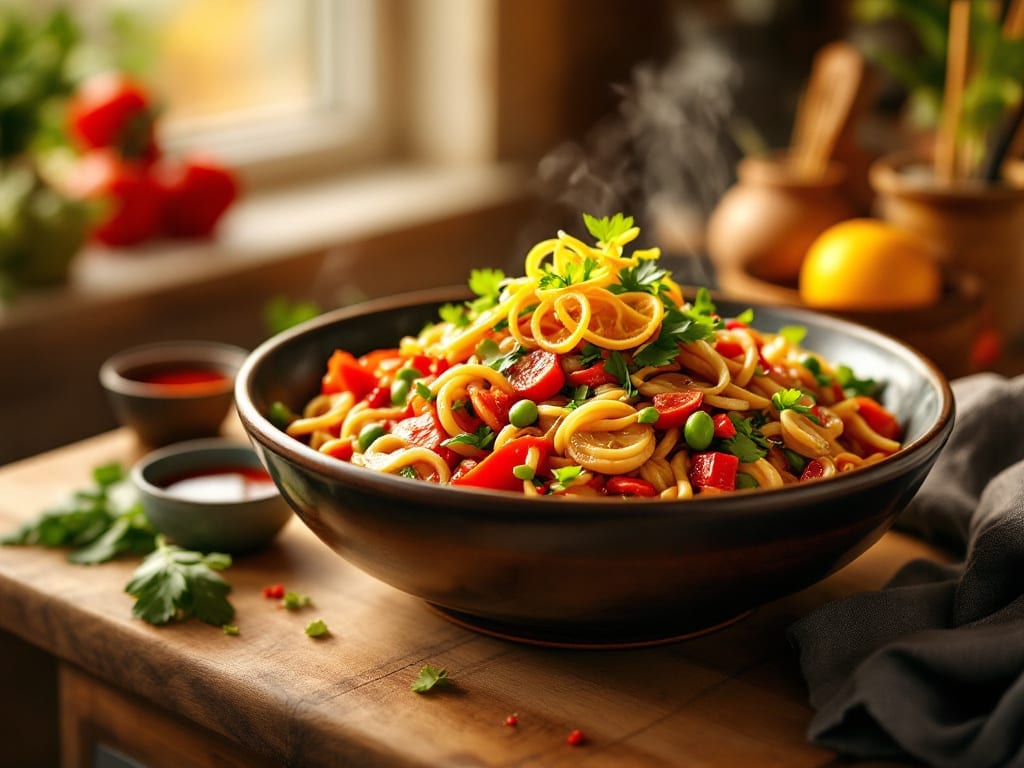
Mastering a Chinese stir-fry recipe begins with the wok—where high heat, quick movements, and fresh ingredients transform simple vegetables into a restaurant-worthy meal. ✨ I learned this technique from a Cantonese chef in Portland who swore by the “three shakes” method: stir, shake the wok, repeat.
The secret lies in timing and texture, where crisp-tender vegetables meet a savory soy-ginger sauce that balances sweetness and umami.
This recipe delivers authentic flavor without shortcuts—no pre-cut vegetables or bottled sauces here. We’ll start with a hot wok to blister the garlic and ginger, then work through bell peppers, broccoli, and snap peas in stages so nothing steams instead of sears.
The sauce, made from scratch with tamari, rice vinegar, and a touch of honey, clings to every piece, creating a dish that’s vibrant, aromatic, and packed with wok hei—the smoky breath of the wok itself.
By the end, you’ll have a plate of crisp-tender stir-fry that’s bright, flavorful, and ready in under 20 minutes. The vegetables retain their snap, the sauce coats each bite evenly, and the aroma will have everyone asking for seconds.
Serve it over steamed jasmine rice or noodles for a complete meal that feels both comforting and sophisticated. Let’s get cooking!
For those who love regional variations, this method works beautifully for Sichuan-style stir-fries—just add a dash of chili oil and dried chilies at the end. Or keep it Cantonese-inspired with a lighter touch.
The technique scales too: double the ingredients for a crowd or halve it for a single serving. The wok is your tool; the rest is up to you.
Ingredients for chinese
Bright vegetables, bold aromas, and a wok that sings—here’s what you’ll need for authentic stir-fry magic.
| Ingredient | Amount | Notes |
|---|---|---|
| Bell Peppers 🌶️ | 2 whole | Any color, cut into 1-inch strips |
| Broccoli Florets 🥦 | 2 cups | Cut into bite-sized pieces |
| Snap Peas 🌱 | 1 cup | Trimmed, whole or halved |
| Garlic Cloves 🧄 | 6 cloves | Minced, for aroma |
| Fresh Ginger 🌿 | 1 tbsp | Finely grated, peeled |
| Tamari 🍶 | ½ cup | Gluten-free soy sauce substitute |
| Rice Vinegar 🍶 | 2 tbsp | Seasoned preferred |
| Honey 🍯 | 1 tbsp | Light or dark variety |
| Sesame Oil 🫒 | 1 tbsp | Toasted, for finishing |
| Neutral Oil 🫒 | 2 tbsp | Avocado or vegetable oil |
| Green Onions 🧅 | 3 whole | Thinly sliced, for garnish |
| Sesame Seeds 🌾 | 1 tsp | Toasted, for crunch |
| Salt 🧂 | 1 tsp | Kosher or sea salt |
| Black Pepper 🌶️ | ½ tsp | Freshly ground preferred |
The vegetables are the stars here, so freshness is non-negotiable. Hit the produce section for crisp bell peppers—no limp ones—and broccoli with tight florets. Snap peas should snap when bent; if they’re mushy, skip them. For garlic and ginger, Asian markets often carry fresher, more aromatic varieties. If you’re short on time, pre-cut stir-fry veggie mixes work in a pinch, but chopping your own ensures that perfect texture. The tamari? San-J brand is a chef favorite for its deep umami flavor—no need for expensive specialty stores, though.
No tamari? Regular soy sauce works fine, though it’ll have a slightly saltier profile. Swap honey for maple syrup or agave if you’re avoiding it, but keep the amount the same. Fresh ginger is ideal, but ground ginger at half the amount will do in a bind. For the oil, avocado oil has the highest smoke point, which is crucial for that wok hei. If you’re making this Sichuan-style, add 1 tsp chili oil and 1 tsp dried red chilies at the end. The sesame oil should be toasted—look for the dark, nutty kind in the Asian aisle, not the light, flavorless cooking oil.
Stir-fry veggies keep best in the fridge for 3-4 days, but they’re best used within 24 hours of chopping. Store them in airtight containers with a paper towel to absorb moisture. The sauce can be made up to 3 days ahead—it actually tastes better as the flavors meld. For leftovers, reheat in the wok over medium heat with a splash of water to restore that crisp-tender texture. Garnish with toasted sesame seeds right before serving—they add crunch and a nutty aroma that elevates everything.
Why You’ll Love This Recipe
- One-Pan Magic: I swear by this for nights when I’m too tired to wash dishes—just toss everything on a sheet pan, roast until the bell peppers caramelize, and boom. That crisp-tender snap of the veggies? Zero cleanup, all flavor.
- Ginger-Garlic Zing: Honestly, the fresh ginger and minced garlic here are everything—bright, warm, and just sharp enough to cut through the sweetness of the broccoli and snap peas. It’s the kind of balance that makes you go back for seconds without trying.
- Lunchbox Hero: Between us, this is my go-to for packed lunches. The broccoli stays crisp, the bell peppers hold their shape, and the snap peas? Still snappy after three days. Toss in some rice, and you’ve got a meal that’s basically a flavor bomb in a container.
- Budget Stretch: I make this when I’m trying to feed the family without breaking the bank—bell peppers, broccoli, and snap peas are cheap staples, and a few cloves of garlic and ginger go a long way. Leftovers? Even better the next day, if you can resist eating them all at once.
Step-by-step instructions for wok-heated vegetables with savory soy-ginger sauce
Here’s how to achieve restaurant-style stir-fry texture and flavor using your wok.
🍳 Step 1: Prep and Blanch the Vegetables
Cut the 2 whole bell peppers into 1-inch strips and separate the 2 cups broccoli florets into bite-sized pieces. Trim the 1 cup snap peas if needed. This prep ensures even cooking and prevents overcrowding in the wok.
Bring a pot of water to a rolling boil and blanch the broccoli and snap peas for 30 seconds. Immediately drain and plunge into ice water to stop cooking. This partial cooking prevents mushiness while maintaining crisp texture. Drain well and set aside—they’ll finish cooking in the wok.
🔥 Step 2: Build the Stir-Fry Base
Heat a wok or large skillet over high heat until it’s smoking hot. Add 2 tablespoons neutral oil and swirl to coat. Add the 6 cloves minced garlic and 1 tablespoon finely grated ginger, stirring constantly for 20-30 seconds until fragrant but not browned.
Add the 1-inch bell pepper strips and stir-fry for 2 minutes until they begin to soften slightly. Here’s where it gets critical—keep the heat high and don’t overcrowd the pan. If the vegetables steam instead of sear, reduce the quantity next time.
🥘 Step 3: Combine and Sauce the Vegetables
Add the blanched broccoli and snap peas to the wok. Stir-fry for 3-4 minutes until the vegetables are heated through and slightly blistered in spots. Push the vegetables to one side of the wok and pour in 0.5 cup tamari and 2 tablespoons rice vinegar. Let it bubble for 30 seconds to deglaze the pan.
Return the vegetables to the sauce and add 1 tablespoon honey. Stir-fry for an additional 2 minutes until everything is well-coated and heated through. The sauce should cling to the vegetables without making them soggy—this balance is key to perfect stir-fry texture.
🔪 Step 4: Finish with Aromatics
Remove the wok from heat and drizzle with 1 tablespoon sesame oil. Add the 3 whole green onions, sliced thinly, and toss gently to incorporate. Sprinkle with 1 teaspoon sesame seeds, 1 teaspoon salt, and 0.5 teaspoon black pepper. Let it sit for 1 minute to allow the flavors to meld.
Divide the stir-fry among 4 servings and garnish with additional green onion slices if desired. Serve immediately over steamed rice or noodles. The vegetables should be vibrant, slightly crisp-tender, and coated in a glossy, savory-sweet sauce.
Pro Tips For Making Chinese
- STIR-FRY IN BATCHES: Don’t toss everything in at once—bell peppers and broccoli need 2-3 minutes less than snap peas to soften. Start with peppers and broccoli, then add snap peas and garlic last when the wok’s screaming hot. I learned this the hard way after serving mushy peas to a crowd.
- JULIENNE GINGER FASTER: Skip the knife for ginger—use a microplane or the largest holes of a box grater. It’s faster, and the texture blends better into sauces without chunks. Yes, it looks like confetti, but no one cares when the dish tastes right.
- WATCH THE GARLIC: High heat turns garlic bitter fast. Once it’s golden, pull the pan off heat for 10 seconds—just long enough to stop the cooking. I used to burn it every time until I realized patience here saves the whole dish.
- BLANCH BROCCOLI FIRST: Toss broccoli florets in boiling water for 30 seconds before stir-frying. It cuts cooking time in half and keeps them vibrant. Sounds like extra work, but it’s the thing that matters most when you’re serving a big group.
Flavor customization for this recipe
Sweet Heat Twist
For a Sichuan-inspired kick, add 1 tablespoon chili oil and 1 teaspoon dried red chilies to the wok with the vegetables in the final minute. The heat will mellow slightly as it cooks, but the aroma will be unforgettable.
I like to balance it with an extra ½ teaspoon honey—this sweetens the heat beautifully. 🌶️
Umami Boost
Swap the tamari for ½ cup soy sauce plus 1 tablespoon dark soy sauce to deepen the color and richness. Dark soy sauce adds a molasses-like depth that works especially well with mushrooms or water chestnuts.
For extra umami, stir in 1 teaspoon fish sauce at the end—just a whisper, but it elevates everything.
Nutty Crunch Finish
Toast 1 tablespoon peanuts or cashews in the dry wok for 2 minutes before adding the vegetables. Their nutty crunch contrasts perfectly with the crisp-tender veggies. For a more authentic touch, use roasted peanuts with the skins on—they’re sold pre-toasted at most Asian markets. 🥜
Herbaceous Variations
Fresh herbs brighten this dish up beautifully. Add 2 tablespoons chopped cilantro or Thai basil at the end for a citrusy, aromatic finish. For a more complex flavor, try ½ teaspoon star anise or 1 cinnamon stick while building the sauce—remove before serving.
My Portland farmers market carries fresh Thai basil year-round, and it’s a game-changer.
Spicy-Sweet Fusion
Combine the Sichuan heat with the Cantonese technique by adding 1 tablespoon gochujang (Korean chili paste) to the sauce. It brings a tangy, slightly sweet fermented heat that pairs perfectly with the ginger.
For extra depth, stir in ½ teaspoon grated fresh galangal—it’s like ginger’s spicier cousin and adds a citrusy punch. 💫
Vegetarian Protein Swap
Boost the protein with 1 cup firm tofu or mushrooms (shiitake or oyster work best). Press tofu for 15 minutes**, cut into cubes, and pan-fry until golden before adding to the wok.
For mushrooms, slice them thinly and cook until they release their juices—about 3 minutes. Both add meaty texture and earthy flavor that holds up to the stir-fry action.
Nutrition facts
Frequently asked questions
Can I use a regular skillet instead of a wok for this stir-fry?
A wok is ideal for its high heat retention and wide surface, but a 12-inch cast-iron skillet or stainless steel pan works too. Just keep the heat at medium-high and avoid overcrowding the pan. For extra wok hei flavor, tilt the pan slightly to concentrate heat in one area while stirring.
How do I adjust the recipe for spicier Sichuan flavors?
Add 1 tablespoon chili oil and 1 teaspoon dried red chilies during the last 2 minutes of cooking. For balance, increase honey to 1.5 teaspoons—this sweetens the heat beautifully. Stir in ½ teaspoon Sichuan peppercorns (toasted and crushed) for a numbing tingle.
What’s the best way to store leftovers?
Let the stir-fry cool completely, then store in an airtight container in the fridge for up to 3 days. Reheat in the wok over medium heat with 1 teaspoon water to restore crispness. For freezing, portion into single servings and freeze for up to 2 months. Thaw overnight in the fridge before reheating.
Can I substitute snap peas with another vegetable?
Try baby corn, green beans, or snow peas—all hold up well to stir-frying. For heartier texture, use thinly sliced carrots or bell pepper strips. Just adjust cooking time: denser veggies like carrots need 1-2 extra minutes in the wok.
Why does my stir-fry turn out soggy?
Overcrowding or low heat causes sogginess. Keep portions small and heat at high—the wok should be smoking when you add oil. Also, avoid pre-cooking veggies too long; blanching for 30 seconds max preserves texture. If using mushrooms, cook them separately first to release moisture.

- Mary Berry’s Boiled Fruit Cake Recipe: Moist Center and Spiced Crust Magic - November 5, 2026
- Atlantic Salmon Recipe: Honey-Dill Pan-Seared With Crispy Skin - November 5, 2026
- Blaze Pizza Copycat Dough Recipe: Chewy, Airy Crust That Mimics the Original - November 5, 2026