
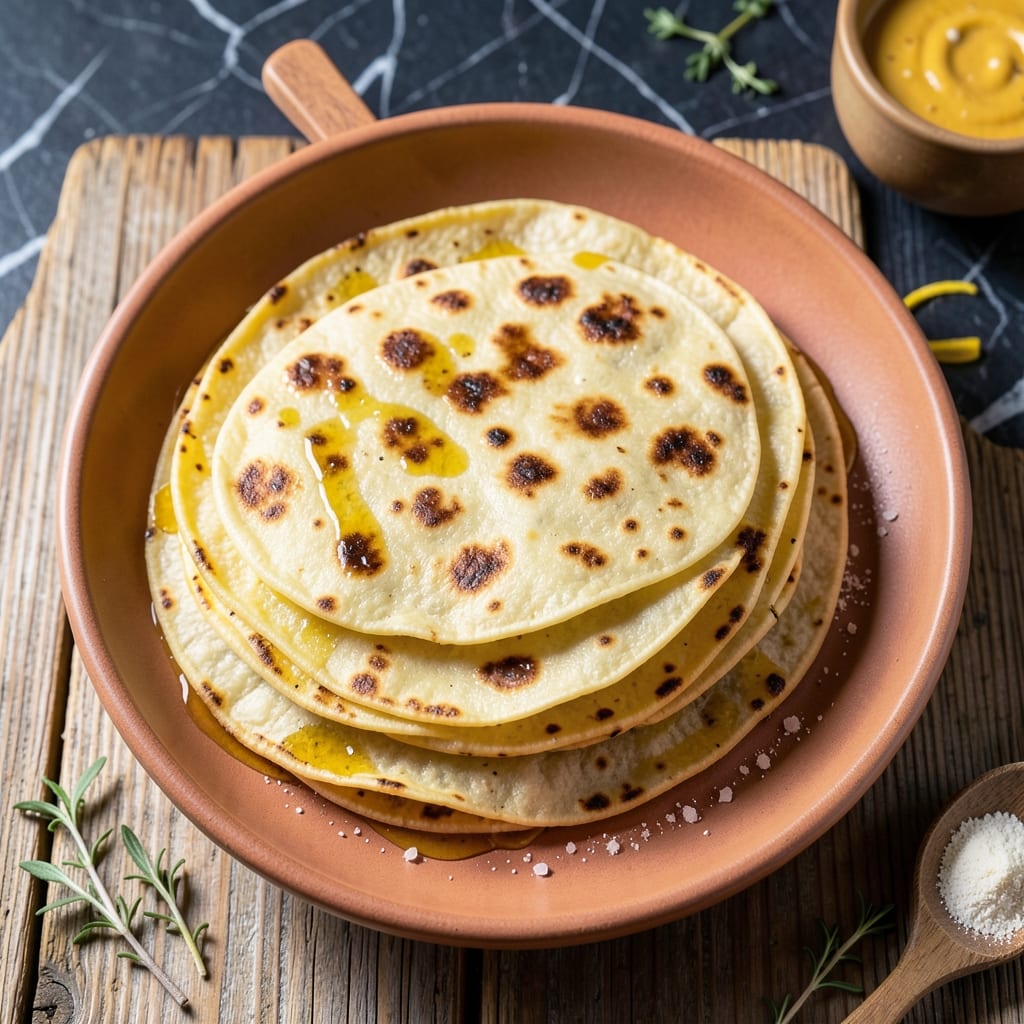
Crafting authentic corn tortillas without masa harina is absolutely possible with a simple substitution. This proven technique delivers traditional flavor and texture using all-purpose flour as the base.
The secret lies in combining the flour with cornmeal to replicate the distinctive corn taste. A brief resting period ensures the dough becomes pliable and easy to work with, just like traditional versions.
You’ll achieve soft, flexible tortillas that hold up to filling without cracking. The process maintains the authentic character of corn tortillas while using pantry staples.
This method proves that you don’t need specialty ingredients to create delicious, restaurant-quality results at home.
Ingredients for Corn Tortilla Recipe Without Masa Harina
Pantry staples transform into authentic-style tortillas with this clever substitution method.
| Ingredient | Amount | Notes |
|---|---|---|
| All-Purpose Flour 🌾 | 2 cups | Unbleached preferred for texture |
| Fine Cornmeal 🌽 | ¾ cup | Stone-ground for authentic flavor |
| Warm Water 💧 | 1 ¼ cups | Approximately 110°F for proper hydration |
| Vegetable Oil 🫒 | 2 tbsp | Divided for dough and cooking |
| Sea Salt 🧂 | ½ tsp | Fine grain for even distribution |
| Baking Powder 🍞 | ¼ tsp | Ensures slight lift in texture |
| Lime Juice 🍋 | 1 tbsp | Freshly squeezed for brightness |
The cornmeal is non-negotiable for that signature flavor. Bob’s Red Mill stone-ground is ideal—find it in the baking aisle or Whole Foods bulk section. The flour should be unbleached (King Arthur is a reliable brand) for better structure. Water temperature matters: too hot kills the dough, too cold won’t activate the gluten properly. Aim for warm but not scalding—about the temperature of a baby’s bathwater.
No fine cornmeal? Pulse regular cornmeal in a blender until powdery, but don’t overdo it. Swap vegetable oil for melted coconut oil (neutral flavor) or even avocado oil. If you’re out of baking powder, omit it—the tortillas will be slightly denser but still workable. Lime juice can be substituted with apple cider vinegar for similar acidity, though the flavor profile will shift slightly.
Dough rests best covered with a damp towel (prevents crusting) for 30 minutes at room temperature. Cooked tortillas stay pliable wrapped in a clean kitchen towel—they’ll keep 2 days refrigerated or 1 month frozen. Reheat directly on a dry skillet to restore freshness.
Why You’ll Love This Recipe
- No Fuss Mixing: I just stir flour, cornmeal, oil, and water—no special equipment, no resting time. Honestly, it’s simpler than my pancake batter.
- Crispy Corn Bite: The fine cornmeal gives that authentic toasty flavor with a slightly crunchy edge, and the sea salt makes every bite pop.
- Taco Night Hero: These hold up to hearty fillings without tearing, and I’ve used them for quesadillas and breakfast tacos too.
- Pantry Staples Only: Between us, I always have these ingredients on hand, so fresh tortillas are never more than 15 minutes away.
Step-by-Step Instructions for Corn Tortillas Without Masa Harina
Authentic flavor emerges through precise technique and proper ingredient balance.
Step 1: Combine Dry Ingredients for Optimal Texture
In a large mixing bowl, whisk together the 2 cups All-Purpose Flour, 0.75 cup Fine Cornmeal, 0.5 tsp Sea Salt, and 0.25 tsp Baking Powder until thoroughly combined. The baking powder ensures a slight lift that mimics the traditional masa harina texture.
I use unbleached flour for better structure and stone-ground cornmeal for that authentic corn flavor. The fine sea salt distributes evenly, preventing any bitter pockets in the final tortillas. This dry mixture forms the foundation of your dough’s character.
Step 2: Hydrate with Warm Water and Fat
Create a well in the center of your dry ingredients. Add the 1.25 cups Warm Water (approximately 110°F), 1 tbsp Vegetable Oil, and 1 tbsp Lime Juice. The warmth of the water activates the baking powder while the lime juice adds subtle brightness that balances the earthy cornmeal.
Use a wooden spoon to gradually incorporate the wet ingredients into the dry, mixing until a shaggy dough forms. The dough should feel slightly tacky but not sticky. If it feels too dry, add water 1 tablespoon at a time—the exact hydration may vary slightly based on your flour’s protein content.
Step 3: Knead and Rest the Dough
Turn the dough onto a lightly floured surface and knead for 3-4 minutes until smooth and elastic. The gluten development at this stage ensures the tortillas hold together well during cooking and rolling. You’ll notice the dough transforms from rough to silky as you work it.
Shape the dough into a ball, place it back in the bowl, and cover with a damp towel. Let it rest at room temperature for 30 minutes. This resting period allows the flour to fully hydrate and the gluten to relax, making the dough easier to roll out without springing back.
Step 4: Divide and Roll the Tortillas
Divide the rested dough into 8 equal portions (about 60 grams each) and roll each into a ball. On a lightly floured surface, use a rolling pin to roll each ball into a thin circle, approximately 6 inches in diameter and ⅛-inch thick.
If the dough resists rolling, let it rest for 2-3 minutes before trying again. For perfectly round tortillas, rotate the dough 45 degrees after each roll. The edges should be thin and even, without any thick spots that would cook unevenly.
Step 5: Cook to Perfection in a Dry Skillet
Heat a cast-iron or nonstick skillet over medium-high heat until a drop of water sizzles and evaporates immediately. Add 1 teaspoon of the remaining Vegetable Oil and swirl to coat the pan. The oil prevents sticking while allowing the tortillas to develop those characteristic light brown spots.
Cook each tortilla for 30-45 seconds per side, until lightly blistered with golden brown spots. Press down gently with a spatula if the tortilla puffs up. Transfer cooked tortillas to a clean towel-lined basket and cover to keep warm. Serve immediately for the best texture and flavor.
Pro Tips For Making Corn Tortilla Recipe Without Masa Harina
- Rest the Dough: After mixing, let the dough sit covered for 15-20 minutes—I learned this the hard way when my first batch kept cracking on the griddle.
- Use Fine Cornmeal: Skip the coarse stuff; fine cornmeal blends smoothly with the flour and gives you that classic tortilla texture without grit.
- Keep It Warm: Warm water (about 110°F) helps the dough come together faster and more evenly—cold water just makes it stubborn.
- Press Thin: Roll or press the dough to about 1/8-inch thick—any thicker and your tortillas will turn out more like flatbread than light, flexible wraps.
Dietary Considerations for corn tortilla recipe without masa harina
Gluten-Free Adaptation
For a gluten-free version, swap the All-Purpose Flour for a 1:1 gluten-free baking blend. I recommend King Arthur’s Measure for Measure—it contains xanthan gum, which helps bind the dough. The texture will be slightly different but still delicious and pliable. 💪
Vegan Considerations
This recipe is naturally vegan, using only plant-based ingredients. The Vegetable Oil and Warm Water ensure no animal products are involved. Even the Baking Powder is typically vegan, but double-check the label for any additives.
Nut-Free Option
This creation is inherently nut-free, making it safe for those with nut allergies. Just ensure your cornmeal and flour are processed in nut-free facilities—Bob’s Red Mill offers nut-free options in their dedicated facility.
Low-Sodium Adjustment
To reduce sodium, simply omit the Sea Salt or replace it with a salt-free seasoning blend. The Lime Juice and cornmeal still provide plenty of flavor. I often make this swap when serving with already-salty fillings.
Allergen Notes
The primary allergens here are wheat (in flour) and corn. For corn allergies, unfortunately, there’s no substitution that maintains the authentic flavor. Always check your cornmeal label for cross-contamination warnings. 🌽
Nutrition Facts
Frequently Asked Questions
Can I use regular cornmeal instead of fine?
Yes, but pulse it in a blender first to achieve a finer texture. Coarse cornmeal can make the tortillas gritty. The finer the grind, the closer you’ll get to authentic texture.
Why does the dough need to rest?
Resting for 30 minutes lets the flour fully hydrate and gluten relax. This makes rolling easier and prevents shrinking during cooking. Skipping this step risks tough, uneven tortillas.
How do I prevent cracking when rolling?
If the dough cracks, let it rest 2-3 minutes longer. Also, ensure it’s not too dry—add warm water 1 tablespoon at a time. Rolling between parchment paper can help too.
Can I make these ahead of time?
Cooked tortillas keep 2 days refrigerated in an airtight container. Reheat in a dry skillet for 10-15 seconds per side to restore freshness.

- Blue Zone Recipe Ideas: Longevity-Boosting Meals for Vibrant Living - September 28, 2026
- Beefaroni Recipe With Tomato Soup: One-Pot Nostalgic Comfort - September 28, 2026
- Bread Recipe KitchenAid Mixer: Foolproof Loaf With Perfect Rise - September 28, 2026