
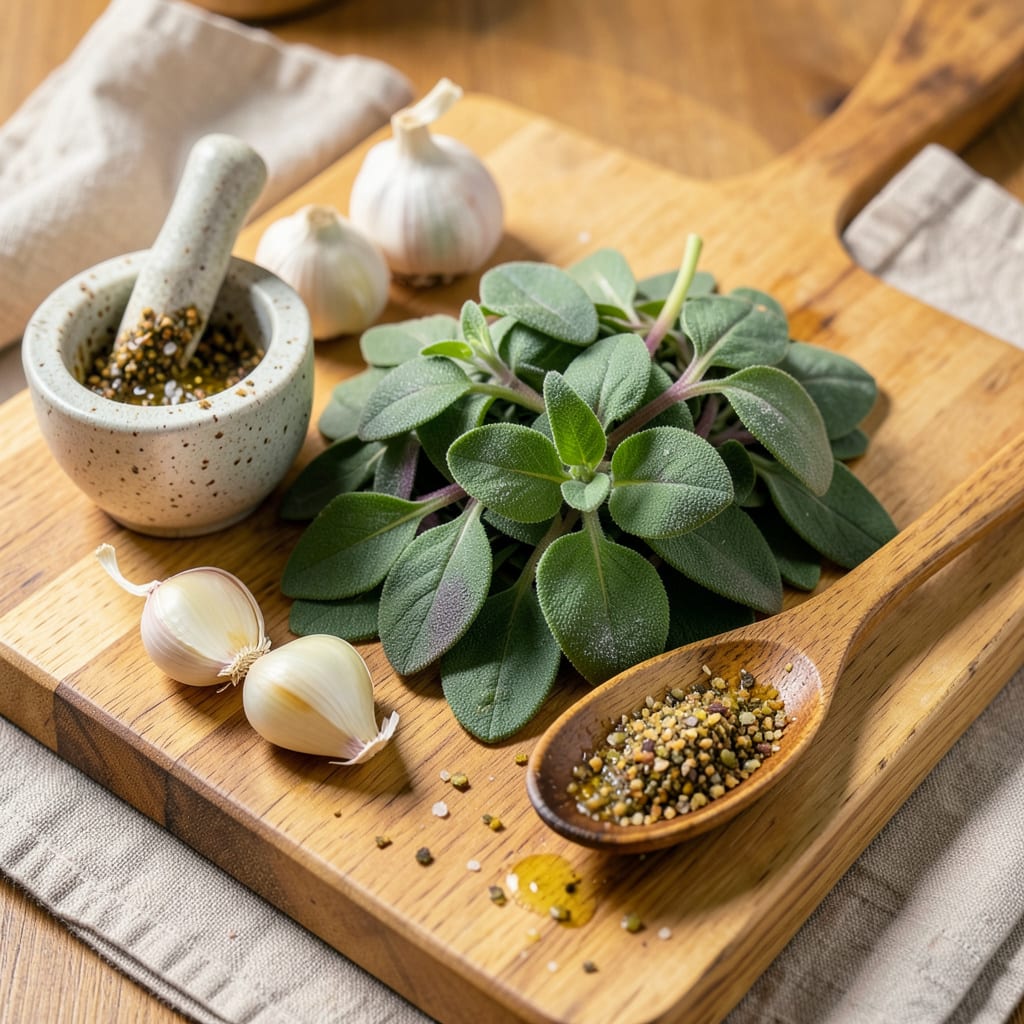
Cuban oregano (not true oregano) uses fresh Plectranthus amboinicus leaves blended with garlic, citrus, olive oil, and spices for a vibrant, aromatic mojo or marinade. Chop finely or pulse in a food processor for best texture.
This herb brings a unique Caribbean flair that transforms simple dishes into bold, flavor-packed meals. 🔥 The secret lies in its robust, slightly minty profile—unlike Mediterranean oregano—which pairs perfectly with lime juice and cumin for that signature Cuban taste. I love using it in mojo criollo because the fresh leaves release their essential oils when blended, creating a sauce that tenderizes meat while infusing it with bright, herbal notes.
For best results, harvest the leaves just before cooking—they lose potency quickly once picked. A quick pulse in the food processor with 3-4 garlic cloves and 1/2 cup olive oil forms the perfect base for marinades or dressings. ✨
💡 In This Article
- Why Cuban Oregano Differs from Mediterranean Varieties
- 3 Authentic Ways to Use Cuban Oregano in Recipes
Why Cuban Oregano Differs from Mediterranean Varieties
Cuban oregano (Plectranthus amboinicus) isn’t actually oregano at all—it’s a member of the mint family with a completely different botanical structure. Unlike Mediterranean oregano (Origanum vulgare), which grows as a low shrub with small purple flowers, Cuban oregano has thick, succulent leaves and a more aggressive growth pattern.
The leaves contain higher concentrations of carvacrol and thymol, compounds that give it that signature minty, slightly camphorous aroma that’s worlds away from the earthy, piney notes of traditional oregano.
The Cuban climate plays a huge role in developing its bold flavor profile. Grown in tropical conditions with high humidity and intense sunlight, the plant produces more essential oils as a protective mechanism. This results in leaves that pack 2-3 times the volatile oil content of Mediterranean varieties.
When you crush the leaves, you’ll notice an immediate citrusy brightness that’s completely absent in dried Greek oregano. The flavor difference becomes especially apparent when used raw—Cuban oregano maintains its potency in fresh applications, while Mediterranean oregano often needs cooking to release its full aroma.
Historically, this herb became essential in Afro-Cuban cuisine because of its availability and resilience. Enslaved Africans and indigenous Taíno people used it medicinally before incorporating it into cooking. The minty, slightly peppery notes cut through rich pork and plantain dishes perfectly.
In mojo criollo, it provides the herbal backbone that balances the acidity of sour orange juice, creating that signature Cuban flavor profile that’s both bright and deeply savory.
What’s fascinating is how the plant’s chemistry changes with preparation. When heated, the carvacrol compounds become more pronounced, adding a subtle warming sensation. This makes Cuban oregano ideal for both fresh applications (like mojo sauce) and cooked dishes (such as black beans or roasted meats).
The leaves also contain more moisture than Mediterranean oregano, which means they blend into sauces more completely rather than remaining fibrous.
For home cooks, this means you can use Cuban oregano in ways you’d never attempt with Mediterranean varieties. Try blending 1 cup fresh leaves with 1/2 cup lime juice and 1/4 cup olive oil for a marinade that will tenderize meat in under 30 minutes.
The enzymes in the fresh leaves break down proteins similarly to how pineapple works in ceviche, but with a more complex herbal flavor. 🌟
The storage requirements differ too. Cuban oregano leaves stay fresh for 5-7 days in the fridge when wrapped in damp paper towels, while Mediterranean oregano dries well but loses most of its potency after 6 months.
You can even root cuttings in water to grow your own endless supply—a trick that doesn’t work with true oregano plants.

- BBQ Sausage Recipe Oven: Smoky Depth Without the Grill - September 28, 2026
- BBQ Chicken Bowl Recipe Rice: Smoky Sweetness Over Fluffy Grains - September 28, 2026
- Beef Cutlet Recipe Ideas: Crispy Breaded Patties With Bold Seasonings - September 28, 2026