
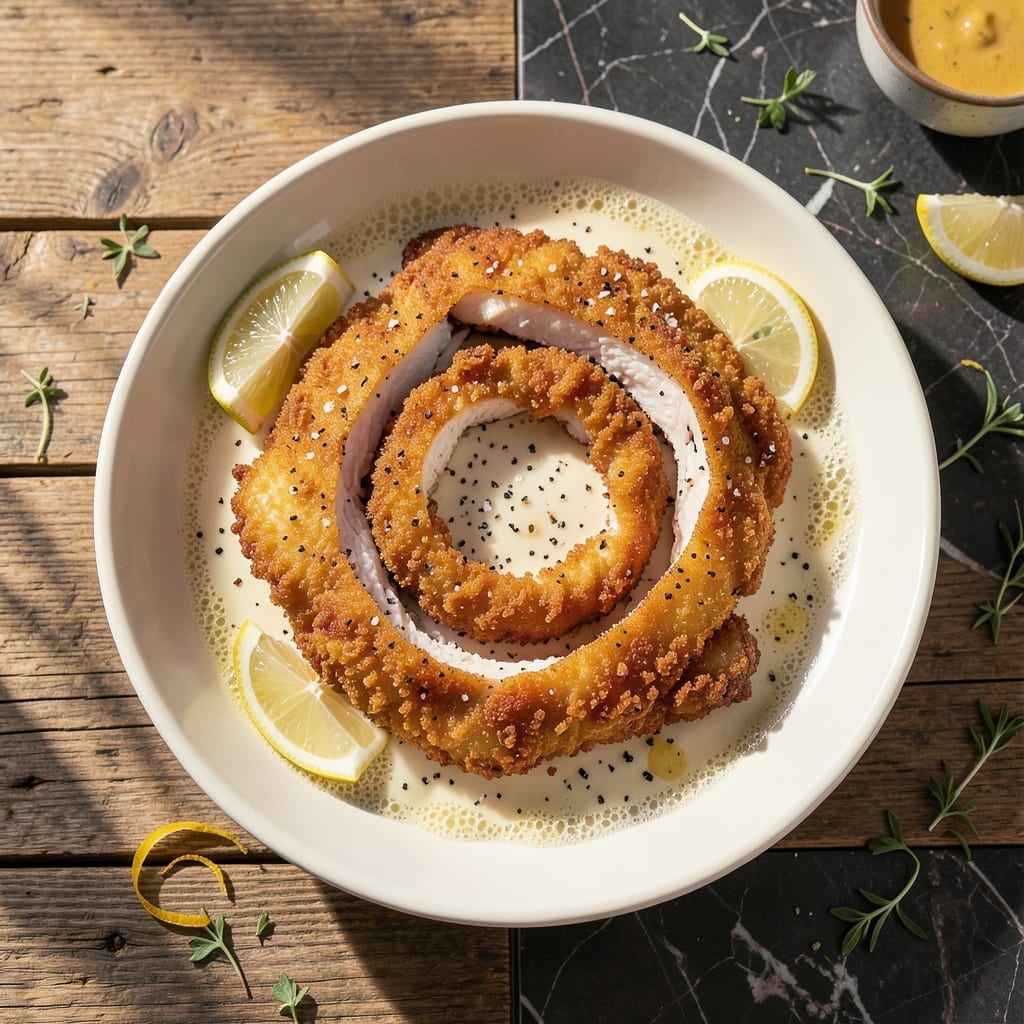
There’s a reason beer-battered halibut is a classic—it delivers golden, crispy perfection every time. This method uses a light, airy batter that fries up light as a feather while locking in the fish’s natural moisture.
The beer in the batter creates tiny bubbles that expand during frying, giving the coating its signature crunch. A touch of flour and seasoning ensures each bite is packed with flavor, not just texture.
At 375°F, the halibut cooks through in just 3-4 minutes per side, emerging tender inside with a shatteringly crisp exterior. Serve it hot with lemon wedges and tartar sauce for the full experience.
Pair with crisp fries or a fresh slaw to balance the richness. This is deep-frying done right.
Ingredients for Deep Fried Halibut
Crispy beer-battered halibut requires just these fresh and pantry staples for restaurant-quality results at home.
| Ingredient | Amount | Notes |
|---|---|---|
| Halibut Fillets 🐟 | 1 ½ lb | Skinless, cut into 1-inch strips |
| All-Purpose Flour 🌾 | 1 ½ cups | Divided for batter and dredging |
| Light Beer 🍺 | 1 cup | Cold, any light lager works |
| Baking Powder 🧂 | 2 tsp | For extra crispiness |
| Kosher Salt 🧂 | 1 ½ tsp | Divided for batter and fish |
| Black Pepper 🌶️ | ½ tsp | Freshly ground preferred |
| Garlic Powder 🧄 | 1 tsp | For depth of flavor |
| Paprika 🌶️ | 1 tsp | Sweet or smoked variety |
| Vegetable Oil 🫒 | 6 cups | For deep frying, high smoke point |
| Lemon Wedges 🍋 | 4 pieces | Fresh, for serving |
| Tartar Sauce 🥄 | ½ cup | Store-bought or homemade |
| Cornstarch 🌾 | ¼ cup | For extra crisp coating |
The halibut must be fresh or previously frozen and fully thawed. Whole Foods or a trusted fishmonger is ideal for sourcing wild-caught halibut—look for firm, translucent flesh with no fishy odor. For the beer, any light lager works (I prefer a crisp pilsner). The flour should be standard all-purpose; avoid cake or bread flour as they alter the batter’s texture.
No beer on hand? Sparkling water or club soda can substitute in a pinch, though the flavor will be milder. For a gluten-free version, swap the all-purpose flour for rice flour or a gluten-free blend. If you’re out of baking powder, 1 tsp baking soda plus 1 tsp cream of tartar works as a replacement. The oil must have a high smoke point—peanut or canola oil are great alternatives to vegetable oil.
The battered fish is best eaten immediately, but cooked halibut keeps in the fridge for up to 2 days. Reheat in a 350°F oven on a wire rack to maintain crispiness. The oil can be reused once if strained and stored in a cool, dark place for up to 1 month.
Why You’ll Love This Recipe
- Unfussy Batter: I just mix flour, light beer, and baking powder—no fancy steps, and the halibut turns out golden every time.
- That Crispy Bite: The beer in the batter gives it this airy crunch that pairs perfectly with tender halibut. Honestly, it’s the little things that make it so good.
- Weeknight Hero: Between us, this is my go-to for last-minute dinners when I need something impressive but quick.
- Budget-Friendly Luxe: Halibut feels fancy, but the simple ingredients keep it affordable. I’ll be real: it tastes like a restaurant dish for a fraction of the price.
Step-by-Step Instructions for Beer-Battered Halibut
Master the technique for achieving a golden, crisp exterior and tender, flaky halibut within.
Step 1: Prepare the Halibut and Dredging Station
Pat the 1.5 lb Halibut Fillets completely dry with paper towels—moisture prevents the coating from adhering properly. Cut the fillets into 1-inch strips for even cooking. Season lightly with ½ tsp Kosher Salt and set aside.
In a shallow dish, combine 1 cup All-Purpose Flour, ¼ cup Cornstarch, 1 tsp Garlic Powder, 1 tsp Paprika, and ½ tsp Black Pepper. This dredging mixture creates the first crispy layer that locks in moisture. Set this aside while you prepare the batter.
Step 2: Create the Light Beer Batter
In a mixing bowl, whisk together the remaining ½ cup All-Purpose Flour, 2 tsp Baking Powder, and 1 tsp Kosher Salt. The baking powder adds lift to the batter, creating that signature airy crunch.
Slowly pour in the 1 cup Light Beer while whisking continuously until smooth. The cold beer should create a thick, pancake-like batter. Let it rest for 5 minutes—this allows the gluten to relax and the baking powder to activate, ensuring maximum crispiness when fried.
Step 3: Heat the Oil and Begin Frying
In a deep, heavy-bottomed pot or Dutch oven, heat the 6 cups Vegetable Oil to 375°F over medium-high heat. Use a deep-fry thermometer to monitor the temperature precisely—halibut cooks quickly and uneven oil temperature leads to greasy or undercooked results.
While the oil heats, dredge each halibut strip in the flour mixture, pressing gently to adhere. Shake off excess, then dip into the beer batter, allowing any excess to drip off for 3 seconds before carefully lowering into the hot oil.
Step 4: Fry to Golden Perfection and Drain
Fry the halibut in batches to avoid crowding the pot—this prevents the oil temperature from dropping. Cook for 3-4 minutes per side until the batter turns deep golden brown and the halibut flakes easily when tested with a fork.
Use a slotted spoon to transfer the cooked halibut to a wire rack or paper towel-lined plate. The rack allows airflow on all sides, keeping the coating crisp while you finish frying the remaining batches. Sprinkle immediately with a pinch of salt while hot.
Step 5: Serve Immediately with Classic Accompaniments
Arrange the fried halibut on a serving platter. The contrast between the crisp exterior and tender interior should be evident with each bite. Serve right away with the 4 pieces Lemon Wedges and ½ cup Tartar Sauce on the side for dipping.
The lemon’s acidity cuts through the richness of the fried coating, while the tartar sauce adds a creamy, tangy complement. This dish is best enjoyed immediately while the batter remains at its crispiest.
Pro Tips For Making Deep Fried Halibut
- Pat Fillets Dry: I learned this the hard way—any moisture left on the halibut will make the batter slide right off. Press between paper towels until completely dry before dredging.
- Chill the Batter: After mixing the flour, beer, and baking powder, let it rest in the fridge for 10 minutes. Sounds weird, but it works: the cold batter sticks better and fries up lighter.
- Skip Crowded Frying: Resist the urge to cook all the fillets at once. Overcrowding drops the oil temp fast, and you’ll end up with greasy, soggy fish instead of that crisp golden crust.
- Double Fry for Crisp: Fry once at 350°F for 3-4 minutes, then pull and drain. Crank the oil to 375°F and fry again for 1-2 minutes for a shatteringly crisp coating that holds up.
Health Benefits of These Flavors
Lean Protein Power
Halibut is a fantastic source of high-quality protein, with each 3-ounce serving providing about 20 grams of complete protein. This supports muscle growth, repair, and overall body maintenance. Unlike fattier fish, halibut delivers this protein with minimal saturated fat, making it heart-healthy. 💪
Omega-3 Rich
This fish packs a punch of omega-3 fatty acids, essential for brain health and reducing inflammation. A single serving contains roughly 500-1,000mg of these beneficial fats. I notice my focus improves when I include more omega-3-rich foods in my diet.
Vitamin Boost
Halibut is loaded with vitamin D and B vitamins, particularly B12 and niacin. A 3-ounce portion provides about 80% of your daily vitamin D needs, crucial for immune function and bone health. The B vitamins help convert food into energy efficiently.
Mineral Wealth
You’ll find an impressive array of minerals in halibut, including selenium, phosphorus, and magnesium. Selenium acts as a powerful antioxidant, while phosphorus supports bone health. A serving covers about 30% of your daily selenium requirements.
Low Calorie Option
Despite its rich, satisfying flavor when fried, halibut itself is relatively low in calories. A 3-ounce cooked portion contains only about 120 calories before frying, making it a great choice for calorie-conscious meals.
Heart Health
The combination of omega-3s, low saturated fat, and high protein makes halibut excellent for cardiovascular health. Regular consumption can help lower blood pressure and reduce the risk of heart disease. 💛
Nutrition Facts
Frequently Asked Questions
What oil works best for frying?
Use vegetable, peanut, or canola oil for their high smoke point. Avoid olive oil as it can burn at 375°F.
Can I use a different type of fish?
Yes! Cod, haddock, or pollock work well. Adjust cooking time if fillets are thinner than 1-inch.
How do I keep the batter from falling off?
Pat the fish completely dry first and let the batter rest for 5 minutes before frying. This helps the coating adhere better.
How can I make this gluten-free?
Swap all-purpose flour for rice flour or a gluten-free blend. Use gluten-free beer to maintain the same texture.

- BBQ Sausage Recipe Oven: Smoky Depth Without the Grill - September 28, 2026
- BBQ Chicken Bowl Recipe Rice: Smoky Sweetness Over Fluffy Grains - September 28, 2026
- Beef Cutlet Recipe Ideas: Crispy Breaded Patties With Bold Seasonings - September 28, 2026