
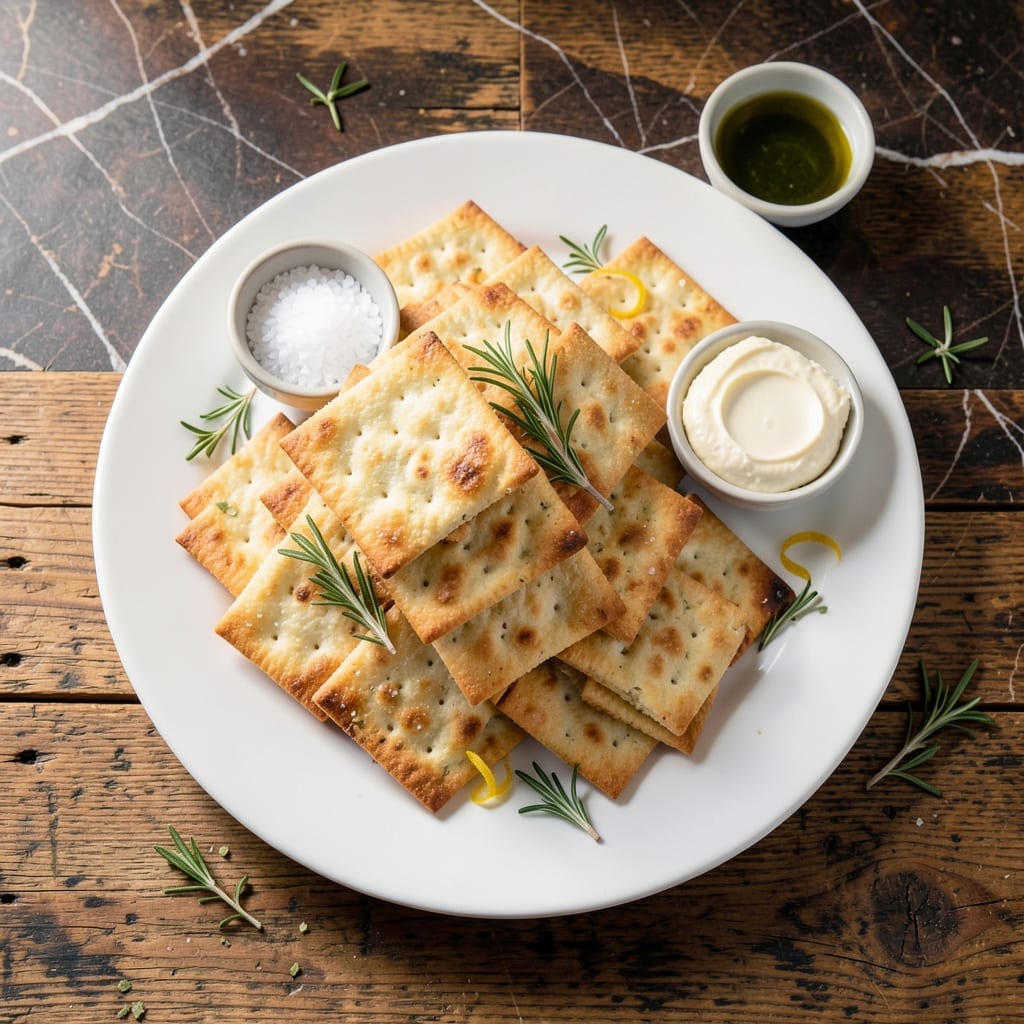
There’s a special satisfaction in baking your own saltines at home, achieving that perfect crisp snap and delicate flavor. This proven method delivers the classic cracker texture you expect, with precise control over ingredients and thickness.
What makes this approach different is the careful balance of flour, water, and leavening—creating a dough that rolls thin and bakes to a golden, flaky finish. The secret lies in chilling the dough before rolling, which prevents shrinking during baking.
You’ll end up with crispy, light crackers that shatter with every bite, just like the store-bought version but with homemade quality. The baking time and temperature ensure even browning and that signature salty flavor.
Perfect for soups, snacks, or cheese pairings. Here’s how to make them.
Ingredients for Saltine
Nine simple ingredients. Perfect crisp snap. Classic cracker texture achieved at home.
| Ingredient | Amount | Notes |
|---|---|---|
| All-Purpose Flour 🌾 | 2 cups | Plus extra for dusting surface |
| Fine Sea Salt 🧂 | 1 tsp | Divided for dough and topping |
| Baking Soda 🧂 | ½ tsp | Ensures even rise and texture |
| Cold Water 💧 | ¾ cup | Ice cold for best results |
| Vegan Butter 🧈 | 2 tbsp | Cold, cubed for flakiness |
| Olive Oil 🫒 | 1 tbsp | For brushing before baking |
| Coarse Kosher Salt 🧂 | 1 tsp | For sprinkling on top |
| Granulated Sugar 🍚 | ½ tsp | Optional for slight sweetness |
| Apple Cider Vinegar 🍏 | 1 tsp | Balances flavor profile |
The flour is the foundation here. King Arthur or Gold Medal all-purpose give the most consistent results—avoid bread flour, which can make the crackers too dense. The vegan butter must be cold and cubed to create those flaky layers. I source mine from Whole Foods or Trader Joe’s, where the selection is reliable. Don’t skip chilling the dough; it’s what prevents shrinking during baking.
No all-purpose flour? Bread flour at half the amount mixed with cake flour can work, but texture may vary. For a whole-grain twist, substitute one-third of the flour with white whole wheat. Vegan butter alternatives like coconut oil (solid, not melted) work in a pinch. If omitting sugar, add an extra pinch of salt to compensate for flavor balance.
Dough keeps wrapped in the fridge for 2 days or freezes for 1 month. Baked crackers stay crisp in an airtight container at room temperature for up to 1 week. For longer storage, freeze baked crackers and reheat briefly in the oven to restore crunch.
Why You’ll Love This Recipe
- 5-Minute Mix: I just dump flour, salt, baking soda, cold water, and vegan butter in a bowl—no resting, no fuss.
- Buttery Crunch: The vegan butter gives them that rich, crisp snap that makes it hard to stop at one.
- Snack or Side: I serve them with soup, cheese, or straight from the tin—honestly, they fit everywhere.
Step-by-Step Instructions for Crunchy Saltine Crackers
This method ensures perfect texture and flavor for your homemade crackers every time.
Step 1: Create the Dough Base
In a large mixing bowl, combine the 2 cups All-Purpose Flour, 1 tsp Fine Sea Salt, 0.5 tsp Baking Soda, and 0.5 tsp Granulated Sugar. Whisk these dry ingredients together until uniformly distributed. This mixture forms the structural foundation of your crackers.
Cut the 2 tbsp Vegan Butter into small cubes while cold, then work it into the flour mixture using your fingertips or a pastry cutter until the texture resembles coarse crumbs. The cold butter is essential for creating flaky layers in the finished crackers.
Step 2: Incorporate Wet Ingredients
Make a well in the center of the dry ingredients. Add the 0.75 cup Cold Water and 1 tsp Apple Cider Vinegar to the well. The vinegar adds subtle tang and helps develop the gluten structure for that characteristic snap.
Gradually incorporate the wet ingredients into the dry using a wooden spoon until the mixture begins to come together. You’ll notice the dough starts to pull away from the sides of the bowl. At this point, switch to kneading by hand for 2-3 minutes until the dough becomes smooth and elastic.
Step 3: Roll and Cut the Dough
Lightly dust your work surface with additional all-purpose flour. Divide the dough into 4 equal portions (since this recipe serves 4). Work with one portion at a time, keeping the others covered to prevent drying.
Roll the dough as thin as possible—ideally 1/16-inch thick or less. The thinner you roll, the crispier your crackers will be. Use a sharp knife or pizza cutter to score the dough into 2-inch squares. Poke each square with a fork to create small holes, which prevent the crackers from puffing during baking.
Step 4: Bake to Golden Perfection
Preheat your oven to 375°F. Transfer the scored dough to parchment-lined baking sheets. Brush the surface lightly with the 1 tbsp Olive Oil and sprinkle evenly with the 1 tsp Coarse Kosher Salt. This final salt application gives saltines their signature salty crust.
Bake for 10-12 minutes or until the edges turn golden brown and the centers appear dry. Rotate the baking sheets halfway through for even cooking. Watch closely during the final minutes to prevent over-browning.
Step 5: Cool and Store
Remove the crackers from the oven and immediately transfer them to a wire rack to cool completely. They’ll continue to crisp as they cool. Break apart along the scored lines once fully cooled.
Store in an airtight container at room temperature for up to 1 week. The crackers should maintain their crisp texture and clean snap throughout storage. For best results, ensure they’re completely cooled before sealing to prevent any moisture buildup.
Pro Tips For Making Saltine
- Chill the Dough: After mixing, refrigerate the dough for at least 30 minutes—vegan butter softens fast, and cold dough rolls out cleaner and cracks less.
- Roll Paper Thin: Aim for 1/16-inch thickness; any thicker and your saltines won’t crisp properly, and I learned this the hard way with chewy first attempts.
- Prick Before Baking: Use a fork to dock the dough all over so it doesn’t puff up—skip this and you’ll get crackers that look more like flatbread.
- Use Fine Salt: Coarse salt won’t stick as well and can make the texture uneven; fine sea salt dissolves better and gives that classic saltine snap.
Serving Suggestions for saltine
Soup Pairings
These crisp crackers are perfect for floating atop a warm bowl of tomato soup—I love the contrast of textures. They also pair beautifully with creamy broccoli cheddar or a rustic minestrone. The saltiness enhances the soup’s flavors without overpowering them. 🥣
Cheese Boards
Arrange them on a charcuterie board with sharp cheddar, tangy blue cheese, and smoky Gouda. The crackers’ neutral base lets the cheeses shine. I add honey or fig jam for a sweet contrast.
For a vegan board, try cashew-based cheeses and marinated olives alongside your crackers.
Dip Companions
Serve with hummus, spinach-artichoke dip, or guacamole for a crowd-pleasing snack. The sturdy texture holds up well to hearty dips. I prefer roasted garlic hummus for extra depth.
Salad Toppers
Crush a few over a fresh garden salad for added crunch. They work especially well with Caesar or Cobb salads, replacing croutons. I sprinkle them just before serving to maintain crispness.
Quick Snacks
Top with peanut butter and banana slices for a sweet treat, or avocado and everything bagel seasoning for a savory bite. My kids love them with cream cheese and cucumber.
Nutrition Facts
Frequently Asked Questions
Can I use regular butter instead of vegan butter?
Yes, regular cold butter works perfectly in this recipe. The key is keeping it cold and cubed to create flaky layers. Vegan butter was chosen for dietary preferences, but traditional butter gives identical texture and flavor.
How thin should I roll the dough?
Aim for 1/16-inch thickness or less for the crispiest results. The thinner you roll, the crunchier your crackers will be. Use a ruler or adjust your rolling pin settings for precision.
Why did my crackers puff up during baking?
This usually happens if you skip the fork holes or roll the dough too thick. Poking holes releases steam, while thin rolling prevents air pockets. Chill the dough 30 minutes before baking to minimize puffing.
Can I make these without a rolling pin?
Place dough between two sheets of parchment and use a wine bottle or flat pan. This method works well for even thickness. Just be sure to dust the parchment with flour to prevent sticking.

- BBQ Sausage Recipe Oven: Smoky Depth Without the Grill - September 28, 2026
- BBQ Chicken Bowl Recipe Rice: Smoky Sweetness Over Fluffy Grains - September 28, 2026
- Beef Cutlet Recipe Ideas: Crispy Breaded Patties With Bold Seasonings - September 28, 2026