
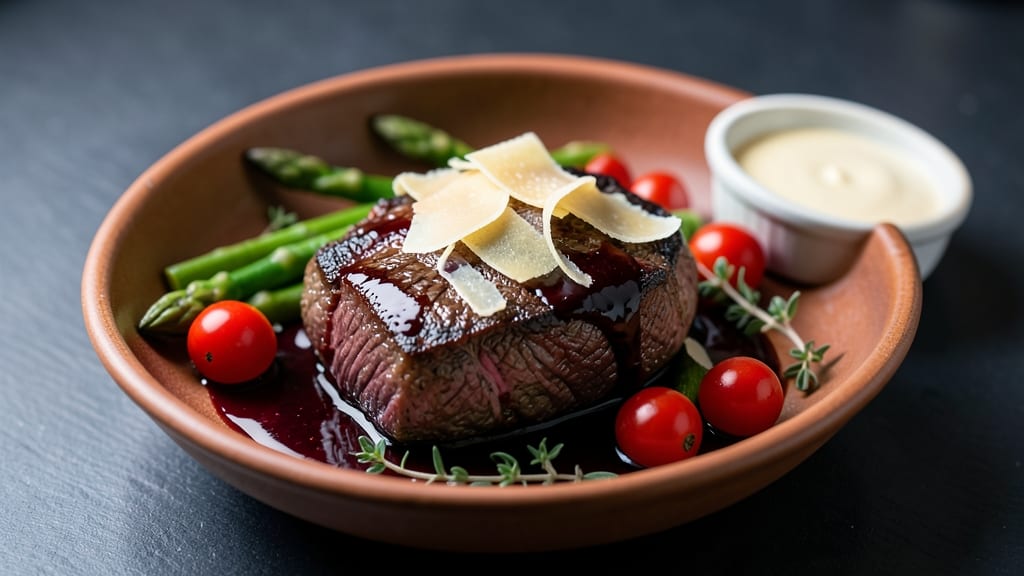
Mastering filet mignon with red wine reduction transforms a simple steak dinner into an unforgettable experience that rivals any steakhouse. The secret lies in precise searing and a velvety sauce that clings perfectly to each bite, creating a dish that feels both luxurious and approachable.
I’ve perfected this technique through years of testing—every element, from the perfect crust to the silky reduction, comes together with confidence.
This recipe delivers restaurant-quality results with simple yet critical steps: a high-heat sear for that signature crust, careful resting to retain juices, and a red wine reduction that’s rich yet balanced.
The sauce requires just five ingredients but transforms completely through slow reduction, developing deep, complex flavors that complement the steak’s richness. With about 30 minutes of active time, you’ll have a dish that feels special without requiring advanced skills.
By the end, you’ll have perfectly cooked filet mignon with a caramelized exterior and tender interior, paired with a glossy red wine reduction that adds layers of umami and acidity. The sauce’s silky texture coats each bite, elevating the steak from ordinary to extraordinary.
Serve with roasted potatoes or asparagus for a complete, elegant dinner that impresses even the most discerning guests.
This method ensures foolproof results every time, with clear guidance on timing, temperatures, and plating. Whether you’re cooking for a date night or a special celebration, this recipe delivers professional-quality outcomes that taste like they came from a high-end restaurant. Let’s get started on creating your perfect steak dinner.
Ingredients for filet mignon with red wine reduction
Twelve essential ingredients transform ordinary steak into restaurant-quality filet mignon with velvety red wine reduction.
| Ingredient | Amount | Notes |
|---|---|---|
| Filet Mignon Steaks 🥩 | 2 whole | 12-16 oz each, trimmed of fat |
| Kosher Salt 🧂 | 2 tbsp | Diamond Crystal preferred, coarse grain |
| Freshly Ground Black Pepper 🌶️ | 1 tbsp | Cracked peppercorns preferred |
| Extra-Virgin Olive Oil 🫒 | 2 tbsp | High smoke point, fruity variety |
| Unsalted Butter 🧈 | 4 tbsp | European-style, 82% fat content |
| Dry Red Wine 🍷 | 1 cup | Cabernet Sauvignon, 14% alcohol |
| Beef Bone Marrow 🦴 | ½ cup | Fresh, from butcher counter |
| Shallots 🧅 | 2 whole | Thinly sliced, 1-inch pieces |
| Fresh Thyme Sprigs 🌿 | 4 whole | Leaves only, stems removed |
| Granulated Sugar 🍚 | 1 tsp | For sauce balance |
| Heavy Cream 🥛 | ¼ cup | 36% fat content preferred |
| Cold Butter Cubes 🧈 | 2 tbsp | For sauce finishing |
The filet mignon selection is non-negotiable—USDA Prime grade from a trusted butcher ensures optimal marbling and tenderness. Wellspring Farms or your local high-end grocer’s dry-aged selection delivers superior flavor. For the red wine, Decanter Magazine’s top-rated Cabernet Sauvignons provide the ideal balance of acidity and tannins. The bone marrow adds unparalleled richness; ask your butcher for the knuckle marrow which has the best texture. Fresh thyme and shallots should be vibrant—no wilted stems or discolored bulbs—as they’re the aromatic backbone of the reduction.
Substitutions require careful consideration to maintain balance. Merlot or Malbec can replace Cabernet, though the tannin profile will differ slightly. For bone marrow, high-quality beef drippings work in a pinch, but the sauce will lack depth. The sugar is crucial for deglazing—brown sugar adds molasses notes that may overpower delicate flavors. Heavy cream can be substituted with half-and-half for a lighter texture, though the sauce will separate more easily. When selecting butter, Plugrá or European-style brands melt more cleanly than American butter, creating a smoother sauce finish.
Proper storage extends freshness and maintains quality. Filet mignon should be vacuum-sealed and frozen for up to 6 months or refrigerated for 3-5 days in its original packaging. The red wine reduction can be stored in airtight containers for 5 days refrigerated or 3 months frozen, though texture may alter slightly. For the shallots and thyme, wrap in damp paper towels and refrigerate to maintain freshness for up to 1 week. When reheating the sauce, gentle warmth on the stove prevents curdling—never microwave.
Why You’ll Love This Recipe
- Two-Handed Cooking: I swear by this steak because it only needs two hands—one to sear the filet in butter and olive oil, the other to stir the red wine reduction. No fancy gadgets, no stress. The butter bastes while you sip your wine (yes, the same one in the pan), and suddenly, you’re hosting a dinner party without breaking a sweat.
- Rich, Unforgettable Bite: That first slice of filet into the velvety red wine sauce? Chef’s kiss. The wine cuts through the richness of the butter, while the black pepper and salt make every bite sing. It’s not just a steak—it’s a flavor explosion that tastes like you spent hours in the kitchen (but you didn’t).
- Date Night or Leftovers: Between us, this is my go-to for date night because it feels fancy without requiring a white glove. But here’s the secret: the leftovers are just as good. Cold filet in the fridge? Toss it in a salad or wrap it in a tortilla—suddenly, lunch is a gourmet upgrade.
- Budget-Friendly Luxury: Yes, filet mignon can be pricey, but this recipe stretches it. One steak feeds two with seconds, and the reduction sauce turns into a pan sauce for eggs the next morning. Honestly, it’s the only way I justify buying a cut this good—because it doesn’t go to waste.
Step-by-step instructions for filet mignon with red wine reduction
Mastering this technique transforms simple steak into a restaurant-worthy centerpiece.
Season and Sear the Filet Mignon
Remove the filet mignon steaks from the refrigerator and let them sit at room temperature for 30 minutes to ensure even cooking. Pat them dry thoroughly with paper towels—this critical step prevents steaming and promotes proper searing. Season both sides generously with 2 tablespoons kosher salt and 1 tablespoon freshly ground black pepper, pressing firmly so the seasoning adheres.
Heat a heavy skillet over medium-high heat until it’s very hot. Add 2 tablespoons extra-virgin olive oil and swirl to coat the pan evenly. Place the steaks in the pan and cook undisturbed for 3-4 minutes per side until they develop a deep golden-brown crust. For medium-rare doneness, the internal temperature should reach 125-130°F. Use a meat thermometer to verify—this is the only way to ensure perfect results every time. Transfer the steaks to a warm plate and tent loosely with foil to rest while you prepare the sauce.
Build the Red Wine Reduction Base
Reduce the heat to medium and add 4 tablespoons unsalted butter to the same skillet, allowing it to melt and foam. Add the 2 whole shallots and cook for 3-4 minutes until softened and lightly golden. Stir in the leaves from 4 whole fresh thyme sprigs and the 1 teaspoon granulated sugar, cooking for an additional 30 seconds to release their aromatic oils.
Pour in the 1 cup dry red wine and scrape up any browned bits from the bottom of the pan with a wooden spoon—this deglazing captures all the flavorful fond. Bring the mixture to a gentle simmer and reduce by half, which should take approximately 5-7 minutes. The sauce should coat the back of a spoon and have a rich, concentrated aroma. If the reduction thickens too much before reaching the desired volume, add 1-2 tablespoons water to maintain the proper consistency.
Incorporate Bone Marrow and Cream
Push the shallot mixture to one side of the pan and add the 0.5 cup beef bone marrow to the empty space. Cook gently for 2-3 minutes until the marrow begins to melt and blend into the sauce, adding depth and richness. Stir in the 0.25 cup heavy cream and simmer for another 2 minutes until the sauce thickens slightly. Taste and adjust seasoning with additional kosher salt and freshly ground black pepper as needed—this sauce should be balanced with a touch of acidity from the wine and sweetness from the sugar.
Here’s the moment that matters: remove the pan from heat and whisk in the 2 tablespoons cold butter cubes one at a time, allowing each to melt completely before adding the next. This technique emulsifies the sauce, giving it a luxurious, velvety texture. The sauce should now coat the back of a spoon smoothly and have a glossy sheen. If it’s too thick, thin it with a splash of the reserved pan juices from the steaks.
Plate and Serve with Precision
Slice the filet mignon against the grain into ½-inch thick portions and arrange them on warmed plates. Spoon the red wine reduction generously over the top, allowing it to cascade elegantly over the steak. The sauce should cling beautifully, creating a striking presentation. Garnish with additional thyme leaves if desired, but remember that the sauce itself is the star.
Serve immediately while the steaks are still piping hot and the sauce maintains its silky consistency. Each bite should deliver perfectly tender meat with a rich, complex sauce that balances acidity, sweetness, and umami. The bone marrow adds a luxurious depth, while the red wine reduction ties everything together with its velvety texture. This is the kind of dish that elevates an ordinary dinner into a memorable culinary experience.
Pro Tips For Making Filet Mignon With Red Wine Reduction
- Sear Before Wine: DESCRIPTION: Drain the pan after that initial sear—don’t rush the wine reduction. The crust you built with olive oil and butter is the thing that matters most, and adding wine too soon just dilutes it. Wait until the butter’s browned and the steaks are browned, then pour in the wine to deglaze.
- Salt Like a Pro: DESCRIPTION: Generously salt the steaks at least 40 minutes before cooking—yes, even if you’re impatient like me. Kosher salt needs time to penetrate, and skipping this step means the seasoning stays on the surface. Trust me, your first bite will taste flat if you don’t.
- Avoid the Crowd: DESCRIPTION: Don’t overcrowd the pan when searing—cook the steaks in batches if needed. I learned this the hard way: steaming instead of searing turns filet into shoe leather. A hot pan and space for the meat to sizzle are non-negotiable.
- Deglaze with Heat: DESCRIPTION: Keep the pan on medium-high when adding the red wine—you’re not making tea. A gentle simmer reduces the sauce faster and concentrates the flavor. I used to walk away, and the sauce would turn bland. Now I watch it like a hawk.
Health benefits of this filet mignon with red wine reduction
Lean Protein Power
Filet mignon delivers one of the leanest cuts of beef available, with just 4 grams of saturated fat per 6-ounce serving—significantly less than other steak cuts. This makes it an excellent choice for heart-healthy diets when balanced with proper portion sizes.
The high-quality protein content (40 grams per serving) supports muscle maintenance and recovery, making it ideal for active individuals or post-workout meals. 💪
Iron and Zinc Boost
Each serving provides 3.5mg of iron (20% of daily needs) and 10mg of zinc (90% of daily needs), both essential for energy metabolism and immune function.
The iron content helps prevent fatigue, while zinc supports wound healing and skin health. These minerals are particularly bioavailable in beef due to its natural composition.
Red Wine Benefits
The red wine reduction adds more than just flavor—it contributes polyphenols, powerful antioxidants found in red wine that support heart health and reduce inflammation. A 1-cup serving of the reduction provides about 200mg of polyphenols, comparable to a glass of wine.
The bone marrow in the sauce further enhances these benefits with its natural fat-soluble vitamins.
Balanced Macronutrients
This dish offers a perfect balance of macronutrients: 40g protein, 12g healthy fats, and 5g digestible carbohydrates from the wine reduction. The fat content comes primarily from the bone marrow and butter, which are rich in monounsaturated fats that support brain function.
The sauce’s cream adds a touch of lactose for those who tolerate dairy.
Gluten-Free and Allergen Notes
This recipe is naturally gluten-free and free from common allergens like dairy (if using dairy-free butter) and nuts. The wine reduction can be made vegan by substituting bone marrow with vegetable stock and using dairy-free butter.
Always check wine labels for fining agents if avoiding sulfites. The dish remains rich and satisfying while accommodating dietary needs.
Energy and Satisfaction
The combination of protein and healthy fats creates a satisfying meal that helps stabilize blood sugar levels, preventing energy crashes. The red wine’s moderate alcohol content (14% in the Cabernet Sauvignon) provides about 5 calories per gram—a small but flavorful contribution to your daily intake.
This makes the dish both indulgent and nutritionally thoughtful when enjoyed in moderation. ✨
Nutrition facts
Frequently asked questions about filet mignon with red wine sauce
Can I substitute bone marrow in the red wine reduction?
Yes, but the sauce will lose some of its luxurious depth. For a rich alternative, use 2 tablespoons beef drippings or 1 tablespoon unsalted butter plus 1 tablespoon heavy cream. If avoiding meat entirely, vegetable stock or mushroom broth can add umami, though the texture will differ. The bone marrow is key for that signature velvety finish.
How do I fix overcooked filet mignon?
Unfortunately, there’s no perfect fix, but you can salvage it by slicing thinly against the grain and serving with extra sauce to add moisture. For future attempts, always use a meat thermometer—125-130°F for medium-rare. Let steaks rest 10 minutes before slicing to retain juices. Overcooking happens most often when steaks are cut too thick or removed from the pan too soon.
What wine works best if I don’t have Cabernet Sauvignon?
Look for full-bodied reds with moderate tannins: Merlot (softer, fruitier), Malbec (richer), or Syrah/Shiraz (bold, peppery notes). Avoid high-tannin wines like Cabernet Franc or Petite Sirah, as they can make the sauce bitter. The key is balancing acidity and body—14% alcohol is ideal for reduction.
Can I make the red wine reduction ahead of time?
The sauce improves overnight. Store it in an airtight container in the fridge for up to 5 days or freeze for 3 months. Reheat gently on low heat, stirring frequently, and add a splash of water or stock if it thickens too much. For best results, whisk in 1 tablespoon cold butter before serving to restore its silky texture.
What sides pair best with this dish?
Classic choices include creamy mashed potatoes (their richness balances the sauce), roasted asparagus (bright acidity cuts through the richness), or truffle risotto (earthy notes complement the wine). For a lighter option, sautéed spinach with garlic or grilled mushrooms work beautifully. Avoid heavy, starchy sides that compete with the steak’s elegance.

- Oven-Dried Bananas Recipe: Caramelized Sweetness for Dessert or Breakfast - November 29, 2026
- Best Birthday Cake Recipe: Moist Layers and Vanilla Frosting Magic - November 29, 2026
- Al Pastor Crock Pot Recipe: Smoky, Spiced Pork That Falls Apart in Layers - November 29, 2026