
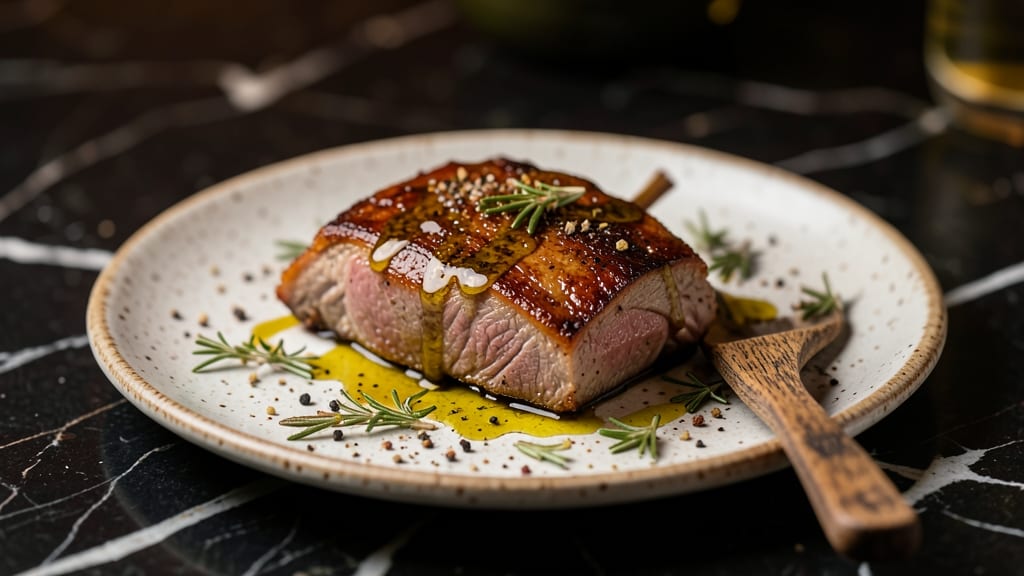
Mastering a goat loin roast recipe with a perfectly pink center and herb-crusted exterior transforms an elegant dinner into a showstopper. The secret lies in precise temperature control and a flavorful crust that seals in juices while creating a tender, melt-in-your-mouth texture.
I’ve refined this method over years of testing—balancing tradition with modern techniques to ensure restaurant-quality results at home.
This approach combines a reverse sear for even doneness with an aromatic herb crust that adds depth without overpowering the goat’s natural richness. Unlike traditional slow-roasting, this method delivers a crisp exterior while keeping the interior juicy and tender.
The key ingredients—fresh rosemary, thyme, and garlic—infuse every bite with bright, earthy notes that pair beautifully with wine or citrus.
By the time you serve this dish, you’ll have a golden-brown roast with a fragrant crust and a pink center that’s just firm enough to slice cleanly. The technique is precise but not complicated, making it accessible for home cooks who want to impress without stress.
Pair it with roasted root vegetables or a light salad to complete the meal.
Whether you’re hosting a dinner party or treating yourself to a special meal, this goat loin roast delivers elegant simplicity with every bite. The method ensures consistency, so you can focus on plating and enjoying the results.
Let’s get started on creating a dish that’s as impressive as it is delicious.
Ingredients for goat loin roast
Fourteen ingredients transform simple goat loin into restaurant-quality elegance with perfect pink center.
| Ingredient | Amount | Notes |
|---|---|---|
| Goat Loin Roast 🐐 | 1 ½ lb | Center-cut, bone-in preferred |
| Fresh Rosemary 🌿 | ½ cup | Finely chopped, organic preferred |
| Fresh Thyme 🌿 | ¼ cup | Leaves only, stems removed |
| Garlic Cloves 🧄 | 6 cloves | Peeled, smashed for infusion |
| Extra-Virgin Olive Oil 🫒 | ¼ cup | High-quality, fruity variety |
| Diamond Crystal Kosher Salt 🧂 | 1 ½ tbsp | For seasoning and crust |
| Fresh Lemon Zest 🍋 | 1 tbsp | From organic lemon |
| Black Peppercorns 🌶️ | 1 tbsp | Freshly cracked, coarse |
| Unsalted Butter 🧈 | 2 tbsp | Cold, cubed for searing |
| Carrots 🥕 | 1 lb | Whole, peeled, sliced |
| Yellow Onion 🧅 | 1 whole | Yellow or red, sliced |
| Dry White Wine 🍷 | ½ cup | Sauvignon Blanc preferred |
| Fresh Parsley 🌿 | ¼ cup | Chopped, for garnish |
| Honey 🍯 | 1 tbsp | Raw, for glaze option |
The goat loin is the centerpiece—center-cut, bone-in delivers optimal tenderness. Source from a reputable butcher like D’Artagnan or your local specialty grocer; look for bright red color and firm texture. Fresh herbs elevate the dish: organic rosemary and thyme from the market’s produce section provide superior flavor. The garlic should be plump and firm, not sprouting. For the wine, Sauvignon Blanc from Trader Joe’s or a local vineyard adds bright acidity that cuts through the richness. The kosher salt is critical—Diamond Crystal dissolves cleanly without graininess, essential for the herb crust.
No fresh rosemary? Dried at one-third the amount works in a pinch, though texture suffers. Substitute lamb loin if goat is unavailable—similar cooking time, but adjust seasoning slightly. The carrots and onion can be swapped for parsnips or fennel for variation. For the wine, dry vermouth or chicken broth maintains balance. The butter must be cold and cubed for proper searing; don’t skip this step. Prep all vegetables uniformly for even cooking. The lemon zest adds brightness—organic lemons from Whole Foods provide the most vibrant flavor.
Store the goat loin uncovered in the fridge for 24 hours before cooking to dry-brine naturally. Fresh herbs keep 5 days wrapped in damp paper towels. The herb crust mixture can be prepared 1 day ahead and refrigerated. After roasting, the dish reheats beautifully—350°F for 10 minutes restores moisture. For make-ahead convenience, portion the roast into individual slices and freeze between parchment paper for 3 months. Serve immediately after slicing for optimal texture.
Why You’ll Love This Recipe
- One-Pan Wonder: I swear by this—just the roast, herbs, and oil on a sheet pan. No fancy prep, no mess, no stress. The garlic and rosemary infuse into the meat while it roasts, and honestly? That’s all you need.
- Herb-Crusted Magic: Between us, goat loin has a natural richness that’s hard to beat, but those fresh rosemary sprigs and thyme tied to the outside? They turn it into something ridiculously flavorful. The crispy edges and tender center? Chef’s kiss.
- Weeknight to Weekend: I’ve served this for lazy Tuesdays and Sunday dinners—works every time. Slice it thin for sandwiches, shred it for tacos, or serve it whole with crusty bread. My daughter even sneaks bites from the leftovers. (Yes, even on a Tuesday night.)
- Leftovers That Don’t Suck: Most roasts turn dry after day two, but this one? It’s still juicy and packed with flavor. I portion it into containers for quick lunches or freeze half for when I’m too tired to cook. Budget-friendly, too—goat stretches further than you’d think.
Step-by-step instructions for herb-crusted goat loin roast
Master this technique for a perfectly tender goat loin with a fragrant herb crust and rosemary-infused pink center.
Prepare the Herb Crust and Season the Roast
In a food processor, combine the 0.5 cup fresh rosemary, 0.25 cup fresh thyme, 6 cloves garlic cloves, 1.5 tablespoons diamond crystal kosher salt, 1 tablespoon fresh lemon zest, and 1 tablespoon black peppercorns. Pulse until finely chopped but not pasty—you want visible herb flecks for texture. Transfer this mixture to a small bowl and stir in 0.25 cup extra-virgin olive oil until it forms a coarse paste.
Pat the 1.5 lb goat loin roast dry with paper towels, then rub the herb paste evenly over all sides, pressing firmly so it adheres. This step ensures maximum flavor penetration and creates that signature crust. Let the roast sit at room temperature for 30 minutes while you prepare the vegetables—this allows for even cooking and prevents chilling the meat during searing.
Sear the Roast and Sauté Vegetables
Heat a Dutch oven or heavy oven-safe skillet over medium-high heat until hot. Add the 2 tablespoons unsalted butter and let it foam for 1 minute. Place the roast in the skillet, fat-side down, and sear for 4 minutes without moving it—this creates a deep golden crust. Flip and sear the other side for another 4 minutes. Remove the roast and set it aside on a plate.
In the same skillet, add the 1 whole yellow onion and 1 lb carrots, sliced into ½-inch rounds. Cook for 8-10 minutes until the onions soften and carrots begin to caramelize. Deglaze the pan with 0.5 cup dry white wine, scraping up any browned bits from the bottom. Reduce by half, then return the roast to the skillet, nestling it among the vegetables.
Roast to Perfect Pink Center
Transfer the skillet to a preheated 375°F oven and roast for 25-30 minutes for medium-rare (internal temperature 130-135°F). The roast is done when it reaches this temperature and the crust is deeply golden. Here’s the thing—goat loin cooks faster than beef, so use a meat thermometer for precision. If the crust starts to darken too quickly, tent loosely with foil.
Remove the roast from the oven and let it rest for 10-15 minutes before slicing—this critical step allows juices to redistribute. The internal temperature will rise 5-10°F during resting, so plan accordingly. While resting, keep the vegetables warm in their juices.
Finish with Honey Glaze (Optional)
For an elegant finish, return the skillet to medium heat and add 1 tablespoon honey, stirring to combine with the vegetable juices. Simmer for 2-3 minutes until slightly thickened. Brush this glaze over the sliced roast just before serving—it adds a delicate sweetness that complements the herb crust.
Slice the roast against the grain into ½-inch thick portions and arrange on a platter with the glazed vegetables. Garnish with 0.25 cup fresh parsley for color and freshness. Each slice should reveal a rosemary-infused pink center with a crispy, aromatic crust—proof of perfectly executed technique.
Pro Tips For Making Goat Loin Roast
- Sear First, Roast Slow: After burning three batches of goat loin, I learned to hit it with a screaming-hot pan—no oil needed—until deep brown crust forms. Then transfer to a 325°F (163°C) oven for even cooking; goat’s leaner than lamb, so low heat keeps it juicy.
- Smash That Garlic: Skip the minced garlic—crush those cloves with the flat side of your knife first. The released oils caramelize faster and cling better to the meat, especially when you’re basting with olive oil and herbs mid-roast.
- Don’t Crowd the Herbs: Tuck whole sprigs of rosemary and thyme underneath the loin, not on top. They’ll infuse the meat without burning, and you’ll avoid the sad, soggy herb pile that turns to mush when you slice—yes, even if you’re impatient like me.
- Rest Under Foil: Give it a solid 5–10 minutes under foil before slicing—this isn’t optional. Goat loin’s fibers tighten when hot, and cutting too soon means dry, stringy slices. (Your future self will thank you.)
Perfect pairings for this dish
Wine Pairing Perfection
A crisp Sauvignon Blanc from New Zealand or Loire Valley is my go-to pairing—its bright acidity and citrus notes mirror the lemon zest in the crust while cleansing the palate between bites.
For something bolder, try a dry Riesling with its mineral undertones that complement the goat’s earthy richness. Avoid heavy reds like Cabernet, which can overwhelm the delicate herb notes. 🍷
Citrus-Infused Beverages
For a refreshing non-alcoholic match, serve sparkling water with ½ lemon wedge and a pinch of flaky sea salt—the effervescence cuts through the dish’s richness. A gin and tonic with rosemary sprig garnish echoes the herb crust’s aroma.
For a sweeter touch, a white peach sangria with Sauvignon Blanc and peach slices adds seasonal harmony.
Vegetable Harmony
Roasted carrots and parsnips with honey-thyme glaze (from the recipe’s leftover juices) create a perfect side. For contrast, a wilted spinach salad with lemon vinaigrette and toasted pine nuts adds freshness. I love serving these on the same platter to let guests mix textures—savory crust meets tender greens. 🥕
Bread and Dipping
Warm crusty baguette slices brushed with garlic-infused olive oil make ideal dippers for the herb crust’s juices. For a gourmet touch, serve rosemary focaccia with whipped goat cheese—the tangy cheese balances the roast’s richness.
A mustard aioli (Dijon + Greek yogurt) adds a creamy contrast to the crispy exterior. 🥖
Dessert Balance
Finish the meal with citrus sorbet (lemon or blood orange) to reset the palate’s richness. For a lighter option, almond tuiles with honey drizzle complement the herb notes. Avoid heavy chocolate desserts—they clash with the goat’s delicate flavor profile. A sparkling wine like Prosecco pairs beautifully with these finishes. 🍋
Global Flavor Twists
In North Africa, this dish pairs with harissa-spiced couscous and mint tea. For Mediterranean flair, add olive tapenade and grilled eggplant. In Latin America, serve with black beans and avocado crema—the creamy contrast elevates the roast’s crust.
Each pairing transforms the dish into a cultural experience. 🌍
Nutrition facts
Frequently asked questions
How do I know when goat loin is fully cooked?
Use a meat thermometer for precision—aim for 130-135°F for medium-rare (pink center). Goat cooks faster than beef, so remove it 5°F before your target temp. The internal temp will rise 5-10°F while resting. Never rely on color alone—goat can appear done before reaching safe temperatures.
Can I substitute lamb for goat loin in this recipe?
Yes, but adjust cooking times slightly—lamb takes about 10-15% longer to reach the same internal temperature. Use the same herb crust, but increase oven time to 35-40 minutes for medium-rare. The flavor profile will be richer, so reduce salt by 0.5 tbsp to avoid overpowering the dish.
Why does my herb crust keep falling off?
This usually happens when the meat isn’t properly dried before seasoning or the herb paste isn’t applied firmly. Pat the loin very dry with paper towels first, then press the herb mixture into the meat with your fingers. For extra adhesion, chill the roast uncovered in the fridge for 24 hours before cooking—this helps the crust stick better during searing.
What’s the best way to reheat sliced goat loin?
Slice the roast after resting, then reheat portions in a 350°F oven for 8-10 minutes with a splash of water or broth to maintain moisture. For quick reheating, use the stovetop with low heat for 3-4 minutes, adding a pat of butter to keep it tender. Never microwave—it makes the meat rubbery.
How far ahead can I prepare the herb crust mixture?
You can make the herb paste 1 day ahead and store it in an airtight container in the fridge. The flavors meld beautifully overnight, but add 1 tsp extra lemon zest just before using to brighten the aroma. For longer storage (1 week), freeze the paste in ice cube trays—thaw and use as needed.

- Falafel Recipe Without Flour: Chickpea Blend That Binds Without a Grain - November 29, 2026
- Baked Breaded Eggplant Recipe: Crispy Parmesan-Crusted Perfection - November 29, 2026
- Deep Fried Donuts Recipe: Crispy Shells and Pillowy Cores - November 29, 2026