
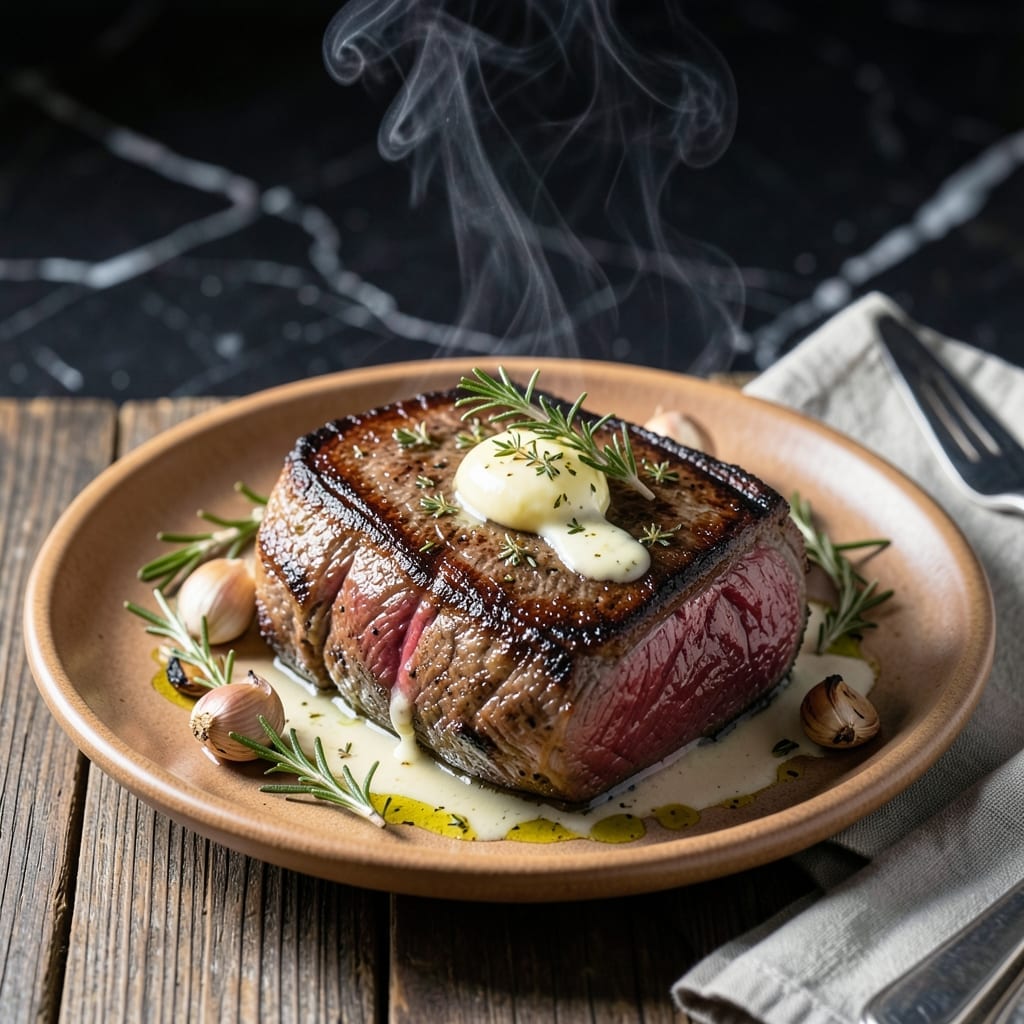
Achieve restaurant-quality steak at home with this proven sear and roast method. The technique delivers a perfect crust while maintaining ideal internal temperature through precise oven finishing.
This approach combines stovetop searing for a deeply caramelized exterior with oven roasting to ensure even cooking throughout. The result is tender, juicy meat with professional-level flavor and texture.
Mastering this process requires attention to detail in both the searing phase and the oven transition. The method works consistently for cuts from ribeye to filet.
You’ll produce steakhouse results with proper timing and temperature control. This is professional technique made accessible for home cooks.
Ingredients for Gordon Ramsay Steak Recipe Finish in Oven
Achieve professional results with these carefully selected steakhouse-quality ingredients for perfect oven-finished steaks.
| Ingredient | Amount | Notes |
|---|---|---|
| Ribeye Steaks 🥩 | 2 whole | 1.5 inches thick, bone-in preferred |
| Kosher Salt 🧂 | 2 tsp | Diamond Crystal recommended for even coating |
| Freshly Ground Black Pepper 🌶️ | 1 tsp | Coarse grind for texture |
| Garlic Cloves 🧄 | 4 cloves | Smashed, peeled for aromatics |
| Fresh Thyme Sprigs 🌿 | 4 sprigs | Plus extra for garnish |
| Fresh Rosemary Sprigs 🌿 | 2 sprigs | Woody stems removed |
| Unsalted Butter 🧈 | 4 tbsp | European-style preferred for richness |
| Extra-Virgin Olive Oil 🫒 | 2 tbsp | High smoke point variety |
| Shallots 🧅 | 2 whole | Finely minced for pan sauce |
| Red Wine 🍷 | ½ cup | Dry variety such as Cabernet Sauvignon |
| Beef Stock 🥩 | ½ cup | Low-sodium preferred for reduction |
| Dijon Mustard 🟡 | 1 tbsp | Whole-grain for texture variation |
The steak itself is paramount—ribeye with abundant marbling delivers the best flavor and juiciness. Source from a reputable butcher or Whole Foods for consistent quality. Bone-in cuts provide additional depth of flavor. Ensure the steaks are at room temperature before cooking for even doneness. Diamond Crystal kosher salt is preferred by professionals for its clean taste and even distribution.
No ribeye? New York strip or filet mignon work well (adjust cooking time for thickness). For the pan sauce, dry white wine can substitute red in a pinch. Fresh herbs are non-negotiable, but dried at one-third the quantity works if absolutely necessary. The butter must be unsalted—this allows precise seasoning control.
Steaks are best cooked immediately, but can rest 1-2 hours at room temperature before searing. Leftover sauce keeps 3-4 days refrigerated. For wine, use what you’d drink—never cooking wine (the quality matters in reduction).
Why You’ll Love This Recipe
- One Pan Finish: I sear the ribeye in a hot pan then slide the whole thing into the oven—minimal mess, maximum flavor.
- Garlic-Thyme Perfection: The garlic and thyme infuse the steak with a rich, aromatic taste that’s restaurant-quality every time.
- Weeknight Fancy: It feels gourmet but takes less effort than my usual weekday dinner. Honestly, it’s my secret to impressing guests.
- Leftovers? Please: Ribeye reheats beautifully for sandwiches or salads, so nothing goes to waste.
Step-by-Step Instructions for Gordon Ramsay Steak Finish in Oven
This chef-inspired method delivers a perfect sear with even doneness throughout your creation.
Step 1: Season and Temper the Ribeye Steaks
Pat the ribeye steaks completely dry with paper towels—this ensures a proper sear. Season both sides aggressively with the 2 tsp kosher salt and 1 tsp freshly ground black pepper, pressing gently so the seasoning adheres.
Let the steaks sit at room temperature for 45-60 minutes before cooking. This step is crucial—cold steaks cook unevenly, with tough edges and underdone centers. The salt will begin to penetrate the meat during this time, enhancing flavor and tenderness.
Step 2: Sear the Steaks for Maximum Crust
Preheat your oven to 400°F. In a large oven-safe skillet, heat the 2 tbsp extra-virgin olive oil over high heat until it shimmers but doesn’t smoke. Add the ribeye steaks and sear undisturbed for 2-3 minutes per side until a deep, golden-brown crust forms.
Add the 4 tbsp unsalted butter, 4 cloves garlic cloves, 4 sprigs fresh thyme sprigs, and 2 sprigs fresh rosemary sprigs to the pan. Tilt the skillet and baste the steaks with the melted butter and aromatics for 1 minute to infuse extra flavor into the crust.
Step 3: Transfer to Oven for Even Cooking
Place the skillet with the seared steaks directly into the preheated oven. Roast for 6-8 minutes, depending on your desired doneness. For medium-rare, aim for an internal temperature of 125-130°F—use an instant-read thermometer for accuracy.
This oven finish ensures the steaks cook evenly from edge to edge without overcooking the exterior. The butter, garlic, and herbs will continue to baste the meat as it roasts, adding layers of richness and aroma.
Step 4: Rest and Prepare the Pan Sauce
Transfer the steaks to a cutting board and tent loosely with foil. Let them rest for 10 minutes—this allows the juices to redistribute, ensuring every slice is tender and flavorful.
While the steaks rest, place the skillet back on the stovetop over medium heat. Add the 2 whole shallots and sauté for 2-3 minutes until softened. Deglaze with the 0.5 cup red wine, scraping up any browned bits, and reduce by half. Stir in the 0.5 cup beef stock and 1 tbsp Dijon mustard, simmering until slightly thickened. Strain the sauce and serve over the sliced steaks.
Pro Tips For Making Gordon Ramsay Steak Recipe Finish In Oven
- Sear Hard First: Crank your pan to smoking hot before adding the ribeye—this builds the deep crust Ramsay insists on. I learned this the hard way after too many gray, sad steaks from a lukewarm pan.
- Dry the Steak: Pat those ribeyes bone-dry with paper towels before seasoning. Even a little moisture steams the surface instead of searing it, and your crust will suffer.
- Skip Cold Steaks: Pull the ribeyes out of the fridge 30-45 minutes before cooking. Cold meat seizes up in the pan, leading to uneven cooking and a tougher bite.
- Baste with Aromatics: When finishing in the oven, toss those garlic cloves and thyme sprigs into the pan with butter and baste the steak every minute. It’s messy but adds layers of flavor you can’t get any other way.
Pro Cooking Tips for Perfect Results
Perfect Searing Heat
Your skillet must be ripping hot before the steaks hit the pan. I heat my cast iron over high heat for 5 minutes with the oil until it shimmers. If the oil smokes, it’s too hot—reduce slightly. A proper sear creates the Maillard reaction for that deep crust. 🔥
Butter Basting Technique
After searing both sides, add the butter, garlic, and herbs, then tilt the pan. Use a spoon to continuously baste the steaks with the melted butter for 1 minute. This adds incredible flavor and helps build that glossy, professional crust.
Oven Transition Timing
Move the skillet to the 400°F oven immediately after basting. For 1.5-inch ribeyes, 6-8 minutes typically hits medium-rare. Use an instant-read thermometer—125-130°F is ideal. The carryover heat will bring it to perfect doneness while resting.
Resting is Non-Negotiable
Let your steaks rest for 10 minutes under foil. This allows the juices to redistribute. Skipping this step means dry meat on your plate. I set a timer to resist the urge to cut early.
Pan Sauce Pro Tips
After removing the steaks, don’t let the fond burn. Lower the heat to medium and add the shallots right away. Deglaze with red wine, scraping all those flavorful bits. Reduce the sauce by half before adding the beef stock for depth. 💡
Thermometer Accuracy
Invest in a quality instant-read thermometer—I use ThermoWorks. Test it in boiling water (212°F) first. The difference between medium-rare and medium can be just 5°F, and precision matters for perfect results.
Nutrition Facts
Frequently Asked Questions
What oven temperature works best for finishing?
400°F is ideal for even cooking without overcooking the crust. This temperature allows the steak to reach perfect doneness while maintaining a beautiful sear.
How long should I rest the steak after oven finishing?
Always rest for 10 minutes under foil. This lets juices redistribute for maximum tenderness and flavor in every bite. Skipping this step risks dry meat.
Can I use a different cut besides ribeye?
Yes! Try New York strip or filet mignon. Adjust oven time based on thickness—thinner cuts may need 4-5 minutes less.
Why do I need an oven-safe skillet?
It allows seamless transition from stovetop searing to oven finishing. Cast iron or stainless steel handles the high heat and oven temperatures perfectly.

- BBQ Sausage Recipe Oven: Smoky Depth Without the Grill - September 28, 2026
- BBQ Chicken Bowl Recipe Rice: Smoky Sweetness Over Fluffy Grains - September 28, 2026
- Beef Cutlet Recipe Ideas: Crispy Breaded Patties With Bold Seasonings - September 28, 2026