
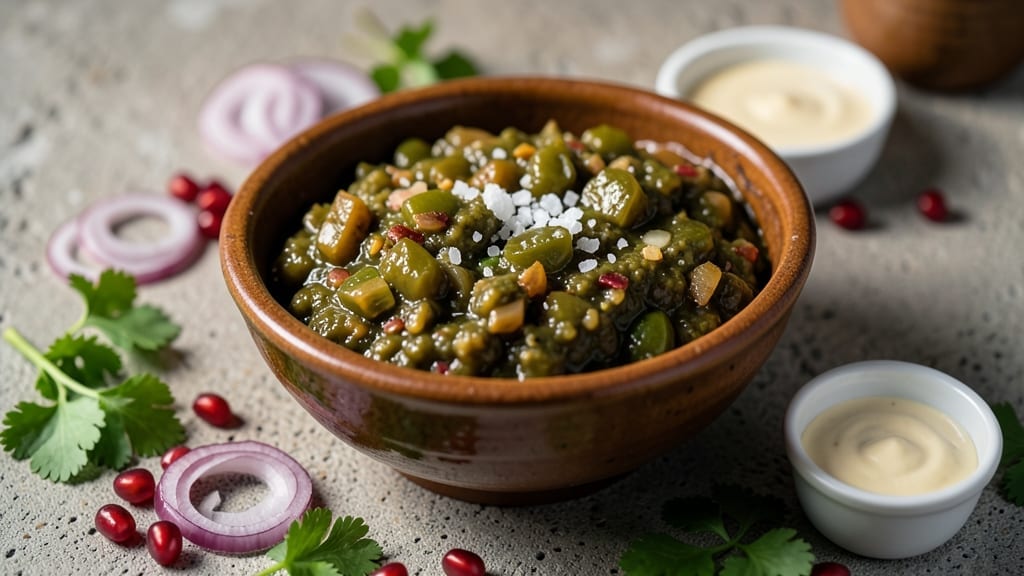
Grandma’s old-fashioned green tomato chutney recipe captures that tangy, vinegar-bright zing that turns simple meals into something extraordinary. This isn’t just a condiment—it’s a flavor memory packed with crunchy celery, sharp green tomatoes, and the kind of spice blend that makes every bite sing.
I first tasted this chutney at my grandmother’s kitchen table, where she’d let it ferment just long enough to develop that perfect balance of heat and acidity without losing its fresh, crunchy texture.
The secret to this recipe lies in the slow simmering and the right ratio of vinegar to tomatoes—never enough to overpower, just enough to preserve that bright, tangy punch.
We’re talking about a condiment that works as a sandwich spread, a curry enhancer, or even a bold topping for grilled meats. The celery adds a satisfying crunch, while the spices—cumin, mustard seeds, and a touch of red chili—bring depth without overpowering the natural flavors of the tomatoes.
What you’ll end up with is a vibrant green chutney that’s smooth yet textured, with layers of flavor that develop even more as it sits. The vinegar preserves the freshness while the slow cooking process melds everything together into a harmonious blend.
This isn’t just a recipe; it’s a taste of tradition that elevates any dish it touches. Let’s get started on making yours.
Once you’ve mastered this chutney, you’ll find it keeps beautifully in the refrigerator for up to two weeks—or even longer if you can resist dipping into the jar. Pair it with sandwiches, use it as a marinade, or serve it alongside spicy dishes to cool the heat.
The possibilities are endless, and the flavor? Pure nostalgia in every spoonful.
Ingredients for grandma’s old fashioned green tomato chutney
Ten simple ingredients for a chutney that tastes like summer nostalgia in every bite.
| Ingredient | Amount | Notes |
|---|---|---|
| Green Tomatoes 🍅 | 2 lbs | Unripe, firm, chopped into chunks |
| Celery Stalks 🥬 | 3 whole | Fresh, chopped into small pieces |
| Yellow Onion 🧅 | 1 whole | Medium size, chopped fine |
| White Vinegar 💧 | 1 cup | Distilled, not apple cider |
| Granulated Sugar 🍚 | ½ cup | White sugar preferred |
| Mustard Seeds 🌶️ | 1 tbsp | Whole, yellow preferred |
| Ground Cumin 🌿 | 1 tsp | Freshly ground for best flavor |
| Red Chili Flakes 🔥 | 1 tsp | Adjust for heat preference |
| Salt 🧂 | 1 tsp | Kosher or sea salt |
| Fresh Cilantro 🌿 | ¼ cup | Chopped, stems removed |
Green tomatoes are the heart of this chutney, so pick the firmest, unripe ones you can find—they should be bright green with no soft spots. I usually grab mine from the produce section at Trader Joe’s or the local farmers market where they’re harvested early. The celery adds that signature crunch, so don’t skip it—fresh stalks from the crisper drawer work best, but frozen will do in a pinch if you’re in a hurry. For the vinegar, distilled white vinegar gives that classic tang, while apple cider vinegar adds a fruity note that some folks prefer. The sugar balances the acidity, so don’t skimp on quality—white granulated sugar dissolves perfectly without leaving graininess.
No mustard seeds? Dijon mustard at half the amount works in a bind, though it won’t give the same texture. Running low on cumin? Ground coriander at the same amount mimics that earthy depth. The red chili flakes are where you can play—add more for heat lovers or swap in smoked paprika for a different vibe. Fresh cilantro is ideal, but dried cilantro at one-third the amount gets you close if you’re out. The yellow onion? Red or white works too, but yellow adds that classic chutney sweetness. Pro tip: Toast your mustard seeds in a dry pan for 30 seconds before adding to the pot—they’ll release their aroma and make the whole chutney sing.
This chutney tastes even better after a day or two, so make it a day ahead if you can. Store it in a clean glass jar with a tight lid in the fridge for up to 2 weeks. The flavors keep developing over time, so it’s worth making extra. I always keep a jar in my fridge for sandwiches and another in the freezer for when I want to make a big batch. The vinegar helps preserve it, but the texture might get softer after a week—just stir it up before using. Freezing works too if you’re prepping for a crowd, but the texture changes slightly when thawed.
Why You’ll Love This Recipe
- I’ll be real: I always double the batch because it keeps for months in the fridge. A little goes a long way, and honestly? It’s one of those recipes where you’re always glad you made extra.
- No Chopping Chaos: I swear by this recipe because the prep is ridiculously simple—just dice the green tomatoes and celery, then let the vinegar and sugar work their magic. No peeling, no fancy techniques, just 10 minutes of hands-on time before you can walk away.
- Sweet-Tart Magic: That perfect balance of sharp green tomatoes, crisp celery, and just enough sugar to soften the bite? Chef’s kiss. The vinegar brightens everything, and honestly, it’s the kind of flavor that lingers—like a hug in your mouth.
- Pantry Staple Power: Between us, this chutney turns anything into a star—slather it on sandwiches, mix it into deviled eggs, or drizzle it over grilled cheese. My kids even sneak it into their mac and cheese (yes, really).
Step-by-step instructions for green tomato chutney
Here’s how to make this tangy, crunchy chutney that balances sweet, spicy, and vinegary flavors perfectly.
Prepare the Vegetables
Start by washing and chopping all your vegetables to even sizes. Cut the 2 lbs green tomatoes into ½-inch chunks—they should be uniform so they cook evenly. For the 3 whole celery stalks, slice them into ¼-inch pieces and remove any stringy bits. Finely chop the 1 whole yellow onion so it practically dissolves during cooking.
Here’s the thing—don’t skip the chopping step. Even-sized pieces ensure everything cooks at the same rate, preventing mushy celery or undercooked tomatoes. I like to use a sharp chef’s knife for this; it makes quick work of the job and keeps your fingers safe. Place all chopped vegetables in a large bowl as you go so they’re ready for the next step.
Toast the Spices
Heat a heavy-bottomed skillet over medium heat and add the 1 tablespoon mustard seeds. Let them toast for 1-2 minutes until they begin to pop and turn golden brown. This step is crucial—it releases their nutty aroma and deepens the chutney’s flavor profile.
Once the mustard seeds are fragrant, immediately add the 1 teaspoon ground cumin and 1 teaspoon red chili flakes, stirring constantly for 30 seconds to toast them as well. You’ll smell the spices bloom—this is when their flavors truly wake up. Remove the skillet from heat and let the spices cool for 1 minute before adding them to the vegetables. This prevents them from burning and makes them easier to mix in evenly.
Cook the Vegetable Mixture
In a large pot or Dutch oven, combine the chopped vegetables with the toasted spices. Add the 1 cup white vinegar and ½ cup granulated sugar, stirring well to distribute everything evenly. Bring the mixture to a boil over medium-high heat, then reduce the heat to medium-low and let it simmer uncovered for 20-25 minutes. You want the vegetables to soften but still retain some texture—think tender-crisp rather than mushy.
Stir occasionally during cooking to prevent sticking. You’ll notice the mixture reduces slightly and the colors deepen to a rich golden hue. Here’s where it gets good—the vinegar will start to mellow out, and the sweetness will balance the tang. The chutney should smell vibrant and complex, like a summer garden in a jar.
Finish and Season
After the vegetables have softened, stir in the 1 teaspoon salt and taste the mixture. This is your chance to adjust the seasoning—add more salt if needed, or a pinch more red chili flakes for extra heat. The chutney should be tangy, slightly sweet, and subtly spicy with a bright vinegar note.
Remove the pot from heat and let the chutney cool for 5 minutes. Then, stir in the ¼ cup chopped fresh cilantro. This herb adds freshness that cuts through the richness of the vinegar and sugar. The cilantro should be finely chopped—this ensures it distributes evenly and doesn’t create texture contrasts in the finished chutney.
Store and Serve
Transfer the chutney to clean, sterilized jars while it’s still warm. This helps create a vacuum seal as it cools, preserving the chutney for up to 3 months in the refrigerator. Let the jars cool completely before sealing to prevent condensation from forming inside.
This chutney is incredibly versatile—serve it as a condiment with grilled meats, as a topping for sandwiches, or even as a dip for fresh bread. The flavors develop even more over time, so it actually gets better with age. Store it in the fridge and enjoy the tangy, crunchy goodness whenever you like!
Pro Tips For Making Grandma’S Old Fashioned Green Tomato Chutney
- Chop Tomatoes Small: I learned this the hard way—big chunks of green tomato stay crunchy and uneven. Dice them into ¼-inch pieces so they soften and meld into that smooth, jammy texture. (Yes, it takes longer, but the result is worth it.)
- Sweat Celery First: Don’t just toss celery in raw—sauté it in a dry pan for 3-4 minutes until it wilts and releases its flavor. This softens the stalks and prevents that sad, chewy bite in your chutney. (Your future self will notice the difference.)
- Acidify Gradually: Dumping all the vinegar at once can make your chutney taste harsh. Stir in the white vinegar in two batches: half at the start, then the rest at the end. This balances the tang without overpowering the sweetness.
- Simmer Low and Long: Skipping the slow simmer leads to a thin, watery chutney. After the initial boil, drop the heat to a gentle bubble and let it cook uncovered for 45-60 minutes. This thickens it naturally—no extra sugar needed. (I know, I know, but trust the process.)
Make-ahead tips for this dish
Batch Prep Advantage
This chutney tastes even better after 24-48 hours of resting, so I always make a big batch—double or triple the recipe—when I have time. Store it in sterilized glass jars (I use Ball Mason jars) with tight lids.
The vinegar helps preserve it, but the texture stays best for up to 3 months in the fridge. I keep one jar in the fridge for daily use and freeze extras in 1-cup portions for quick access. 💡
Freezer-Friendly Tips
For long-term storage, portion the chutney into freezer-safe bags or silicone molds before freezing. Leave ½-inch headspace to prevent expansion cracks. Thaw overnight in the fridge—never microwave as it can break down the texture.
Once thawed, the chutney keeps for 1 week in the fridge. I label each bag with the date to track freshness. ❄️
Slow-Infused Flavor
The real magic happens when you let the chutney sit. After 3-5 days, the flavors meld beautifully—the vinegar mellows, the spices deepen, and the sweetness balances perfectly. I like to taste it daily and adjust seasoning if needed.
For extra depth, add 1 tsp black pepper or ½ tsp turmeric when reheating. This slow infusion makes it taste like it’s been simmering for hours. 🌟
Reheating Without Ruin
If your chutney thickens in the fridge, stir in 1-2 tbsp water or vinegar to restore consistency. For reheating, use a small saucepan over low heat—never boil—just warm until steaming (2-3 minutes).
Stir frequently to prevent scorching. The texture should return to its original smoothness. For quick use, microwave 30-second intervals until warmed through. 🔥
Gift-Worthy Jars
This chutney makes an amazing homemade gift! Package it in small, decorative jars (I love Le Parfait jars) with a handwritten tag. Add a spoon and a note about how to use it—great for holiday hosts or housewarming presents.
The chutney keeps well for 2-3 months unopened, so it’s perfect for gifting. Just remind recipients to refrigerate after opening. 🎁
Year-Round Prep
Green tomatoes are seasonal, but you can prep ahead by pickling extra tomatoes in vinegar and storing them in the freezer. When you’re ready to make chutney, just thaw and use them fresh.
Alternatively, canned green tomatoes (like Muir Glen) work in a pinch. For a winter twist, add ½ cup diced apple to the mix for extra sweetness. 🍎
Nutrition facts
Frequently asked questions
Why does this chutney need to simmer for so long?
The slow simmering (20-25 minutes) is key to developing the chutney’s signature balance of tang, sweetness, and crunch. This time lets the vinegar mellow while the vegetables soften just enough to release their flavors without turning mushy. The celery stays crisp, but the tomatoes and onion break down into a smooth, vibrant base.
Can I substitute apple cider vinegar for white vinegar?
Yes, but expect a slightly sweeter, fruitier flavor. Apple cider vinegar works beautifully—just use ½ cup extra to compensate for its milder acidity. For a classic taste, stick with white vinegar, but the apple cider version pairs wonderfully with pork dishes or apple-based recipes.
How do I fix my chutney if it’s too tangy or too sweet?
Too tangy? Stir in 1-2 tbsp sugar and let it sit overnight to balance. Too sweet? Add 1 tbsp extra vinegar or a pinch of salt to sharpen the flavors. For extra depth, a splash of lemon juice can brighten it up without overpowering. Always taste as you adjust!
What’s the best way to use up leftover chutney?
Spread it on toasted bread with cheese, mix into mayonnaise for sandwiches, or use as a marinade for grilled chicken or pork. It also elevates deviled eggs or as a dip for veggie sticks. The possibilities are endless—don’t let it go to waste!
Can I make this chutney without celery?
Swap the celery for ½ cup finely chopped fennel or ¼ cup diced bell pepper for a different texture. If you omit it entirely, add ½ tsp extra cumin to boost the earthy flavor. The crunch is optional, but the spices keep the chutney vibrant.

- Mary Berry’s Boiled Fruit Cake Recipe: Moist Center and Spiced Crust Magic - November 5, 2026
- Atlantic Salmon Recipe: Honey-Dill Pan-Seared With Crispy Skin - November 5, 2026
- Blaze Pizza Copycat Dough Recipe: Chewy, Airy Crust That Mimics the Original - November 5, 2026