
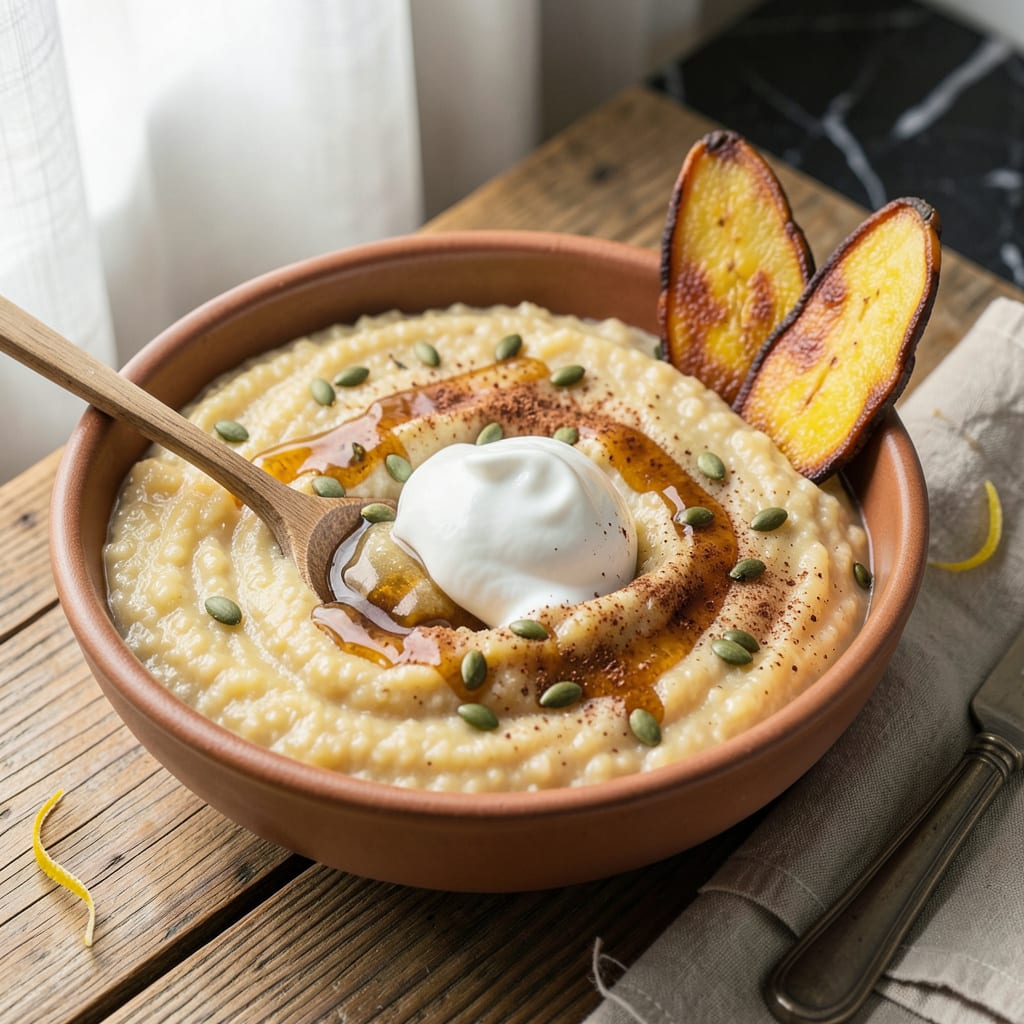
Harina is a simple Puerto Rican cornmeal pudding made with cornmeal, coconut milk, sugar, and spices like cinnamon and nutmeg. Cook it slowly while stirring to avoid lumps, then chill until firm for a creamy, comforting dessert.
This beloved dessert carries deep cultural significance in Puerto Rican households, often served at family gatherings and holidays. The combination of coconut milk and warm spices creates a rich, velvety texture that’s both nostalgic and satisfying. What sets harina apart is its versatility—it can be enjoyed warm or chilled, plain or topped with fresh fruit or caramel. The secret to its signature creaminess lies in the patient cooking process, where constant stirring prevents graininess while allowing flavors to meld perfectly. ✨
💡 In This Article
- The Cultural Roots and Key Ingredients of Harina
- Step-by-Step Tips for Smooth, Lump-Free Harina
The Cultural Roots and Key Ingredients of Harina
Harina traces its origins to Puerto Rico’s Taíno heritage, where corn was a sacred crop called yucayeque. When Spanish colonizers introduced coconut and sugar cane, these ingredients merged with native cornmeal to create what we now recognize as harina.
The dish became a staple during 19th-century plantation life, when enslaved Africans and indentured workers adapted it using available ingredients. Today, it remains a centerpiece at Nochebuena celebrations and family reunions. 🌟
The foundation of harina’s texture comes from fine yellow cornmeal, which differs from Italian polenta’s coarser grind. When cooked with 13.5-ounce cans of coconut milk (about 1.5 cups per 1 cup cornmeal), the starch granules absorb liquid slowly, creating a custard-like consistency.
The fat content in coconut milk (about 24% per can) coats these granules, preventing the grainy mouthfeel that plagues lesser versions. Traditional recipes call for whole nutmeg freshly grated rather than pre-ground for its volatile oils that bloom when heated.
Regional variations reveal harina’s adaptability. In Ponce, cooks add orange blossom water for floral notes, while San Juan versions often include vanilla bean paste for speckled appearance. The Loíza coastal area incorporates sea salt to balance sweetness, reflecting African culinary influences.
What unites all versions is the low-and-slow cooking method—maintaining temperatures between 180-200°F allows starches to fully gelatinize without scorching. ✨
The spice blend serves both flavor and preservation purposes. Cinnamon contains cinnamaldehyde, which inhibits bacterial growth, while cloves (used sparingly—just 1/8 teaspoon per batch) add eugenol compounds that enhance perceived sweetness. The traditional 1:1 sugar-to-cornmeal ratio creates osmolality that helps maintain moisture during chilling.
When properly executed, the final texture should hold a clean knife edge when sliced but still quiver slightly like flan when shaken.
Modern adaptations sometimes substitute almond milk or evaporated milk, but purists argue these lack coconut milk’s lauric acid, which contributes to harina’s signature mouthcoat. The dish’s cultural significance extends beyond taste—it represents resilience, as the ingredients were historically accessible even during economic hardship.
Serving it in clay pots (as in Guayama) honors Taíno cooking traditions while the cross-hatched knife pattern on top references African geometric designs. 💛
Understanding these layers transforms harina from simple pudding to edible history. The 2-hour chilling period isn’t just about setting—it allows flavors to marry while the cornmeal absorbs residual liquid.
When served with guava paste or passionfruit syrup, the contrast of tropical fruit acids cuts through the richness, creating the perfect bite that’s been perfected over centuries. The next time you stir that pot, remember you’re continuing a tradition that spans Taíno hamacas, Spanish colonial kitchens, and modern Puerto Rican dining tables.

- BBQ Sausage Recipe Oven: Smoky Depth Without the Grill - September 28, 2026
- BBQ Chicken Bowl Recipe Rice: Smoky Sweetness Over Fluffy Grains - September 28, 2026
- Beef Cutlet Recipe Ideas: Crispy Breaded Patties With Bold Seasonings - September 28, 2026