
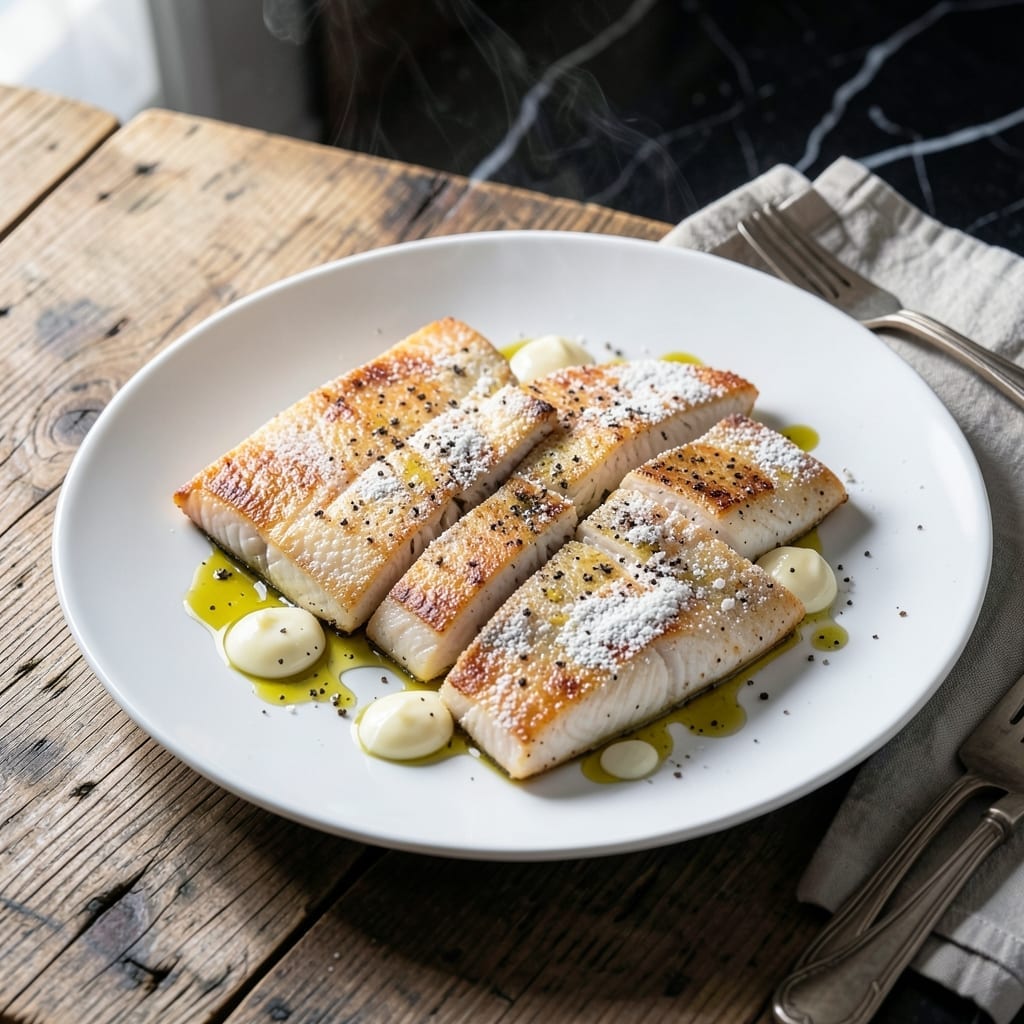
Elegant sea bass deserves a simple yet refined preparation that lets the fish shine. This method delivers restaurant-quality results with minimal effort, focusing on fresh ingredients and precise technique.
The key is high heat searing to achieve a crisp golden crust while keeping the flesh tender and moist inside. A bright lemon butter sauce adds the perfect finishing touch without overpowering the delicate fish.
With just 15 minutes of cooking time, this becomes an impressive dish suitable for weeknight dinners or special occasions. The technique works for any white fish when sea bass isn’t available.
Serve with seasonal vegetables for a complete, elegant meal that feels effortlessly sophisticated.
Ingredients for Ina Garten Sea Bass
Twelve refined ingredients create this restaurant-quality dish with minimal effort.
| Ingredient | Amount | Notes |
|---|---|---|
| Sea Bass Fillets 🐟 | 4 whole | Skin-on, about 6 oz each |
| Kosher Salt 🧂 | 1 ½ tsp | Diamond Crystal preferred |
| Freshly Ground Black Pepper 🌶️ | ½ tsp | Coarse grind for texture |
| All-Purpose Flour 🌾 | ¼ cup | For light dusting |
| Unsalted Butter 🧈 | 4 tbsp | Divided for cooking and sauce |
| Extra-Virgin Olive Oil 🫒 | 2 tbsp | High smoke point preferred |
| Fresh Lemon Juice 🍋 | 3 tbsp | From 1-2 large lemons |
| Lemon Zest 🍋 | 1 tbsp | Finely grated from 1 lemon |
| Garlic Cloves 🧄 | 2 cloves | Minced finely |
| Fresh Parsley 🌿 | 2 tbsp | Chopped, for garnish |
| Fresh Thyme Sprigs 🌿 | 2 whole | Optional for aroma |
| Shallot 🧅 | 1 whole | Finely diced for sauce |
| Dry White Wine 🍷 | ¼ cup | Sauvignon Blanc or Pinot Grigio |
The sea bass is non-negotiable for optimal results. Wild-caught Chilean sea bass offers the best texture and flavor, available at Whole Foods or high-end seafood counters. Ensure fillets are skin-on for crisping and uniform thickness for even cooking. Freshness is paramount—look for firm flesh and no fishy odor. The butter should be high-quality, like Plugrá or European-style, for the sauce.
No sea bass? Branzino or halibut work beautifully with the same technique. For a budget option, cod or haddock are serviceable, though slightly less delicate. The wine can be substituted with chicken or vegetable stock plus a splash of lemon. Fresh herbs are ideal, but dried at one-third the amount will suffice in a pinch. Always use freshly squeezed lemon juice for brightness.
Prepare the sauce just before serving to maintain its vibrant flavor. Leftovers, while rare, keep for 1 day in the refrigerator. The fish is best enjoyed immediately, but the compound butter can be made 2 days ahead and stored, tightly wrapped, in the fridge.
Why You’ll Love This Recipe
- One Pan Wonder: I love that I only need a skillet, some butter, and basic pantry staples to make this sea bass shine.
- Buttery Perfection: That crisp flour coating with rich butter and flaky fish? Honestly, it’s the simplest way to get restaurant-quality taste at home.
- Dinner Party Ready: I serve this when I want to impress but don’t want to stress—elegant enough for guests, easy enough for a Tuesday.
- Leftovers? Rarely: Between us, there’s never any left, but if there were, they’d reheat beautifully for lunch the next day.
Step-by-Step Instructions for Lemon-Kissed Sea Bass
Master this elegant preparation with precise technique for restaurant-quality results.
Step 1: Prep and Season the Sea Bass Fillets
Pat the 4 whole Sea Bass Fillets completely dry with paper towels to ensure proper browning. Season both sides evenly with the 1.5 tsp Kosher Salt and 0.5 tsp Freshly Ground Black Pepper, pressing gently to adhere.
Lightly dust each fillet with the 0.25 cup All-Purpose Flour, shaking off any excess. The flour creates a delicate crust while preventing the skin from sticking during cooking. This step is crucial for achieving that perfect golden sear.
Step 2: Sear the Fillets to Golden Perfection
Heat the 2 tbsp Extra-Virgin Olive Oil in a large nonstick skillet over medium-high heat until shimmering. Add the fillets skin-side down and cook undisturbed for 3-4 minutes until the skin is crisp and golden brown.
Flip the fillets carefully using a fish spatula and add 2 tbsp Unsalted Butter to the pan. Baste the fillets with the butter for 2-3 minutes until the fish is opaque and flakes easily with a fork. The butter adds richness and helps develop the flavor.
Step 3: Create the Lemon-Wine Pan Sauce
Transfer the cooked fillets to a warm plate and tent with foil. Reduce heat to medium and add the finely diced Shallot to the same skillet. Sauté for 1-2 minutes until softened and translucent.
Add the 2 cloves minced Garlic Cloves and cook for 30 seconds until fragrant. Pour in the 0.25 cup Dry White Wine and 3 tbsp Fresh Lemon Juice, scraping up any browned bits from the bottom of the pan. Simmer for 2-3 minutes until reduced by half.
Stir in the remaining 2 tbsp Unsalted Butter, the 1 tbsp Lemon Zest, and the 2 whole Fresh Thyme Sprigs. Cook for 1 minute until the sauce thickens slightly and becomes glossy.
Step 4: Finish and Serve with Fresh Herbs
Remove the thyme sprigs from the sauce and discard. Pour the sauce over the fillets, dividing it evenly. Garnish with the 2 tbsp chopped Fresh Parsley for a pop of color and freshness.
Serve immediately while the sauce is still warm and glossy. The fillets should be moist and flaky with a crisp skin, and the sauce should have a bright, tangy flavor that complements the delicate fish perfectly.
Pro Tips For Making Ina Garten Sea Bass
- Pat Dry First: I learned this the hard way—skip the paper towel and your sea bass will steam instead of sear. Press between two sheets to get every drop off before flouring.
- Hot Pan, Cold Butter: Start your pan screaming hot, then add the butter right before the fish goes in. This prevents the butter from burning while still getting that golden crust.
- Season the Flour: Mix about 1 teaspoon of kosher salt into your flour before dredging. Sounds weird, but it works: the seasoning sticks better and penetrates the fish.
- Don’t Overcrowd: After burning three batches, I finally figured out—leave at least an inch between fillets. Otherwise, they’ll steam each other and you’ll lose that crispy exterior.
Best Sauces and Condiments for This ina garten sea bass
Classic Lemon Butter
The built-in sauce from the recipe is already perfect, but I often double it for extra drizzling. The lemon-wine reduction with butter creates a silky, bright finish that enhances the fish’s natural sweetness. Use European-style butter for richer flavor.
Herb Variations
For a Mediterranean twist, stir 1 tsp capers and 1 tbsp chopped dill into the finished sauce. Alternatively, add ½ tsp tarragon for a French-inspired version that pairs beautifully with the lemon. Fresh herbs always elevate.
Spicy Kick
Add ¼ tsp red pepper flakes with the garlic for subtle heat, or a dash of sriracha to the finished sauce. The spice cuts through the richness while complementing the lemon’s acidity. I love the balance this adds. 🌶️
Citrus Alternatives
Swap the lemon for lime juice and zest for a brighter, more tropical flavor. Or try orange zest with a splash of Grand Marnier for a sophisticated twist. These variations work especially well with summer seafood meals.
Wine Sauce Boost
For a deeper flavor, reduce the wine by half before adding other ingredients. Use a crisp Sauvignon Blanc for best results. The concentrated wine adds complexity without overpowering the delicate fish.
Dipping Options
Serve with a side of aioli made with ½ cup mayo, 1 minced garlic clove, and 1 tbsp lemon juice. Or offer tartar sauce for those who prefer a creamier complement to the crisp fish. 💫
Nutrition Facts
Frequently Asked Questions
Can I use frozen sea bass fillets?
Yes, but thaw them completely in the refrigerator overnight first. Pat extremely dry before cooking to prevent steaming. Frozen fillets may release more moisture, so extend cooking time by 1-2 minutes per side.
What’s the best pan for cooking sea bass?
A heavy nonstick or cast iron skillet works best for even heat distribution. Avoid thin pans that may cause hot spots. Ensure it’s large enough to accommodate all fillets without crowding for proper searing.
How do I know when the sea bass is done?
The flesh should be opaque and flake easily with a fork. Internal temperature should reach 145°F. Overcooking makes it dry, so remove from heat just as it reaches doneness.
Can I make the sauce ahead of time?
For best flavor, make the sauce just before serving. However, you can prep ingredients in advance. The finished sauce keeps for 1 day refrigerated but may thicken—reheat gently with a splash of wine.

- BBQ Sausage Recipe Oven: Smoky Depth Without the Grill - September 28, 2026
- BBQ Chicken Bowl Recipe Rice: Smoky Sweetness Over Fluffy Grains - September 28, 2026
- Beef Cutlet Recipe Ideas: Crispy Breaded Patties With Bold Seasonings - September 28, 2026