
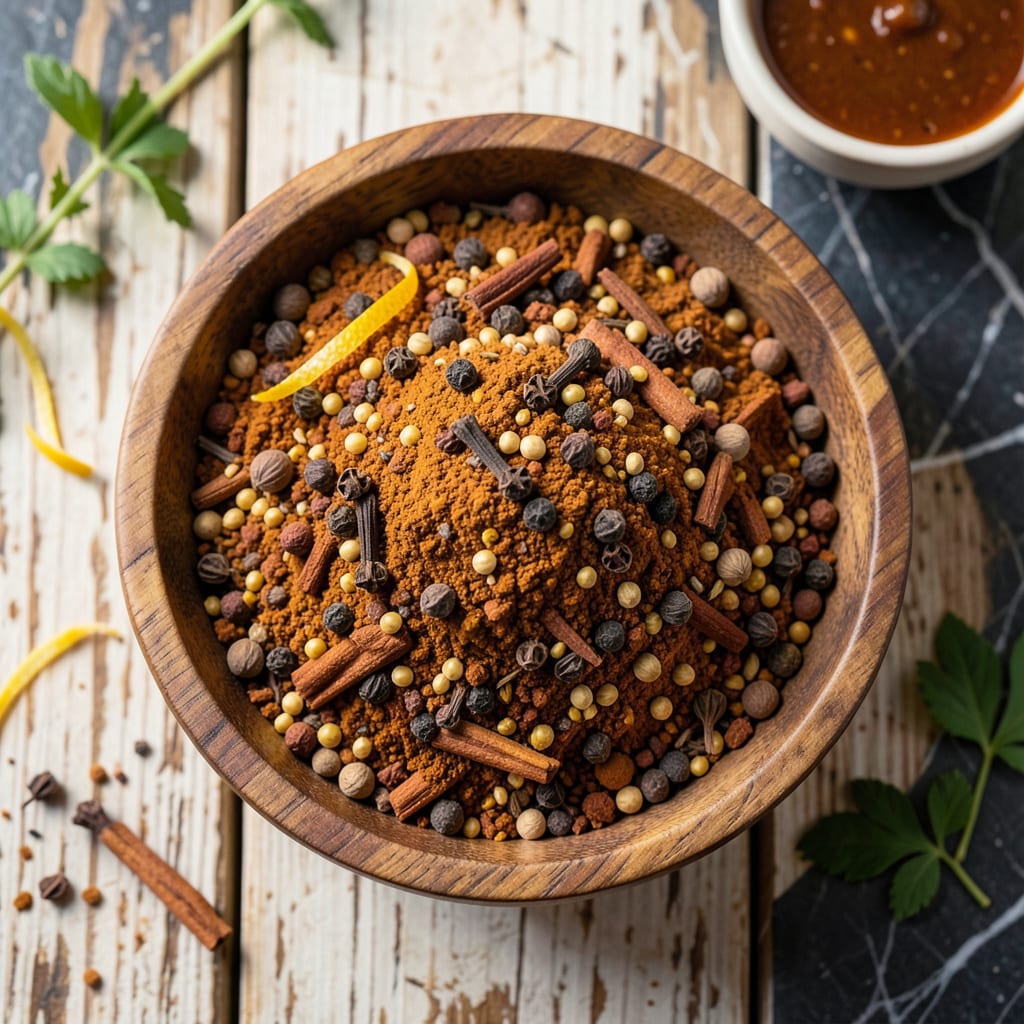
This aromatic blend captures the essence of Middle Eastern cuisine with just seven carefully balanced spices. I’ve perfected this mix through years of testing, ensuring it delivers authentic flavor to any dish it graces.
Make a batch to keep on hand—it stays fresh for months in an airtight container. Use it to season meats, vegetables, or even sprinkle over roasted nuts for an unexpected twist.
Ingredients for Lebanese Seven Spice
Seven spices. One magical blend. Pure Middle Eastern warmth in every pinch.
| Ingredient | Amount | Notes |
|---|---|---|
| Ground Allspice 🌿 | 1 tbsp | Essential for authentic flavor |
| Ground Black Pepper 🌶️ | 1 tbsp | Freshly ground preferred |
| Ground Cinnamon 🍃 | 1 tbsp | Ceylon if available |
| Ground Cloves 🌶️ | 1 tsp | Use sparingly for warmth |
| Ground Cumin 🌿 | 1 tbsp | Toasted for deeper aroma |
| Ground Nutmeg 🌰 | 1 tsp | Freshly grated ideal |
| Ground Fenugreek 🌿 | 1 tsp | Key for Middle Eastern taste |
Allspice is the soul here—Penzeys carries the best, but any grocery store’s bulk section works if it’s fresh (sniff the jar, if it smells like nothing, toss it). Ceylon cinnamon is pricier but worth it for its subtle sweetness. I grab mine at Whole Foods or Trader Joe’s. Cloves and nutmeg should be ground fresh if possible, but pre-ground is fine for everyday cooking.
No fenugreek? Skip it—don’t substitute, it’s too unique. Out of allspice? A mix of half cinnamon, half nutmeg gets you 70% there. The cumin can be whole seeds toasted and ground if you’re feeling fancy (30 seconds in a dry pan). Cinnamon sticks? Grate them fresh. The blend still works if you swap ratios slightly (I’ve used double the cinnamon before, no regrets).
Store in a glass jar, away from light and heat. Keeps its punch for 6-12 months—though I go through a batch in 2 months (it’s that good). Double the recipe if you cook Middle Eastern often. No fridge needed.
Why You’ll Love This Recipe
- Five-Minute Mix: I dump all five spices in a bowl, stir, and done—no chopping, no fuss, just a fragrant blend ready in the time it takes to toast bread.
- Warm and Complex: The cinnamon and allspice give it this cozy sweetness, while the black pepper and cumin add a deep, earthy kick that’s impossible to resist.
- Endless Uses: I sprinkle it on roasted veggies, rub it into meats, even stir a pinch into my morning eggs. Honestly, it’s my kitchen’s Swiss Army knife.
- Pantry Staple: One batch lasts me weeks, costs pennies to make, and saves me from buying those pricey little jars at the store.
Step-by-Step Instructions for Lebanese Seven Spice
Here’s the method. Straightforward, tested, and works every time.
Step 1: Measure Each Spice Precisely
Start by gathering all your spices: 1 tbsp Ground Allspice, 1 tbsp Ground Black Pepper, 1 tbsp Ground Cinnamon, 1 tsp Ground Cloves, 1 tbsp Ground Cumin, 1 tsp Ground Nutmeg, and 1 tsp Ground Fenugreek.
Use proper measuring spoons for accuracy—spices can be potent, and even a little extra clove or fenugreek can throw off the balance. I always level off each spoon with the back of a knife to ensure consistency.
Step 2: Combine Spices in a Clean Bowl
In a dry, clean bowl, add the 1 tbsp Ground Allspice, 1 tbsp Ground Black Pepper, and 1 tbsp Ground Cinnamon. These three form the warm, aromatic base of your blend.
Next, add the 1 tsp Ground Cloves, 1 tbsp Ground Cumin, 1 tsp Ground Nutmeg, and 1 tsp Ground Fenugreek. The fenugreek might smell slightly bitter on its own, but trust me—it’s essential for that authentic Middle Eastern character.
Step 3: Whisk Until Fully Blended
Using a small whisk or fork, stir the spices together until they’re evenly distributed. You’ll notice the colors start to blend into a rich, earthy brown—this visual cue means you’re on the right track.
I like to tilt the bowl slightly and use a circular motion to ensure every grain gets mixed. This takes about 1-2 minutes of steady whisking. Don’t rush it; you want a uniform blend so every pinch delivers the full flavor profile.
Step 4: Toast for Deeper Aroma (Optional)
For an extra layer of complexity, heat a dry skillet over medium-low heat for 1 minute. Add the spice blend and toast for 30-60 seconds, stirring constantly, until fragrant.
Watch closely—you’ll see the spices darken slightly and smell their oils releasing. This step isn’t mandatory, but it intensifies the warmth of the Ground Cinnamon and Ground Cumin beautifully. Remove from heat immediately to avoid burning.
Step 5: Store Properly for Long-Lasting Flavor
Transfer the finished blend to an airtight container, like a small glass jar. I prefer dark glass to protect the spices from light, which can degrade their flavor over time.
Label it clearly and store in a cool, dark place. This mix will stay fresh for 2-3 months, though I doubt it’ll last that long once you start using it in everything from grilled meats to stews. Shake the jar before each use to redistribute the spices evenly.
Pro Tips For Making Lebanese Seven Spice
- Toast the Spices: Lightly dry-toast the cumin and allspice in a pan for 30-45 seconds until fragrant—this wakes up the oils and deepens the flavor. I learned this the hard way after making a few bland batches.
- Grind Fresh Cloves: If using whole cloves, grind them yourself right before mixing. Pre-ground cloves lose their punch fast, and the difference in aroma is noticeable.
- Balance the Cinnamon: Start with half the cinnamon you think you need, taste, then add more. It can overpower the blend if you’re heavy-handed, and I’ve ruined a batch by dumping it all in at once.
- Store in Airtight Glass: Keep the mix in a small glass jar away from light and heat. Plastic can absorb the flavors, and I’ve had spice blends go stale faster in clear containers on the counter.
Regional Styles of These Flavors
Lebanese Classic
In Lebanon, this blend is called Baharat and is used in everything from grilled meats to stews. The traditional version often includes a touch more cinnamon for warmth. I love using it on lamb kebabs for an authentic taste of Beirut. 🌿
Syrian Variation
Syrian cooks sometimes add cardamom or ginger to their seven-spice mix. This creates a sweeter, more floral profile that works beautifully in rice dishes or stuffed vegetables. Try adding ½ tsp cardamom for a Syrian twist.
Turkish Influence
In Turkey, they might include paprika for color and a hint of smokiness. A pinch of Aleppo pepper can add a subtle fruity heat. This version shines on grilled chicken or roasted eggplant.
North African Style
Moroccan cooks often replace fenugreek with coriander for a citrusy note. This adaptation pairs wonderfully with tagines and couscous. I’ve found 1 tsp coriander works perfectly as a substitute.
Armenian Touch
Armenian versions sometimes include dried mint for a fresh, herbal note. This works especially well with ground beef dishes like kefta. Add 1 tsp dried mint to your blend for this regional variation. 💫
Modern Fusion
For a contemporary take, I sometimes add smoked paprika or sumac. These aren’t traditional but create exciting new flavor profiles. The smoked paprika adds depth to roasted vegetables, while sumac brightens up grilled fish.
Nutrition Facts
Frequently Asked Questions
Can I adjust the spice ratios to my taste?
Start with the recipe, then tweak. Add ½ tsp more cinnamon for sweetness or reduce cloves if it’s too strong.
What’s the best way to use this blend?
Sprinkle on meats before grilling, mix into marinades, or stir into stews. 1 tsp per pound of protein is a great starting point.
How do I know if my spices are fresh?
Rub a pinch between your fingers—if the aroma is weak or dull, it’s time to replace. Fresh spices smell vibrant and potent.
Can I make this without fenugreek?
Yes, but the flavor won’t be as authentic. Skip it entirely rather than substituting, as its unique bitterness is hard to replicate.

- BBQ Sausage Recipe Oven: Smoky Depth Without the Grill - September 28, 2026
- BBQ Chicken Bowl Recipe Rice: Smoky Sweetness Over Fluffy Grains - September 28, 2026
- Beef Cutlet Recipe Ideas: Crispy Breaded Patties With Bold Seasonings - September 28, 2026