
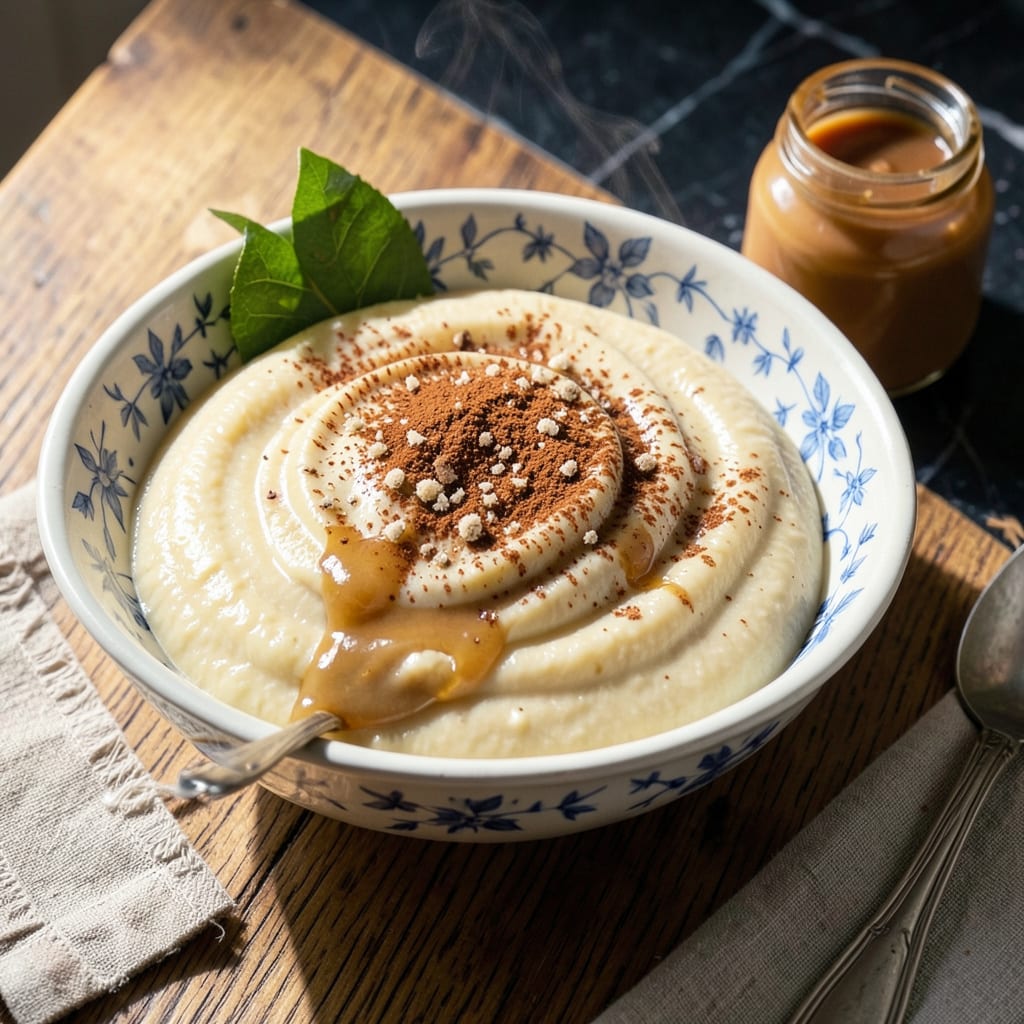
Dominican Maizena is a creamy cornstarch pudding flavored with cinnamon, vanilla, and sometimes citrus zest. It’s cooked until thick, chilled, then topped with cinnamon or syrup. A beloved no-bake dessert with just 5 main ingredients.
This classic dessert traces its roots to resourceful home cooking, where cornstarch became a pantry hero for creating rich, satisfying sweets without expensive ingredients. 🔥 What sets the Dominican version apart is its perfect balance of warm spices and silky texture—achieved by slowly cooking the mixture until it reaches a pudding-like consistency that holds its shape when chilled. I love how it transforms simple staples into something extraordinary, often served at celebrations or as a comforting everyday treat.
The beauty lies in its versatility—you can adjust the cinnamon level for boldness or add lime zest for brightness. Unlike custards that require eggs, this relies entirely on cornstarch’s thickening power, making it foolproof for beginners. ✨
💡 In This Article
- Why Maizena Pudding Holds Cultural Significance in the Dominican Republic
- Pro Tips for Perfect Dominican Maizena Texture and Flavor
Why Maizena Pudding Holds Cultural Significance in the Dominican Republic
This humble dessert carries generations of history in every spoonful. During the early 20th century, cornstarch became a kitchen staple across the Caribbean when economic instability made imported wheat flour expensive.
Dominican cooks discovered that maizena (the Spanish term for cornstarch) could create luxurious textures at a fraction of the cost, giving birth to this beloved pudding. 🔥 What started as necessity quickly became tradition.
The dish’s simplicity reflects its working-class origins—just 5 core ingredients (cornstarch, milk, sugar, cinnamon, vanilla) that most households always had on hand. Yet its creamy richness made it feel special enough for Sunday family gatherings and holidays.
Regional variations emerged: coastal areas often add coconut milk for tropical depth, while mountain towns might include orange blossom water for floral notes.
Maizena pudding shares DNA with other Latin American corn-based desserts like majarete (a thicker cornmeal version) and atole (a Mexican drink). But the Dominican adaptation stands out for its silky, sliceable texture—achieved by cooking the mixture to exactly 180°F before chilling. This precise temperature ensures the cornstarch fully gelatinizes without becoming gummy.
The dessert’s cultural role extends beyond taste. Preparing it became a ritual of care, with abuelas teaching grandchildren the exact moment to stop stirring (when the spoon leaves a clean trail). Serving it topped with ground cinnamon in geometric patterns turned everyday meals into celebrations.
Even today, the scent of warming cinnamon in maizena signals home for Dominicans worldwide.
Modern twists keep the tradition alive while adapting to new tastes. Some home cooks now layer it with tropical fruit compotes or drizzle with dulce de leche, proving how a simple starch-and-spice combination can evolve across centuries. The pudding’s enduring popularity lies in this balance—honoring heritage while welcoming innovation. ✨
What’s fascinating is how the dish mirrors the Dominican spirit: resourceful, warm, and able to create richness from simplicity. Whether served in a clay bowl at a countryside merienda or a glass cup at a Santo Domingo café, it carries the same comforting message—home isn’t a place, but a flavor.

- BBQ Sausage Recipe Oven: Smoky Depth Without the Grill - September 28, 2026
- BBQ Chicken Bowl Recipe Rice: Smoky Sweetness Over Fluffy Grains - September 28, 2026
- Beef Cutlet Recipe Ideas: Crispy Breaded Patties With Bold Seasonings - September 28, 2026