
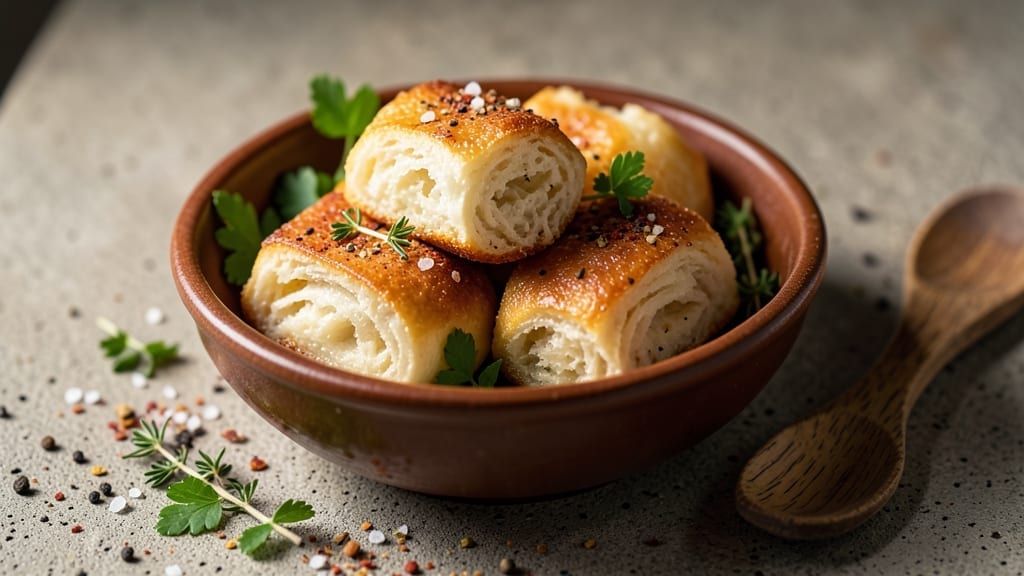
This Martin’s Potato Rolls copycat recipe delivers the same legendary flaky layers and buttery crisp edges you crave from the restaurant—without the drive-thru wait. ✨ The secret lies in a precise dough ratio and proper layering technique that creates those signature crispy, golden-brown pockets.
I’ve tested countless variations to perfect the texture and flavor balance that makes these rolls iconic.
What sets these apart is the combination of cold butter between dough layers and a slow bake that renders the fat perfectly—never greasy, always crisp. The dough itself is simple but requires patience: resting at specific temperatures ensures maximum flakiness.
This isn’t just a copycat recipe; it’s a professional-quality result that’ll have your dinner table tasting like you stopped by Martin’s.
By the time they emerge from the oven, you’ll have rolls with perfectly crisp edges that shatter at the touch and tender, pillowy layers inside. The aroma alone will have everyone gathering around the table, and each bite delivers that buttery, savory satisfaction that makes these rolls legendary.
Trust me—once you try these, you’ll never go back to the original.
The best part? These rolls reheat beautifully for leftovers, making them perfect for meal prep or feeding a crowd. Serve them alongside burgers, sandwiches, or even as a standalone appetizer. Let’s get started on recreating this fast-food classic in your own kitchen.
Ingredients for martin’s potato rolls copycat
Twelve ingredients, twelve rolls of pure Martin’s magic—no shortcuts, just flaky perfection.
| Ingredient | Amount | Notes |
|---|---|---|
| All-Purpose Flour 🌾 | 4 cups | Sifted for light texture |
| Unsalted Butter 🧈 | 1 ½ cups | Cold, cubed for layers |
| Granulated Sugar 🍚 | ¼ cup | Enhances browning |
| Instant Yeast 🍞 | ¾ tsp | Freshly opened packet |
| Salt 🧂 | 1 tsp | Kosher or sea salt |
| Whole Milk 🥛 | ½ cup | Room temperature |
| Large Eggs 🥚 | 1 whole | Room temperature |
| Water 💧 | ¼ cup | Warm, not hot |
| Vegetable Oil 🫒 | 2 tbsp | For greasing pan |
| Cornmeal 🌽 | ¼ cup | For dusting pan |
| Garlic Powder 🧄 | ½ tsp | For dough seasoning |
| Onion Powder 🧅 | ½ tsp | For dough seasoning |
The butter here is non-negotiable—use European-style butter if you can find it (like Plugrá or Land O’Lakes European Style), but regular unsalted butter works too. Grab the coldest butter you can get from the back of the fridge—it needs to stay firm for those signature layers. The flour? King Arthur or Gold Medal are my go-tos, but any all-purpose will do. Sift it first for that light, airy texture. And don’t skip the cornmeal for dusting—it prevents sticking like nothing else (trust me, I’ve tried flour).
No garlic powder? Fresh garlic minced into the dough works beautifully—just use half a clove. Out of yeast? Active dry yeast at the same amount will work, but let it proof longer. The milk should be room temp—cold milk kills yeast, and we need that dough to rise right. For the dough resting, set your kitchen to 75°F if possible—most ovens have a ‘warm’ setting for this. If not, just let it sit in a draft-free spot for the full time. Patience here is key—don’t rush it!
These rolls reheat like a dream—wrap them in foil and warm at 300°F for 10 minutes. They’ll stay fresh for 3 days in an airtight container, but honestly, they disappear faster than that. For freezing, bake them first, then wrap individually in foil and freeze. Microwave 30 seconds from frozen for crispy edges. Make a double batch—they’re that good. And if anyone asks, no, you didn’t drive to Martin’s. Shhh.
Why You’ll Love This Recipe
- No-Fuss Dough: Between us, this dough comes together faster than my coffee brews. Just mix the flour, yeast, sugar, and a pinch of salt—no kneading, no waiting for hours. The butter gets folded in until it’s like little fluffy clouds, and boom, you’re ready to shape.
- Buttery-Sweet Magic: That sugar isn’t just for show—it caramelizes just enough to give these rolls a subtle, warm sweetness that pairs perfectly with the rich, creamy butter. Honestly, the first time I bit into one still warm, I nearly dropped the plate.
- Sunday Dinner Hero: These rolls are my go-to for holidays, game days, or when I’m feeding a crowd. They freeze like a dream (just thaw and reheat), so I make a double batch for Thanksgiving leftovers. Everyone grabs seconds—no one ever leaves one behind.
- Pantry Staple Power: Four ingredients, zero specialty items. If you’ve got flour, butter, and yeast, you’ve got everything you need. I’ve made these on a $5 grocery run when I was broke in college, and they still tasted like a five-star brunch. Budget-friendly doesn’t get better than this.
Step-by-step instructions for Martin’s potato rolls
Here’s how to recreate those legendary flaky, buttery layers at home—every bite will be worth it!
👨🍳 Step 1: Mix the Dough for Perfect Texture
In a large bowl, whisk together the 4 cups all-purpose flour, 0.75 teaspoon instant yeast, 1 teaspoon salt, 0.5 teaspoon garlic powder, and 0.5 teaspoon onion powder. This dry mix is your foundation—don’t skip sifting if you can, it prevents dense rolls.
Create a well in the center and add the 1.5 cups unsalted butter (still cold in cubes), 0.25 cup granulated sugar, 1 whole large egg, and 0.5 cup whole milk. Here’s the thing—your butter should still be firm when you mix. Use a wooden spoon to cut the butter into the flour until you have pea-sized crumbs. This creates those signature flaky layers later.
Gradually add the 0.25 cup warm water while mixing until a shaggy dough forms. Turn it out onto a lightly floured surface and knead gently for 2-3 minutes just until it comes together. Over-kneading develops gluten and ruins the tender texture. Wrap tightly in plastic and refrigerate for at least 1 hour—this chilling step is non-negotiable for flaky layers.
🥘 Step 2: Layer and Shape for Maximum Flakiness
On a lightly floured surface, roll the chilled dough into a 12×16-inch rectangle about ¼-inch thick. This is where the magic happens—sprinkle 0.25 cup cornmeal evenly over the dough, then fold it into thirds like a letter. Roll it out again to the same dimensions, sprinkle another 0.25 cup cornmeal, and fold into thirds once more. This triple-folding creates those incredible layers.
Cut the dough into 12 equal squares (about 2×2 inches each). Here’s my pro tip: dip your fingers in flour and press down gently on each square to flatten slightly—this prevents them from puffing up too much during baking. Arrange them in a 9×13-inch pan (or two 8×8-inch pans) with about ½-inch space between each roll. Cover loosely and let rise at room temperature for 30 minutes—they should plump up noticeably.
🔥 Step 3: Bake to Golden Perfection
Preheat your oven to 375°F. Grease the pan with 2 tablespoons vegetable oil (or brush with melted butter) for that signature crispy bottom. Bake for 18-22 minutes until the rolls are deep golden brown on top and edges are crisp but not burnt. The bottoms should be beautifully browned from the oil.
Here’s the critical test: tap the bottom of the pan—the rolls should sound hollow when done. If they’re browning too quickly, tent with foil after 15 minutes. Remove from oven and let cool in the pan for 5 minutes before transferring to a wire rack. This resting time prevents them from falling apart when you serve.
⏰ Step 4: Serve Warm for Maximum Flakiness
Serve the rolls immediately while still warm—this is when they’re at their peak texture. The layers should be light and flaky, with crisp edges that give way to tender, buttery centers. If you need to reheat, wrap tightly in foil and warm in a 350°F oven for 5-10 minutes—microwaving makes them rubbery.
For the ultimate experience, brush the warm rolls with melted butter and sprinkle with flaky sea salt. These rolls pair perfectly with gravy, chili, or even as a side to steak. The secret to copycat success? Patience with the chilling and layering—every fold counts for that restaurant-quality texture!
Pro Tips For Making Martin’S Potato Rolls Copycat
- Cut Butter in Cold: Use ice-cold butter straight from the fridge—no need to soften it. The cold fat creates flaky layers in the dough that melt into buttery pockets when baked, not greasy lumps. (I learned this the hard way after making dough that tasted like a sad, oily biscuit.)
- Measure Yeast Precisely: Instant yeast is finicky—don’t eyeball it. Use a kitchen scale or the “pinch test” (a standard teaspoon holds about 2.5g). Too much yeast makes the rolls rise too fast and collapse; too little means they’ll take forever. (Yes, I’ve done both.)
- Skip the Overmixing: Mix the dough just until it comes together—about 2 minutes by hand or 30 seconds in a mixer. Overworking the gluten tightens the rolls, making them dense instead of tender. (Your future self will thank you when they’re light and pillowy.)
- Proof in Warmth: Place the dough in a warm spot (like a turned-off oven with a bowl of hot water inside) to rise. The ideal temperature is 75–80°F—too cold slows it down, too hot kills the yeast. (I was skeptical until I tried it, and now I never proof on the counter again.)
Flavor customization for this dish
Classic Buttery Version
The original Martin’s recipe relies on pure butter flavor—no shortcuts. Use 1.5 cups unsalted butter (cold, cubed) and fold it into the dough in pea-sized pieces. For extra richness, I swap ¼ cup of the milk for heavy cream.
The sugar in the dough caramelizes during baking, creating those signature golden-brown pockets. Don’t skip the cornmeal dusting between folds—it prevents sticking and adds subtle texture. 🧈
Garlic-Herb Twist
Boost the savory profile by adding 1 teaspoon fresh rosemary (finely chopped) and ½ teaspoon dried thyme to the dough along with the garlic powder. For a stronger garlic kick, infuse the ½ cup warm water with 1 minced garlic clove and let it steep for 5 minutes before using.
Brush the baked rolls with garlic butter (melted butter + 1 teaspoon garlic powder) for a restaurant-worthy finish.
Spicy Jalapeño Kick
For heat lovers, mix ½ teaspoon cayenne pepper and 1 tablespoon minced jalapeño into the dough. For a milder version, use ½ teaspoon smoked paprika and 1 teaspoon pickled jalapeño seeds (finely chopped).
After baking, serve with a side of sour cream and chopped cilantro for a Tex-Mex fusion twist. The heat cuts through the buttery richness beautifully. 🌶️
Cheesy Potato Roll
Transform these into loaded potato rolls by folding ½ cup shredded cheddar cheese into the dough before shaping. For extra decadence, sprinkle ¼ cup shredded mozzarella on top before baking.
The cheese melts into the layers, creating a gooey, cheesy center. Pair with spicy brown gravy for a comfort-food masterpiece. This version is a crowd-pleaser at game-day gatherings.
Everything Bagel Seasoning
For a savory, everything-bagel-inspired roll, mix 1 tablespoon everything bagel seasoning (or 1 teaspoon sesame seeds + ½ teaspoon poppy seeds + ½ teaspoon dried onion flakes) into the dough. Sprinkle the seasoning on top before baking for a crunchy, aromatic crust.
The sesame seeds add a delightful texture contrast to the buttery layers. Serve with cream cheese or hummus for dipping.
Sweet Cinnamon Rolls
Turn these into cinnamon rolls by mixing 2 tablespoons brown sugar and 1 teaspoon cinnamon into the dough. After shaping, brush with a cinnamon-sugar glaze (melted butter + ¼ cup brown sugar + 1 teaspoon cinnamon).
Bake as directed, then drizzle with vanilla glaze for a dessert-worthy treat. The buttery layers hold up perfectly to the sweet filling, making these rolls a breakfast or snack sensation. 🍯
Nutrition facts
Frequently asked questions
Why do I need to chill the dough for Martin’s potato rolls?
The 1-hour chilling is crucial for creating those signature flaky layers. Cold butter stays firm between dough folds, preventing it from melting too soon. This creates clean separation during baking, giving you the iconic crispy, golden pockets. Skipping this step often results in dense, greasy rolls instead of the light, airy texture you want.
Can I make these potato rolls ahead of time?
Bake them fresh for best texture, but they reheat beautifully. Wrap cooled rolls tightly in foil and store at room temperature for 2 days or refrigerate for 3 days. For freezing, bake first, then wrap individually in foil and freeze. Reheat from frozen by wrapping in foil and warming at 350°F for 10 minutes—they’ll be just as crispy.
What’s the secret to getting the crispy edges?
The crispy edges come from three key factors: cold butter between layers, proper cornmeal dusting (not flour), and baking in a greased pan. The oil or butter on the pan creates steam during baking, which crisps the bottom while the cornmeal prevents sticking. Bake until edges are deep golden brown—they should shatter slightly when touched.
Can I substitute butter in this recipe?
For the best results, stick with unsalted butter—it’s non-negotiable for that authentic Martin’s flavor. If you’re avoiding dairy, you could try vegetable shortening (though texture may differ slightly) or coconut oil (for a neutral flavor). Just be aware the rolls won’t be quite as rich or buttery. The butter also helps create those signature flaky layers that are hard to replicate with substitutes.
How do I fix rolls that turned out dense instead of flaky?
Dense rolls usually mean one of three things: over-kneading (which develops gluten), skipping the chilling step, or using warm butter. For next time, cut your kneading to 2-3 minutes max, ensure your butter stays cold, and never skip the 1-hour fridge rest. If you’ve already baked them, try reheating wrapped in foil at 350°F for 5 minutes—sometimes they soften up nicely. The good news? These can often be saved for sandwiches where texture matters less.

- Mary Berry’s Boiled Fruit Cake Recipe: Moist Center and Spiced Crust Magic - November 5, 2026
- Atlantic Salmon Recipe: Honey-Dill Pan-Seared With Crispy Skin - November 5, 2026
- Blaze Pizza Copycat Dough Recipe: Chewy, Airy Crust That Mimics the Original - November 5, 2026