
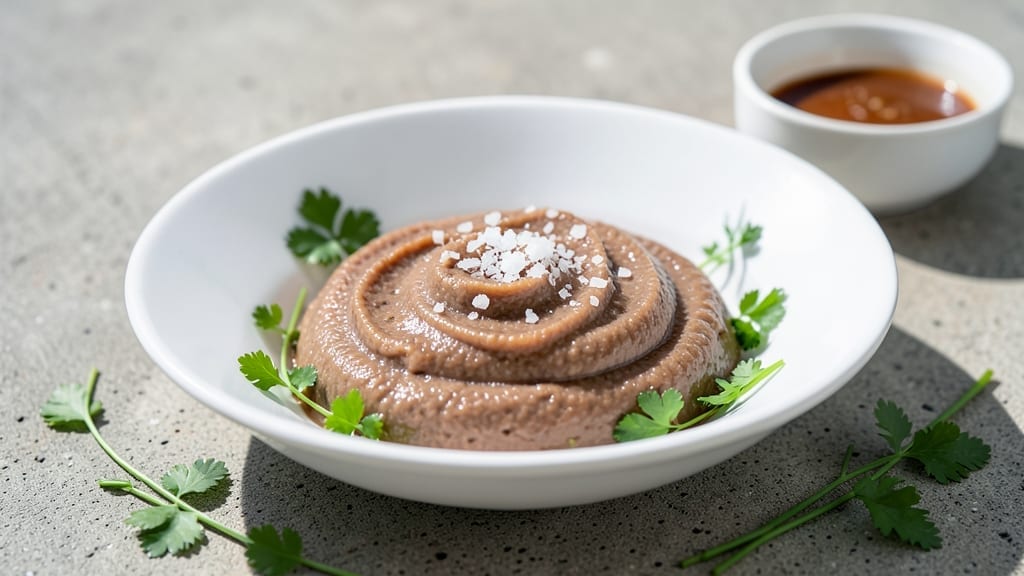
This liver paste recipe transforms humble pantry staples into a deeply umami-rich spread that elevates everyday meals with professional depth. The secret lies in slow-cooking liver with aromatic herbs and fat until it becomes an intensely flavorful, velvety paste—perfect for pairing with crusty bread or charcuterie boards.
I developed this version after years of experimenting with traditional European liver spreads, simplifying the process while preserving that restaurant-quality richness.
The beauty of this recipe is its versatility—just five core ingredients create a spread that’s far more complex than store-bought alternatives. Liver provides the deep umami foundation, while butter or lard adds richness, and thyme, parsley, and shallots contribute bright, herbal notes that balance the intensity.
The slow cooking process ensures a smooth, spreadable texture without any graininess, making it ideal for both savory applications and unexpected twists like drizzling over roasted vegetables.
What sets this liver paste apart is its ability to transform simple dishes into something special. Spread it thickly on toasted sourdough, layer it between slices of prosciutto, or use it as a bold condiment for grilled meats.
The flavor develops even more after chilling, so making a batch ahead of time ensures maximum impact when you serve it. This isn’t just a condiment—it’s a flavor multiplier that turns ordinary meals into memorable experiences.
For those new to liver spreads, don’t let the ingredient intimidate you—the slow cooking process mellows any gaminess, leaving only rich, savory depth. The key is patience: letting the paste rest in the refrigerator for at least 24 hours allows the flavors to meld completely.
Once you try this, you’ll never reach for store-bought liver pâté again. Let’s get started on creating your own umami powerhouse.
Ingredients for liver paste
Five simple ingredients transform into a luxurious umami spread—rich, velvety, and restaurant-worthy.
| Ingredient | Amount | Notes |
|---|---|---|
| Chicken Liver 🍗 | 1 ½ lb | Fresh, trimmed of connective tissue |
| Unsalted Butter 🧈 | ¾ cup | Cold, cubed for even melting |
| Shallots 🧅 | 4 whole | Peeled, finely minced |
| Fresh Thyme Leaves 🌿 | 2 tbsp | Stems removed, finely chopped |
| Fresh Parsley Leaves 🌿 | ½ cup | Stems removed, finely chopped |
| Diamond Crystal Kosher Salt 🧂 | 1 tsp | For seasoning during cooking |
| Freshly Ground Black Pepper 🌶️ | ½ tsp | For finishing before blending |
| Extra-Virgin Olive Oil 🫒 | 1 tbsp | For finishing, high quality preferred |
The liver is the heart of this paste, so choose fresh, high-quality chicken livers—avoid any with a metallic or overly gamey smell. Most grocery stores carry them near the meat counter, but Whole Foods or specialty butchers often have the freshest cuts. Trim off any connective tissue or silverskin before cooking, as these can make the final paste grainy. I always buy extra and freeze what I won’t use within a week—they keep beautifully wrapped in parchment for up to two months. For the fat, unsalted butter adds a luxurious richness, but you can substitute lard or duck fat for a deeper, more traditional flavor profile.
No fresh thyme? Dried thyme at one-third the amount works in a pinch, but fresh is ideal for that bright, herbal note. The shallots can be swapped for green onions or regular onions, though they’ll add a slightly sharper bite. If you’re avoiding dairy, olive oil or avocado oil can replace the butter, though the texture will be slightly lighter. For extra depth, I like to add a pinch of nutmeg or smoked paprika to the final blend—just a whisper to complement the liver’s natural umami. The parsley is non-negotiable though; it brightens the final spread and keeps it from becoming too heavy.
This paste develops best with time, so plan to make it a day ahead. After blending, spread it into a shallow dish and refrigerate uncovered for at least 24 hours—this allows the flavors to meld and the texture to become silky smooth. It keeps for up to two weeks in the fridge, sealed tightly between uses. For longer storage, portion into small jars or silicone molds and freeze for up to three months. The paste thickens when chilled, so let it sit at room temperature for 10-15 minutes before serving to achieve that perfect, spreadable consistency.
Why You’ll Love This Recipe
- Foolproof First-Timer: I swear by this recipe because it’s the only liver dish I’ve never messed up. The butter and shallots caramelize while you chop—no fancy technique required, just patience (and maybe a splash of wine to deglaze).
- Umami Bomb: That crispy-butter sear on the liver? Absolute magic. The thyme and parsley brighten it up just enough to make it feel fancy, not heavy—like a hug from your nonna’s kitchen.
- Party Spread Hero: Slather it on crusty bread for charcuterie, dollop it into mashed potatoes, or even mix it into pasta sauce. Honestly, I’ve used it in three different meals this week and no one’s complained (yet).
- Budget Luxury: Chicken liver is cheap, but this tastes like a $50 steak dinner. A pound feeds my family for days, and the leftovers? Even better cold on toast—proof that simple ingredients can be my secret weapon.
Step-by-step instructions for liver paste
Here’s how to transform simple ingredients into a velvety, herb-infused liver spread that elevates any dish.
Prepare the Chicken Liver
Begin by trimming any connective tissue or silverskin from the 1.5 lb chicken liver, then rinse it thoroughly under cold water. Pat it completely dry with paper towels—this step is crucial for preventing the paste from becoming watery later. I like to cut the liver into ¼-inch thick slices for even cooking, though you can leave it whole if you prefer larger pieces.
In a large skillet, melt 0.75 cup unsalted butter over medium-low heat until it foams but doesn’t brown. Add the liver slices in a single layer, ensuring they don’t overlap. Cook for 3-4 minutes per side until just cooked through—you’re aiming for medium doneness, not well-done. The liver should still be slightly pink in the center, as overcooking will make the paste bitter. Remove from the pan and set aside to cool slightly.
Sauté the Shallots and Herbs
In the same skillet, reduce the heat to low and add the 4 whole shallots, which have been peeled and finely minced. Cook them gently for 5-6 minutes, stirring occasionally, until they become translucent and just begin to caramelize at the edges. This slow cooking ensures they soften completely without burning, which would add bitterness to the paste.
Add the 2 tbsp fresh thyme leaves and 0.5 cup fresh parsley leaves, both finely chopped, to the skillet. Stir for 1-2 minutes until the herbs release their aromatic oils and the mixture becomes fragrant. Remove from heat and let the shallot-herb mixture cool for 5 minutes—this prevents the butter from separating when you blend everything together later.
Blend to a Silky Paste
Transfer the cooked liver, shallot-herb mixture, and any rendered butter from the skillet into a high-powered food processor or blender. Add 1 tsp diamond crystal kosher salt and 0.5 tsp freshly ground black pepper to the mixture. Pulse a few times to break everything down, then blend on high speed for 1-2 minutes until completely smooth. You’ll know it’s ready when the paste is velvety with no visible texture.
With the processor running, slowly drizzle in 1 tbsp extra-virgin olive oil through the feed tube. This step emulsifies the mixture, giving it a luxurious, spreadable consistency. Taste and adjust seasoning if needed—you may want to add a pinch more salt or pepper to balance the flavors. The paste should be rich, herby, and slightly umami-forward, with a smooth, almost mousse-like texture.
Rest and Serve
Transfer the liver paste to a bowl and let it rest at room temperature for 15-20 minutes. This resting period allows the flavors to meld and the texture to set slightly, making it easier to spread. If you’re not using it immediately, cover the bowl with plastic wrap pressed directly onto the surface to prevent a skin from forming, and refrigerate for up to 3 days.
Serve the liver paste on crusty bread, as a dip for vegetables, or as a spread for toasted baguette slices. For extra flair, garnish with additional chopped parsley or a drizzle of high-quality olive oil. The contrast of the creamy paste with crispy bread creates a truly decadent experience.
Pro Tips For Making Liver Paste
- Sear Livers First: I learned this the hard way—skipping the sear means bland, greasy paste. Pat the livers dry, then hit them with a hot pan (no oil needed) for 30 seconds per side until they just start to brown. This stops them from turning to mush when blended.
- Mince Shallots Fine: Sounds weird, but it works: finely minced shallots (almost paste-like) dissolve into the butter instead of sitting as chunks. Use a knife or pulse in a food processor—your future self will notice the difference when spreading.
- Don’t Overmix the Paste: This isn’t the prettiest method, but it’s the tastiest: blend until smooth, then stop. Overworking it turns the paste greasy and loses that luxurious texture. Taste-test as you go—it should still have a slight grain.
- Use Cold Butter: I skip this when I’m lazy, but the dish is noticeably better when I don’t: cube the unsalted butter and chill it first. It melts slower during blending, keeping the paste from separating into a buttery sludge. Just 10 minutes in the fridge makes a real difference.
Regional styles of this dish
French Classic
In France, liver paste—often called foie gras or pâté de foie—is a staple of traditional cuisine, especially in regions like Alsace and Normandy. The classic version uses duck or goose liver instead of chicken, cooked with cognac or armagnac for depth.
I’ve adapted this by adding a splash of dry sherry (about 1 tbsp) to the butter while cooking the liver for that same luxurious richness. Serve it with crusty baguette and cornichons for a true bistro experience. 🍷
Italian Rustic
Southern Italy transforms liver paste into spreadable “pasta di fegato” by incorporating sun-dried tomatoes and rosemary into the blend. For this version, add 2 tbsp finely chopped sun-dried tomatoes (oil-packed) and 1 tsp fresh rosemary to the food processor after blending the base.
The result is a tangy, herby spread perfect for grilled sandwiches or bruschetta. Pair it with a Chianti Classico to cut through the richness. 🍅
Spanish Chorizo Twist
In Spain, liver paste often includes chorizo for a smoky, spicy kick. Cook 2 oz sliced chorizo in the same skillet with the shallots until crispy, then blend it into the paste. The paprika and garlic in the chorizo infuse the spread with bold flavors.
Serve it on manchego cheese crostini or with roasted red peppers for a tapas-style bite. A Rioja red wine complements the smokiness beautifully. 🌶️
German Liverwurst Style
Germany’s Leberwurst is a coarse, spreadable liver paste often eaten with mustard and rye bread. To mimic this texture, blend the liver paste until it’s slightly chunky (about 30 seconds less than fully smooth).
Add 1 tsp caraway seeds and 1 tbsp Dijon mustard to the blend for that classic German flavor. Serve it with sauerkraut or pickled onions for a hearty meal. 🥨
Middle Eastern Za’atar
For a bright, aromatic twist, blend in 1 tsp za’atar seasoning and ½ tsp sumac after processing. The sesame, thyme, and lemon zest in za’atar lift the liver’s richness, creating a Middle Eastern-inspired spread.
Serve it on warm pita bread with hummus and olives for a mezze-style platter. A dry white wine like Greek Assyrtiko balances the flavors perfectly. 🌿
Modern Fusion
Get creative with umami bombs like miso or fish sauce. Stir 1 tsp white miso paste or ½ tsp fish sauce into the blended liver paste for a Japanese-inspired depth.
Top with toasted sesame seeds and scallions for a restaurant-worthy twist. This version works as a glaze for grilled meats or a dipping sauce for spring rolls**. 🍣
Nutrition facts
Frequently asked questions
Can I use beef or pork liver instead of chicken liver?
Yes, but the flavor and texture will differ. Beef liver has a stronger, more intense taste that works well in hearty spreads, while pork liver is milder and slightly sweeter. For a richer result, use duck or goose liver (like in traditional pâté), but chicken liver remains the most versatile for everyday use. Adjust cooking time slightly—beef liver may need 1-2 extra minutes per side.
Why does my liver paste taste bitter?
Overcooking the liver is the most common cause of bitterness. Cook it just until it reaches medium doneness (slightly pink center) and avoid browning the butter. For extra depth, add a splash of dry sherry or apple cider (1 tbsp) while cooking to mellow the flavor. If bitterness persists, blend in 1 tsp honey or maple syrup to balance it.
How do I fix a grainy liver paste?
Graininess usually means the liver wasn’t cooked long enough or blended thoroughly. Reheat the paste in a saucepan over low heat until warm, then blend again with 1 tbsp additional butter or olive oil to emulsify. For stubborn textures, strain through a fine-mesh sieve before serving. Pro tip: Chill the paste longer (up to 48 hours) to let flavors meld and texture smooth out.
Can I make this liver paste ahead of time?
This paste actually tastes better after resting. Spread it into a shallow dish and refrigerate uncovered for 24 hours to develop deeper flavors. It keeps for 2 weeks in the fridge or 3 months frozen. For serving, let it sit at room temperature for 10-15 minutes to soften—it thickens when chilled but remains spreadable.
What are the best ways to use leftover liver paste?
Beyond spreading, get creative! Use it as a glaze for steak or pork chops, mix into burgers or meatloaf for umami depth, or fold into mashed potatoes for a gourmet twist. Thin with a splash of broth or cream to make a sauce for pasta. The possibilities are endless—just store leftovers in an airtight container for up to 5 days.

- Mary Berry’s Boiled Fruit Cake Recipe: Moist Center and Spiced Crust Magic - November 5, 2026
- Atlantic Salmon Recipe: Honey-Dill Pan-Seared With Crispy Skin - November 5, 2026
- Blaze Pizza Copycat Dough Recipe: Chewy, Airy Crust That Mimics the Original - November 5, 2026