
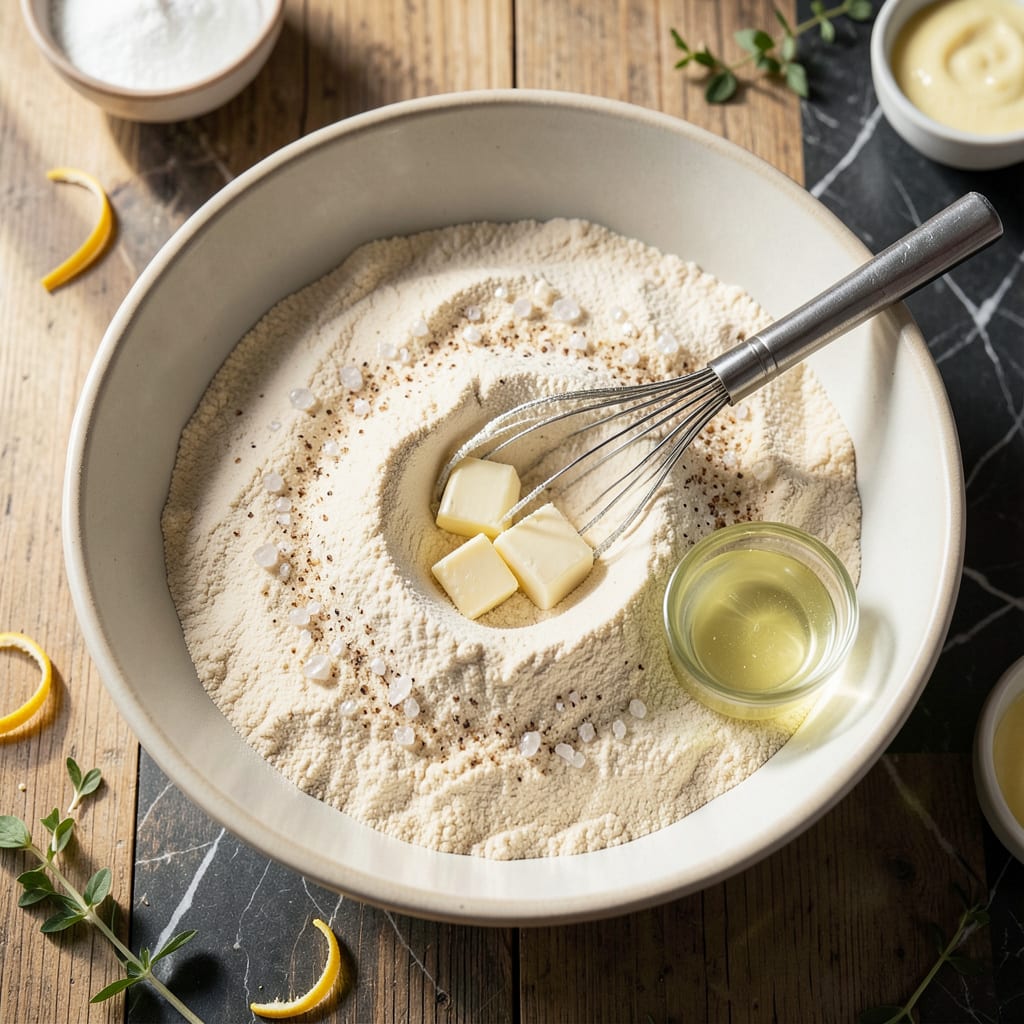
I’ve spent years perfecting shortcrust pastry, and this method delivers that signature buttery, melt-in-your-mouth texture every time. The secret is keeping everything cold and handling the dough as little as possible.
With just a few simple ingredients and a gentle touch, you’ll create a pastry that’s crisp, flaky, and so tender it practically dissolves. It’s the foundation for pies and tarts that taste like they came from a professional bakery.
Ingredients for Mary Berry Shortcrust Pastry
Just six ingredients for that signature buttery, flaky Mary Berry magic in every bite.
| Ingredient | Amount | Notes |
|---|---|---|
| All-Purpose Flour 🌾 | 2 cups | Plus extra for dusting |
| Unsalted Butter 🧈 | 1 cup | Cold, cubed, high-fat content |
| Granulated Sugar 🍚 | 1 tbsp | Fine grain, optional for sweet pastry |
| Salt 🧂 | ½ tsp | Fine sea salt preferred |
| Ice Water 💧 | 3 tbsp | As cold as possible |
| Lemon Juice 🍋 | 1 tsp | Freshly squeezed, optional for tenderness |
[recipeingredientscaler]
The butter is non-negotiable here. Use a high-fat European-style butter like Plugrá or Kerrygold—their lower water content means flakier layers. Keep it ice-cold until the very last second (pop the cubes back in the fridge if they soften while you prep). The flour should be plain, all-purpose—no self-rising—and give it a quick aeration in the bowl before mixing.
No European butter? Regular unsalted works fine—just chill it an extra 10 minutes. Swap the sugar for powdered sugar if making sweet tarts. Out of lemon juice? White vinegar at half the amount does the same tenderizing trick. The salt enhances flavor, but you can reduce it to 1/4 tsp if using salted butter (though I don’t recommend it).
This dough keeps 2-3 days wrapped tightly in the fridge, or freeze for 1 month. Let it soften slightly before rolling—cold but not rock-hard. Always dust your surface with extra flour to prevent sticking (worth the extra minute).
Why You’ll Love This Recipe
- Five Ingredients Only: I love that it comes together with just flour, butter, sugar, salt, and ice water—no fancy shopping required.
- Buttery, Flaky Magic: The cold butter and minimal handling create layers that melt in your mouth. Honestly, it’s my secret to pies that disappear fast.
- Endless Possibilities: From jam tarts to quiches, this pastry works for sweet or savory. I’ll be real: I’ve used it for both in the same week.
- Budget-Friendly Base: A batch costs pennies and freezes beautifully. Between us, I always keep a roll in the freezer for last-minute baking.
Step-by-Step Instructions for Shortcrust Pastry
Master this method and you’ll create light, flaky pastry that rivals any bakery’s best.
Step 1: Combine the Dry Ingredients and Cold Butter
In a large mixing bowl, whisk together the 2 cups All-Purpose Flour, 0.5 tsp Salt, and 1 tbsp Granulated Sugar until evenly distributed. The fine sea salt dissolves beautifully, while the sugar adds a subtle sweetness that balances the richness.
Add the 1 cup Unsalted Butter (cold and cubed) to the flour mixture. Using your fingertips, gently rub the butter into the flour until the mixture resembles coarse breadcrumbs with a few pea-sized pieces of butter remaining. This creates the flaky layers we’re after—don’t overwork it or the pastry will be tough.
Step 2: Incorporate the Liquid Ingredients
Make a well in the center of your flour-butter mixture. Add the 3 tbsp Ice Water and 1 tsp Lemon Juice to the well. The lemon juice isn’t just for flavor; it tenderizes the gluten for a more delicate texture.
Using a fork, gradually draw the flour mixture into the liquid, mixing until the dough just starts to come together. You’re looking for a shaggy, slightly sticky dough—not smooth. The colder your ingredients, the better your results will be, so work quickly.
Step 3: Knead and Rest the Dough
Turn the dough out onto a lightly floured surface. Gently knead it 2-3 times just until it forms a smooth ball. Handle it as little as possible to maintain those precious butter layers. Over-kneading develops gluten, which makes pastry tough rather than tender.
Flatten the dough into a disc about 1 inch thick, wrap it tightly in plastic wrap, and refrigerate for 30 minutes to 1 hour. This resting period allows the gluten to relax and the butter to firm up, making the dough easier to roll out and preventing shrinkage during baking.
Step 4: Roll and Shape for Baking
On a lightly floured surface, roll out the chilled dough to the desired thickness—typically ⅛ inch for tarts and pies. Use a light touch and roll from the center outward, turning the dough occasionally to maintain an even thickness.
If the dough starts to stick, sprinkle a bit more flour underneath, but avoid using too much as it can make the pastry dry. For a perfect fit, roll the dough slightly larger than your pan, then carefully transfer it, pressing gently into the edges without stretching.
Step 5: Blind Bake for Crisp Perfection
For recipes requiring pre-baking, prick the base all over with a fork to prevent air bubbles. Line the pastry with parchment paper and fill with pie weights or dried beans. Bake at 375°F for 15 minutes, then remove the weights and bake for another 10-12 minutes until the edges are light golden brown.
The pastry should be dry to the touch and hold its shape when lightly pressed. If any areas puff up, gently press them down with the back of a spoon while still warm. Let it cool completely before adding fillings to maintain that crisp, flaky texture.
Pro Tips For Making Mary Berry Shortcrust Pastry
- Chill the Butter: Cut your unsalted butter into small cubes and refrigerate for 20 minutes before mixing—cold butter makes flakier layers.
- Use Ice Water: Measure your water then add ice cubes to it for 5 minutes; the colder the water, the less it toughens the flour.
- Stop Overworking: Mix just until the dough comes together, or you’ll develop gluten and end up with a tough crust.
- Rest the Dough: Wrap it in cling film and let it sit in the fridge for 30 minutes; this relaxes the gluten and prevents shrinking when baked.
Dietary Considerations for These Flavors
Gluten-Free Adaptation
Swap the all-purpose flour for a 1:1 gluten-free blend like King Arthur Measure for Measure. Add ½ tsp xanthan gum to improve texture. The dough will be slightly more delicate, so roll it between parchment paper. 💪
Vegan Version
Replace unsalted butter with cold vegan butter like Miyoko’s and use ice-cold water. The key is keeping everything as cold as possible. I’ve found adding 1 tsp apple cider vinegar helps with flakiness.
Dairy-Free Option
Use coconut oil in place of butter—¾ cup solid coconut oil for every 1 cup butter. Chill the oil before cubing. The flavor is subtly sweet, which works well for fruit tarts.
Reduced Sugar
For savory dishes, omit the 1 tbsp sugar entirely. For sweet pastry, reduce it to ½ tbsp or use a sugar substitute like monk fruit. The texture remains the same, just less sweet.
Honestly, I often skip sugar for quiches and savory pies—it’s not missed.
Lower Sodium
Cut the salt to ¼ tsp or use salt-free butter. The pastry will still have rich flavor from the butter. If using salted butter, eliminate added salt entirely. 🌟
Nutrition Facts
Frequently Asked Questions
Why is cold butter important for shortcrust pastry?
Cold butter creates flaky layers by melting during baking, forming steam pockets. If it softens first, the pastry loses its signature texture. Keep ingredients chilled until the last moment for best results.
Can I make this dough ahead of time?
Yes! Wrap the dough tightly and refrigerate for 2-3 days or freeze for 1 month. Let it soften slightly before rolling to prevent cracking.
How do I prevent my pastry from shrinking?
Rest the dough for at least 30 minutes before rolling, and avoid stretching it when fitting into the pan. Prick the base with a fork before blind baking to release steam.
What’s the best way to roll out the dough?
Use a lightly floured surface and roll from the center outward, turning the dough occasionally. Aim for ⅛ inch thickness for even baking.

- BBQ Sausage Recipe Oven: Smoky Depth Without the Grill - September 28, 2026
- BBQ Chicken Bowl Recipe Rice: Smoky Sweetness Over Fluffy Grains - September 28, 2026
- Beef Cutlet Recipe Ideas: Crispy Breaded Patties With Bold Seasonings - September 28, 2026