
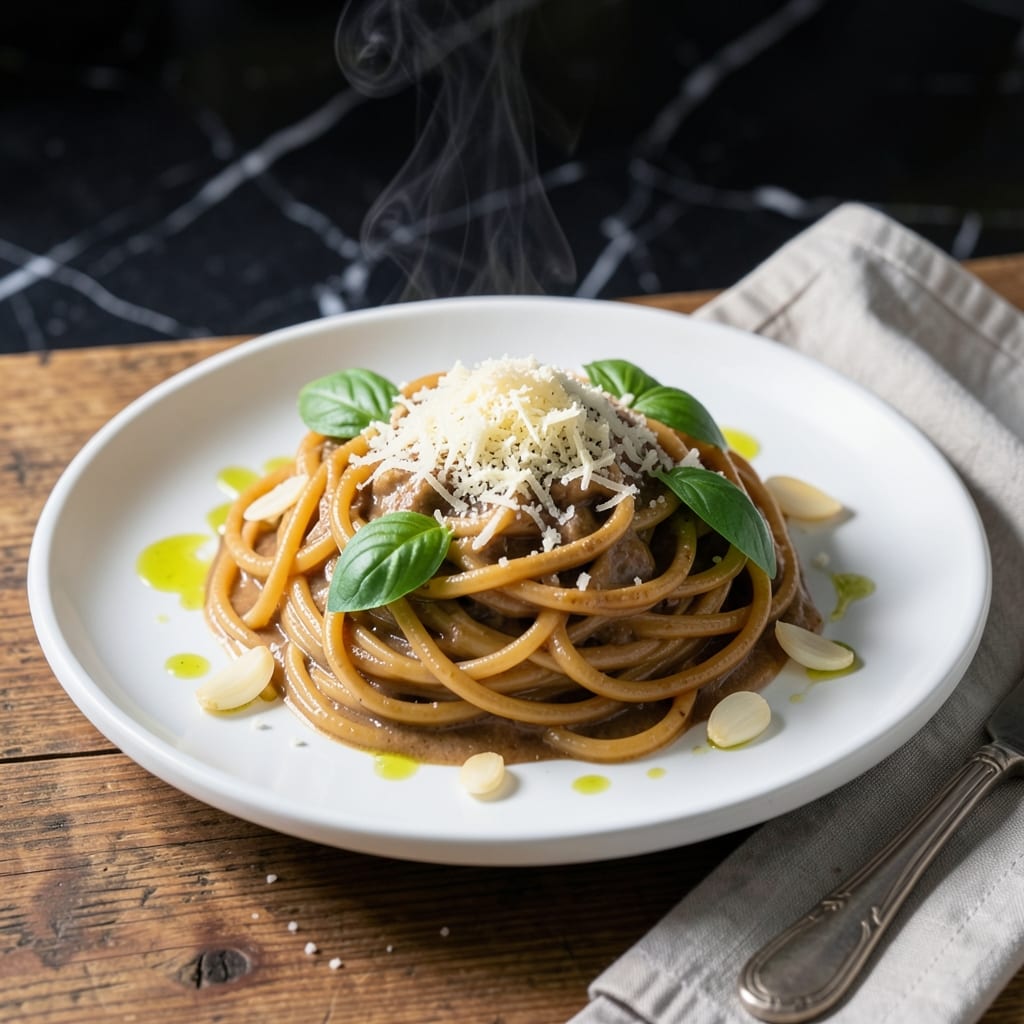
This miso pasta delivers restaurant-quality flavor with a technique that’s surprisingly simple to master at home. The umami-rich sauce transforms ordinary noodles into something extraordinary.
By combining white miso with butter and pasta water, you create a silky, velvety sauce that clings perfectly to every strand. The key is cooking the pasta just shy of al dente before finishing it in the sauce.
What emerges is a bowl of pasta with deep, complex flavors and a texture that’s both creamy and light. The miso adds savory depth without overwhelming the dish.
Serve immediately with a sprinkle of Parmesan and fresh herbs for a meal that feels special but comes together quickly.
Ingredients for Miso Pasta Recipe Chrissy Teigen
Restaurant-quality pasta with umami depth comes from these carefully selected ingredients.
| Ingredient | Amount | Notes |
|---|---|---|
| Dried Spaghetti 🍝 | 1 lb | High-quality bronze-cut preferred |
| White Miso Paste 🥣 | ½ cup | Fermented soybean paste, unsweetened |
| Unsalted Butter 🧈 | ½ cup | European-style for richness |
| Parmesan Cheese 🧀 | ½ cup | Freshly grated from wedge |
| Garlic Cloves 🧄 | 3 cloves | Minced for aromatic base |
| Fresh Basil Leaves 🌿 | ½ cup | Loosely packed, torn for garnish |
| Reserved Pasta Water 💧 | 1 cup | Starchy, from cooking pasta |
| Kosher Salt 🧂 | 1 tbsp | Diamond Crystal preferred |
| Freshly Ground Black Pepper 🌶️ | ½ tsp | Coarse grind for texture |
| Extra-Virgin Olive Oil 🫒 | 2 tbsp | For finishing and depth |
| Red Pepper Flakes 🔥 | ½ tsp | Optional for heat |
| Heavy Cream 🥛 | ¼ cup | Optional for extra silkiness |
The miso paste is non-negotiable here—look for white miso at Whole Foods or Asian markets (the milder, sweeter variety). Miso Master or South River Miso are excellent brands. Bronze-cut pasta has the texture to hold this sauce properly. For the butter, Plugrá or Kerrygold add that professional touch. The Parmesan should be a real wedge, not pre-grated (which contains anti-caking agents that hinder melt).
No white miso? Yellow miso at half the amount works in a pinch (it’s stronger). Skip the cream entirely if you prefer a lighter sauce. Fresh herbs can be parsley or chives instead of basil. For a nutty depth, toast 1/4 cup breadcrumbs in the butter before adding miso. The garlic is flexible—use 1 shallot instead for a milder allium note.
The sauce comes together in minutes, so prep all ingredients beforehand. Leftovers keep for 3 days in the fridge (reheat with a splash of water). The miso paste itself stores in the fridge for 6-12 months in an airtight container. Always bring butter to room temperature before mixing for the smoothest emulsion.
Why You’ll Love This Recipe
- One Pot Wonder: I just boil the spaghetti, melt the butter with minced garlic, stir in the miso and parmesan—no strainer, no fuss.
- Umami Bomb: The white miso and parmesan create this deep, savory richness that coats every noodle. Honestly, I lick the bowl.
- Weeknight Hero: Between us, this is my Tuesday night lifesaver—ready before the kids finish arguing over who gets the last chicken nugget.
- Budget Friendly: A block of miso lasts forever, and I’m using pantry staples. I’ll be real: it’s cheaper than takeout and twice as good.
Step-by-Step Instructions for Miso Pasta
Here’s the method. Straightforward, tested, works every time.
Step 1: Cook the Spaghetti and Reserve Water
Bring a large pot of water to a rolling boil and add 1 tbsp Kosher Salt. Add 1 lb Dried Spaghetti and cook according to package instructions until al dente—usually 1 minute less than the suggested time. The pasta should have a slight bite, as it will finish cooking in the sauce.
Before draining, reserve 1 cup Reserved Pasta Water in a measuring cup. The starchy water is essential for creating a silky sauce that clings perfectly to the strands. Drain the spaghetti but do not rinse—this preserves the starch that helps bind the sauce.
Step 2: Create the Miso Butter Base
In a large skillet over medium-low heat, melt 0.5 cup Unsalted Butter until it begins to foam. Add 3 cloves Garlic Cloves (minced) and cook for 30-45 seconds until fragrant but not browned. Stir in 0.5 cup White Miso Paste until fully dissolved into the butter, creating a smooth, aromatic paste.
This step builds the foundation of flavor. The miso paste will darken slightly as it melts into the butter, releasing its rich umami depth. If the mixture seems too thick, add a splash of the reserved pasta water to loosen it while stirring constantly.
Step 3: Combine Pasta and Sauce
Add the drained spaghetti to the skillet with the miso butter mixture. Toss well to coat every strand evenly. Pour in 0.75 cup Reserved Pasta Water (start with this amount) and stir vigorously for 1-2 minutes until the sauce begins to thicken and cling to the pasta.
Here’s the thing—the sauce should be glossy and coat the back of a spoon. If it’s too thick, add more reserved pasta water 1 tablespoon at a time until it reaches your desired consistency. The starchy water is your insurance policy against a dry or clumpy sauce.
Step 4: Finish with Cream and Cheese
Remove the skillet from heat and stir in 0.5 cup Parmesan Cheese until melted and fully incorporated. For extra silkiness, add 0.25 cup Heavy Cream and stir until the sauce becomes velvety smooth. Season with 0.5 tsp Freshly Ground Black Pepper and 0.5 tsp Red Pepper Flakes if using.
This is the moment that matters: the sauce should be rich and glossy, with a perfect balance of umami from the miso and sharpness from the Parmesan. Taste and adjust seasoning if needed, though the miso paste is quite salty on its own.
Step 5: Plate and Garnish
Divide the pasta among serving plates. Drizzle each portion with 2 tbsp Extra-Virgin Olive Oil for a final touch of richness and depth. Garnish with 0.5 cup Fresh Basil Leaves, torn by hand to release their aroma.
Serve immediately while the pasta is hot and the sauce is at its most fluid. The basil adds a fresh, herbal contrast to the deep umami flavors, while the olive oil enhances the silky texture. Each bite should deliver layers of savory, creamy, and aromatic notes.
Pro Tips For Making Miso Pasta Recipe Chrissy Teigen
- Reserve Pasta Water: Save at least 1 cup of starchy pasta water before draining—it’s the glue that binds the miso, butter, and parmesan into a silky sauce. I learned this the hard way after my first batch turned into a clumpy mess.
- Bloom the Miso: Whisk the white miso paste with a splash of warm pasta water before mixing it into the dish. This prevents clumping and ensures the miso dissolves evenly into the sauce.
- Grate Fresh Parmesan: Skip the pre-grated stuff and use a microplane to grate the parmesan fresh—it melts smoother and actually changes the outcome. The pre-shredded kind has anti-caking agents that make the sauce grainy.
- Low and Slow Garlic: Cook the minced garlic in butter over low heat until just fragrant, about 1-2 minutes. After burning three batches, I finally figured out that high heat turns it bitter fast.
Make-Ahead Tips for This Dish
Prep Ahead Strategy
You can prep all dry ingredients 24 hours in advance. Measure 0.5 cup White Miso Paste and 0.5 cup Parmesan Cheese, then store in separate airtight containers. The miso keeps indefinitely in the fridge, while grated cheese stays fresh for 3 days. 💡
Pasta Cooking
Cook pasta 2 hours before serving, then rinse with cold water to stop cooking. Toss with 1 tbsp olive oil to prevent sticking. Store in the fridge until ready to finish. This method works because the cold pasta will absorb the hot miso butter sauce beautifully.
Sauce Base Prep
Make the miso butter base up to 3 days ahead. Melt 0.5 cup Unsalted Butter, mix in miso paste, then cool and refrigerate. Reheat gently before combining with pasta. The flavors actually deepen with a little time together.
Reheating Tips
When ready to serve, reheat your prepped components separately. Warm the sauce base in a skillet over low heat, then add cold pasta with 0.5 cup Reserved Pasta Water. Stir until everything comes together—this takes about 3-4 minutes. 🔥
Garnish Storage
Wash and dry 0.5 cup Fresh Basil Leaves up to 2 days ahead. Store wrapped in a damp paper towel in a sealed container. This keeps the leaves crisp and fresh. The olive oil drizzle should always be added fresh when serving.
Freezing Option
This dish freezes surprisingly well for up to 1 month. Portion cooked pasta with sauce into freezer bags, leaving 1 inch headspace. Thaw overnight in the fridge, then reheat gently with a splash of water to restore the silky texture.
Nutrition Facts
Frequently Asked Questions
Can I use red miso instead of white?
Yes, but reduce the amount by half—red miso is saltier and stronger. Start with 1/4 cup and adjust to taste. White miso’s milder flavor lets other ingredients shine more.
What if my sauce is too thick?
Add reserved pasta water 1 tablespoon at a time until silky. The starch in the water helps emulsify the sauce. Avoid plain water—it dilutes flavor.
How do I store leftovers?
Keep in an airtight container in the fridge for up to 3 days. Reheat gently with a splash of water or cream to restore the creamy texture.
Can I make this gluten-free?
Swap spaghetti for gluten-free pasta, but check cooking time—it often needs 1-2 minutes less. The sauce works perfectly with any noodle type.

- BBQ Sausage Recipe Oven: Smoky Depth Without the Grill - September 28, 2026
- BBQ Chicken Bowl Recipe Rice: Smoky Sweetness Over Fluffy Grains - September 28, 2026
- Beef Cutlet Recipe Ideas: Crispy Breaded Patties With Bold Seasonings - September 28, 2026