
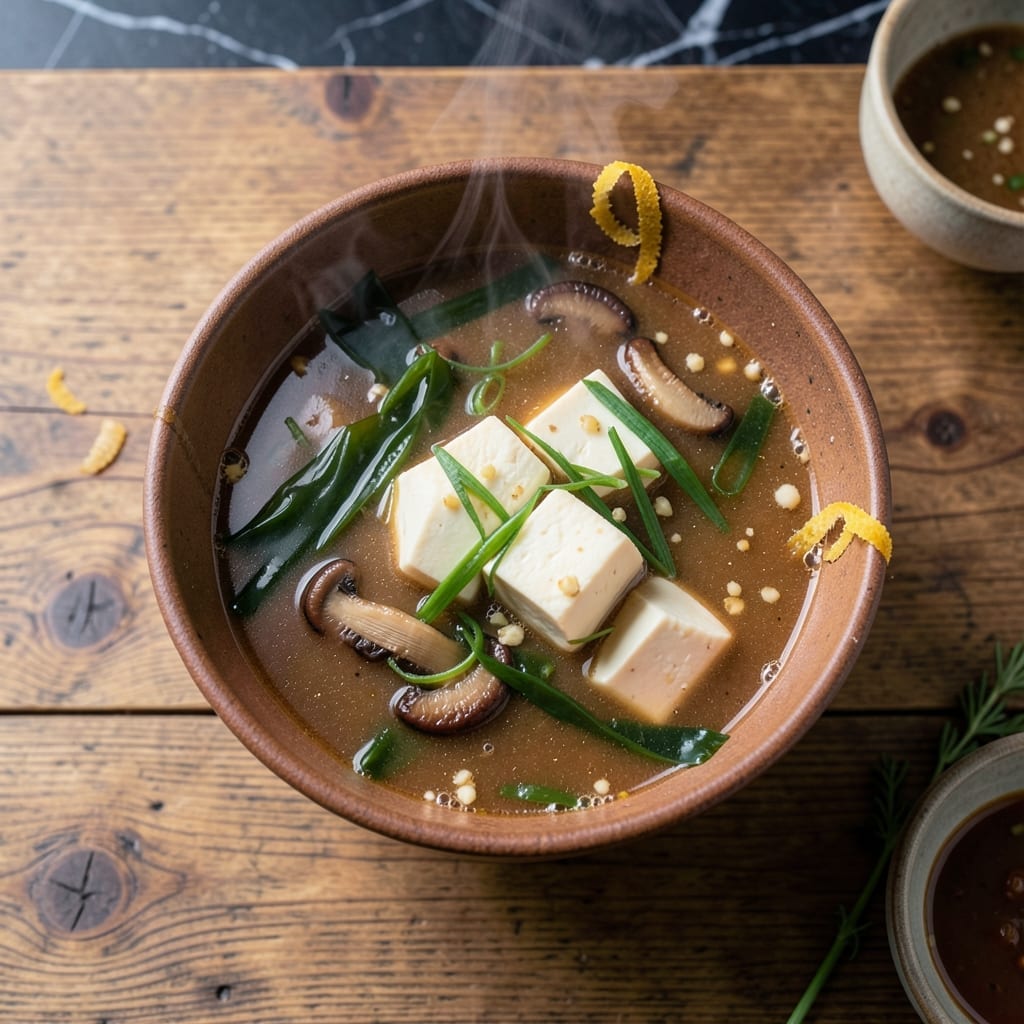
I’ve refined this miso soup to deliver authentic flavor without traditional dashi. A simple broth base, enhanced with kombu and shiitake, creates rich umami depth in under 20 minutes.
The key is infusing the broth with dried ingredients before adding miso paste. This method extracts maximum flavor while keeping the recipe vegan and accessible.
What results is a bowl of steaming, aromatic soup with tender tofu, seaweed, and green onions. The umami is bold, balanced, and deeply satisfying.
Perfect for a quick meal or as a starter to any Asian-inspired dinner. Here’s how to make it at home.
Ingredients for Miso Soup Recipe Without Dashi
Simple plant-based ingredients create bold umami without traditional dashi. Ready in minutes.
| Ingredient | Amount | Notes |
|---|---|---|
| Dried Kombu Seaweed 🌿 | 2 pieces | 4-inch squares for infusion |
| Dried Shiitake Mushrooms 🍄 | 4 whole | Rehydrated for broth |
| White Miso Paste 🥣 | ½ cup | Fermented soybean paste |
| Firm Tofu 🧈 | 14 oz | Pressed, cubed |
| Green Onions 🧅 | 4 whole | Thinly sliced for garnish |
| Wakame Seaweed 🌊 | ¼ cup | Dried, rehydrated |
| Vegetable Broth 🥣 | 6 cups | Low-sodium preferred |
| Soy Sauce 🫒 | 1 tbsp | Low-sodium or tamari |
| Sesame Oil 🫒 | 1 tsp | Toasted, for finishing |
| Garlic Cloves 🧄 | 2 cloves | Minced for broth |
| Fresh Ginger 🌿 | 1 tbsp | Grated for depth |
| Rice Vinegar 🍚 | 1 tsp | For brightness |
The kombu and shiitake are non-negotiable for authentic umami. Look for dried kombu at Asian markets or Whole Foods—avoid any with white powder (that’s MSG). Shiitake should be thick and meaty, not thin and brittle. For the miso, white miso is sweeter and milder; red would overpower. I prefer Miso Master or South River Miso brands for consistency.
No kombu? Add an extra 2-3 shiitake and a strip of nori to the broth. Swap wakame for arame or dulse if that’s what you’ve got. Tamari works as a 1:1 swap for soy sauce. For tofu, silken won’t hold up—stick with firm or extra-firm. The ginger can be pre-grated in a pinch, but fresh tastes brighter.
Broth keeps 5 days refrigerated, but add miso and tofu fresh. Freeze rehydrated shiitake for 3 months—perfect for future batches. The kombu? Reuse once more before composting (it still has flavor).
Why You’ll Love This Recipe
- No Dashi, No Problem: I skip the store-bought dashi and use just kombu and shiitake for a rich, umami-packed broth.
- Minimal Chopping Required: Just cube the tofu and slice green onions—everything else is a pour-and-stir situation.
- Deep Umami Flavor: The kombu and shiitake infuse the broth with a savory depth that white miso paste turns creamy and satisfying.
- Budget Stretcher: Dried ingredients last forever, and a little miso goes a long way—this pot costs pennies per bowl.
Step-by-Step Instructions for Miso Soup Without Dashi
This method builds deep umami flavor through careful layering of ingredients and techniques.
Step 1: Rehydrate and Infuse the Broth Base
In a large pot, combine the 6 cups Vegetable Broth, 2 pieces Dried Kombu Seaweed, and 4 whole Dried Shiitake Mushrooms. Bring to a gentle simmer over medium heat—this takes about 5-7 minutes.
Once simmering, reduce heat to low and let steep for 15-20 minutes until the kombu expands and the shiitake mushrooms soften. This slow infusion extracts maximum umami from both ingredients. Remove and discard the kombu, but reserve the rehydrated shiitake mushrooms for later use.
Step 2: Build the Aromatic Foundation
Add the 2 cloves Garlic Cloves and 1 tbsp Fresh Ginger to the infused broth. Simmer for an additional 5 minutes to allow the aromatics to meld with the liquid. The garlic should become fragrant but not brown, and the ginger will release its warm, spicy notes into the base.
Strain the broth through a fine-mesh sieve to remove the garlic and ginger pieces, pressing gently to extract all their flavor. Return the strained broth to the pot and maintain it at a low simmer. This clean, aromatic liquid will serve as the perfect canvas for your miso paste.
Step 3: Dissolve the Miso and Add Seasonings
In a small bowl, whisk the 0.5 cup White Miso Paste with 1 tbsp Soy Sauce and 1 tsp Rice Vinegar until smooth. This step prevents clumping when you add it to the hot broth.
Ladle about 1 cup of the hot broth into the miso mixture and whisk vigorously to create a smooth slurry. Pour this back into the pot and stir well to combine. Taste and adjust seasoning if needed, but remember the flavors will intensify as the soup sits.
Step 4: Add Tofu and Seaweed
Gently stir in the 14 oz Firm Tofu cubes and 0.25 cup Wakame Seaweed. The tofu will warm through in about 2-3 minutes—you want it heated but not falling apart. The wakame will rehydrate and expand in the hot broth, becoming tender and silky.
Avoid boiling the soup after adding the miso, as high heat can dull its delicate flavors and kill the beneficial probiotics. Keep it at a gentle simmer where small bubbles occasionally break the surface.
Step 5: Finish and Serve
Remove the pot from heat and stir in the 1 tsp Sesame Oil. Ladle the soup into bowls and garnish with thinly sliced 4 whole Green Onions. The sesame oil adds a nutty depth, while the green onions provide a fresh, crisp contrast.
Serve immediately while hot. The soup should have a rich, savory aroma with visible pieces of tofu, wakame, and shiitake mushrooms in each bowl. The broth will be deeply flavorful with a perfect balance of saltiness from the miso and brightness from the rice vinegar.
Pro Tips For Making Miso Soup Recipe Without Dashi
- Steep Kombu First: Soak the kombu in cold water for at least 30 minutes before heating—this extracts maximum umami without bitterness. I learned this the hard way after my first few batches tasted flat.
- Press the Tofu: Drain and press the firm tofu for 10 minutes under a weighted plate to remove excess water, so it absorbs the broth better. Sounds like extra work, but it actually changes the outcome.
- Skip the Boil: Never boil the miso paste—add it off-heat to the warm broth to preserve its delicate flavors. After ruining a pot by boiling it, I finally figured out the temperature matters most.
- Reuse Shiitake Water: Reserve the soaking liquid from dried shiitakes to use as part of your broth—it’s packed with savory depth. My grandmother swore by this, and she was right.
Perfect Pairings for These Flavors
Side Dish Ideas
Steamed jasmine rice makes the perfect bed for this soup—I use 1 cup rice to 1.5 cups water for fluffy grains. The neutral flavor lets the miso shine. Alternatively, try brown rice for extra chew. 🥗
Wine Pairings
A crisp Sake like Tyku Junmai complements the umami beautifully. For wine, Pinot Grigio from Italy works well—its citrus notes cut through the richness. Avoid heavy reds that overpower the delicate flavors.
Beer Options
Light lagers like Asahi Super Dry or Sapporo pair perfectly—their clean finish doesn’t compete with the soup. A wheat beer with citrus notes also works if you prefer something fruitier. 🍺
Vegetable Additions
Add 1 cup spinach or bok choy in the final 2 minutes of cooking for extra greens. Thinly sliced shiitake mushrooms from the broth add meaty texture. These keep the meal light yet satisfying.
Condiment Bar
Set out sriracha, pickled ginger, and extra green onions for customization. A drizzle of chili oil adds heat. I always include lime wedges for a bright finish.
Nutrition Facts
Frequently Asked Questions
Can I use red miso paste instead of white?
Yes, but it will create a stronger, saltier flavor. Reduce the amount by 25% and balance with a touch of honey or mirin.
How do I store leftover miso soup?
Store broth and tofu separately in airtight containers for up to 3 days. Reheat gently—boiling destroys miso’s probiotics.
Why is my soup bland without dashi?
Kombu and shiitake need 15-20 minutes to infuse properly. Adding 1 tsp soy sauce or a splash of rice vinegar boosts depth.

- Bread Recipe For Bread Machine: Hands-Off Artisan Loaf With Perfect Rise - September 30, 2026
- BBQ Chicken Drumsticks Recipe Air Fryer: Smoky Char in Half the Time - September 30, 2026
- Korean BBQ Sauce Recipe Homemade: Sweet and Spicy Umami Glaze - September 30, 2026