
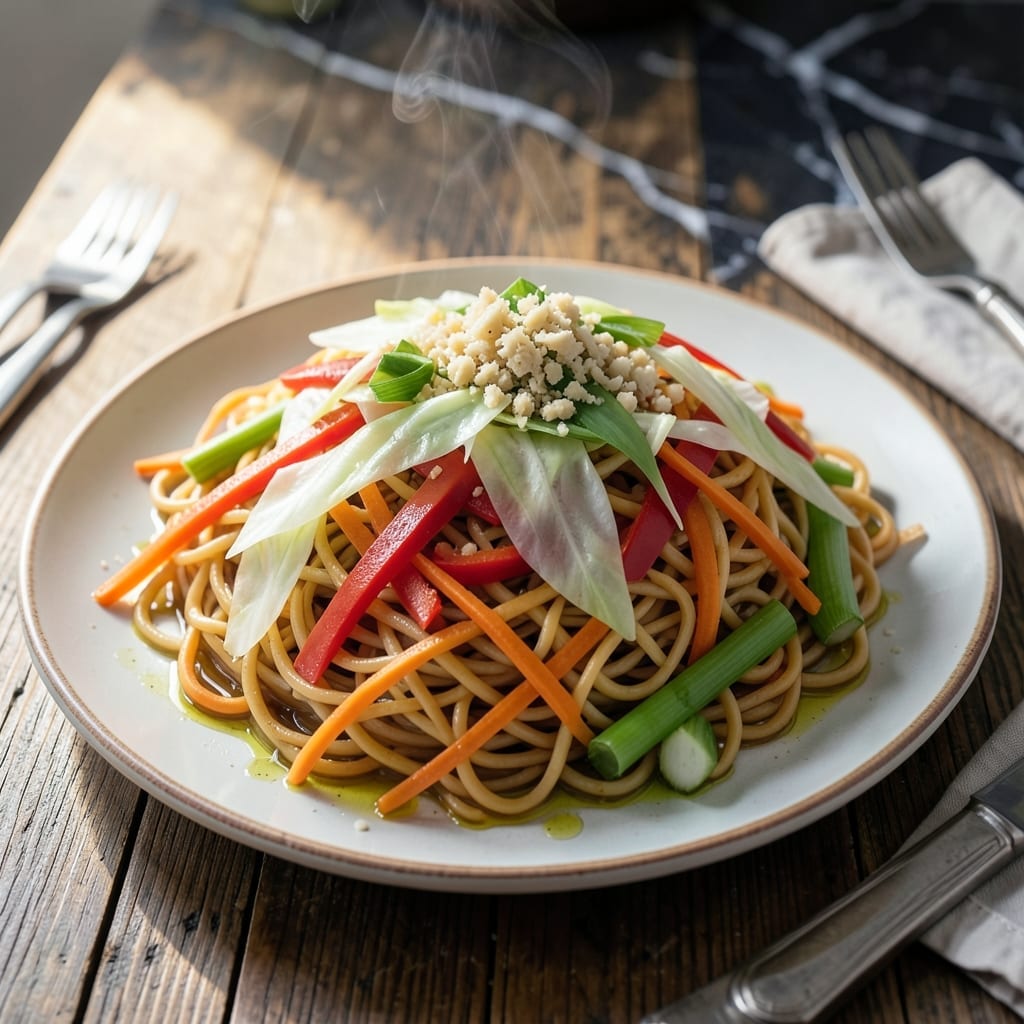
This Nankin-style chow mein delivers restaurant-quality results with a crispy texture that’s hard to resist. I developed this method after years of takeout disappointment, focusing on the perfect balance of chewy noodles and tender vegetables.
The secret lies in par-cooking the noodles before stir-frying, which ensures they maintain their bite while absorbing the rich, savory sauce. A high-heat wok and quick cooking preserve the vegetables’ crispy freshness and vibrant color.
You’ll end up with a dish featuring golden-brown noodles, perfectly cooked vegetables, and that signature wok hei flavor. The sauce coats every strand without making the dish soggy.
Ready in under 30 minutes, this version stays true to tradition while working in any home kitchen.
Ingredients for Nankin Chow Mein
Fresh noodles, crisp veggies, and bold sauces make this dish shine.
| Ingredient | Amount | Notes |
|---|---|---|
| Fresh Egg Noodles 🍜 | 12 oz | Or dried chow mein noodles |
| Vegetable Oil 🫒 | 3 tbsp | High smoke point for stir-frying |
| Garlic Cloves 🧄 | 4 cloves | Minced for maximum flavor |
| Fresh Ginger 🌿 | 1 tbsp | Peeled and grated |
| Napa Cabbage 🥬 | 3 cups | Thinly shredded |
| Carrots 🥕 | 2 whole | Julienned for crisp texture |
| Red Bell Pepper 🌶️ | 1 whole | Thinly sliced |
| Green Onions 🧅 | 4 whole | Cut into 2-inch pieces |
| Bean Sprouts 🌱 | 1 cup | Rinsed and drained |
| Soy Sauce 💧 | 3 tbsp | Low-sodium preferred |
| Oyster Sauce 🍶 | 2 tbsp | Vegan oyster sauce if needed |
| Sesame Oil 🫒 | 1 tsp | Toasted for depth |
| Cornstarch 🌾 | 1 tbsp | Mixed with 2 tbsp water |
| Salt 🧂 | ½ tsp | Adjust to taste |
| White Pepper 🌶️ | ¼ tsp | Freshly ground if possible |
The noodles are everything here—fresh egg noodles from an Asian market give that perfect chew (dried works too, just par-cook them). For the cabbage, Napa is ideal, but regular green cabbage in a pinch. I grab mine at H Mart or the international aisle at Kroger. The ginger and garlic should be fresh, not the jarred kind (the flavor difference is night and day).
Need to swap something? Mushrooms or snap peas can stand in for the bell pepper. No oyster sauce? Hoisin plus a dash of soy gets close. For a gluten-free version, tamari works instead of soy sauce. The cornstarch slurry is non-negotiable though—it’s what gives the sauce that glossy, clingy texture (don’t skip it).
Leftovers keep in the fridge for 3-4 days—the noodles soak up the sauce but stay tasty. Reheat in a dry pan to crisp them back up. For meal prep, cook the noodles and veggies separately, then toss with sauce when ready to eat (keeps the texture perfect).
Why You’ll Love This Recipe
- One-Pan Wonder: I love how everything cooks in a single pan—just toss the egg noodles with cabbage, garlic, and ginger, and dinner’s ready.
- Umami Bomb: The garlic and fresh ginger hit differently with those springy egg noodles. Honestly, it’s the kind of flavor that lingers in the best way.
- Weeknight Hero: Between us, this is my go-to for busy evenings. It’s filling, fast, and even my picky nephew asks for seconds.
- Stretches Far: Leftovers taste even better the next day, and it feeds a crowd without breaking the bank.
Step-by-Step Instructions for Nankin Chow Mein
This method delivers perfectly crispy noodles with a rich, savory vegetable medley every time.
Step 1: Prep All Vegetables for Even Cooking
Start by julienning the 2 whole Carrots into thin matchsticks—this ensures they soften quickly without turning mushy. Thinly shred the 3 cups Napa Cabbage and slice the 1 whole Red Bell Pepper into uniform strips. Cut the 4 whole Green Onions into 2-inch pieces, keeping the white and green parts separate if you prefer.
Rinse and drain the 1 cup Bean Sprouts, then pat them dry. Mince the 4 cloves Garlic Cloves and peel and grate the 1 tbsp Fresh Ginger. Having everything prepped before cooking is key—stir-frying happens fast, and you won’t have time to chop once the heat is on.
Step 2: Par-Cook and Coat the Fresh Egg Noodles
Bring a large pot of water to a boil and cook the 12 oz Fresh Egg Noodles for 1-2 minutes until just tender but still slightly firm. Drain immediately and rinse under cold water to stop the cooking process. This keeps them from overcooking when stir-fried later.
Transfer the noodles to a bowl and toss with 1 tbsp Cornstarch (mixed with 2 tbsp water first) and 0.5 tsp Salt. The cornstarch creates a light coating that helps the noodles crisp up beautifully in the pan. Let them sit while you cook the vegetables.
Step 3: Stir-Fry Vegetables to Retain Crispness
Heat 2 tbsp Vegetable Oil in a wok or large skillet over high heat until shimmering. Add the carrots, bell pepper, and cabbage, stir-frying for 2-3 minutes until the vegetables are just tender but still vibrant in color. You want them to retain a slight bite for texture contrast.
Push the vegetables to one side and add the remaining 1 tbsp Vegetable Oil to the empty space. Toss in the minced garlic and grated ginger, stirring constantly for 30 seconds until fragrant—don’t let them burn. Add the green onions and bean sprouts, stir-frying for another 1 minute.
Step 4: Combine Noodles and Sauce for Maximum Flavor
Add the par-cooked noodles to the wok, breaking up any clumps with your spatula. Pour in the 3 tbsp Soy Sauce, 2 tbsp Oyster Sauce, and 0.25 tsp White Pepper. Stir-fry everything together for 3-4 minutes until the noodles are crispy at the edges and evenly coated in sauce.
The key here is high heat and constant motion. You’ll hear a sizzling sound as the noodles crisp—this is exactly what you want. If the mixture looks dry, add a splash of water to help distribute the sauce evenly.
Step 5: Finish with Sesame Oil and Serve Immediately
Remove the wok from heat and drizzle the 1 tsp Sesame Oil over the chow mein, tossing gently to incorporate. The sesame oil adds a rich, nutty aroma that ties all the flavors together. Taste and adjust seasoning with additional salt if needed.
Serve the chow mein hot, while the noodles are still at their crispest. The contrast between the tender vegetables and the slightly crunchy noodles is what makes this dish so satisfying. Garnish with extra green onions if desired.
Pro Tips For Making Nankin Chow Mein
- Blanch the Noodles: Parboil the fresh egg noodles for 30 seconds in salted water before stir-frying—this prevents them from turning mushy and helps them soak up the sauce better.
- Slice Cabbage Thin: Shred the napa cabbage into ¼-inch strips so it wilts quickly and evenly in the wok without leaving chewy bits.
- Skip Crowded Wok: Stir-fry in batches if needed—overloading the pan steams the noodles instead of frying them, and you’ll lose that crucial crisp-tender texture.
- Bloom Aromatics First: Cook the minced garlic and ginger in hot oil for just 15-20 seconds until fragrant, but don’t let them brown—burnt bits will make the whole dish bitter.
Wine and Beer Pairings for This nankin chow mein
Crisp White Wines
A dry Riesling from Germany or Washington State cuts through the savory richness beautifully. I love how its citrus notes and bright acidity cleanse your palate between bites of the crispy noodles. Serve at 45-50°F for optimal flavor. 🍷
Light Red Options
For red wine lovers, a chilled Beaujolais offers red fruit flavors without overwhelming the dish. The low tannins in Gamay grapes complement the umami from the soy and oyster sauces perfectly. I keep mine at 55°F.
Asian Beer Pairings
Sapporo or Asahi beers are classic choices that refresh without competing. Their crisp, clean profiles and mild bitterness balance the dish’s saltiness. I prefer them ice-cold for maximum contrast with the hot chow mein.
Craft Beer Alternatives
A pilsner style beer like Trumer Pils works wonderfully with its crisp finish. Avoid heavy IPAs or stouts that would clash with the delicate vegetable flavors. The carbonation helps cleanse your palate between bites.
Non-Alcoholic Choices
For non-drinkers, jasmine tea (hot or iced) complements the ginger and garlic notes. I brew mine with 2 tsp loose leaves per cup at 175°F for 3 minutes. The floral aroma enhances the dish beautifully. 💫
Nutrition Facts
Frequently Asked Questions
Can I use dried noodles instead of fresh?
Yes, but par-cook them for 2-3 minutes first. Fresh noodles crisp better, but dried work if you adjust cooking time.
What if my noodles turn out soggy?
Use high heat and stir-fry in small batches. Overcrowding the pan steams instead of crisps.
Can I add protein to this dish?
Try chicken, shrimp, or tofu. Cook separately first, then combine at the end.
How do I make it gluten-free?
Swap soy sauce for tamari and use gluten-free noodles. Oyster sauce has options too.

- BBQ Sausage Recipe Oven: Smoky Depth Without the Grill - September 28, 2026
- BBQ Chicken Bowl Recipe Rice: Smoky Sweetness Over Fluffy Grains - September 28, 2026
- Beef Cutlet Recipe Ideas: Crispy Breaded Patties With Bold Seasonings - September 28, 2026