
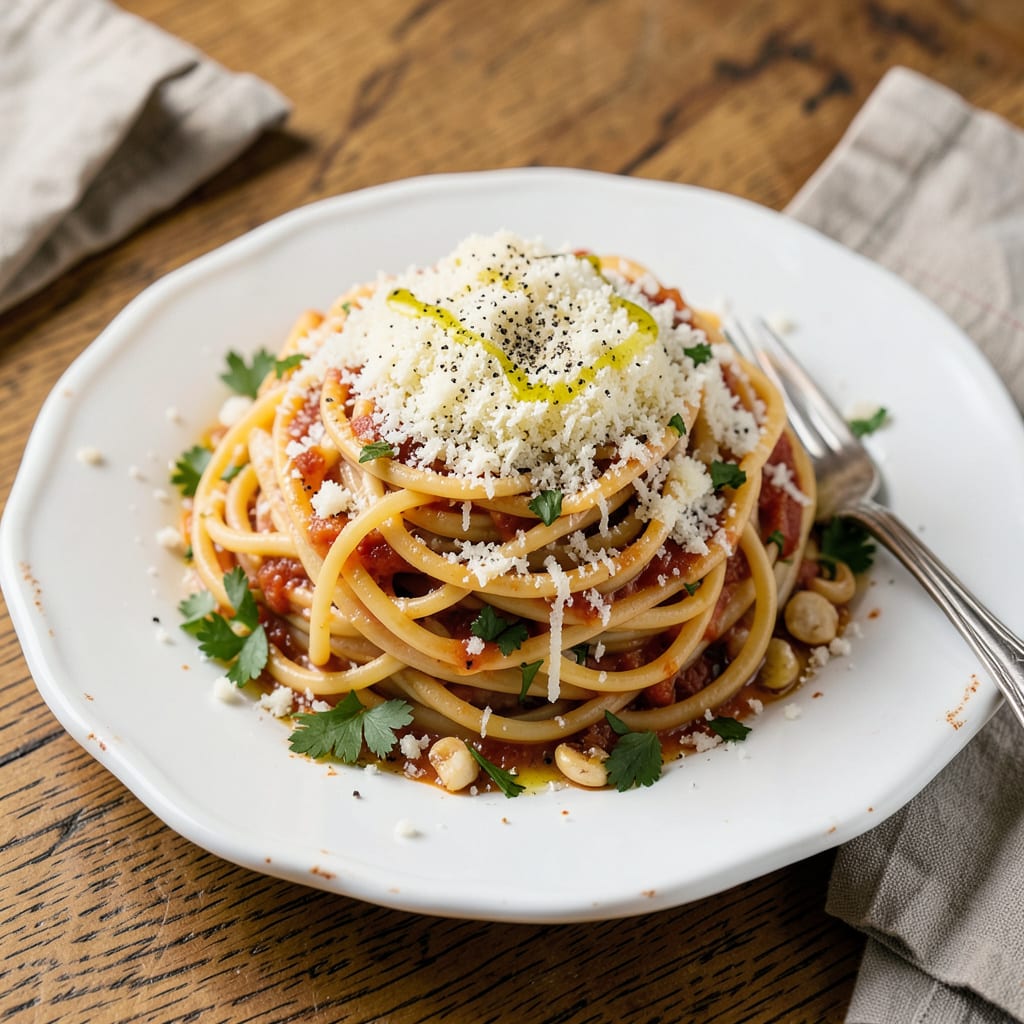
The Old Spaghetti Factory’s famous mizithra cheese sauce combines butter, heavy cream, and grated mizithra cheese melted together until smooth. Serve it hot over spaghetti with a sprinkle of browned butter and extra cheese for that signature restaurant flavor.
This sauce stands out because of mizithra’s distinct Greek heritage—a salty, tangy cheese with a slightly nutty finish that melts effortlessly. 🔥 I’ve found that its lower moisture content compared to parmesan creates a velvety texture without graininess. The key is balancing the cheese’s boldness with the richness of heavy cream and the depth of browned butter, which adds a toasty complexity.
What most home cooks miss is the timing: the cheese must be added off-heat to prevent separation, and the sauce needs constant stirring. ✨ I always recommend using freshly grated mizithra for maximum flavor impact—pre-shredded versions often contain anti-caking agents that affect melt quality.
💡 In This Article
- Why Mizithra Cheese Makes the Sauce So Unique
- Pro Tips for Perfect Old Spaghetti Factory Mizithra at Home
Why Mizithra Cheese Makes the Sauce So Unique
Mizithra cheese brings a one-of-a-kind flavor profile that sets this sauce apart. Originating from Greece, this aged cheese is made from sheep’s or cow’s milk and boasts a salty, tangy punch with subtle nutty undertones.
Unlike parmesan, which can taste overly sharp, or pecorino, which leans grassy, mizithra delivers a balanced intensity that doesn’t overpower the dish. Its lower moisture content (around 30%) means it melts into a silky, lump-free consistency—perfect for sauces. 🔥
The magic happens at the molecular level. Mizithra contains less casein (the protein that can make cheese stringy) and more soluble proteins, allowing it to dissolve smoothly into warm fats like butter and cream. When grated fresh, its fine, powdery texture disperses evenly, creating that signature velvety coating on each strand of spaghetti.
Compare this to parmesan, which often leaves a slightly gritty mouthfeel due to its crystalline structure.
Traditional mizithra production involves a unique whey-based process where curds are pressed and aged for 3-12 months. This develops its concentrated umami notes while maintaining a crumbly yet meltable texture. The aging process also reduces lactose content, making it naturally easier to digest than younger cheeses.
When melted at 140-160°F, it releases its full spectrum of flavors without breaking down into greasy pools like some Italian hard cheeses.
What really makes mizithra special in this sauce is its sodium content—typically 2.5-3.5%—which enhances all the other ingredients. The saltiness cuts through the richness of the heavy cream while the tangy notes brighten the dish. This is why substitutions like parmesan (which can be saltier) or romano (which is sharper) never quite replicate the original.
The cheese’s natural acidity also helps balance the sauce’s overall pH, preventing that “flat” taste some cream sauces develop.
For the best results, look for authentic Greek mizithra labeled “aged” or “grating” style. Fresh mizithra (often sold in tubs) has a milder, creamier profile better suited for desserts. The aged version’s firm texture means it grates into fine, even particles that melt uniformly.
I’ve found that 1 cup of freshly grated mizithra per 1/2 cup of butter gives that perfect Old Spaghetti Factory balance—rich but not heavy, salty but not overwhelming. ✨
Pro tip: The cheese’s low melting point means you should always add it off direct heat. When you sprinkle it over warm (not boiling) cream, it incorporates gradually, creating tiny emulsified droplets rather than clumping. This technique, combined with the final drizzle of browned butter, is what gives the sauce its restaurant-quality sheen and depth.
The butter’s toasted milk solids add a caramelized complexity that perfectly complements mizithra’s natural funk.
If you can’t find mizithra, a blend of 2 parts pecorino romano to 1 part aged asiago comes closest. However, you’ll want to reduce the salt in your recipe by about 25% since pecorino packs a stronger saline punch. The asiago adds that missing nuttiness, though the texture won’t be quite as smooth.
For true authenticity though, hunting down real mizithra is worth the effort—it’s the soul of this iconic sauce. 💫

- BBQ Sausage Recipe Oven: Smoky Depth Without the Grill - September 28, 2026
- BBQ Chicken Bowl Recipe Rice: Smoky Sweetness Over Fluffy Grains - September 28, 2026
- Beef Cutlet Recipe Ideas: Crispy Breaded Patties With Bold Seasonings - September 28, 2026