
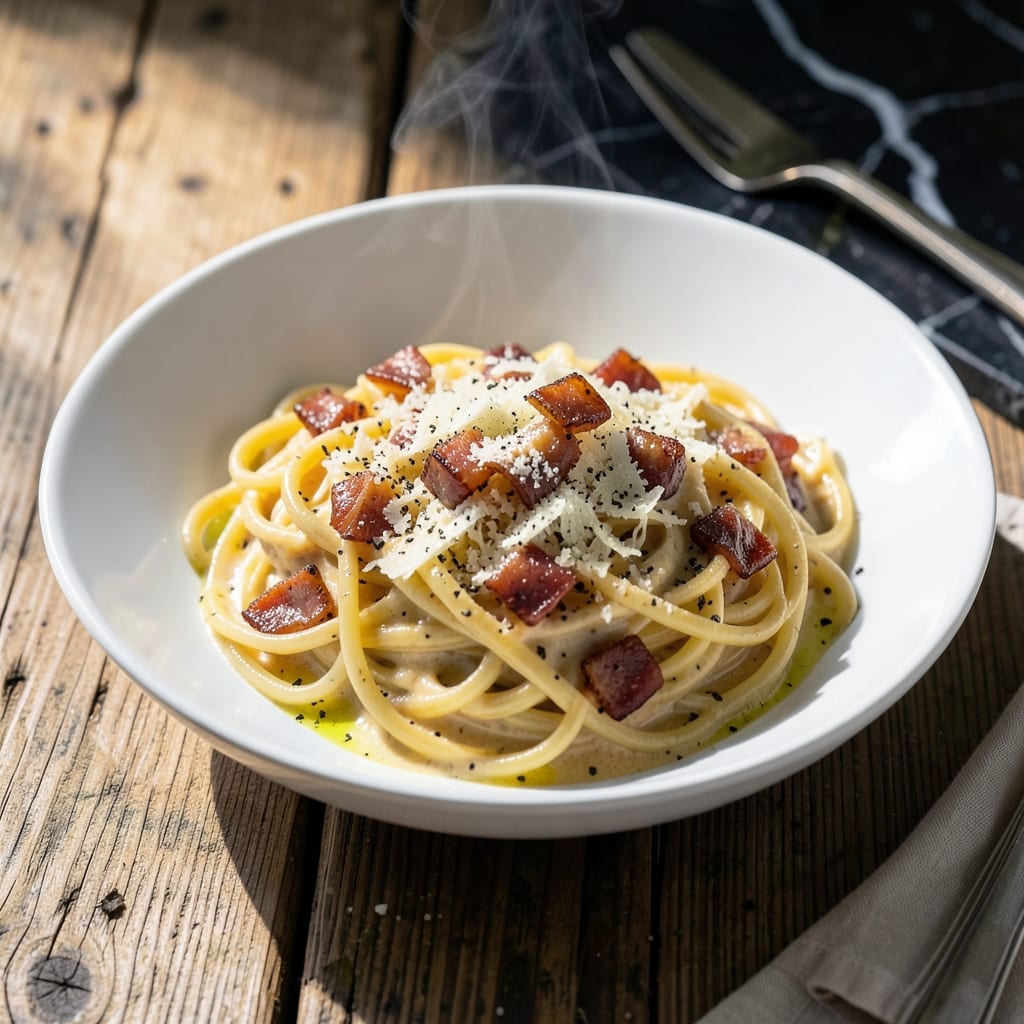
Achieving the perfect pasta carbonara requires mastering a few key techniques I learned through trial and error. The balance between silky sauce and crispy guanciale is non-negotiable.
This traditional Roman dish relies on emulsifying eggs with hot pasta water to create a velvety sauce that coats every strand. The guanciale must be rendered until golden and crisp, not chewy.
Timing is critical—al dente pasta meets the hot pan to finish cooking while you work quickly to combine all elements. The result is a dish where each bite delivers rich, creamy sauce with bits of crispy pork.
No shortcuts here, just proven methods that deliver restaurant-quality carbonara at home. The process demands attention but rewards with unforgettable flavor.
Ingredients for Perfect Pasta Carbonara Recipe Step by Step
Traditional Roman ingredients for silky sauce and crispy pork perfection at home.
| Ingredient | Amount | Notes |
|---|---|---|
| Guanciale 🥓 | 6 oz | Diced, rendered until crispy |
| Spaghetti 🍝 | 1 lb | Dried, cooked al dente |
| Large Eggs 🥚 | 4 whole | Room temperature, separated |
| Pecorino Romano Cheese 🧀 | 1 ½ cups | Freshly grated, finely |
| Parmesan Cheese 🧀 | ½ cup | Freshly grated, finely |
| Black Pepper 🌶️ | 2 tsp | Freshly cracked, coarse |
| Sea Salt 🧂 | 2 tsp | For pasta water and seasoning |
| Reserved Pasta Water 💧 | 1 cup | Hot, starchy, for emulsifying |
| Extra-Virgin Olive Oil 🫒 | 1 tbsp | For cooking guanciale |
| Garlic Cloves 🧄 | 2 cloves | Lightly crushed, optional |
Guanciale is non-negotiable here—Eataly or a quality Italian market will have it (or order online from D’Artagnan). Pancetta works in a pinch but lacks that signature cured flavor. Look for well-marbled pieces with a good fat-to-meat ratio. The cheese? Pecorino Romano is traditional, but Parmigiano-Reggiano adds depth. Buy wedges and grate them yourself—pre-shredded melts poorly due to anti-caking agents.
No guanciale? Thick-cut bacon is the closest substitute, though it’s smokier. Short on Pecorino? Substitute all Parmigiano—it’s milder but still delicious. The eggs must be room temperature to blend smoothly with the hot pasta water. If you’re nervous about raw eggs, use pasteurized (they’re labeled as such). The pasta water is your secret weapon—don’t drain it all away!
Cooked carbonara doesn’t reheat well—the sauce can separate. But if you must, warm it gently in a pan with a splash of water. Best eaten fresh, though. Store unused guanciale in the fridge for up to 1 week or freeze for 3 months.
Why You’ll Love This Recipe
- Minimal Effort: Honestly, five ingredients and one pot is all it takes to nail this dish.
- Rich and Creamy: That silky egg-cheese sauce clinging to the spaghetti with crispy guanciale? Pure satisfaction.
- Crowd Pleaser: I’ve served this for date nights and lazy Sundays—everyone cleans their plate.
- Budget Stretcher: A little guanciale and cheese go a long way, and leftovers (if any) reheat beautifully.
Step-by-Step Instructions for Perfect Pasta Carbonara
Here’s my tested method for achieving that silky sauce and perfectly crisp guanciale every time.
Step 1: Render the Guanciale to Crispy Perfection
Heat a large skillet over medium heat and add the 6 oz Guanciale—no oil needed as it will render its own fat. Cook for 8-10 minutes, stirring occasionally, until the guanciale turns golden and crispy and has released about 2 tablespoons of fat.
If using the optional 2 cloves Garlic Cloves, add the lightly crushed cloves during the last 2 minutes of cooking. Remove the skillet from heat and let it cool slightly while you prepare the rest. The rendered fat will be the base for your sauce, so don’t drain it.
Step 2: Cook the Spaghetti Al Dente
Bring a large pot of water to a rolling boil and add the 2 tsp Sea Salt. Cook the 1 lb Spaghetti according to package instructions until 1 minute shy of al dente. You want it slightly underdone as it will finish cooking in the sauce.
Before draining, reserve 1 cup Reserved Pasta Water—this starchy liquid is essential for emulsifying the sauce. Drain the spaghetti but do not rinse it; the surface starch helps the sauce cling beautifully to the noodles.
Step 3: Prepare the Egg and Cheese Mixture
In a bowl, whisk together the 4 whole Large Eggs, 1.5 cups Pecorino Romano Cheese, and 0.5 cup Parmesan Cheese until smooth. Add 2 tsp Black Pepper and mix well. The mixture should be thick and pale, almost like a custard.
I use a fine grater for the cheeses to ensure they melt smoothly into the sauce. The egg mixture will cook gently when combined with the hot pasta, creating that signature silky texture.
Step 4: Combine Everything Off Heat
Remove the skillet with guanciale from heat and let it cool for 1 minute. Add the drained spaghetti and toss to coat in the rendered fat. Then, pour in ½ cup of the reserved pasta water and toss vigorously for 30 seconds.
Now, reduce the heat to low and add the egg and cheese mixture, stirring constantly for 1-2 minutes until the sauce thickens and becomes creamy. The residual heat will gently cook the eggs without scrambling them. If the sauce is too thick, add more pasta water 1 tablespoon at a time until it reaches your desired consistency.
Step 5: Serve Immediately with Extra Cheese
Transfer the carbonara to warmed plates right away—this dish doesn’t wait. Top with additional Pecorino Romano Cheese and a crack of Black Pepper.
The sauce should cling to every strand of spaghetti with a glossy, creamy finish. Each bite will deliver rich, crispy guanciale, sharp cheese, and that unmistakable peppery kick. Serve with crusty bread to soak up every last bit of sauce.
Pro Tips For Making Perfect Pasta Carbonara Recipe Step By Step
- Use Guanciale, Not Bacon: I learned this the hard way—guanciale’s sweeter, more delicate fat is non-negotiable for authentic carbonara. Bacon works in a pinch, but the flavor profile just isn’t the same.
- Temper Your Eggs: Whisk your eggs with the grated cheeses off heat first, then slowly mix in a ladle of hot pasta water. This keeps the sauce creamy instead of turning into scrambled eggs.
- Save That Pasta Water: Stash at least a cup of the starchy pasta water before draining—it’s the magic ingredient for loosening the sauce and helping it cling to the noodles.
- Toss Off Heat: After combining everything, remove the pan from heat immediately. Residual heat will finish cooking the eggs without curdling them, giving you that silky texture.
Troubleshooting Perfect Results
Sauce Too Thin
If your sauce looks watery, you likely added too much pasta water. Return the pan to low heat and stir constantly for 1-2 minutes—the residual heat will help emulsify the sauce. Add 2 tbsp grated Pecorino Romano to thicken it naturally. 💡
Sauce Too Thick
When the sauce clumps or seems gluey, you over-reduced it. Remove from heat immediately and stir in 1-2 tbsp hot pasta water until silky. Work quickly—the eggs can scramble if overheated. I keep extra pasta water on standby for this exact reason.
Scrambled Eggs
This happens when the pan is too hot. Always remove from heat before adding the egg mixture, then use residual warmth to cook gently. If it scrambles, salvage by stirring vigorously with ¼ cup pasta water to smooth it out. Prevention is key here.
Guanciale Not Crispy
If your guanciale stays chewy, it needs more time. Cook over medium-low heat for 10-12 minutes, stirring occasionally. Don’t rush—crispy edges are worth the wait. I learned this the hard way with my first batch in Portland.
Pasta Sticks Together
Under-salted water or overcooking causes this. Use 2 tsp sea salt per pound of pasta and cook 1 minute shy of al dente. Toss immediately with guanciale fat to coat strands. The starch in the water helps separate the noodles beautifully. ✨
Cheese Doesn’t Melt
Pre-shredded cheese contains anti-caking agents that prevent melting. Always grate Pecorino Romano and Parmesan fresh for the creamiest sauce. A fine grater ensures it incorporates smoothly into the egg mixture.
Nutrition Facts
Frequently Asked Questions
Can I use bacon instead of guanciale?
Yes, thick-cut bacon is the best substitute. Cook it until crispy over medium-low heat for 10-12 minutes. It’s smokier than guanciale but still delicious.
Why did my sauce turn out grainy?
This usually means the eggs scrambled. Always remove the pan from heat before adding the egg mixture. If it happens, stir in ¼ cup hot pasta water to smooth it out.
How do I prevent the pasta from sticking?
Use 2 tsp sea salt per pound of pasta and cook until 1 minute shy of al dente. Immediately toss with rendered guanciale fat to coat the strands.

- Potato Candy Recipe 1933: Vintage Peanut Butter Roll Delight - October 30, 2026
- Potato Chip Cookie Recipe With Pecans: Buttery Crunch Meets Nutty Richness - October 30, 2026
- Potato Patty Recipe No Egg: Crispy Edges Without the Binder - October 30, 2026