
Few baking achievements compare to pulling a perfectly flaky pie crust from the oven. This shortening-based method delivers consistent results every time, with layers so tender they practically melt.
The secret lies in keeping the Crisco cold and handling the dough minimally. By cutting the shortening into flour until pea-sized crumbs form, you create the structure for those prized flaky layers.
What emerges is a golden crust that holds its shape yet shatters at the touch of a fork. The absence of butter means no risk of toughening from overworked gluten.
Ideal for both sweet and savory pies, this crust stays crisp beneath juicy fillings. The technique proves that simplicity often yields the most impressive results.
Ingredients for Perfect Pie Crust Recipe Crisco
Five ingredients. One bowl. The foundation of every perfect pie.
| Ingredient | Amount | Notes |
|---|---|---|
| All-Purpose Flour 🌾 | 2 ½ cups | Sifted for even texture |
| Crisco All-Vegetable Shortening 🧈 | ¾ cup | Chilled solid, not melted |
| Ice Water 💧 | ¼ cup | Plus 1 tbsp as needed |
| Salt 🧂 | 1 tsp | Fine sea salt preferred |
| Granulated Sugar 🍚 | 1 tsp | Optional for sweet pies |
The shortening must stay cold—Crisco All-Vegetable Shortening is the gold standard here for its high melting point and consistent texture. Use the stick version if available (easier to measure), but the can works too. King Arthur or Gold Medal flours are reliable choices for all-purpose; avoid self-rising or cake flour. Measure your flour by spooning it into the cup and leveling off—scooping directly from the bag packs it down and throws off the ratio.
No Crisco? Store-brand vegetable shortening works identically—just ensure it’s 100% vegetable (some blends contain lard). For a butter-flavored crust, swap in butter-flavored Crisco. The sugar is optional but adds subtle sweetness for fruit pies; omit entirely for savory applications. If you only have salted butter for topping, reduce the added salt by half.
The dough can rest in the fridge for up to 3 days, or freeze it for 3 months (thaw overnight before rolling). Keep your shortening in a cool pantry—it lasts for 1 year unopened, but check for off smells after opening.
Why You’ll Love This Recipe
- No-Fuss Mixing: I just cut the Crisco into the flour with a pastry cutter—no fancy techniques, and it comes together in minutes.
- Buttery Crisp: The shortening makes it flaky without a hint of greasiness, and that pinch of sugar gives it the subtlest sweetness.
- Holiday or Tuesday: I’ve used this crust for Thanksgiving pies and random weeknight galettes—it never lets me down.
Step-by-Step Instructions for Perfect Pie Crust
Master the technique for achieving the ideal flaky texture that sets exceptional pies apart.
Step 1: Combine Dry Ingredients Precisely
Measure out the 2.5 cups All-Purpose Flour into a large mixing bowl. Sifting isn’t strictly necessary with modern flour, but I do whisk it briefly to aerate and prevent compacting. This step ensures even distribution of the dry components.
Add the 1 tsp Salt and 1 tsp Granulated Sugar to the flour. The salt enhances all the flavors in your crust, while the sugar adds subtle sweetness that complements both sweet and savory fillings. Stir these thoroughly into the flour until the mixture appears uniformly speckled.
Step 2: Cut in the Chilled Shortening
Add the 0.75 cup Crisco All-Vegetable Shortening to the flour mixture. It must be thoroughly chilled—this is non-negotiable for achieving flakiness. Using a pastry cutter or two forks, begin working the shortening into the flour with a downward cutting motion.
Continue cutting until the mixture resembles coarse crumbs with pea-sized pieces of shortening visible throughout. These visible fat pieces create the flaky layers in your finished crust. The process takes about 3-5 minutes of steady cutting—don’t rush this critical step.
Step 3: Incorporate Ice Water Gradually
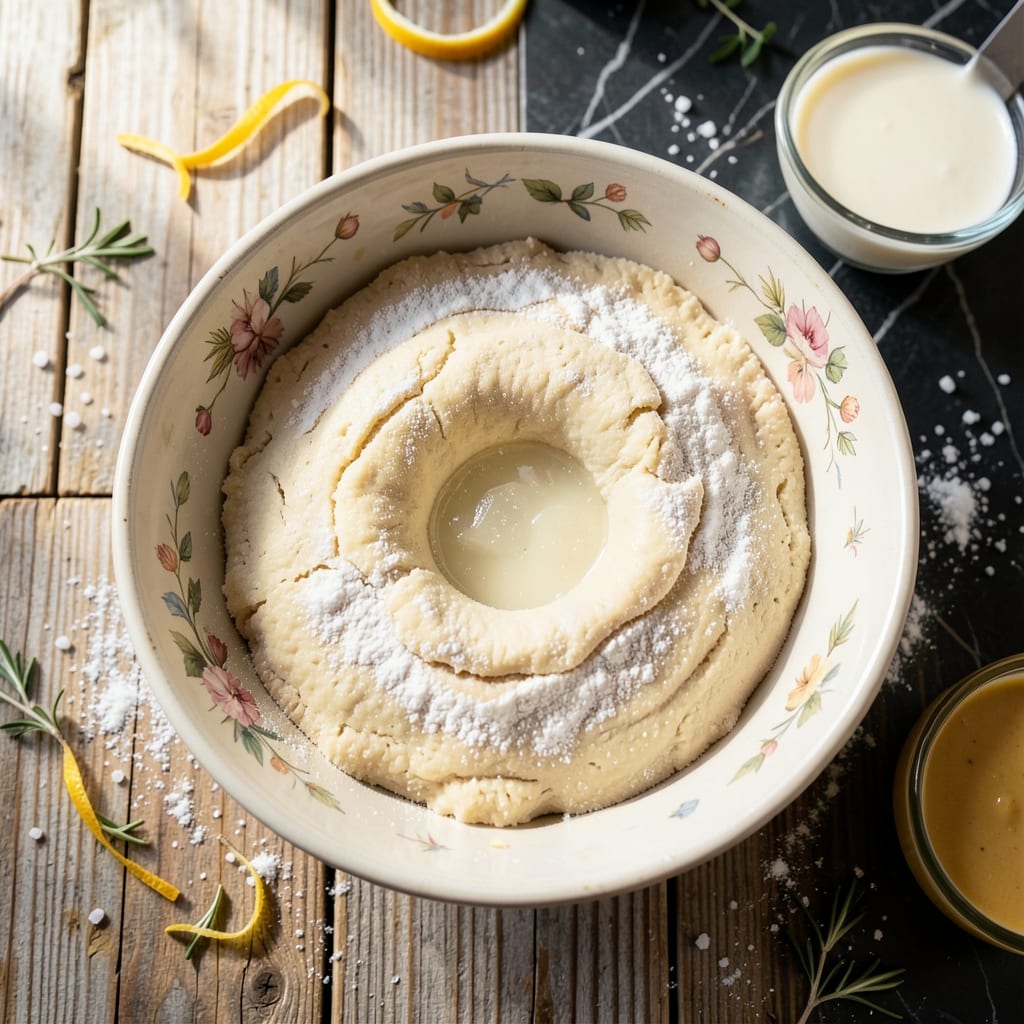
Create a well in the center of your flour-shortening mixture. Add the 0.25 cup Ice Water one tablespoon at a time, using a fork to gently toss and distribute the liquid. The ice-cold water prevents the shortening from melting, which would ruin the flakiness.
Mix just until the dough begins to come together when pressed. It should look shaggy and slightly dry in the bowl—that’s perfect. If it seems too dry to hold, add additional water by the teaspoon until it just coalesces. Overworking or adding too much water develops gluten, resulting in a tough crust.
Step 4: Shape and Chill the Dough
Turn the dough out onto a lightly floured surface and gently press it into a cohesive ball. Divide it in half if making a double-crust pie. Shape each portion into a disk about 1 inch thick, which makes rolling easier and more even.
Wrap each disk tightly in plastic wrap and refrigerate for at least 1 hour, or up to 2 days. This chilling period allows the gluten to relax and the shortening to resolidify. The dough should be firm but not rock-hard when ready to roll out.
Step 5: Roll Out and Blind Bake if Needed
On a well-floured surface, roll one dough disk from the center outward to a 12-inch circle about ⅛-inch thick. Transfer to your pie dish, pressing gently into the bottom and up the sides. Trim edges to ½-inch overhang, then crimp as desired.
For pre-baked crusts, line with parchment paper and fill with pie weights or dried beans. Bake at 375°F for 15 minutes, then remove weights and bake another 10-12 minutes until light golden brown. This ensures a crisp, sturdy base that won’t sog out under fillings.
Pro Tips For Making Perfect Pie Crust Recipe Crisco
- Chill Your Shortening: Pop your Crisco in the fridge for 15 minutes before mixing—I learned this the hard way after my first few crusts turned out greasy instead of flaky.
- Use Ice-Cold Water: Fill a glass with ice cubes and water, then measure from that for the liquid. Sounds picky, but warm water makes the dough tough every time.
- Don’t Overwork It: Mix just until the dough comes together, even if it looks a little shaggy. After burning three batches, I finally figured out overmixing develops gluten, and nobody wants a chewy crust.
- Rest Before Rolling: Give the dough a solid 15-20 minutes in the fridge after shaping—my grandmother swore by this, and she was right. It relaxes the gluten and prevents shrinking.
Regional Styles of This Dish
Southern Style
In the South, we often add 1 tbsp vinegar or 1 egg yolk to the dough for extra tenderness. The acidity tenderizes the gluten, while the yolk adds richness. I learned this trick from my grandmother—her pies were legendary. 💛
Midwestern Tradition
Midwestern bakers swear by using lard instead of shortening for a flakier texture. If you want to try this, replace the Crisco with an equal amount of leaf lard. The flavor is slightly more savory, perfect for meat pies.
Texas Twist
For a Texan touch, add 1 tsp cornmeal to the flour mixture. This gives the crust a slight crunch and golden color. It pairs beautifully with pecan or peach fillings, classic Texas favorites. 🌟
New England Approach
New England cooks often use cold butter in combination with shortening for a hybrid crust. Use ½ cup Crisco and 4 tbsp cold butter, cut in together. This creates layers with both flakiness and rich, buttery flavor.
California Style
On the West Coast, health-conscious bakers might swap in coconut oil for part of the shortening. Use ½ cup Crisco and ¼ cup solid coconut oil for a subtle tropical note. Chill the coconut oil first to maintain the cold temperature.
Amish Technique
The Amish community often uses a hot water crust method. Replace the ice water with ½ cup boiling water and mix quickly. This creates a sturdier crust, ideal for hand pies or deep-dish creations. Handle carefully—it’s hot!
Nutrition Facts
Frequently Asked Questions
Why use shortening instead of butter?
Shortening has a higher melting point than butter, creating more reliable flakiness. It also has no water content, reducing gluten development for a more tender crust. Butter adds flavor but can make the dough harder to work with.
How do I prevent a soggy bottom crust?
Blind bake the crust at 375°F for 15 minutes with weights, then 10-12 minutes without. This creates a moisture barrier. For fruit pies, sprinkle 1 tbsp flour or breadcrumbs on the unbaked crust before adding filling.
Can I make this ahead of time?
The dough keeps in the fridge for up to 2 days or freezes for 3 months. Wrap tightly in plastic to prevent drying. Thaw overnight in the fridge before rolling.

- Pina Colada Dip Recipe Red Lobster: Tropical Creaminess With Toasted Coconut - October 12, 2026
- Pickled Sweet Cherry Peppers Recipe Canning: Tangy Heat for Pantry Staples - October 12, 2026
- Peppercorn Sauce Recipe Vegan: Rich Umami Depth Without Cream - October 12, 2026