
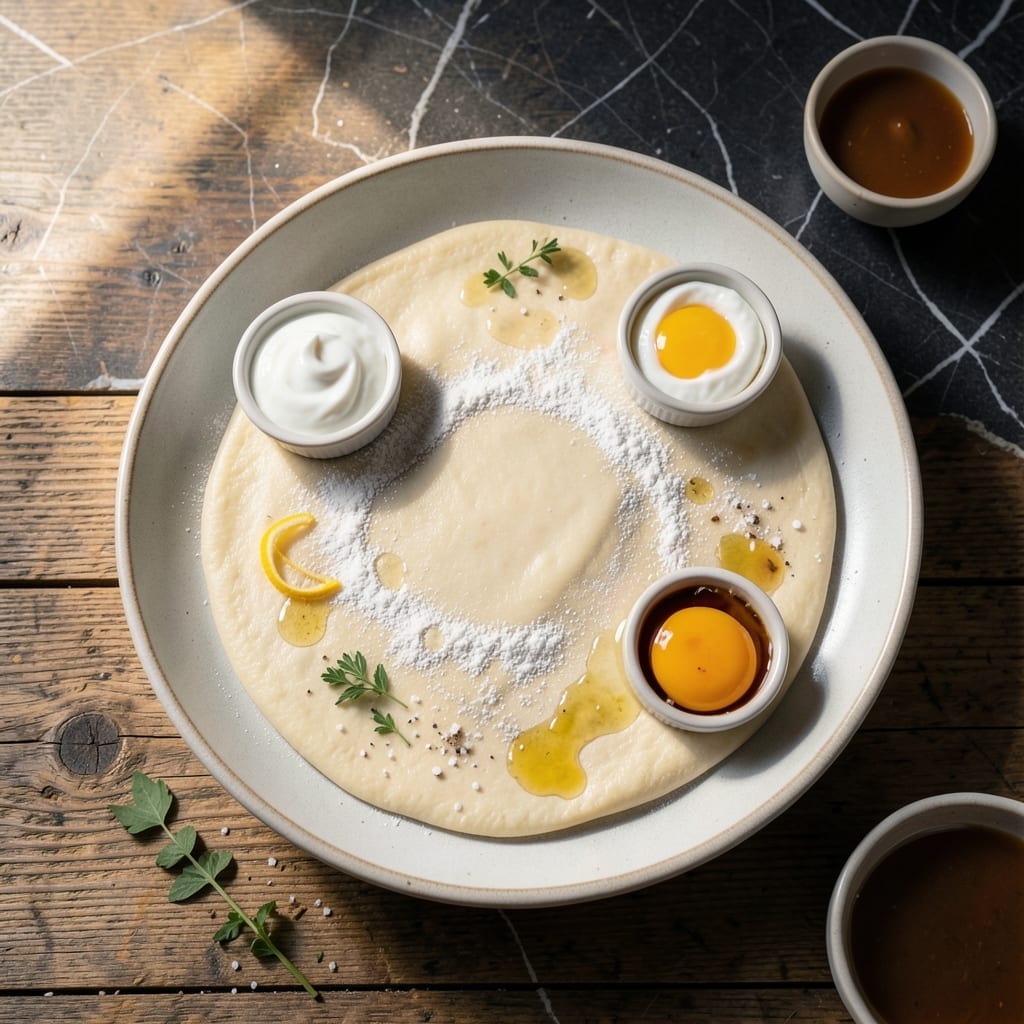
There’s an art to crafting the perfect pierogi dough that results in those coveted flaky pillows. I spent years refining this technique, and the addition of sour cream makes all the difference in achieving a tender, elastic texture.
The key lies in the right ratio of ingredients and proper kneading time. Sour cream adds richness while keeping the dough workable, not sticky. Resting the dough for at least 30 minutes allows the gluten to relax, making it easier to roll thin without springing back.
When cooked, these pierogi develop a delicate exterior that gives way to a soft, pillowy bite. The sour cream in the dough creates a subtle tang that complements both sweet and savory fillings beautifully.
This method consistently produces professional-quality results in home kitchens. Here’s how to make it.
Ingredients for Perogies Dough Recipe with Sour Cream
Simple ingredients yield professional-quality flaky pierogi dough with a tender, elastic bite.
| Ingredient | Amount | Notes |
|---|---|---|
| All-Purpose Flour 🌾 | 3 cups | Plus extra for dusting |
| Sour Cream 🥛 | ¾ cup | Full-fat for richness |
| Unsalted Butter 🧈 | 4 tbsp | Melted and cooled |
| Large Egg 🥚 | 1 whole | Room temperature preferred |
| Warm Water 💧 | ¼ cup | About 110°F |
| Salt 🧂 | 1 tsp | Fine sea salt preferred |
| Sugar 🍚 | 1 tsp | Granulated white sugar |
| White Vinegar 🧃 | 1 tsp | Helps tenderize dough |
The sour cream is non-negotiable for that signature tang and tenderness—use full-fat for best results. King Arthur Flour is my go-to for all-purpose, but any quality brand works. The butter should be unsalted to control sodium levels. Most grocery stores carry all these staples, so no specialty trips required.
No sour cream? Full-fat Greek yogurt works in a pinch (use the same amount). Out of all-purpose flour? Bread flour can substitute but may make the dough slightly tougher. The vinegar tenderizes—apple cider vinegar can replace white. For a richer dough, some cooks add an extra egg yolk (don’t exceed this or the dough becomes brittle).
The dough rests best at room temperature for 30-60 minutes. Wrap tightly in plastic and use within 2 days, or freeze for up to 1 month. Thaw overnight in the fridge before rolling.
Why You’ll Love This Recipe
- No-Fuss Mixing: I just dump the flour, sour cream, butter, egg, and warm water in a bowl—no fancy steps, no resting time, and it still comes together beautifully every time.
- Rich, Tangy Depth: The sour cream gives the dough this subtle tang that makes the perogies taste way more interesting than plain flour-and-water versions.
- Freezer’s Best Friend: I make a double batch on Sunday, freeze the dough in balls, and pull them out whenever I need a quick meal. Honestly, it’s my lazy-day lifesaver.
- Budget Stretcher: All-purpose flour and a tub of sour cream cost pennies, and this dough feeds my whole family with leftovers for lunch the next day.
Step-by-Step Instructions for Perogies Dough With Sour Cream
This professional method ensures tender, flaky dough that rolls out beautifully every time.
Step 1: Combine Wet Ingredients for Smooth Foundation
In a medium bowl, whisk together the 0.75 cup Sour Cream, 4 tbsp Unsalted Butter (melted and cooled), 1 whole Large Egg, 0.25 cup Warm Water, 1 tsp Sugar, 1 tsp Salt, and 1 tsp White Vinegar until fully blended. The vinegar works with the sour cream to create a subtle tang while tenderizing the dough.
Check that the mixture looks creamy and uniform without any streaks of egg or butter. If the butter was too hot, it might separate—let it cool to room temperature first.
Step 2: Gradually Incorporate Dry Ingredients
Pour the wet mixture into a large mixing bowl. Add all 3 cups All-Purpose Flour at once, then use a wooden spoon to stir until a shaggy dough forms. The flour should be mostly incorporated, but some dry spots are fine at this stage.
Don’t overmix—you just want to bring the ingredients together. The dough will be sticky, but that’s normal with the sour cream addition. Resist the urge to add more flour yet.
Step 3: Knead Until Smooth and Elastic
Turn the dough out onto a lightly floured surface. Dust your hands with flour to prevent sticking, then knead for 5-7 minutes until smooth and slightly tacky. The dough should spring back gently when pressed with a finger.
If it’s too sticky, add flour 1 tablespoon at a time, but be conservative—too much flour makes the dough tough. The sour cream keeps it soft, so you’ll notice it’s more pliable than traditional dough.
Step 4: Rest for Maximum Flakiness
Shape the dough into a ball and place it in a lightly greased bowl. Cover with a clean kitchen towel and let rest at room temperature for 30 minutes. This hydration period allows the gluten to relax, making the dough easier to roll out thinly.
After resting, the dough should feel smooth and slightly elastic. If it’s still sticky, knead in a bit more flour and rest for another 10 minutes. The goal is a supple dough that doesn’t tear when stretched.
Divide the dough into 4 equal portions for rolling, as this recipe makes enough for 4 servings of pierogi. Roll each portion on a floured surface to ⅛-inch thickness for the perfect flaky texture.
Pro Tips For Making Perogies Dough Recipe With Sour Cream
- Chill the Dough: After kneading, wrap the dough and refrigerate for at least 30 minutes—this relaxes the gluten and makes rolling much easier. I learned this the hard way after fighting with springy dough that kept shrinking.
- Use Full-Fat Sour Cream: Skip the low-fat version; full-fat sour cream adds the richness and tenderness the dough needs. My grandmother swore by this, and she was right: the texture just isn’t the same otherwise.
- Avoid Over-Flouring: Resist the urge to dump extra flour on the counter when rolling—too much makes the dough tough. Lightly dust just enough to prevent sticking, and re-flour sparingly as needed.
- Warm the Water: Use water that’s warm but not hot, around 110°F, to activate the dough without cooking the egg. Sounds weird, but it works: too hot and you’ll end up with a dense, rubbery mess.
Common Mistakes When Making Great perogies dough recipe with sour cream
Overworking the Dough
Kneading too long develops excess gluten, making your pierogi tough instead of tender. Stick to 5-7 minutes max—the dough should be smooth but still slightly tacky. I learned this the hard way after ruining three batches in a row.
Skipping the Rest
Rushing the 30-minute rest means the gluten won’t relax, causing the dough to shrink when rolled. Cover it tightly with a towel to prevent drying. This step is non-negotiable for flaky results.
Too Much Flour
Adding extra flour too soon makes the dough dry and brittle. Only add 1 tbsp at a time if it’s truly sticky. The sour cream keeps it soft, so trust the process. My grandmother’s advice: “Less is more.”
Hot Butter Mistake
Using melted butter that’s too hot will cook the egg, creating a scrambled texture. Always cool it to room temperature first. I use a thermometer to check—anything above 110°F is too warm. 🌡️
Uneven Rolling
Rolling the dough too thick or thin leads to uneven cooking. Aim for ⅛-inch thickness consistently. Use a ruler to check if you’re unsure—I keep one in my kitchen drawer for this exact purpose.
Ignoring Temperature
Cold ingredients can prevent proper blending. Ensure your egg and sour cream are at room temperature before starting. This simple step ensures a smooth, uniform dough every time.
Nutrition Facts
Frequently Asked Questions
Why does the dough need to rest?
Resting allows the gluten to relax, preventing shrinkage when rolling. 30 minutes is ideal for achieving that perfect, elastic texture without toughness.
Can I use Greek yogurt instead of sour cream?
Yes, full-fat Greek yogurt works as a substitute in the same amount. The texture will be slightly denser, but the tangy flavor remains similar.
What if my dough tears while rolling?
If it tears, patch it with extra dough and dust with flour. Roll to ⅛-inch thickness for even cooking and to prevent future tears.
How long can I store unused dough?
Wrap tightly and refrigerate for up to 2 days, or freeze for 1 month. Thaw overnight in the fridge before using.

- Potato Candy Recipe 1933: Vintage Peanut Butter Roll Delight - October 30, 2026
- Potato Chip Cookie Recipe With Pecans: Buttery Crunch Meets Nutty Richness - October 30, 2026
- Potato Patty Recipe No Egg: Crispy Edges Without the Binder - October 30, 2026