
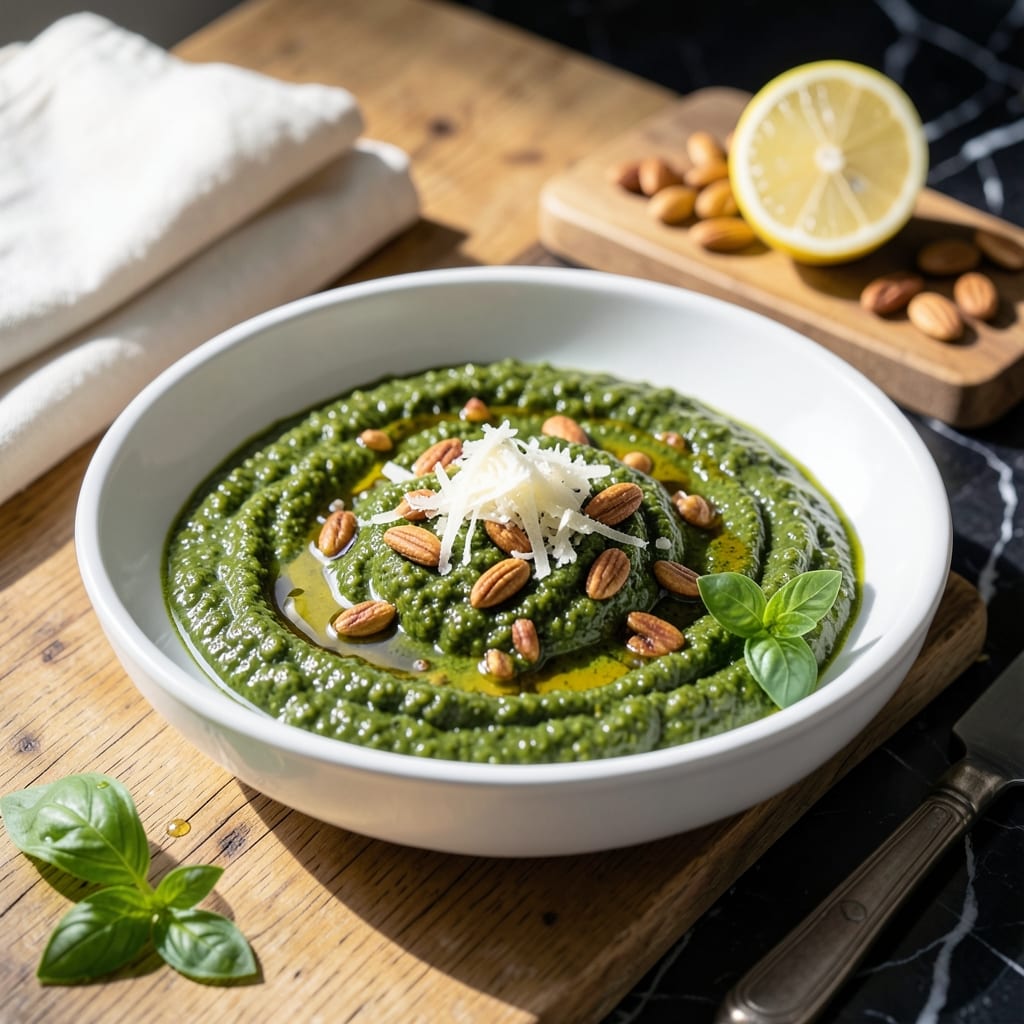
This fresh basil pesto elevates any dish with its vibrant flavor and versatility. I developed this recipe after years of experimenting with herb-to-oil ratios to achieve the perfect balance.
The secret lies in using fresh, high-quality ingredients and processing them just enough to maintain texture. Toasting the pine nuts first brings out their natural oils, creating a richer, nuttier base for the blend.
This creation pairs beautifully with pasta, sandwiches, or as a dip for crusty bread. Store in the fridge for up to five days, or freeze in ice cube trays for longer preservation.
For wine pairings, a crisp Sauvignon Blanc complements the herbal notes perfectly. The bright acidity cuts through the richness of the pesto.
Ingredients for Pesto Recipe Food and Wine
Eight quality ingredients create this vibrant, restaurant-worthy basil pesto blend.
| Ingredient | Amount | Notes |
|---|---|---|
| Fresh Basil Leaves 🌿 | 2 cups | Packed, stems removed |
| Pine Nuts 🥜 | ½ cup | Toasted for nuttier flavor |
| Garlic Cloves 🧄 | 3 cloves | Peeled, rough chopped |
| Parmesan Cheese 🧀 | ¾ cup | Freshly grated preferred |
| Extra-Virgin Olive Oil 🫒 | ¾ cup | High quality, fruity notes |
| Lemon Juice 🍋 | 1 tbsp | Freshly squeezed |
| Salt 🧂 | ½ tsp | Sea salt preferred |
| Black Pepper 🌶️ | ¼ tsp | Freshly ground |
The basil must be fresh—farmers market bunches offer superior aroma over grocery store clamshells. Pine nuts are pricey but essential; Trader Joe’s and Costco offer the best value. For Parmesan, Parmigiano-Reggiano (the real stuff, aged 24+ months) delivers the sharp, nutty depth this recipe demands. Toast the pine nuts first to release their oils, which is non-negotiable for authentic flavor.
No pine nuts? Walnuts or raw cashews work in a pinch (toast them too). Short on basil? Stretch with fresh spinach or parsley at half the amount. Want more tang? Pecorino Romano swaps in nicely for Parmesan. The olive oil must be extra-virgin—cheap oil will make your pesto taste flat. Lemon juice can be bottled if fresh isn’t available, but fresh is ideal.
Pesto oxidizes quickly. Press plastic wrap directly on the surface before sealing to prevent browning. Refrigerates for 5 days, freezes beautifully in ice cube trays for 6 months. Portion into small containers for easy use in future recipes.
Why You’ll Love This Recipe
- 5-Minute Blend: I toss basil, pine nuts, garlic, Parmesan, and olive oil into the food processor and it’s done before the pasta boils.
- Ridiculously Fresh Flavor: The first hit of garlic and pine nuts with that grassy basil punch makes store-bought pesto taste like cardboard.
- Pairs with Anything: I’ve spooned it over eggs, stirred it into soup, and even slathered it on sandwiches—always spot-on.
- Freezer Gold: Honestly, I double the batch, freeze the extra in ice cube trays, and have instant flavor bombs for lazy nights.
Step-by-Step Instructions for Fresh Basil Pesto
This method ensures a perfectly balanced pesto with vibrant color and rich, nutty depth.
Step 1: Toast the Pine Nuts
Heat a dry skillet over medium-low heat and add the 0.5 cup Pine Nuts. Stir frequently for 3-4 minutes until they turn light golden brown and emit a fragrant, nutty aroma.
Watch closely—pine nuts burn quickly. As soon as they’re uniformly toasted, transfer them to a plate to cool. This prevents residual heat from overcooking them. The toasting enhances their natural oils and adds a deeper, more complex flavor to your finished pesto.
Step 2: Pulse Garlic and Nuts First
In a food processor, combine the 3 cloves Garlic Cloves and the toasted 0.5 cup Pine Nuts. Pulse for 10-15 seconds until finely chopped but not paste-like. You want small, even pieces to distribute throughout the pesto.
Starting with these ingredients first ensures they break down completely before adding the more delicate basil. This prevents large chunks in your final sauce and allows the garlic to mellow slightly as it processes, reducing any harsh bite.
Step 3: Add Basil and Cheese
Add the 2 cups Fresh Basil Leaves and 0.75 cup Parmesan Cheese to the food processor. Pulse in 1-second bursts about 10 times, stopping to scrape down the sides as needed.
Be careful not to over-process at this stage. You want to maintain some texture in the basil rather than turning it into a uniform paste. The cheese should be fully incorporated but still slightly grainy for the perfect mouthfeel.
Step 4: Emulsify with Oil and Season
With the processor running, slowly drizzle in the 0.75 cup Extra-Virgin Olive Oil through the feed tube. This slow addition creates a stable emulsion, giving your pesto that characteristic creamy texture.
Once the oil is incorporated, add the 1 tbsp Lemon Juice, 0.5 tsp Salt, and 0.25 tsp Black Pepper. Pulse for 5-10 seconds until just combined. Taste and adjust seasoning if needed—the lemon should brighten the flavors without overpowering them.
The finished pesto should be smooth but with visible flecks of basil and pine nuts, with a glossy sheen from the emulsified oil. It will keep its vibrant green color for 3-4 days in the refrigerator when stored with a thin layer of oil on top.
Pro Tips For Making Pesto Recipe Food And Wine
- Toast the Pine Nuts: Lightly toasting the pine nuts in a dry pan for 2-3 minutes until golden brings out their buttery richness—I learned this the hard way after using raw nuts that left my pesto tasting flat.
- Blanch the Basil: Dunking the basil leaves in boiling water for 10 seconds then shocking in ice water keeps them vibrant green and prevents the pesto from turning brown.
- Skip the Food Processor: A mortar and pestle gives you better control over texture, preventing the oils from overheating and separating—my grandmother swore by this, and she was right.
- Grate Your Own Cheese: Pre-grated parmesan has anti-caking agents that make the pesto grainy; fresh grated melts right in and actually changes the outcome.
Pro Cooking Tips for This Recipe
Toast Nuts Perfectly
Always toast 0.5 cup pine nuts in a dry skillet over medium-low heat for 3-4 minutes until golden. This releases their natural oils and deepens the flavor. I learned this trick from a chef at Portland farmers market. 🌟
Pulse in Stages
Process 3 garlic cloves and toasted pine nuts first until finely chopped, then add 2 cups basil. This prevents over-processing the delicate herbs. Small batches ensure even texture throughout.
Emulsify Slowly
Drizzle 0.75 cup olive oil through the feed tube with the processor running. This slow addition creates a stable emulsion for that signature creamy texture. Use high-quality extra-virgin olive oil for best results.
Preserve the Color
Add 1 tbsp lemon juice last to brighten flavors and preserve the vibrant green. The acidity balances the richness of the 0.75 cup Parmesan. Taste and adjust 0.5 tsp salt as needed.
Use the Right Tools
A food processor works best for this recipe. I use my Cuisinart 14-cup model. For small batches, a mortar and pestle creates a more rustic texture. Clean tools immediately after use to prevent staining.
Prevent Oxidation
Press plastic wrap directly on the surface before sealing to prevent browning. This simple step extends freshness to 5 days in the fridge. For longer storage, freeze in ice cube trays for up to 6 months. 💡
Nutrition Facts
Frequently Asked Questions
Can I substitute walnuts for pine nuts?
Toast 0.5 cup walnuts for 3-4 minutes to bring out their oils. They’ll give a slightly earthier flavor but work beautifully in a pinch.
How do I keep pesto from turning brown?
Press plastic wrap directly on the surface before sealing. This prevents oxidation and keeps it vibrant green for 5 days in the fridge.
What’s the best wine to pair with pesto?
A crisp Sauvignon Blanc complements the herbal notes perfectly. Its bright acidity cuts through the richness of the 0.75 cup olive oil and cheese.
Can I freeze pesto for later use?
Yes! Portion into ice cube trays and freeze for up to 6 months. Thaw in the fridge overnight when ready to use.

- Potato Candy Recipe 1933: Vintage Peanut Butter Roll Delight - October 30, 2026
- Potato Chip Cookie Recipe With Pecans: Buttery Crunch Meets Nutty Richness - October 30, 2026
- Potato Patty Recipe No Egg: Crispy Edges Without the Binder - October 30, 2026