
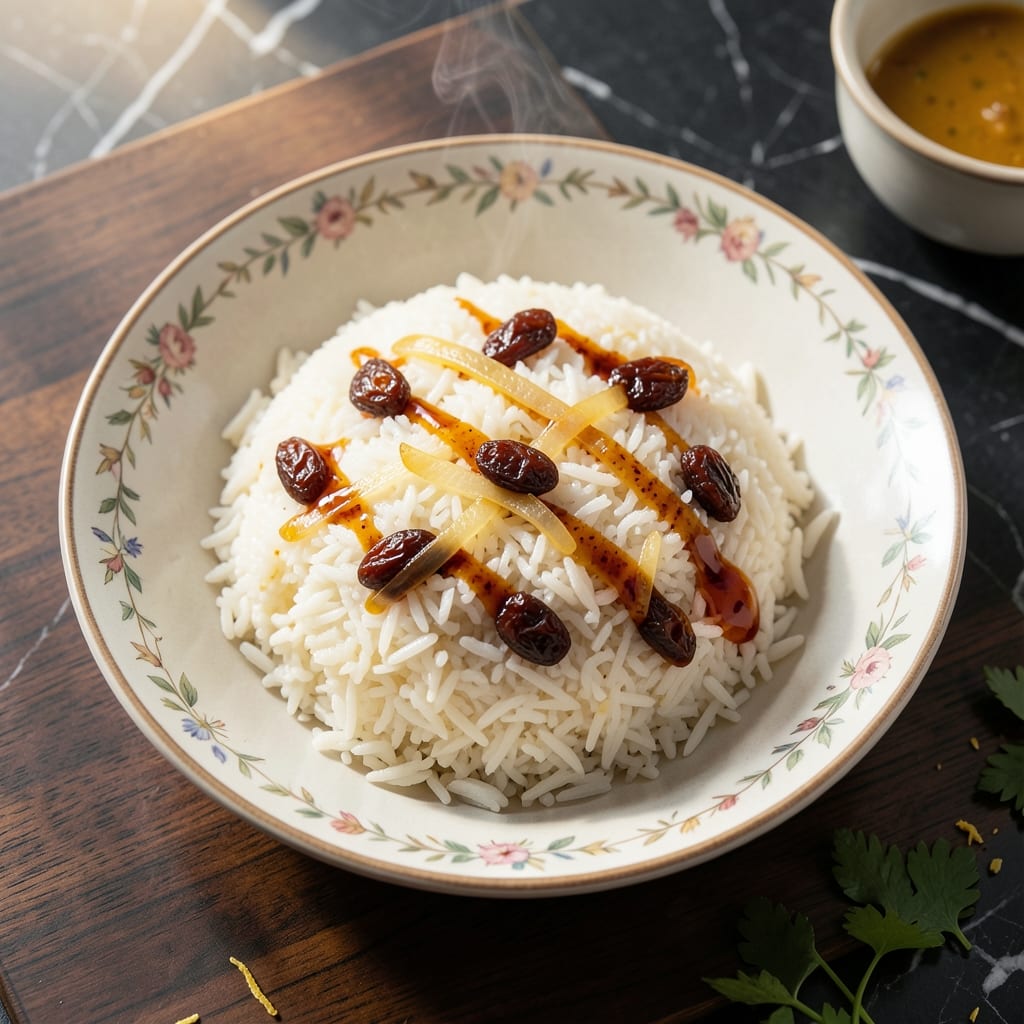
This Persian rice dish transforms simple ingredients into a fragrant, golden saffron-infused pilaf that’s as beautiful as it is delicious. The secret lies in the technique: parboiling the basmati rice before steaming it to fluffy perfection.
Plump raisins add a natural sweetness that balances the earthy saffron and aromatic spices. A crispy tahdig layer at the bottom provides a satisfying textural contrast that’s a hallmark of authentic Persian cuisine.
With just a few traditional steps, you’ll create a dish that’s fit for a celebration but simple enough for a weeknight. The result is rice that’s light, separate, and infused with warm, inviting flavors.
Serve this pilaf alongside grilled meats or as a vegetarian main. The saffron’s golden hue makes every plate feel special.
Ingredients for Persian Rice Recipe Raisins
Basmati rice, saffron, and plump raisins create this fragrant Persian pilaf with crispy tahdig perfection.
| Ingredient | Amount | Notes |
|---|---|---|
| Basmati Rice 🍚 | 2 cups | Rinsed until water runs clear |
| Saffron Threads 🌼 | ¼ tsp | Crushed between fingers |
| Hot Water 💧 | ¼ cup | For steeping saffron |
| Unsalted Butter 🧈 | ½ cup | Melted, divided |
| Raisins 🍇 | ½ cup | Golden or dark preferred |
| Yellow Onion 🧅 | 1 whole | Finely diced |
| Ground Cinnamon 🌿 | ½ tsp | Freshly ground preferred |
| Ground Cardamom 🌿 | ½ tsp | Freshly ground preferred |
| Ground Cumin 🌿 | ¼ tsp | Toasted lightly for aroma |
| Salt 🧂 | 1 ½ tsp | Divided for seasoning |
| Plain Yogurt 🥛 | ½ cup | Whole milk for richness |
| Vegetable Oil 🫒 | 2 tbsp | For crispy tahdig layer |
| Flat-Leaf Parsley 🌿 | ¼ cup | Chopped, for garnish |
The saffron is non-negotiable here. Look for deep red threads—pale ones lack potency. Whole Foods or Middle Eastern markets (like Sasan or Patel Brothers) often carry superior quality. Basmati rice should be aged—Tilda or Daawat brands are reliable. The raisins should be plump and moist; if they’re dry, soak them in warm water for 10 minutes before using (worth the extra minute).
No saffron? A pinch of turmeric for color plus a drop of rosewater won’t replicate the flavor but saves the dish visually. Swap raisins for dried apricots or cranberries—chop them to similar size. For the tahdig, potatoes or lavash bread work if you’re skipping the rice crust. The yogurt can be Greek for extra tang, but keep it full-fat for creaminess.
Store saffron in an airtight container away from light—lasts 2-3 years. Basmati rice keeps 1-2 years in a cool, dry place. The pilaf reheats well: sprinkle a few drops of water and cover with foil. Best within 3 days but freezes for 1 month (texture changes slightly).
Why You’ll Love This Recipe
- One Pot Wonder: I love that this comes together in a single pot—just basmati, saffron, butter, and raisins simmering away.
- Golden Surprise: The saffron and raisins create this sweet, fragrant bite that’s honestly addictive.
- Weeknight Hero: Between us, this works for busy Tuesdays or fancy dinner parties with zero extra effort.
- Stretches Easily: Leftovers taste even better the next day, and it’s cheap to make for a crowd.
Step-by-Step Instructions for Persian Rice With Raisins
Master the technique of saffron-infused pilaf with perfectly plump dried fruit and golden tahdig.
Step 1: Prepare the Saffron Infusion and Rice
Begin by crushing the 0.25 tsp Saffron Threads between your fingers directly into a small bowl. Pour over the 0.25 cup Hot Water and let it steep for 15 minutes to develop its deep golden hue. Meanwhile, rinse the 2 cups Basmati Rice under cold water until the water runs completely clear—this removes excess starch for fluffier grains.
Soak the rice in cold water for 30 minutes to ensure even cooking. During this time, the saffron infusion will intensify in color and aroma, creating the signature golden liquid that gives this dish its distinctive character. Drain the rice completely before cooking.
Step 2: Bloom Spices and Caramelize Onions
In a large non-stick pot, melt ¼ cup of the 0.5 cup Unsalted Butter over medium heat. Add the finely diced 1 whole Yellow Onion and cook for 8-10 minutes, stirring occasionally, until deeply caramelized to a rich amber color. This builds the flavor foundation for the pilaf.
Add the 0.5 cup Raisins, 0.5 tsp Ground Cinnamon, 0.5 tsp Ground Cardamom, and 0.25 tsp Ground Cumin. Cook for 2-3 minutes until the raisins plump slightly and absorb the warm spices. The aroma should be fragrant and inviting at this stage.
Step 3: Parboil the Rice With Spiced Liquid
Bring 4 cups of water to a boil in a separate pot, then add the soaked and drained rice along with 1 tsp of the 1.5 tsp Salt. Parboil for 5-6 minutes until the rice is just beginning to soften but still has a firm bite. Drain immediately and set aside.
In the pot with the caramelized onions and raisins, add the remaining ¼ cup Unsalted Butter and 2 tbsp Vegetable Oil. Stir in the parboiled rice, the saffron infusion, and the remaining ½ tsp Salt. Gently fold everything together to distribute the golden color and flavors evenly.
Step 4: Create the Tahdig and Steam
Return the pot to medium-low heat. Use a spatula to shape the rice into a pyramid, then use the handle of the spatula to poke 5-6 holes through to the bottom of the pot. This allows steam to escape and prevents sogginess.
Pour the 0.5 cup Plain Yogurt over the rice, focusing on the edges to help create the crispy tahdig layer. Cover with a tight-fitting lid and cook for 25-30 minutes on low heat. You’ll hear a gentle sizzle as the bottom develops its coveted golden crust.
Step 5: Finish and Serve
When the rice is done, the bottom should be a deep golden brown with a crisp texture. To serve, invert the pot onto a large platter, revealing the tahdig on top. If it doesn’t release immediately, let it sit covered for 2-3 minutes to loosen.
Garnish with the 0.25 cup Flat-Leaf Parsley and serve family-style. The contrast of the crispy tahdig, fluffy saffron rice, and sweet plump raisins in every bite defines this classic Persian preparation. The saffron’s aroma should be prominent but balanced by the warm spices.
Pro Tips For Making Persian Rice Recipe Raisins
- Soak the Basmati: Cover the rice with warm water for at least 30 minutes—this keeps the grains long and fluffy, and I learned this the hard way after ending up with stubby, gummy rice more than once.
- Bloom the Saffron: Crush the threads and steep them in 2-3 tablespoons of hot water for 10 minutes before using. Sounds weird, but it works: this draws out the color and flavor way better than tossing the threads in raw.
- Toast the Raisins: Toss them in a dry pan over medium heat for 1-2 minutes until they plump slightly. My grandmother swore by this, and she was right: it deepens their sweetness and prevents a soggy texture in the finished dish.
- Low and Slow: After the initial boil, turn the heat to its lowest setting and let the rice steam for 25-30 minutes—resist the urge to peek, or you’ll release the steam and end up with unevenly cooked rice.
Storing and Reheating This Dish
Refrigerator Storage
Let your pilaf cool for no more than 2 hours before transferring to airtight containers. It will keep beautifully in the fridge at 40°F or below for up to 4 days. The flavors actually deepen as the saffron and spices continue to meld. ❄️
Freezer Storage
This dish freezes well for up to 1 month with minimal texture changes. I recommend using quart-size freezer bags, squeezing out excess air before sealing. The tahdig may soften slightly, but the rice and raisins retain their character.
Stovetop Reheating
My preferred method uses a heavy pot with 2 tbsp water or broth added to the bottom. Heat over medium-low for 8-10 minutes, stirring gently to redistribute moisture. Cover for the last 2 minutes to steam the rice back to fluffiness. 🔥
Microwave Method
For quick meals, microwave individual portions covered with a damp paper towel. Use 50% power for 2 minutes, stir, then continue in 30-second bursts until hot. Add a splash of water if needed.
Reviving the Tahdig
To restore crispness, heat the inverted pilaf in a non-stick skillet over medium heat for 3-4 minutes with the lid off. This brings back that coveted golden crust we worked so hard to create.
Nutrition Facts
Frequently Asked Questions
Can I use a different type of rice?
Basmati is ideal for its long grains and fragrance, but jasmine rice works in a pinch. Avoid short-grain varieties as they become sticky and won’t achieve the desired fluffy texture.
Why soak the rice first?
Soaking for 30 minutes ensures even cooking and prevents the grains from breaking. It also removes excess starch, which helps create that perfect, separate texture.
How do I prevent the tahdig from burning?
Use medium-low heat and a heavy-bottomed pot. The 2 tbsp Vegetable Oil and 0.5 cup Plain Yogurt create a barrier to promote even browning without scorching.
Can I make this ahead of time?
Yes! Prepare the rice and saffron infusion a day in advance. Store separately in the fridge, then combine and cook the tahdig just before serving for best results.

- Pina Colada Dip Recipe Red Lobster: Tropical Creaminess With Toasted Coconut - October 12, 2026
- Pickled Sweet Cherry Peppers Recipe Canning: Tangy Heat for Pantry Staples - October 12, 2026
- Peppercorn Sauce Recipe Vegan: Rich Umami Depth Without Cream - October 12, 2026