
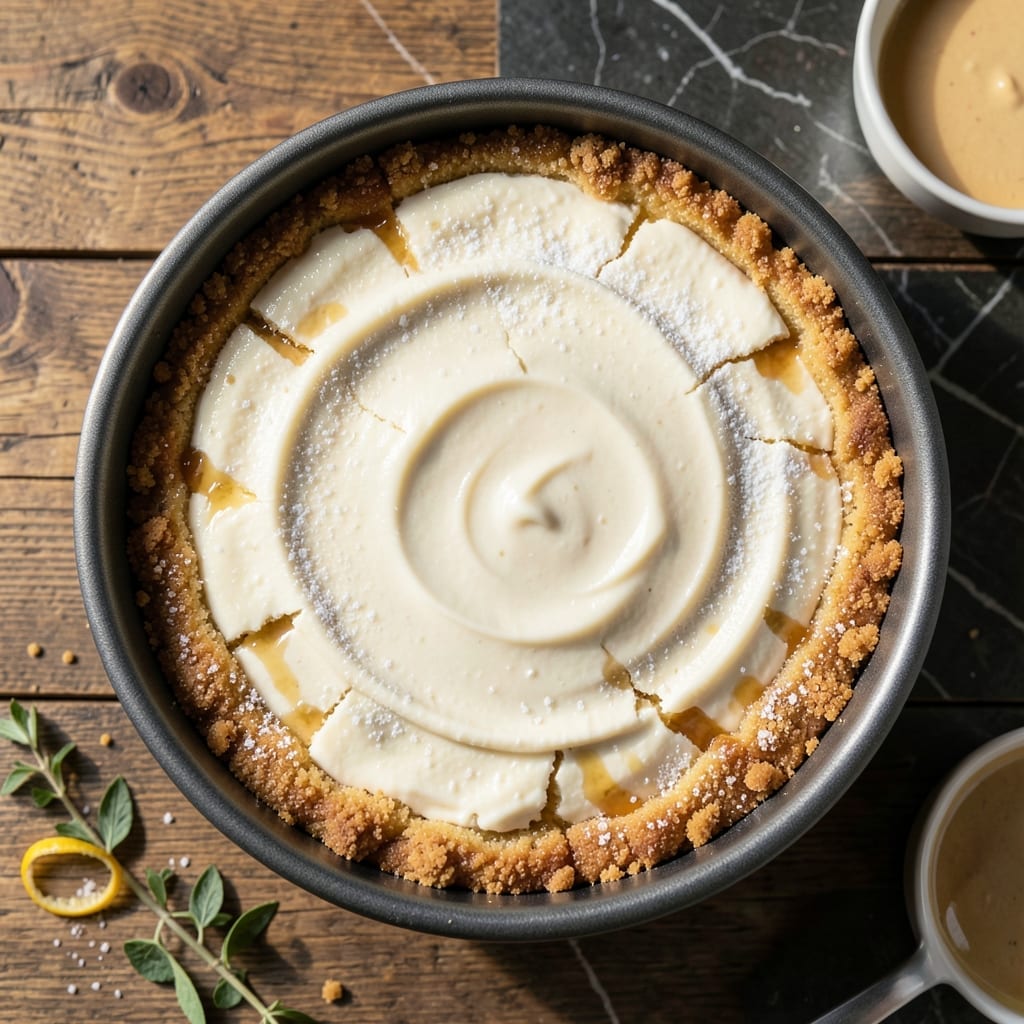
There’s nothing quite like the dense, creamy texture of a classic New York-style cheesecake made with Philadelphia cream cheese. This recipe delivers the authentic bakery experience at home, with a smooth finish and rich flavor that defines traditional cheesecake.
The secret lies in the full-fat cream cheese and a water bath that prevents cracking while ensuring even baking. A buttery graham cracker crust provides the perfect foundation, balancing the rich filling with subtle crunch and sweetness.
You’ll achieve that signature dense yet velvety consistency that makes every slice a decadent treat. The baking process is precise but straightforward, yielding consistent results every time.
Perfect for special occasions or when you crave a timeless dessert that never goes out of style.
Ingredients for Philadelphia Cheesecake Recipe Bake
A short list of rich, creamy staples brings bakery-style decadence to your kitchen counter.
| Ingredient | Amount | Notes |
|---|---|---|
| Graham Cracker Crumbs 🍪 | 2 cups | Fine crumbs, from about 18 crackers |
| Granulated Sugar 🍚 | ¼ cup | For crust sweetness |
| Unsalted Butter 🧈 | ½ cup | Melted for crust binding |
| Philadelphia Cream Cheese 🧀 | 4 packages | 8 oz each, full-fat, room temperature |
| Granulated Sugar 🍚 | 1 ¼ cups | For filling sweetness |
| Large Eggs 🥚 | 5 whole | Room temperature for smooth texture |
| Heavy Cream 🥛 | ¾ cup | Full-fat for richness |
| Pure Vanilla Extract 🌿 | 2 tsp | For depth of flavor |
| All-Purpose Flour 🌾 | 2 tbsp | For structure in filling |
| Salt 🧂 | ½ tsp | Fine sea salt preferred |
| Lemon Zest 🍋 | 1 tsp | Optional, for brightness |
| Sour Cream 🥣 | ½ cup | Full-fat, room temperature |
The cream cheese is non-negotiable—Philadelphia brand full-fat is the gold standard here. It has the right moisture content and tang. Most grocery stores carry it in the dairy aisle near the other cream cheeses. Don’t grab the low-fat version; it won’t give you that dense, velvety texture. The graham cracker crumbs should be fine, not coarse—pulse them in a food processor if you’re crushing whole crackers yourself.
No graham crackers? Digestive biscuits or vanilla wafers work in a pinch (use the same volume). Out of sour cream? Full-fat Greek yogurt at a 1:1 ratio is a solid substitute. The lemon zest is optional but adds a nice brightness—skip it if you’re not a citrus fan. Make sure all dairy is at room temperature to prevent lumps in the batter.
The crust can be made a day ahead and stored covered at room temperature. Once baked, the cheesecake keeps in the fridge for up to 5 days or freezes beautifully for 2 months. Slice it cold for clean pieces, then let individual slices come to room temperature for serving.
Why You’ll Love This Recipe
- No-Fuss Mixing: I just beat the Philadelphia cream cheese with sugar, pour it over the graham cracker crust, and bake—no finicky steps.
- Velvety Richness: That classic Philadelphia cream cheese gives it a smooth, decadent texture that’s impossible to resist.
- Crowd Pleaser: I bring this to potlucks and it’s always the first thing gone, even with picky eaters.
- Stays Fresh: Honestly, it tastes even better the next day, so I make it ahead without stress.
Step-by-Step Instructions for Philadelphia Cheesecake Bake
This classic method delivers that signature dense, creamy New York-style texture you crave.
Step 1: Prepare and Press the Graham Cracker Crust
Preheat your oven to 350°F. In a medium bowl, combine the 2 cups Graham Cracker Crumbs, 0.25 cup Granulated Sugar, and 0.5 cup Unsalted Butter melted. The mixture should resemble wet sand and hold together when pressed.
Press the crust mixture firmly into the bottom of a 9-inch springform pan. I use the bottom of a measuring cup to really pack it down evenly. Bake for 10 minutes until the edges are just beginning to turn light golden brown. Let it cool while you prepare the filling.
Step 2: Beat the Cream Cheese and Sugar Until Smooth
In a large bowl using an electric mixer, beat the 4 packages Philadelphia Cream Cheese on medium speed until completely smooth. This takes about 2-3 minutes—don’t rush it. Lumps now mean lumps in your final cheesecake.
Gradually add the 1.25 cups Granulated Sugar and continue beating for another 2 minutes until light and fluffy. Scrape down the sides of the bowl as needed. The mixture should be pale and ribbon-like when the beaters are lifted.
Step 3: Incorporate Wet Ingredients and Flavorings
Add the 5 whole Large Eggs, one at a time, mixing just until each is incorporated. Then add the 0.75 cup Heavy Cream, 2 tsp Pure Vanilla Extract, 2 tbsp All-Purpose Flour, 0.5 tsp Salt, and 1 tsp Lemon Zest. Mix on low speed until just combined.
Here’s the thing—overmixing at this stage incorporates too much air, which can cause cracks during baking. The batter should be thick but pourable, with a satiny sheen. Finally, fold in the 0.5 cup Sour Cream by hand to maintain that dense texture.
Step 4: Bake in a Water Bath for Even Cooking
Pour the filling over the cooled crust in the springform pan. Smooth the top with a spatula. Wrap the bottom of the pan in heavy-duty aluminum foil and place it in a large roasting pan. Add hot water to the roasting pan until it comes about halfway up the sides of the springform pan.
Bake at 325°F for 55-65 minutes. You’re looking for the edges to be set but the center to still have a slight wobble when gently shaken. Turn off the oven, crack the door 1 inch, and let the cheesecake cool inside for 1 hour to prevent cracking.
Step 5: Chill Completely Before Serving
Remove the cheesecake from the oven and water bath, then run a thin knife around the edge to loosen it from the pan. Cool at room temperature for 1 hour, then refrigerate uncovered for at least 4 hours (overnight is ideal).
This chilling time is non-negotiable for that classic dense texture. The cheesecake should pull away slightly from the sides of the pan when properly chilled. Slice with a hot, wet knife for clean portions, wiping the blade between cuts.
Pro Tips For Making Philadelphia Cheesecake Recipe Bake
- Room Temp Cream Cheese: Pull the Philadelphia cream cheese out 1-2 hours before baking—cold blocks leave lumps no amount of mixing can fix. I learned this the hard way after my first three cheesecakes looked like cottage cheese.
- Press Crust Firmly: Pack those graham cracker crumbs into the pan with the bottom of a glass, not just a spoon. A loose crust falls apart when you slice it, and nobody wants a crumbly base.
- Skip Overmixing: Once the batter is smooth, stop mixing. Overworking it incorporates too much air, which leads to cracks on the surface—even if you’re tempted to keep going.
- Water Bath Works: Wrap your springform pan in foil and bake it in a water bath. It sounds like extra effort, but it prevents the edges from baking faster than the center, giving you that perfect creamy texture.
Pro Cooking Tips for Great philadelphia cheesecake recipe bake
Room Temperature Matters
All your dairy must be at room temperature—this means 2 hours on the counter. Cold cream cheese creates lumps that never smooth out. I learned this the hard way with my first cheesecake disaster. 💡
Water Bath Essentials
Use a roasting pan larger than your 9-inch springform. Wrap the bottom tightly with heavy-duty foil to prevent water seepage. The water should reach halfway up the pan sides for even heat distribution.
Mixing Technique
Beat the cream cheese first until completely smooth before adding sugar. Use a paddle attachment if possible. Scrape the bowl often—this prevents pockets of unmixed ingredients that cause uneven texture.
Baking Precision
Bake at 325°F until the edges are set but the center jiggles slightly. Overbaking is the #1 cause of cracks. Turn off the oven and let it cool inside with the door cracked 1 inch for 1 hour.
Chilling Patience
Refrigerate uncovered for at least 4 hours—overnight is ideal. This slow cooling prevents sinking. I know it’s hard to wait, but the texture depends on this step completely. 🔥
Clean Slicing
Use a thin, sharp knife dipped in hot water and wiped clean between cuts. This gives you those perfect bakery-style slices. Slice cold, then let individual pieces warm slightly for serving.
Nutrition Facts
Frequently Asked Questions
Why do I need a water bath for baking?
A water bath provides even, gentle heat that prevents cracks. The steam keeps the oven environment moist, ensuring your cheesecake bakes uniformly without drying out.
Can I use a different pan if I don’t have a springform?
Not recommended. A 9-inch springform pan is essential for easy removal and maintaining the perfect shape. A regular cake pan makes it nearly impossible to remove intact.
How do I know when it’s done baking?
The edges should be set, but the center should still have a slight wobble. Overbaking leads to cracks, so pull it out at the first sign of firming.
What if my cheesecake cracks on top?
Don’t panic! Cover it with fresh fruit, whipped cream, or a dusting of powdered sugar. Cracks are cosmetic and don’t affect the delicious flavor.

- Pina Colada Dip Recipe Red Lobster: Tropical Creaminess With Toasted Coconut - October 12, 2026
- Pickled Sweet Cherry Peppers Recipe Canning: Tangy Heat for Pantry Staples - October 12, 2026
- Peppercorn Sauce Recipe Vegan: Rich Umami Depth Without Cream - October 12, 2026