
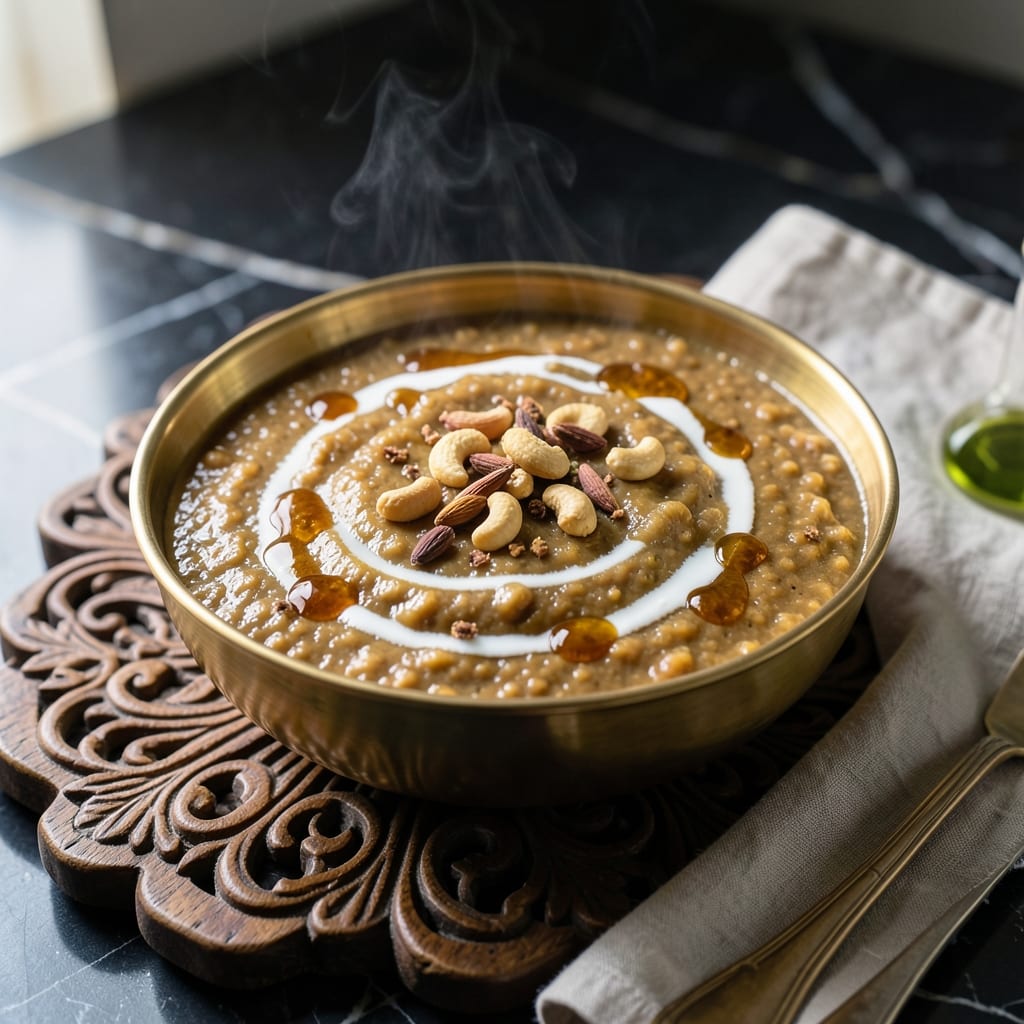
This traditional Telugu dessert transforms humble moong dal into a celebration of sweetness and texture. The recipe captures authentic flavors passed down through generations, using simple ingredients to create something extraordinary.
What makes this version special is its balance of smoothness and subtle sweetness. The dal cooks down to a velvety consistency while maintaining its natural richness. Traditional preparation methods ensure the dish stays true to its cultural roots.
You’ll achieve a dessert that’s creamy yet light, with just the right amount of sweetness to satisfy without overwhelming. The final result honors the classic technique while being accessible for home cooks.
Perfect for festivals or as a comforting treat, this creation brings the warmth of Telugu tradition to your kitchen.
Ingredients for Pesara Pappu Sweet Recipe in Telugu
Simple ingredients transform into a velvety, traditionally sweet Telugu dessert with rich cultural roots.
| Ingredient | Amount | Notes |
|---|---|---|
| Split Yellow Moong Dal 🌾 | 1 cup | Rinsed and drained thoroughly |
| Water 💧 | 3 cups | For cooking dal to softness |
| Jaggery 🍚 | ¾ cup | Grated or powdered for even dissolving |
| Coconut Milk 🥥 | ½ cup | Full-fat for creaminess |
| Cardamom Pods 🌿 | 4 whole | Lightly crushed to release aroma |
| Cashew Nuts 🌰 | ¼ cup | Chopped, for garnish and texture |
| Raisins 🍇 | ¼ cup | Golden or black variety |
| Ghee Substitute 🫒 | 2 tbsp | Vegan butter or coconut oil |
| Saffron Strands 🌼 | 0.125 tsp | Optional, soaked in warm water |
| Green Cardamom Powder 🌿 | ½ tsp | For enhanced cardamom flavor |
| Salt 🧂 | ¼ tsp | To balance sweetness |
| Rose Water 🌹 | 1 tsp | Optional, for floral aroma |
The moong dal is the foundation—look for split yellow variety at any Indian grocery store or the international aisle. Patel Brothers or local South Asian markets will have the best quality. Jaggery is non-negotiable for authenticity (substitute with coconut sugar if unavailable). Freshness matters with cardamom—whole pods last longer than pre-ground powder.
No jaggery? Dark brown sugar with a splash of molasses mimics the depth. Coconut milk can be light, but full-fat delivers the creamy texture this dish deserves. Skip the saffron if it’s not in budget—cardamom carries the flavor. For the ghee substitute, coconut oil adds a complementary note, while vegan butter stays neutral.
Store unused dal in an airtight container for up to 6 months. Jaggery keeps indefinitely in a cool, dry place. The cooked dessert stays fresh in the fridge for 4-5 days—reheat gently to restore the silky consistency.
Why You’ll Love This Recipe
- One Pot Wonder: I just dump the moong dal, jaggery, and water in a pot—no pre-soaking, no fuss.
- Cardamom Magic: The coconut milk and crushed cardamom pods give it that warm, creamy sweetness that lingers.
- Festival Ready: I make this for Sankranti and Diwali, but honestly it’s my afternoon craving fix too.
- Budget Keeper: A cup of dal stretches into a dessert that feeds four, and jaggery is cheaper than sugar.
Step-by-Step Instructions for Traditional Moong Dal Dessert
Master this authentic technique for a perfectly balanced sweet dish with rich flavors and ideal texture.
Step 1: Prepare the Moong Dal Base
Rinse the 1 cup Split Yellow Moong Dal thoroughly under cold water until the water runs clear. This removes surface starch and prevents the lentils from becoming gummy during cooking. Drain completely in a fine-mesh strainer.
In a heavy-bottomed pot, combine the drained dal with the 3 cups Water and 0.25 tsp Salt. Bring to a rolling boil over medium-high heat, then reduce to medium-low and cook uncovered for 20-25 minutes, stirring occasionally. The dal should be completely soft and mushy, with no resistance when pressed between fingers.
Step 2: Infuse Flavors and Sweeten
While the dal cooks, lightly crush the 4 whole Cardamom Pods with the flat side of a knife to release their aromatic oils. Soak the 0.125 tsp Saffron Strands in 2 tablespoons of warm water if using.
Once the dal is tender, stir in the grated 0.75 cup Jaggery and continue cooking for 5-7 minutes until fully dissolved. Add the crushed cardamom pods, 0.5 tsp Green Cardamom Powder, and the saffron with its soaking liquid. The mixture should thicken slightly and develop a glossy sheen.
Step 3: Enrich with Coconut Milk
Reduce heat to low and gradually pour in the 0.5 cup Coconut Milk, stirring constantly to prevent curdling. The coconut milk should blend seamlessly into the dal mixture, creating a creamy, velvety texture.
Cook for an additional 3-5 minutes, stirring frequently, until the mixture reaches your desired consistency—thick enough to coat the back of a spoon but still pourable. Remove from heat and stir in the 1 tsp Rose Water if using.
Step 4: Temper and Garnish
Heat the 2 tbsp Ghee Substitute in a small pan over medium heat. Add the 0.25 cup Cashew Nuts and fry for 1-2 minutes until light golden brown. Remove with a slotted spoon and set aside.
In the same pan, quickly fry the 0.25 cup Raisins for 30-45 seconds until they plump slightly. Fold both the cashews and raisins into the warm dal mixture. Let it rest for 5 minutes before serving to allow the flavors to meld completely.
Pro Tips For Making Pesara Pappu Sweet Recipe In Telugu
- Soak the Dal: I learned this the hard way—soak the split yellow moong dal for at least 30 minutes before cooking to cut the cooking time in half and get that perfect soft texture.
- Dissolve Jaggery First: After burning a batch, I now always dissolve jaggery in 2-3 tablespoons of warm water before adding it to the dal to prevent clumping and ensure even sweetness.
- Simmer the Coconut Milk: Skip boiling the coconut milk on high heat—add it last and simmer on low for 3-4 minutes to prevent curdling and keep the richness intact.
- Crush Cardamom Pods: My grandmother swore by this, and she was right: lightly crush 3-4 cardamom pods before adding them to release more flavor into the pesara pappu.
Regional Styles of This Recipe
Andhra Style
In Andhra, this dish often includes roasted chana dal for extra texture. Many households add 1 tsp roasted cumin seeds to the tempering for a warm, earthy note. The jaggery amount might be increased to 1 cup for a sweeter finish, especially during festivals like Sankranti. 🌟
Rayalaseema Variation
Rayalaseema’s version leans toward a richer profile with 1 tbsp poppy seeds ground into a paste and mixed in. The tempering often includes 2 dried red chilies for a subtle heat, balancing the sweetness beautifully. I love how this adds complexity to the flavor.
Coastal Telugu
The coastal regions incorporate fresh coconut instead of coconut milk, using ½ cup grated coconut cooked directly with the dal. This creates a chunkier texture and a more pronounced coconut flavor. The dish is often served chilled during summer celebrations.
Hyderabadi Influence
Hyderabadi cooks often add 1 tsp kewra water along with rose water for a layered floral aroma. The garnish might include silver leaf (varak) for special occasions, making it visually stunning. This version feels particularly royal.
Rural Traditional
In rural areas, the dish is sometimes prepared with unrefined cane sugar instead of jaggery. The tempering includes 1 sprig curry leaves for a citrusy note. I remember my grandmother making this version—it tasted like pure nostalgia. 💛
Nutrition Facts
Frequently Asked Questions
Can I use sugar instead of jaggery?
Yes, but jaggery gives the authentic flavor. Use 1 cup brown sugar with 1 tbsp molasses to mimic jaggery’s depth. Adjust to taste as you cook.
How do I prevent lumps in the dal?
Rinse the dal thoroughly and cook it on medium-low heat. Stir frequently during the first 15 minutes to break up any clumps. A heavy-bottomed pot helps too.
Why did my dessert turn out too thin?
It likely needs more cooking time. Simmer uncovered for an extra 5-10 minutes after adding coconut milk. The mixture should coat the back of a spoon when done.
Can I make this without coconut milk?
Substitute with ½ cup heavy cream or 1 cup whole milk reduced by half. For a vegan option, use cashew cream for richness.

- Pina Colada Dip Recipe Red Lobster: Tropical Creaminess With Toasted Coconut - October 12, 2026
- Pickled Sweet Cherry Peppers Recipe Canning: Tangy Heat for Pantry Staples - October 12, 2026
- Peppercorn Sauce Recipe Vegan: Rich Umami Depth Without Cream - October 12, 2026