
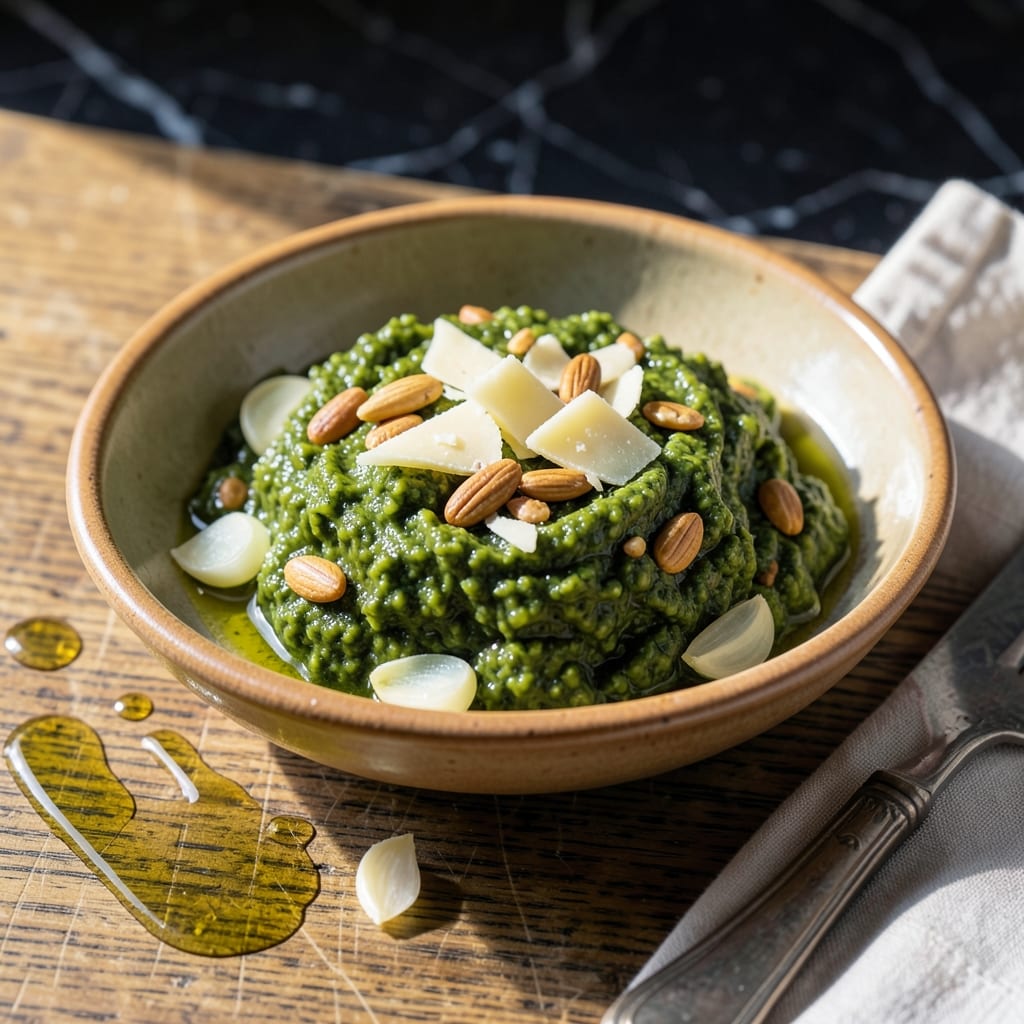
This classic pesto recipe delivers bright, fresh basil flavor with minimal effort. The blend of fresh herbs, nuts, and cheese creates a versatile sauce that elevates pasta, sandwiches, or grilled meats.
With just 5 ingredients and 5 minutes of blending, you’ll have a restaurant-quality condiment ready to use. The key is using high-quality basil and fresh garlic for the best results.
This sauce stays vibrant green and maintains its bold flavor for days when stored properly. The pine nuts add a subtle richness that balances the garlic and basil perfectly.
Use it immediately or refrigerate for up to a week. The possibilities for this simple yet elegant sauce are endless.
Ingredients for Pesto Recipe Basic
Seven ingredients transform into a vibrant, restaurant-quality basil sauce in minutes.
| Ingredient | Amount | Notes |
|---|---|---|
| Fresh Basil Leaves 🌿 | 2 cups | Packed, stems removed |
| Pine Nuts 🥜 | ½ cup | Toasted for depth |
| Garlic Cloves 🧄 | 3 cloves | Peeled, roughly chopped |
| Parmigiano-Reggiano Cheese 🧀 | ¾ cup | Freshly grated from wedge |
| Extra-Virgin Olive Oil 🫒 | ¾ cup | High-quality, fruity variety |
| Sea Salt 🧂 | ½ tsp | Fine grain preferred |
| Freshly Ground Black Pepper 🌶️ | ¼ tsp | To taste |
The basil must be impeccably fresh—farmers market or specialty grocery sources typically offer superior quality. Parmigiano-Reggiano is non-negotiable for authentic flavor; pre-grated versions lack the necessary texture and depth. Pine nuts, while pricey, provide the signature richness. For optimal results, Trader Joe’s or Costco offer competitive pricing on these premium ingredients without sacrificing quality.
Substitutions require careful consideration. Walnut or cashew can replace pine nuts at a 1:1 ratio, though the flavor profile will shift slightly. Pecorino Romano serves as an acceptable cheese alternative with its sharper, saltier profile. If fresh garlic is unavailable, jarred minced garlic at half the quantity may be used, though fresh is strongly preferred for its vibrant, pungent character.
Storage demands attention to preserve the vibrant green color and fresh flavor. Transfer to an airtight container, pressing plastic wrap directly on the surface to prevent oxidation. Refrigerated, it maintains peak quality for 5-7 days. For extended storage, freeze in ice cube trays for up to 3 months without significant degradation.
Why You’ll Love This Recipe
- Five-Minute Blend: I toss everything in the blender—basil, pine nuts, garlic, Parmesan—then let the olive oil work its magic. No chopping marathons here.
- Fresh Herb Explosion: Honestly, that first hit of bright basil and nutty Parmesan with the garlic kick? I could eat it by the spoonful.
- Pasta to Sandwiches: It’s my secret weapon for tossing with pasta tonight and spreading on a sandwich tomorrow. Between us, it even rescues last night’s leftovers.
- Budget-Friendly Jar: Pine nuts are the only splurge, but a little goes a long way. I stretch one batch into three meals without breaking the bank.
Step-by-Step Instructions for Fresh Basil Pesto
This method ensures a vibrant, well-balanced blend with the perfect texture and depth of flavor.
Step 1: Toast the Pine Nuts to Perfection
Heat a dry skillet over medium-low heat. Add the 0.5 cup Pine Nuts and spread them in a single layer. Toast for 3-5 minutes, stirring frequently, until they turn golden brown and emit a nutty aroma.
Watch them closely—pine nuts can go from perfectly toasted to burnt in seconds. Once toasted, immediately transfer them to a plate to cool. This prevents residual heat from continuing to cook them. The toasting enhances their natural oils and adds depth to the pesto.
Step 2: Pulse the Garlic and Basil
In a food processor, combine the 3 cloves Garlic Cloves and pulse until finely minced. Add the 2 cups Fresh Basil Leaves and pulse in short bursts until the basil is coarsely chopped. Avoid over-processing at this stage—you want texture, not a paste.
Stop and scrape down the sides of the processor bowl as needed to ensure even chopping. The garlic should be fully incorporated, and the basil should be broken down but still visible in small pieces. This controlled approach prevents the pesto from becoming bitter.
Step 3: Incorporate the Cheese and Pine Nuts
Add the cooled 0.5 cup Pine Nuts and the 0.75 cup Parmigiano-Reggiano Cheese to the food processor. Pulse again until the mixture is well combined but still retains some texture. The cheese should be evenly distributed, and the pine nuts should be finely ground but not completely smooth.
The Parmigiano-Reggiano adds a salty, umami richness that balances the freshness of the basil. If the mixture seems too thick, don’t add oil yet—continue pulsing until the nuts release their natural oils and the mixture loosens slightly.
Step 4: Emulsify with Olive Oil and Season
With the food processor running, slowly drizzle in the 0.75 cup Extra-Virgin Olive Oil in a steady stream. This gradual addition helps create a smooth, creamy emulsion. Stop the processor once or twice to scrape down the sides and ensure all ingredients are fully incorporated.
Once the oil is fully incorporated, add the 0.5 tsp Sea Salt and 0.25 tsp Freshly Ground Black Pepper. Pulse a few more times to distribute the seasoning evenly. Taste and adjust the salt if needed, but remember that the Parmigiano-Reggiano already contributes saltiness.
Step 5: Finish and Store
Transfer the pesto to a clean bowl or jar. The finished pesto should be vibrant green with a slightly chunky texture. If it seems too thick, you can stir in an additional 1-2 tablespoons of Extra-Virgin Olive Oil to reach your desired consistency.
For best freshness, press a piece of plastic wrap directly onto the surface of the pesto to prevent oxidation. Store in the refrigerator for up to 5 days, or freeze for longer storage. Always bring to room temperature and stir well before serving to restore its creamy texture.
Pro Tips For Making Pesto Recipe Basic
- Toast the Pine Nuts: Lightly toast the pine nuts in a dry pan for 2-3 minutes until golden—this brings out their buttery richness. I learned this the hard way after tasting bland pesto one too many times.
- Use Room-Temp Cheese: Grate the Parmigiano-Reggiano when it’s at room temperature so it melts smoothly into the sauce. Cold cheese tends to clump and resist blending.
- Skip the Food Processor: Pulse the ingredients in short bursts rather than continuous blending to avoid turning your pesto into a bitter, overheated paste. Yes, it takes a little longer, but the texture is worth it.
- Add Oil Last: Drizzle the olive oil in slowly at the end while pulsing to create a creamy emulsion. Adding it all at once can leave you with a greasy, separated mess.
Wine and Beer Pairings for pesto recipe basic
Italian White Wines
For classic pairings, try a crisp Pinot Grigio from Northern Italy—its citrus notes complement the basil beautifully. I also love Vermentino from Sardinia, which adds a mineral edge that cuts through the richness of the Parmigiano-Reggiano. 🍷
Light Red Options
A chilled Chianti Classico offers bright acidity that balances the pesto’s herby intensity. For something fruitier, Frappato from Sicily provides red berry notes without overpowering the sauce. Serve these slightly cooler than room temperature.
Beer Pairings
Italian lagers like Peroni or Birra Moretti cleanse your palate with their crisp, clean finish. For craft beer fans, a Belgian witbier with citrus and spice notes creates an interesting contrast. Avoid heavy IPAs or stouts.
Sparkling Choices
Prosecco is my go-to for celebrations—its bubbles and slight sweetness enhance the basil’s freshness. For a non-alcoholic option, sparkling water with a squeeze of lemon works surprisingly well. The effervescence lifts the pesto’s vibrant flavors.
Rosés to Try
Dry Provence rosé offers delicate red fruit notes that complement without competing. I particularly like Whispering Angel for its consistent quality. Serve at 45-50°F for the best experience. 💫
Nutrition Facts
Frequently Asked Questions
Can I use a different type of nut?
Yes! Walnuts or cashews work well at a 1:1 ratio. Each nut adds a slightly different flavor profile, but all will give you a delicious result. Toast them first for best flavor.
How long will it stay fresh in the fridge?
Properly stored in an airtight container with plastic wrap on the surface, your sauce will stay vibrant for 5-7 days. The oil may separate—just stir before using.
Why did my pesto turn brown?
Oxidation causes browning. Prevent it by pressing plastic wrap directly on the surface before sealing. Using the freshest basil also helps maintain that bright green color.
Can I freeze it for later?
Portion into ice cube trays and freeze for up to 3 months. Thaw in the fridge overnight, then stir well before using.

- Pina Colada Dip Recipe Red Lobster: Tropical Creaminess With Toasted Coconut - October 12, 2026
- Pickled Sweet Cherry Peppers Recipe Canning: Tangy Heat for Pantry Staples - October 12, 2026
- Peppercorn Sauce Recipe Vegan: Rich Umami Depth Without Cream - October 12, 2026